

 Faculty of Science, Technology and Medicine
 Faculty of Law, Economics and Finance
 Faculty of Humanities, Education and Social Sciences
 Interdisciplinary Centre for Security, Reliability and Trust
 Luxembourg Centre for Systems Biomedicine
 Luxembourg Centre for Contemporary and Digital History
 Luxembourg Centre for European Law
 Luxembourg Centre for Socio-Environmental Systems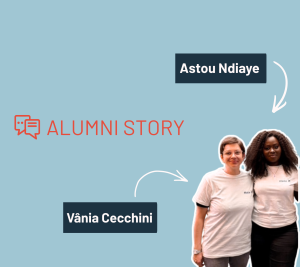
Every day, clinicians face an overwhelming amount of patient data, which can be scattered across different systems, unstructured, making it difficult to interpret. This fragmentation can delay decisions and affect patient outcomes.
Hale-X, a startup founded by University of Luxembourg alumni Astou Ndiaye and Vânia Cecchini, is tackling this challenge. By turning complex, fragmented health data into actionable insights, the company empowers healthcare professionals to make faster, smarter, and more personalised decisions. The goal is to build a digital twin, a complete digital representation of each patient that consolidates all relevant information in one place.
A shared vision for healthcare innovation
Astou and Vânia arrived in Luxembourg from very different paths but shared the same curiosity for science and a desire to make a real-world impact.
Astou’s journey began with biology, driven by a fascination with how living systems work, adapt, and reveal patterns beneath the surface. While she initially saw herself as a researcher, she later realised that innovation in healthcare also requires understanding how ideas become real solutions. After completing her bachelor’s degree in Life Sciences – Biology at FSTM, she chose to pursue the Master in Entrepreneurship and Innovation to bridge science and business.
Vânia’s path was shaped early by curiosity. As a child, she spent hours exploring the world through a microscope her parents gave her. She studied biology in Lisbon and worked in a lab before shifting her focus to computational biology through the Master in Molecular and Computational Biomedicine at Uni.lu.
After studying at the University of Luxembourg, their paths eventually crossed through a LinkedIn message. Astou was looking for someone who could combine deep biological knowledge with coding expertise and decided to reach out to Vânia. “I normally never looked at or responded to LinkedIn requests,” Vânia recalls. But that day was different. Their first conversation revealed not only a strong intellectual match but also shared experiences. Astou’s vision resonated with Vânia’s perspective as both a scientist and a patient. From that moment, a partnership was born, driven by a common ambition to transform healthcare.
The story behind Hale-X
The idea for Hale‑X emerged from personal experience.
For Astou, there was a moment that crystallised the problem in the most personal way imaginable. During a life-threatening medical complication, she encountered a reality familiar to many patients. Her medical data was fragmented, making the results were inconsistent and difficult for clinicians to interpret quickly.
Her scientific background gave her insight into what was happening, insight that likely made the difference in her survival. But she couldn’t help wondering: “What about patients without that knowledge?” How many people might also be slowed down by fragmented data, lost results, or information that is simply hard to integrate in real time?
“Most patients feel lost in the system. In Luxembourg, even tools like the DSP (Dossier de Soins Partagé) can give access to medical data, but it often comes as scattered reports that patients can’t fully understand on their own. What’s missing is a unified, interpretable view of the patient.” explains Astou.
She realised that, in medicine and especially in complex cases, this data fragmentation can fast become life-threatening.
For Vânia, the question was more technical but no less urgent. At a time when artificial intelligence is transforming so many sectors, why does healthcare data still feel siloed and difficult to apply? The answer pointed to a gap, not in the amount of data, but in the ability to structure it, connect it, and make it interpretable in a way that clinicians can use at the point of care.
Why this gap exists
Across healthcare systems, more than 80% of clinical data generated is never used for predictive modelling or decision support (McKinsey, 2024). The data exists, but it is not structured or connected in a way that allows it to inform clinical decisions.
This is largely due to how hospital systems are built. Lab results, imaging, vital signs, prescriptions, and clinical notes are stored in separate tools that were not designed to communicate with each other.
In environments like the Intensive Care Unit (ICU), this fragmentation becomes critical. Patients generate a continuous flow of data through monitoring, tests, and treatments — roughly 2,750 data points per day — yet most of it never enters any predictive model. In a setting where decisions must be made in minutes, this lack of integration is not just inefficient, it directly affects survival.
These insights led Astou and Vânia to design Hale-X, a system that integrates different streams of health data, organises them over time, and turns them into usable insights. “The name reflects health, strength, and transformation,” Astou explains. “Hale refers to health and wellbeing, while “X” represents DNA, genes, discovery, complexity and the unknown variables we aim to make more understandable through better data interpretation and intelligent systems.”
‟ Healthcare stood out very early for us because it is one of the areas where better knowledge, better systems, and better use of technology can directly improve lives. We were not interested in innovation just for the sake of innovation. We wanted to work on something meaningful, complex, and deeply useful.”
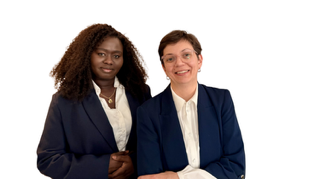
Uni.lu Alumni and founders of Hale-X
One digital twin per patient
At its core, Hale‑X is building AI‑powered solutions that turn complex health data into actionable insight. The vision is ambitious: to create dynamic, data‑driven representations, sometimes described as digital twins, that help clinicians understand a patient’s health status more holistically, detect risks earlier, and support more personalised decisions.
In practice, this means gathering data that is often scattered across different systems, including lab results, imaging, genetic information, and health records, and structuring it so machine learning and advancedanalytics can work with it.
“Patients are looking for a tool that aligns all the data in one coherent place, across specialties and across time. And more importantly, that uses that data to detect risks earlier, predict deterioration, and enable real-time monitoring […] for ICU patients today, but also for chronic-disease management tomorrow,” explains Astou.
Rather than seeing a clinician confronted with a wall of numbers and text, Hale‑X aims to present a clear, integrated picture of patient health that is both clinically relevant and easy to interpret.
What sets Hale‑X apart, the founders emphasise, is not just technical expertise, but scope and intention. Many solutions focus on individual data streams, or on narrow tools for specific tasks. Hale‑X aims for somethingbroader. It focuses on explainable, clinically grounded intelligence built with a long-term view of how healthcare systems operate and how clinicians work.
Their early work has already attracted attention from partners in the healthcare and research ecosystem, such as Centre Hospitalier de Luxembourg (CHL), LuxProvide and LuxInnovation. This interest is driven not only by the tool’s technological promise, but also by how directly it addresses a challenge clinicians recognise as urgent.
What’s next?
Over the next three to five years, the founders envision Hale‑X growing into a trusted platform with validated products, strong clinical partnerships, and a clear position in the precision healthcare landscape. But they also acknowledge the reality of health tech. It’s a demanding sector, requiring rigor, validation, and a deep commitment to both science, patient safety and privacy.
The progress they’ve made so far and the partnerships they are building all point to a future where data doesn’t remain a barrier to good care but becomes a foundation for better care.
3 questions with the founders
Vânia: The Master in Molecular and Computational Biomedicine gave me the tools and skills that together with Astou’s, became one of the foundations of our collaboration in science, biology and data. FSTM offered an environment where science, critical thinking, and interdisciplinarity could meet in a very concrete way. That mattered a lot because Hale-X was born precisely at the intersection of biology, health, data, and innovation.
Astou: One person who played an especially important role was Prof. Eric Tschirhart, who was my physiology professor during my Bachelor in Life Sciences – Biology. He believed in me early, supported me from the beginning, and helped open doors by connecting me to people and opportunities. His trust and support had a real impact on the early stages of my journey and he still plays an important role today. Another important person was Prof. Geraudel, whom I met while completing the Master in Entrepreneurship and Innovation. He gave me a chance even though I did not come from the most typical background for that path. At a time when I was working alongside my studies to support myself, that flexibility and support meant a lot. I can genuinely say that the university gave me not only academic input, but also human support when I needed it.
Astou: Yes. I received the Portabella Scholarship in 2020 and that support truly helped me continue my studies during a very difficult period of my life. We also benefited from being connected to the wider universityinnovation ecosystem.
I also had the chance to participate in the Digital Medical Devices (DMD) Summer School, which was a very eye-opening experience. It helped broaden my perspective on possible innovation pathways and showed me more concretely how research, technology, and entrepreneurship can connect.
Vânia: We are also benefiting from the Venture Mentoring Service at the University’s Incubator, which provides visibility, guidance, opportunities to participate in events, and valuable connections. Our mentors arehelping us shape both our storytelling and our strategy. Overall, the university ecosystem offered us much more than courses. It gave us support, access, and belief.
Start with a real problem. Stay curious, stay humble, and do not wait until everything feels perfectly ready. It never will. Also, believe in yourself in a way that other people’s doubts cannot completely shake. Many people will question you. Some will think your ambition is unrealistic. You should stay open to feedback and ready to adapt, but you should not let other people define what is possible for you.
Build gradually, learn continuously, and surround yourself with people who both challenge you and support you. Being a student can be a strength: it is a time when you are still learning, exploring, and often bold enough to try what others may hesitate to attempt.