

 Faculty of Science, Technology and Medicine
 Faculty of Law, Economics and Finance
 Faculty of Humanities, Education and Social Sciences
 Interdisciplinary Centre for Security, Reliability and Trust
 Luxembourg Centre for Systems Biomedicine
 Luxembourg Centre for Contemporary and Digital History
 Luxembourg Centre for European Law
 Luxembourg Centre for Socio-Environmental Systems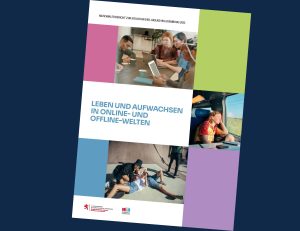
For today’s young people, online and offline worlds are no longer separated or isolated from each other; instead, they are increasingly intertwined, to the point where their boundaries have become almost invisible. What happens offline continues online, just as online experiences extend into offline life, bringing with it constructive dynamics and opportunities, but also the risks and challenges that such continuity may entail. The Youth Report 2025 highlights this profound transformation and its implications for young people aged 12 to 29.
Published every five years by the University of Luxembourg in partnership with the Ministry of Education, Children and Youth (MENJE), the report was prepared by the multidisciplinary team of the Centre for Childhood and Youth Research (CCY). It provides an analysis of young people’s lives both offline and online, addressing topics such as well-being, participation, social relationships, artificial intelligence and education.
Digital technologies are no longer simply tools, they shape young people’s everyday lives. Family exchanges continue via messaging services, homework is managed through online platforms, friendships are maintained on social media and hobbies take place both on screens and face-to-face. Physical interactions remain essential, but they now coexist with digital ones. While this continuity can strengthen feelings of belonging and social recognition, it can also become addictive and time-consuming.
A transformed Relationship to Time and Increased Vulnerability among 12–15 Years-Olds
Among the key findings is a deeply transformed relationship to time. Constant connectivity and social media use create a sense of acceleration and pressure, making it more difficult to disconnect. Spending significant amounts of time online particularly exposes adolescents aged 12 to 15 to risks such as cyberbullying, problematic use or unwanted contact, at a stage when their capacity for self-regulation is still developing.
Persistent Inequalities and Declining Well-Being
Even in a connected society, not all young people start from the same position. Access to digital technologies and the ways in which they are used vary considerably depending on resources, education and family environment, shaping real-life opportunities. Girls and young women are particularly exposed to negative online experiences (sexual messages, inappropriate contact, boundary violations in online gaming, etc.), highlighting the impact of social norms and gender relations.
These differences are accompanied by a decline in well-being: one quarter of young people report feeling unwell or stressed and psychosomatic complaints (especially among young women) have increased since 2019. Socio-economic status, age and gender remain the most influential factors affecting well-being, suggesting that digitalisation can amplify existing social inequalities.
At the same time, the data also reveal inverse dynamics: some young people facing economic or social vulnerability use digital tools as a means of compensation. Language learning applications, access to online educational resources and new forms of social interaction can serve as bridges, enabling them to strengthen their skills and broaden their horizons.
Family and Friends: Fundamental Pillars in a Connected World
While these findings raise concerns, and while some European countries, such as France, are progressively strengthening digital regulation to protect young people, there are also encouraging aspects. In the digital age, peers remain the primary support networks, playing a central role in fostering belonging and recognition. The family also continues to play a key role, particularly for younger adolescents, by providing stability and resilience in the face of an increasingly connected daily life.
Many young people identify risks, express their concerns and attempt to develop self-regulation strategies. However, in a context where social interactions largely take place through screens, disconnecting may also mean excluding oneself. This concern, also known as the “Fear of Missing Out” (FoMO), illustrates the ambivalence of a generation seeking balance between connection and protection.
How Can Young People be Supported?
To help young people navigate this environment, it is essential to provide clear and accessible educational tools, while also supporting parents with practical guidance that enables them to set boundaries without being overly restrictive. Safe and inclusive spaces must be strengthened, particularly for girls and young people from less advantaged backgrounds, who are often more exposed to online risks. Finally, empowering young people to express themselves, take action and participate actively – especially in decisions that concern themselves – enhances their confidence and their self-efficacy, strengthens their sense of being taken seriously and acknowledges their knowledge and lived experiences.
This report of more than 260 pages is based on a multi-method research design conducted between 2023 and 2025, combining representative surveys (Youth Survey Luxembourg), qualitative studies, and secondary data analyses. For the first time, the report is published in full in both German and French. In addition to the printed version, a comprehensive online offer with additional resources is available at: www.jugendbericht.lu.
The report is officially released on 9 March 2026 and was presented at the Ministry of National Education, Children and Youth. The official press release is available here.
A public presentation of the key findings will take place on 16 April 2026, at 18:00. at Maison du Savoir (3.500), University of Luxembourg. The session will be followed by a discussion session.
For further insights, Robin Samuel and Hannes Käckmeister share their perspectives in an interview published on Sciences.lu. Access here.