Faculty of Science, Technology and Medicine
 Faculty of Law, Economics and Finance
 Faculty of Humanities, Education and Social Sciences
 Interdisciplinary Centre for Security, Reliability and Trust
 Luxembourg Centre for Systems Biomedicine
 Luxembourg Centre for Contemporary and Digital History
 Luxembourg Centre for European Law
 Luxembourg Centre for Socio-Environmental Systems
Science and outreach often go hand-in-hand, and what better way to mix the two than board games? This is exactly what happens with “Environmental Detectives” and “Power Planner”, two games developed respectively by Parviel Chirsir, PhD student at the Luxembourg Centre for Systems Biomedicine (LCSB), and Scienteens Lab’s members Dr Louis Krieger & Sébastien Elixander. These fun and educational creations are perfect examples of how to convey scientific information and to tackle complex problems in a playful manner.
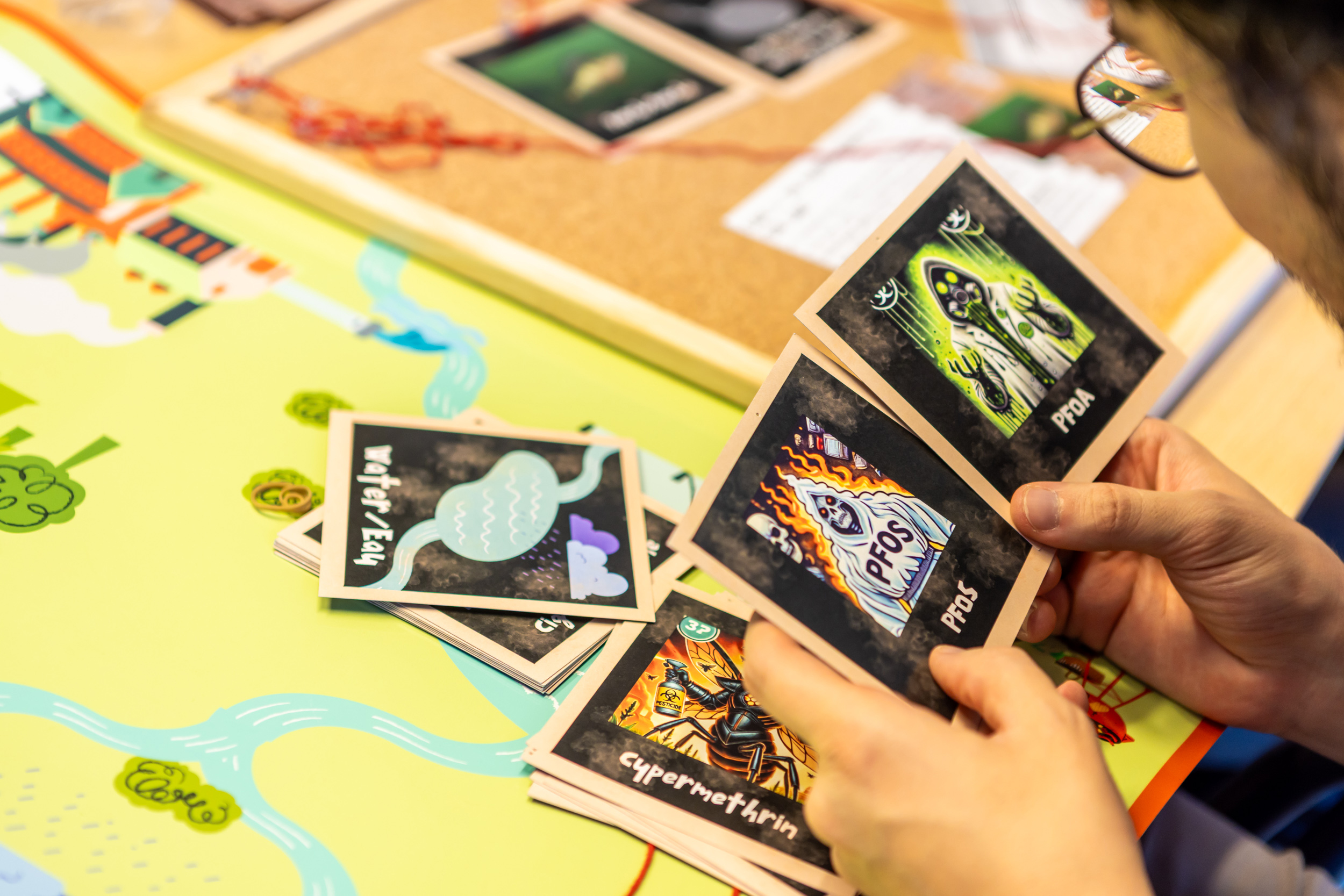
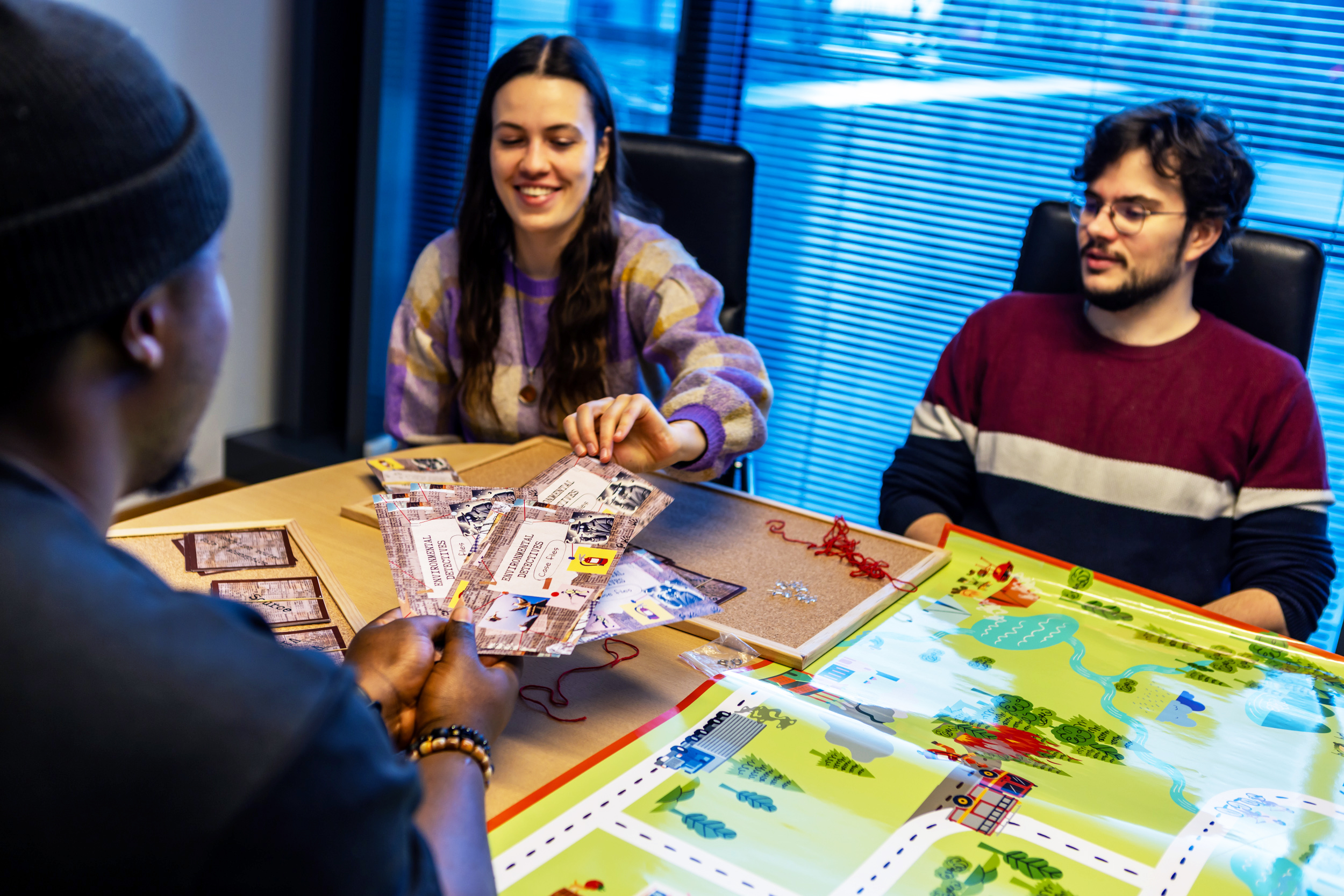
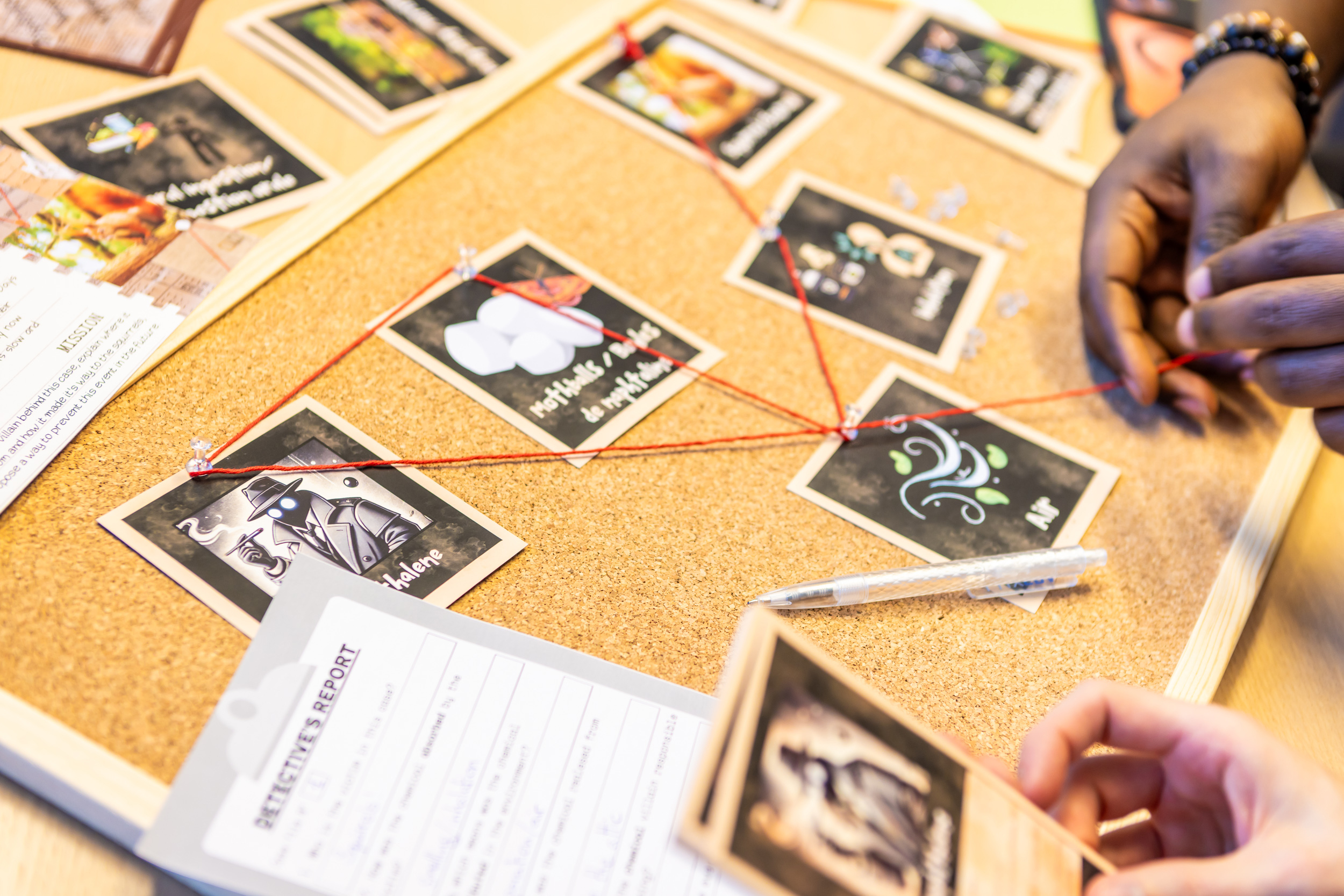
In “Environmental Detectives”, players gather around cork boards and are invited to solve an environmental mystery. What makes a family of squirrels living in your attic sick? Why are the perch in the local river not doing so good? After picking one scenario among the eight stories available, they have to investigate to find the chemical villain responsible. “The players have to collect clues about the source of the pollution, its environmental impacts and how victims are exposed to it,” explains Parviel Chirsir, doctoral researcher in the Environmental Cheminformatics group at the LCSB. “They get to learn about chemical properties, like persistence, mobility, bioaccumulation or toxicity, and they do so while having fun by gathering all the information on a sort of “detective board” with red thread tying everything together.”
Building scientific literacy through storytelling and games
This first game was created in the framework of DESCOM, a programme providing science communication training for doctoral candidates at the University of Luxembourg. It is a joint effort between Parviel and his PhD colleague, Franco Catuogno, from the Luxembourg Institute of Health. It took them roughly eight months of intensive work to come up with the concept and make it happen. They crafted stories about “forever chemicals”, pesticides and plastic additives that we can all relate to and designed striking cards to give a strong visual identity to the game. The result is worth it: “Environmental Detectives” was tested with over 85 people and a wide range of players, from kids joining workshops at the Luxembourg Science Center to group of adults, and the responses were incredibly positive. “Many people told us that the game helped them understand complex scientific issues in a simple and enjoyable way,” highlights Parviel Chirsir. “It really shows that by engaging people through storytelling and games, we can build scientific literacy, empower individuals to think critically about environmental issues and to make informed choices.”
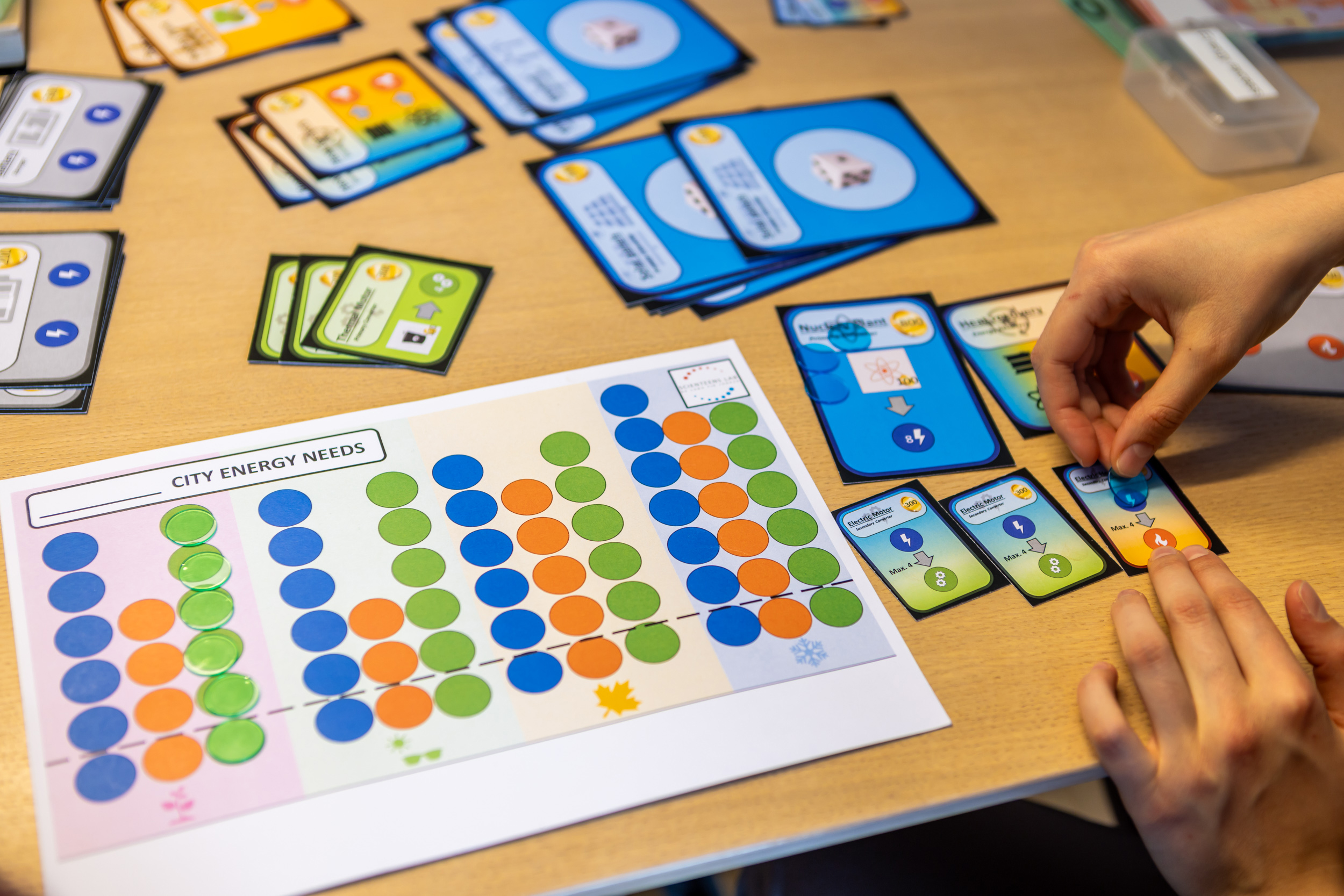
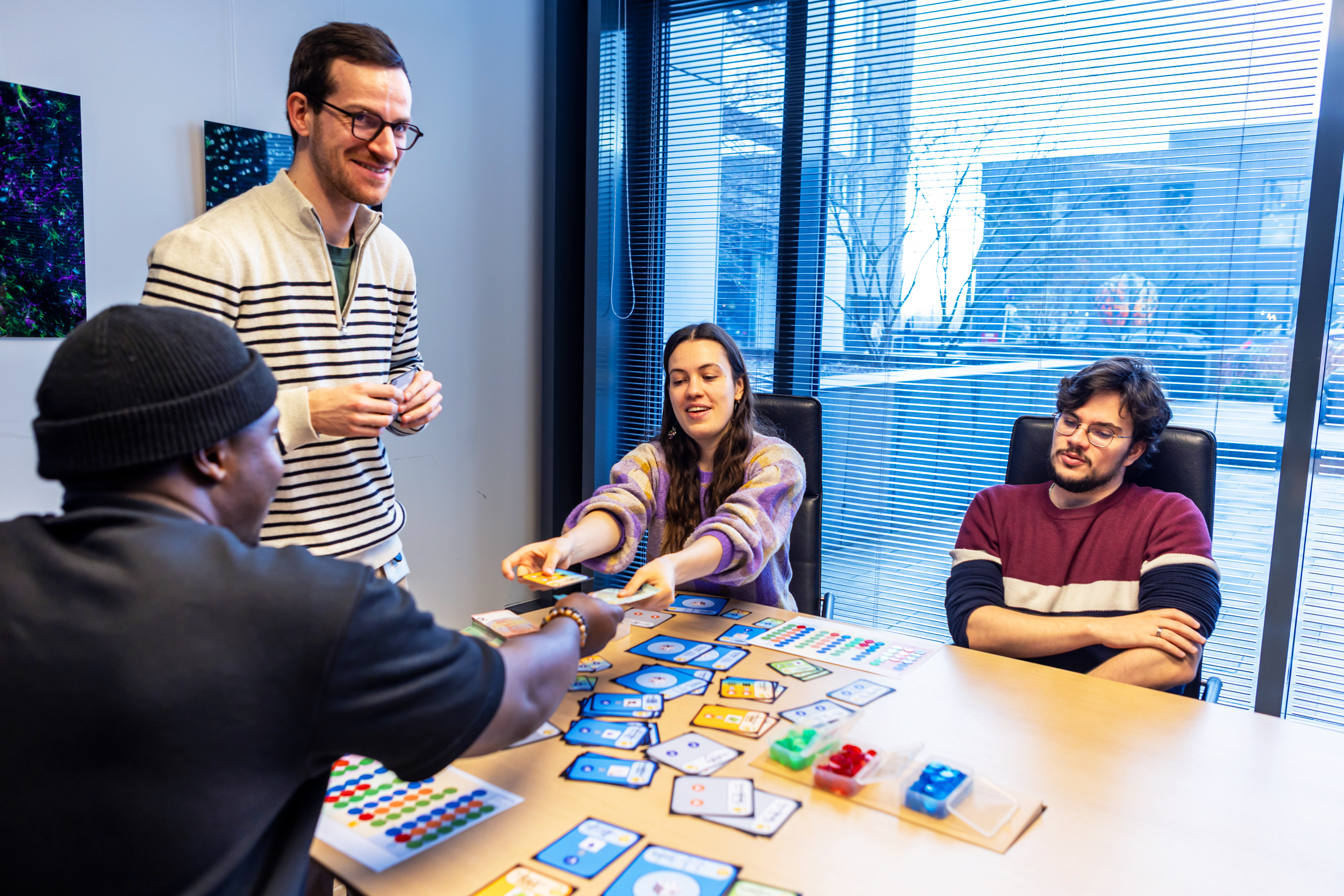
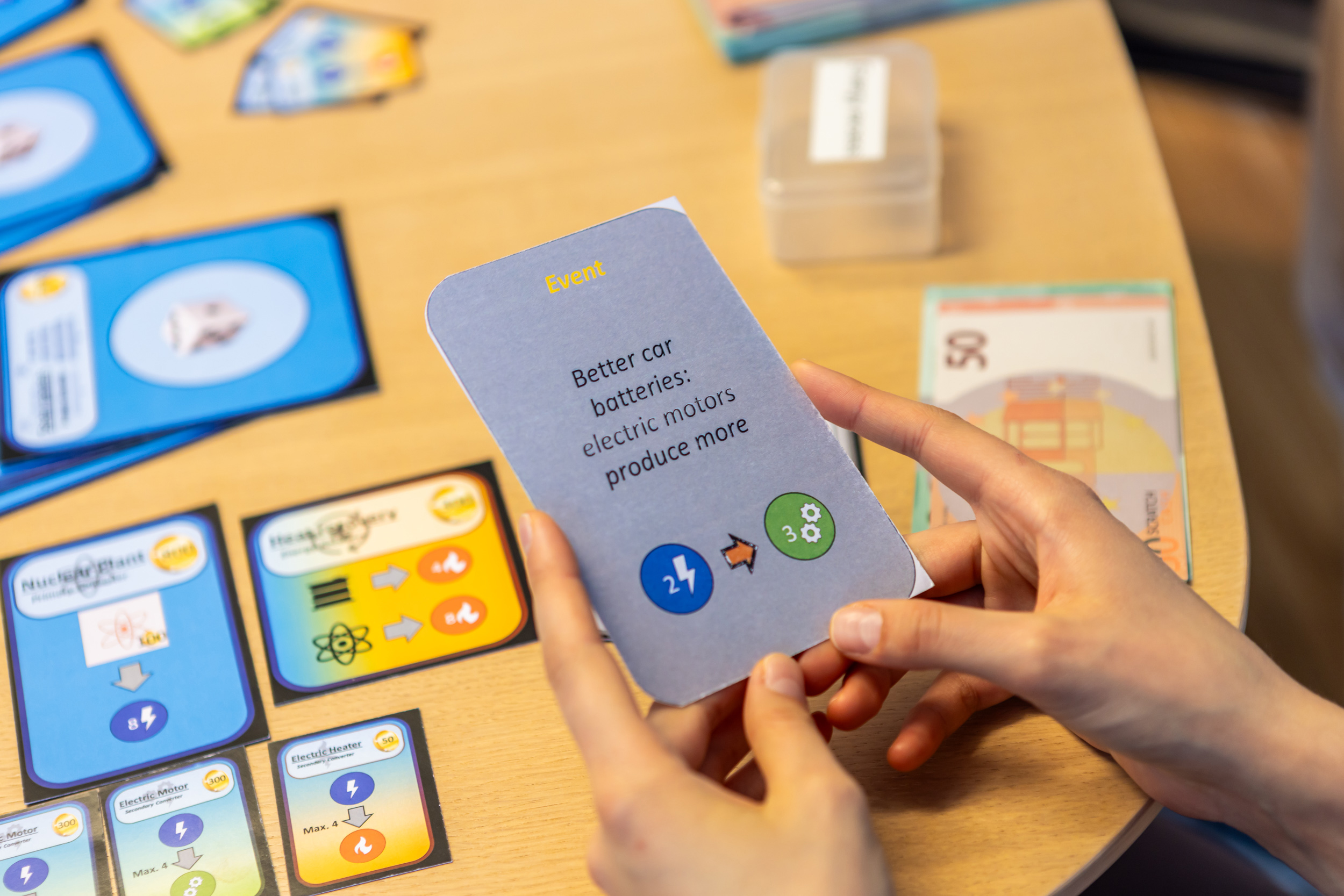
Same approach from the Scienteens Lab’s team. Their game takes the players on a journey to build an energy grid, balance supply and demand, and see if their city makes it through the four seasons. Two years in the making, “Power Planner” manages to convey how intricate the topic of meeting your population’s energy demand is. There is some science involved of course but there are also political and economic aspects to consider. “We went through a lot of trials and errors to get the right combination,” details Dr Louis Krieger, in charge of the physics & sustainability activities at the Scienteens Lab. “Now, we have a game that makes players reflect on the type of technology they should use to fulfil the needs of their citizens in terms of electricity, heating and mechanical energy, but also on how to manage a budget and to plan for unpredictable events, such as the weather or new laws, that will have an impact on their strategy.”
Played at school and soon in the shop
So far, around 50 high-school classes have played with “Power Planner” and watching a game unfold is fascinating. Students and teachers keep brainstorming: Should we go for a nuclear power plant or rather a mix of renewable energy sources such as windmills and an hydraulic dam? Do we have to change our strategy after a difficult winter? The game takes a life of its own with one team negotiating to sell their excess energy to a competing city while another tries to barter to get an energy convertor… And it gets better after every round!
It is so popular that, in the long run, the Scienteens Lab plans to commercialise the game, first to high-schools in Luxembourg and then to educational organisations across Europe. The process will take time as the production line still has to be established and some legal details ironed out with the precious help of the Office for Partnership, Knowledge and Technology Transfer at the University, but by this time next year, you might be able to place a “Power Planner” box under your Christmas tree. And if you are too curious to wait until then to test your problem-solving skills, contact the Scienteens Lab to organise a session with your class or join the LCSB team during the Open Day 2026 for a game of “Environmental Detectives”.