

 Faculty of Science, Technology and Medicine
 Faculty of Law, Economics and Finance
 Faculty of Humanities, Education and Social Sciences
 Interdisciplinary Centre for Security, Reliability and Trust
 Luxembourg Centre for Systems Biomedicine
 Luxembourg Centre for Contemporary and Digital History
 Luxembourg Centre for European Law
 Luxembourg Centre for Socio-Environmental Systems
Overview and activities
University of Luxembourg’s Department of Health, Medicine, and Life Sciences
The department brings together a wide range of educational programmes and research activities within the Faculty of Science, Technology and Medicine. Its portfolio spans undergraduate, postgraduate, and doctoral training, alongside research conducted across multiple biomedical and health science domains.
The department’s academic activities are supported by close links with national health and research institutions and by participation in competitive national and European research programmes.
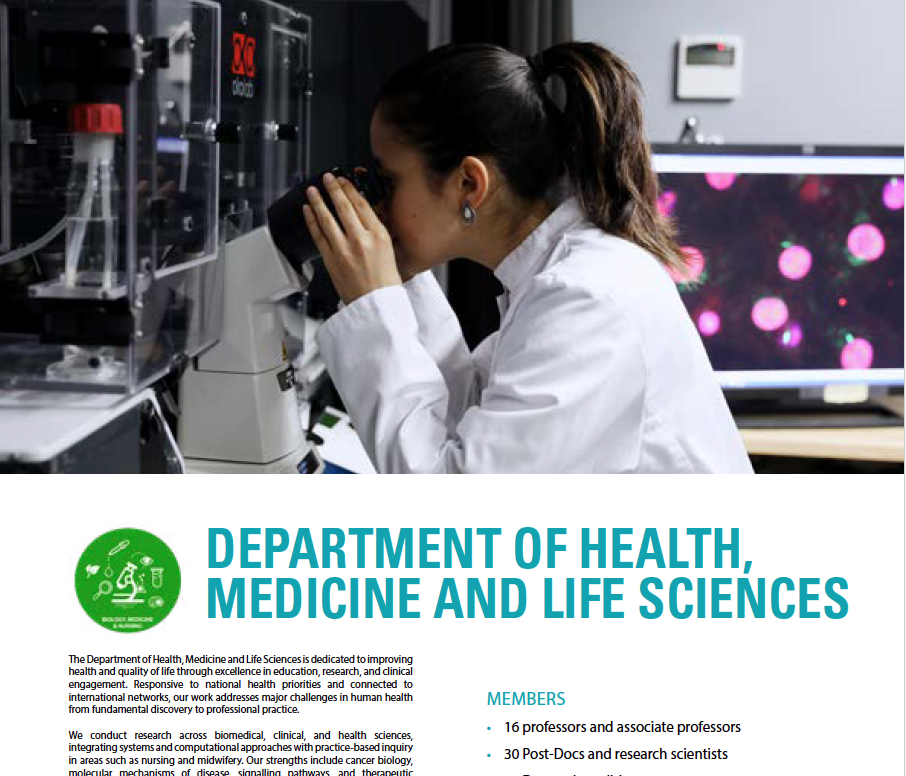
Our commitment to advancing the health sciences

Our work is shaped by the concrete health challenges facing patients, professionals, and the Luxembourg health system. Research focuses on understanding disease and improving treatment options, with particular strengths in cancer, molecular and cellular signalling, therapeutic strategies, and drug repurposing, using complementary experimental and computational approaches. This research agenda remains closely connected to clinical practice and population health, ensuring that scientific advances translate into meaningful improvements.
Equally central is the department’s responsibility in educating health professionals whose expertise is essential to the functioning of the health system. Physicians, specialised nurses and other allied health professionals are trained through advanced simulation-based teaching and practice-oriented learning, preparing them for the complexity of contemporary clinical environments. Beyond formal education, DHML engages actively with society through public outreach and sustained collaboration with healthcare institutions and public authorities, contributing to professional capacity, informed dialogue, and the long-term strength of healthcare in Luxembourg.
What we stand for
Mission
The department’s mission is to respond to the needs of the country by training highly skilled professionals who will contribute meaningfully to research, clinical practice, and society.
Vision
Our ambition is to prepare the next generation of outstanding scientists and health professionals for Luxembourg. Through collaboration at local and international levels, we support innovation, knowledge exchange, and long-term development in health and medicine, advancing health sciences research at the forefront of the field.
Values
Multiculturalism and openness
We are international and multicultural. This starts with the international origins of our students and staff, and extends to the very structure of our programmes, which offer opportunities for study abroad. The department fosters an open and inclusive academic environment, encouraging collaborative and interdisciplinary exchange early on.
Commitment to ethics
To ensure the highest standards in the education of health professionals and researchers for Luxembourg, ethics training is fully integrated into our curricula.
Active outreach
The department regularly contributes to initiatives addressing topics such as palliative medicine, ethics, inclusion and diversity in healthcare, and cancer awareness, including colorectal and other cancers. DHML has also participated in public science initiatives such as the LUX:plorations science-comic project.
Our team
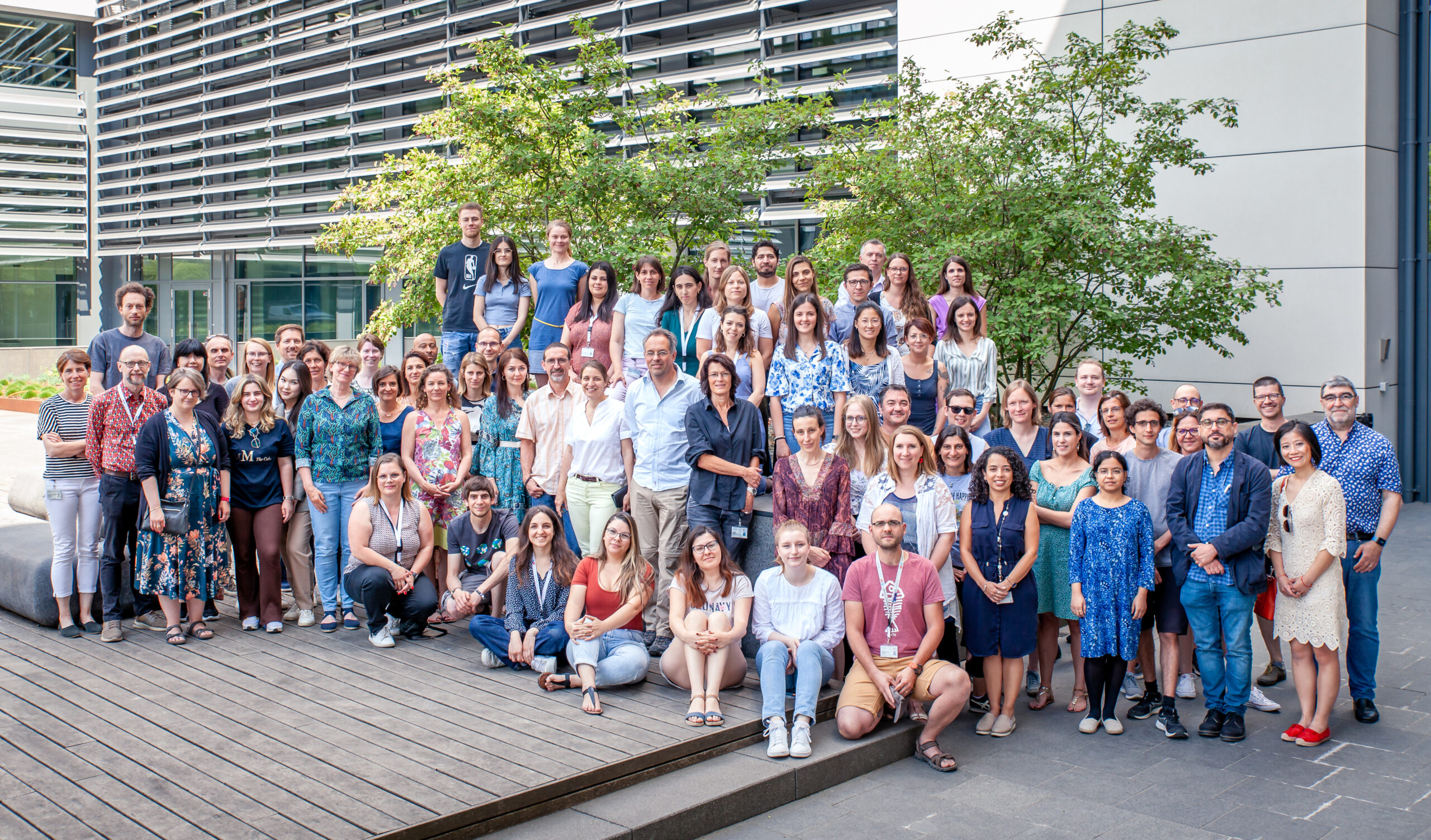
Shared expertise contributes to better outcomes for all
The department embodies the ethos of the University of Luxembourg’s Belval campus as a vibrant, multicultural, and interdisciplinary academic community. Collaboration is fostered through shared infrastructure and core facilities, as well as regular seminars and academic exchange. Together, these conditions support high-quality and productive research that is disseminated through leading peer-reviewed scientific journals, thereby advancing knowledge with the potential to improve patient care and health outcomes.
In numbers
-
16professors
-
30post-docs & research scientists
-
25doctoral candidates
-
50technical & admin staff