

 Faculty of Science, Technology and Medicine
 Faculty of Law, Economics and Finance
 Faculty of Humanities, Education and Social Sciences
 Interdisciplinary Centre for Security, Reliability and Trust
 Luxembourg Centre for Systems Biomedicine
 Luxembourg Centre for Contemporary and Digital History
 Luxembourg Centre for European Law
 Luxembourg Centre for Socio-Environmental Systems
How can we better understand and measure the quality of life of children living with life-limiting or life-saving conditions? While research on this topic exists, it too often excludes the very individuals most affected: the children themselves, a group frequently considered “too vulnerable” to participate (Namisango et al. Palliat Medicine 2025). To address this, Professor of Nursing Sciences Marie Friedel, focuses on developing tools to evaluate children’s wellbeing and advocates for the active inclusion of seriously ill children in research processes, as peer researchers. Prof. Friedel argues that, when appropriately supported, these children not only can but want to share their experiences and that their participation is essential in efficiently assessing the quality of pediatric palliative care, designing appropriate services and improving their quality of life.
| Did you know that… Pediatric palliative care is not restricted to end-of-life care? It includes holistic interdisciplinary care – addressing physical, emotional, social and spiritual needs, rather than focusing only on the illness – to children with a life limiting condition. It also encompasses the support of their family members to improve their quality of life (World Health Organization). It starts at the diagnosis of a life limiting or life threatening condition (cancer is only represented by 30%), includes respite care and continues with bereavement care. |
Including children’s voices in palliative research
One of Prof. Friedel’s latest projects, the “MOSAIK” study (Move to Open Shared Advanced Interventions for Kids with Life-limiting Conditions), stands out because for once, the research was not only about the children, but included them as active participants. The project included interviews with children, parents, and healthcare professionals to explore how children define and experience quality of life. The study uncovered a consistent gap between children’s and adults’ perceptions: while parents and clinicians often rated children’s well-being lower, children themselves tended to view their quality of life more positively, even in the face of severe illness.
The research further revealed that relationships—with family, friends, and peers—are the strongest determinants of children’s perceived well-being, regardless of their level of physical or cognitive impairment. These insights challenge long-held assumptions about how children experience serious illness and emphasise the importance of listening to children’s voices in clinical care, research, and policy development.
‟ Children are not passive recipients of care, they are eager to express what matters most to them.”
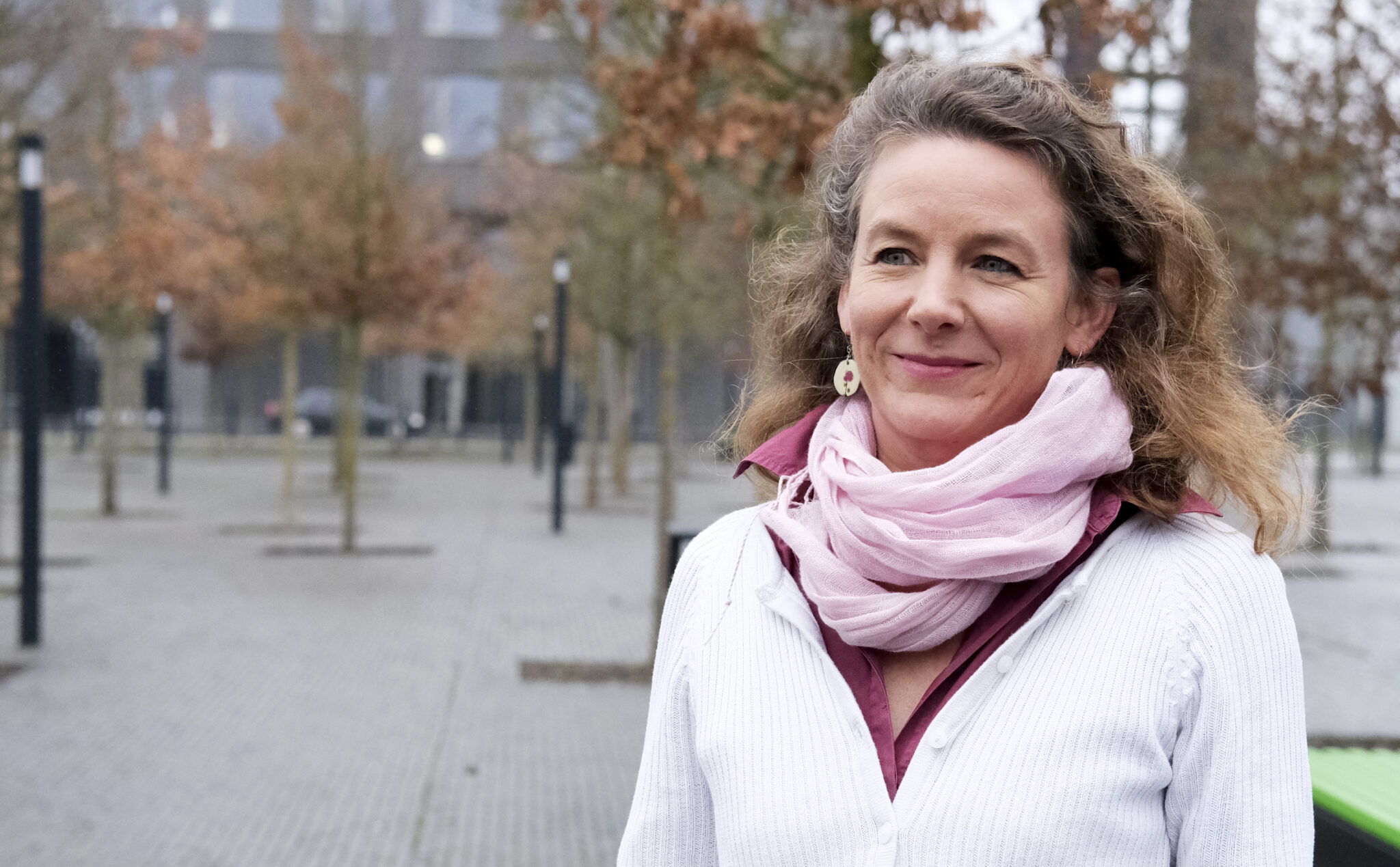
Professor of Nursing Sciences
This inclusive approach has also been highlighted in the international publication “Too Vulnerable? Successful Practices for Conducting Research with Children and Young People Who Have Life-Limiting or Life-Threatening Illness” (PubMed). Co-authored by Prof. Friedel and several international researchers, the article draws on their experiences conducting studies involving children in pediatric palliative care and offers recommendations for engaging them more meaningfully in research. It advocates for conducting research with—and not merely on—children, who are too often viewed by ethics committees as vulnerable. The paper promotes the concept of the “peer researcher,” a form of collaborative research that recognises children as active, reflective agents capable of expressing their own perspectives and contributing to the advancement of care.
| Marie, what led you to this specific field? “I lost a cousin to leukemia when she was just two years old. My best friend died in a skiing accident. These experiences raised questions for me about grief and its impact on siblings. I’ve worked in this field and have seen that care can be provided with authenticity. It’s about striving for a true quality of life. In palliative care, it’s the quality of life that matters, not the length of life.” |
Measuring quality of life with the palliative outcomes scale
As a result of this study, the Children’s Palliative Outcomes Scale was developed, aiming to gather children’s own feedback on the care they receive. When used appropriately, it can serve as an effective instrument for measuring the quality of pediatric palliative care. Today, this tool has already been used in several other countries, such as France, several countries in south-east Asia and the Netherlands.
Collaborations with researchers from Canada, the Cicely Saunders Institute at King’s College London, the International Children’s Palliative Care Network and the Réseau francophone de soins palliatifs pédiatriques have focused on ethical challenges and identifying quality indicators in pediatric palliative care. These joint efforts have led to original publications in the field (Friedel & Coombes, 2024).
Building on this work, Friedel’s team recently contributed to the first ever publication on pediatric palliative care in Luxembourg, led by University of Luxembourg Phd student Micha Massaad et al. (2025) and published in BMC Palliative Care. The mixed-methods study provides a national overview of pediatric palliative care services, revealing that Luxembourg currently offers only a basic level of care for children with life-limiting conditions. The paper identifies urgent needs for specialised training, dedicated infrastructure, and legal frameworks that better address children’s long-term palliative needs.
| Did you know that… Worldwide, 21 million children are living with life-limiting or life-threatening conditions, but only 5–10% have access to pediatric palliative care (Downing et al., Children, 2025). In Europe, around 170,000 children with health-related suffering die every year without access to pediatric palliative care (European Association of Palliative Care, 2023). In Luxembourg, approximately 500 children are currently facing serious illnesses (Massaad et al., BMC Palliative Care, 2025). |
Luxembourg’s National Strategic Plan for palliative care
In response, Professor Friedel’s group is working with Luxembourg’s National Strategic Plan and several key stakeholders in the country to help establish the country’s first dedicated paediatric palliative care centre.
The plan includes the creation of respite care services, and integrate pediatric palliative care training into the University of Luxembourg’s nursing curriculum. Currently, the new one-week module provides pediatric nursing students with foundational skills in caring for seriously ill children, representing an important step in addressing the country’s current shortage of trained professionals.
‟ This is not only about medical care. It is about ensuring that every child in Luxembourg, regardless of their condition, can live to the fullest of their life —and be heard— with dignity on what matters most to them.”
Pediatric palliative care is gaining increasing recognition and importance in Luxembourg. The upcoming Francophone Network for Pediatric Palliative Care Congress will be held in Luxembourg for the first time in 2028, marking a significant milestone for the field.