

 Faculty of Science, Technology and Medicine
 Faculty of Law, Economics and Finance
 Faculty of Humanities, Education and Social Sciences
 Interdisciplinary Centre for Security, Reliability and Trust
 Luxembourg Centre for Systems Biomedicine
 Luxembourg Centre for Contemporary and Digital History
 Luxembourg Centre for European Law
 Luxembourg Centre for Socio-Environmental Systems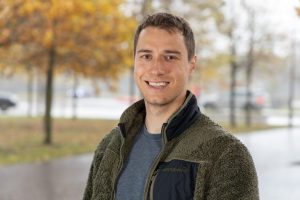
University of Luxembourg Doctoral Researcher Yves Wehmer investigates modern monetary policy while competing at world championships.
The discipline of excellence
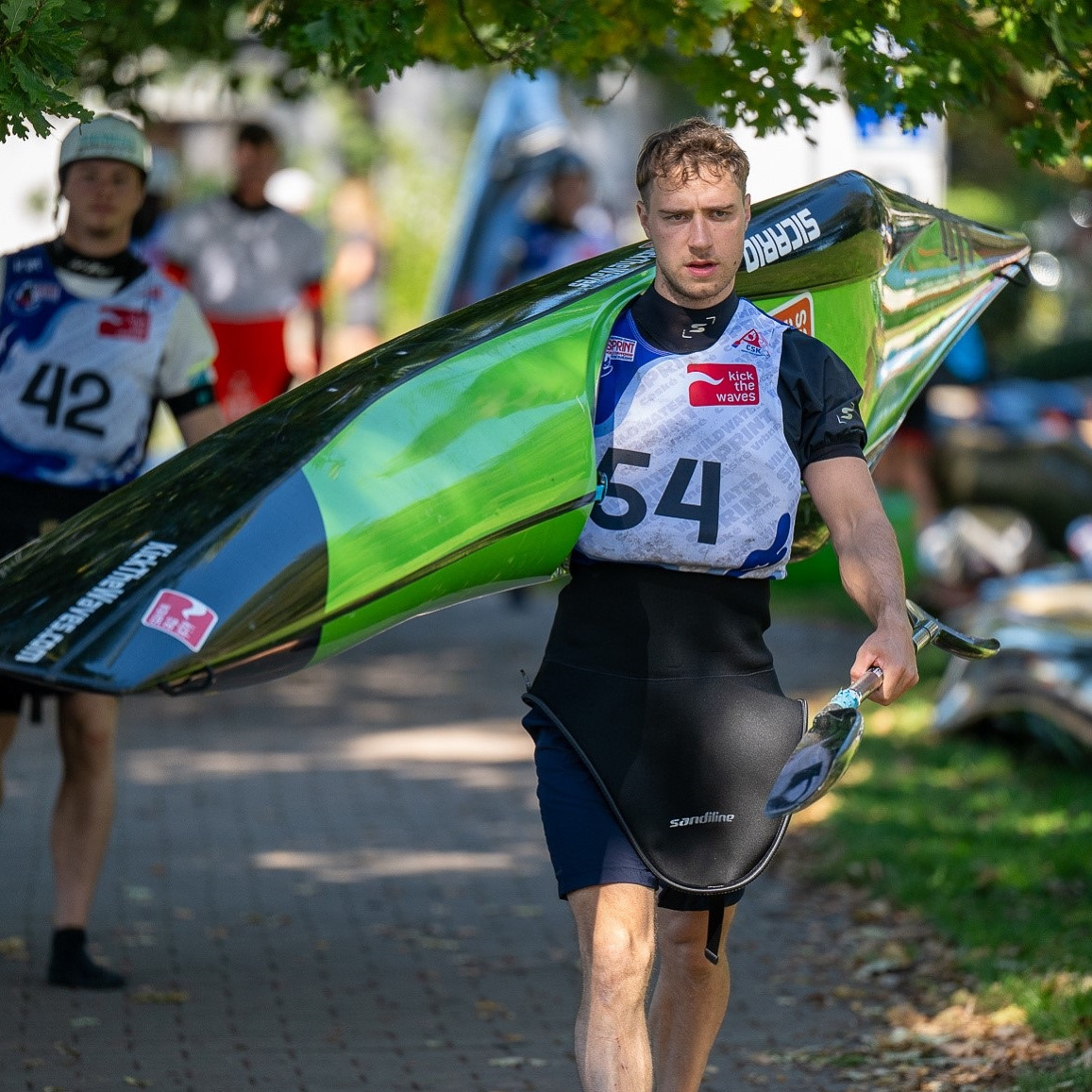
Just 0.8 seconds kept Yves Wehmer from qualifying directly for the finals at the 2025 World Championships in Wildwater Kayaking. In his first heat, competing against professional and semi-professional athletes, he finished ninth – very close to the top five who automatically advanced. What his competitors probably did not know: earlier that week, Yves had been working on his PhD research at the University of Luxembourg, where he develops complex mathematical models to study central bank behaviour.
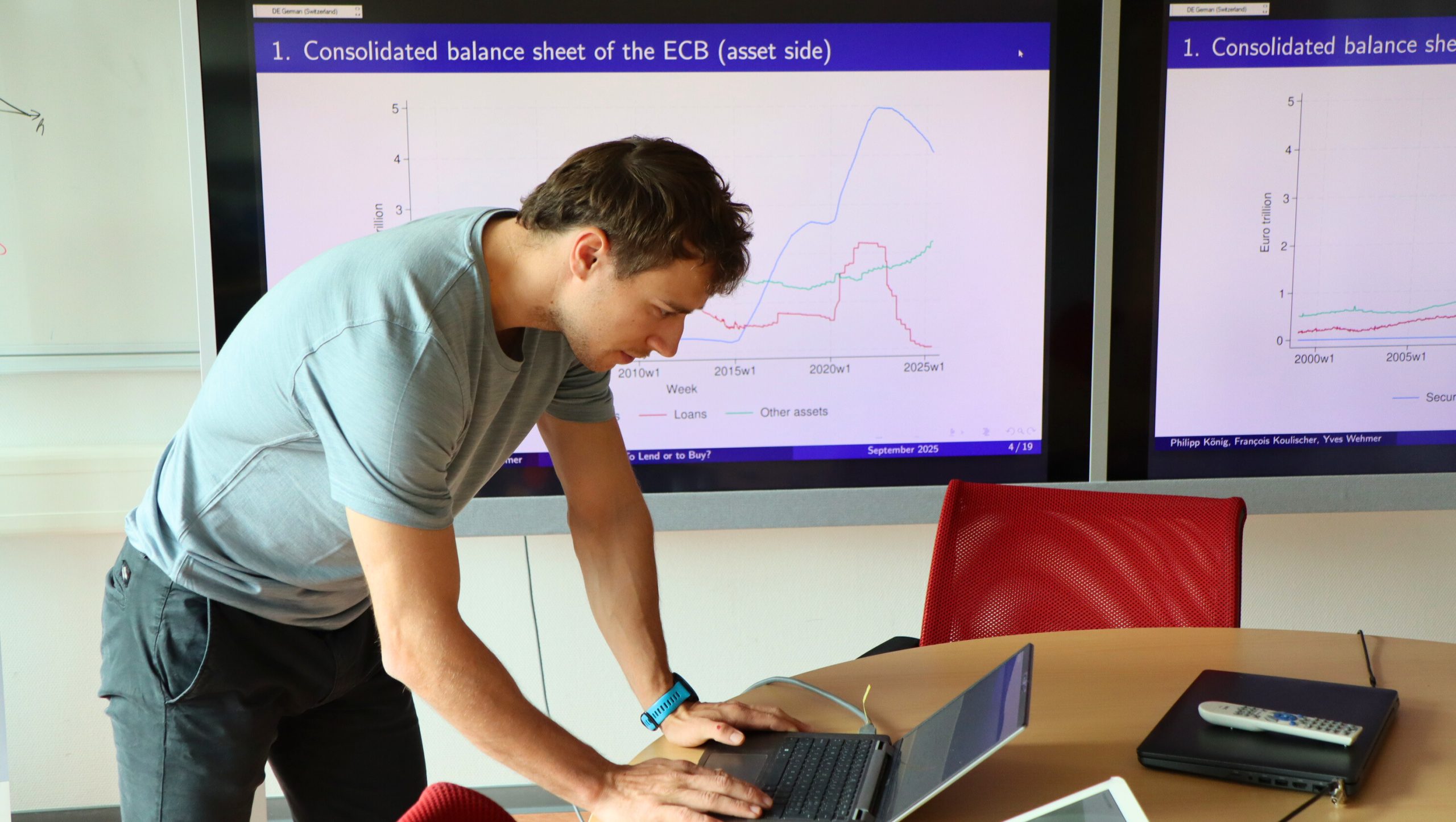
Yves’s life as an athlete and researcher challenges many assumptions. While most of us struggle to find time and motivation to go to the gym, he completes two training sessions daily – kayaking, running, gym, or ski mountaineering – structured around his full-time researcher job. His research, conducted jointly with Assistant Professor François Koulischer and Dr. Philipp Johann König, economist at the Research Centre of the Deutsche Bundesbank, examines how central banks influence financial markets, with direct implications for Luxembourg’s financial sector.
Yves’s typical day begins early in the morning with training. By mid-morning, he is at the University, doing research. In the late afternoon, he returns for a second training session before resuming his research. He dedicates five days a week to research and trains six — every week, without exception. When he goes back to studying, it’s another exercise, just a mental one. He investigates how quantitative easing – where central banks purchase assets from banks – changes bank behaviour. Since 2008, central banks have transformed their approach. “This is drastically different from everything we’ve seen before with the history of central banks,” Yves explains.
His work combines advanced mathematical modelling with empirical analysis of European interbank markets, contributing to Luxembourg’s growing reputation for research in areas where the country’s unique position as both a small nation and a major financial centre provides valuable perspectives.
From sports to research
Yves started kayaking at age seven in Luxembourg. By 2015, he achieved sixth and seventh place at the Junior World Championships in Wildwater Kayaking, tenth place at the Junior World Championships in Marathon Kayaking, along with several Luxembourgish and French national and university championships.
After completing his bachelor’s degree in France, he returned to Luxembourg to do Master in Finance and Economics. While Yves was studying, Assist. Professor Benjamin Holcblat introduced him to the Master in Quantitative Economics and Finance – one of the University’s most demanding programs in this field. The intensity of this Master required reducing his training significantly. “It was not like just learning some mechanism, but really understanding the root of those problems,” he says. His mathematical skills skyrocketed during that year, as Yves says.
In 2025, after years focused on national competitions during his studies, Yves returned to the international stage. Despite not advancing to the finals of the World Championships in Wildwater Kayaking, the result was encouraging for a non-professional competitor. “I was able to show myself that I am in reach of those people. In the coming years, I should be able to compete within the top fifteen, top ten in the world,” Yves says.
He also placed sixth at a European Cup race in 2025, demonstrating consistent world-class performance. This athletic discipline complements his research approach, utilising the same time management and commitment to excellence in both sport and studies that enable him to excel.
Dual pursuit
Why would he choose both, and how to combine intensive sport training with intensive research?
“I didn’t want to be stuck in sports,” Yves explains. “I love doing sports and I want to do it out of passion, not because I’m forced to.” He needed intellectual stimulation alongside physical challenge, he says. Moreover, athletic careers typically end around age 40, leaving limited options afterwards.
For students considering similar dual pursuits, Yves says: “First of all, I would say it’s possible, but they also need to be aware that it’s not going to be an easy thing. You need to make some sacrifices.” Social time decreases. Hours must serve a purpose, and days must be structured.
But for those willing to accept these trade-offs, the rewards may extend beyond individual achievement. “You should give it a shot. Maybe it doesn’t work out, and you can always just stop doing it. But probably we should always try to do things, and then we don’t have regrets afterwards.”
Looking ahead
Now in his second year of the PhD at the University of Luxembourg, Yves is preparing his job market paper while continuing research on monetary policy implementation.
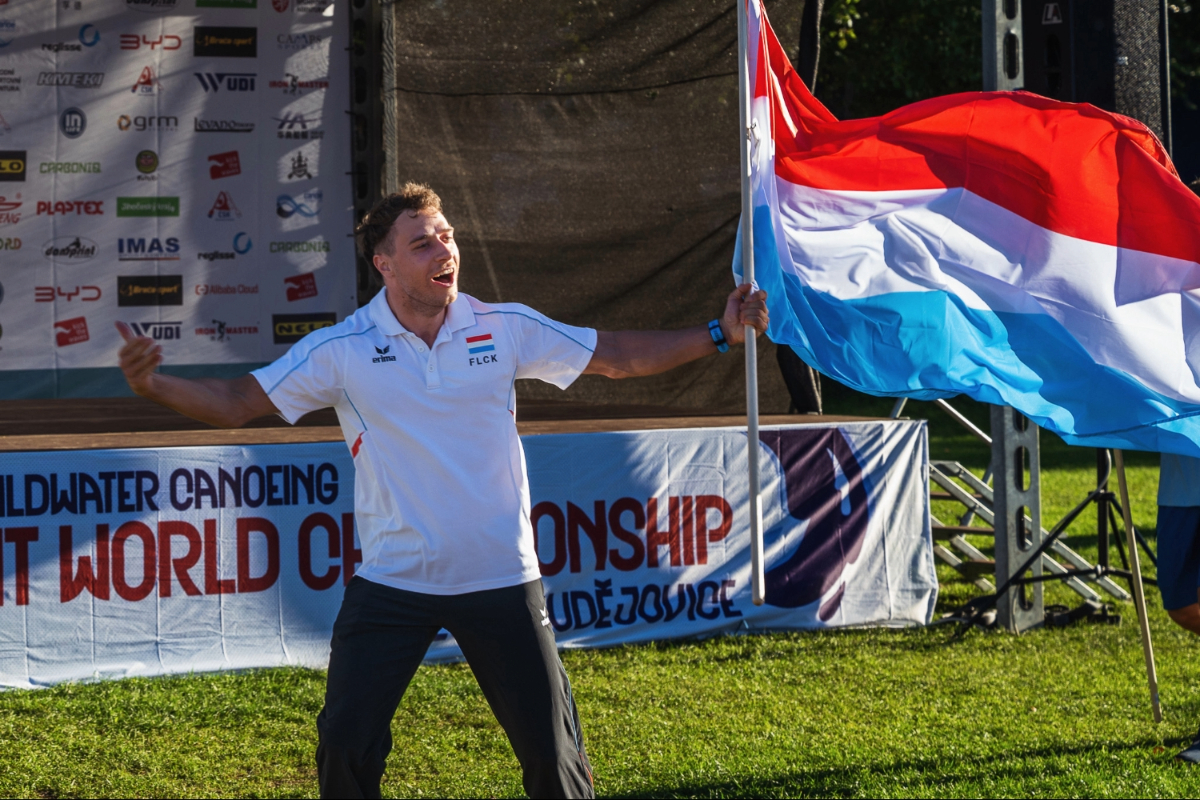
He plans to continue competing internationally for at least two to three years while completing his doctoral thesis, representing Luxembourg at world championships, while advancing research. Whether his future lies in academia, central banking, or the financial industry, he has not decided yet, but he is laying a solid foundation across all fields.
For now, Yves continues his double pursuit: mornings training, afternoons researching, evenings training again. It’s challenging, but it’s producing both athletic and academic excellence – proving that exceptional commitment and discipline can yield outstanding results in several fields.