Research project LIFE

Oral History Collection ‘Talking Borders’

1. Borders as Human-Made and Contingent Social Constructs

“Borders are all human creations—there is nothing permanent about them.”

Audio file of the complete monologue:

In this oral history interview, recorded during the 2nd World Conference of the Association for Borderlands Studies in Vienna in 2018, the border scholar reflects on the fundamentally human-made and contingent nature of borders. Borders are not presented as fixed or natural entities, but as dynamic constructs shaped by social practices, interpretation, and power relations.

Drawing on personal experiences with a range of physical, conceptual, and immaterial borders, the narrator explores how borders are continuously produced, experienced, and redefined. While closely connected to political structures, borders also emerge as sites of interaction, learning, and transformation, intertwined with processes of migration, change, and social negotiation.

Rather than advancing a prescriptive argument, the interview offers a reflective account of how borders acquire meaning through lived experience. It invites consideration of why borders matter and how their significance shifts across contexts and over time.

The interview is presented here as a historically situated perspective articulated in 2018 and curated as part of the digital exhibition by the course instructors. It situates the narrator’s reflections within their original conference context without claiming timeless validity.

  • Interview 1 – Audio 1

  • Interview 1 – Audio 2

  • Interview 1 – Audio 3

  • Interview 1 – Audio 4

  • Interview 1 – Audio 5

2. Fluidity of Borders

“I didn’t cross the border—the border crossed me.”

Audio file of the complete monologue:

This exhibition presents a curated monologue by the border scholar Tech, recorded as part of the Talking Borders research context in 2018. Speaking from lived and professional experience in the U.S. border states of Texas and California, and drawing on research into the criminal justice system, the narrator reflects on the fluid and shifting nature of borders.

The selected audio excerpts challenge the understanding of borders as fixed, clearly demarcated lines on maps. Instead, borders are presented as dynamic entities that shape everyday mobility, social relations, culture, and identity. Through examples from the U.S.–Mexico border region, the narrator illustrates how borders operate well beyond geographic boundary lines, influencing daily life far inland—for instance through internal checkpoints encountered during routine commuting.

The notion of border fluidity is further developed through historical and environmental change, as territorial lines shift and natural markers such as rivers alter their course. This dynamism extends into social and cultural life in South Texas, where linguistic hybridity, shared food cultures, and everyday practices reflect a borderland condition. Identity in this context is described not as a binary position of inside or outside, but as a form of simultaneous belonging—being both.

The excerpts exhibited here have been editorially selected under the thematic focus Fluidity of Borders to present a coherent narrative on how borders move, transform, and permeate social life.

Editorial note: Curated in 2026 by editors external to the original 2018 conference context, this exhibition presents historically situated perspectives. Some references or interpretations articulated at the time of recording may no longer fully correspond to present conditions.

  • Interview 2 – Audio 1

  • Interview 2 – Audio 2

  • Interview 2 – Audio 3

  • Interview 2 – Audio 4

3. Borders as Multifunctional Interfaces

“Borders have different functions; they are not always walls or dead ends.”

Audio file of the complete monologue:

This interview with a border scholar, recorded during the 2nd World Conference of the Association for Borderlands Studies in Vienna in 2018, focuses on the practice of crossing national borders and the multiple consequences such crossings can entail. Borders are approached not as terminal points, but as sites of transition, encounter, and negotiation.

Drawing on both personal experience and professional observation, the narrator reflects on how crossing borders—into new cultural, linguistic, legal, and political environments—can generate a wide spectrum of outcomes. Borders may foster openness, connection, and a sense of collective belonging, while simultaneously giving rise to tension, exclusion, and discrimination. These ambivalent effects are shown to operate at different levels, ranging from individual experience to broader political and institutional contexts.

The audio excerpts presented here have been editorially selected from a longer interview to form a coherent monologue on the functions and effects of borders. Together, they foreground key themes of connection, change, and control, illustrating how borders shape identities and social relations both within and beyond the framework of the nation-state.

Editorial note: Curated in 2026 by an editor external to the original 2018 conference context, this exhibition presents historically situated perspectives. Some references or viewpoints articulated in 2018 may no longer fully correspond to present conditions.

  • Interview 3 – Audio 1

  • Interview 3 – Audio 2

4. When Borders Emerge: From Invisible Lines to Everyday Control

“It was just a line of trees and a road.”

Audio file of the complete monologue:

In this oral history interview, the narrator reflects on the gradual emergence of the border as an everyday reality, drawing on personal memories of growing up near the Ukraine–Russia border. The account traces how a once barely perceptible boundary—experienced as an open and informal passage between neighbouring villages—became progressively materialised and enforced.

The narrator recalls how political events transformed this loosely defined line into a regulated border, first through physical demarcation and later through increasingly rigid systems of control. Over time, pedestrian crossings were restricted and eventually terminated, as borders became institutionalised through military presence, policing, and bureaucratic regulation.

A central theme of the interview is the role of administrative practices—such as visas, permits, and documentation—which operate as barriers long before any physical checkpoint is reached. Borders thus emerge not only as visible infrastructures, but as systems that reshape daily mobility, access, and routine life.

The interview is presented here as a historically situated account of lived bordering processes rather than as an argument or political statement. In light of the ongoing conflict between Ukraine and Russia, the speaker’s identifying details have been anonymised.

  • Interview 4 – Audio 1

  • Interview 4 – Audio 2

  • Interview 4 – Audio 3

  • Interview 4 – Audio 4

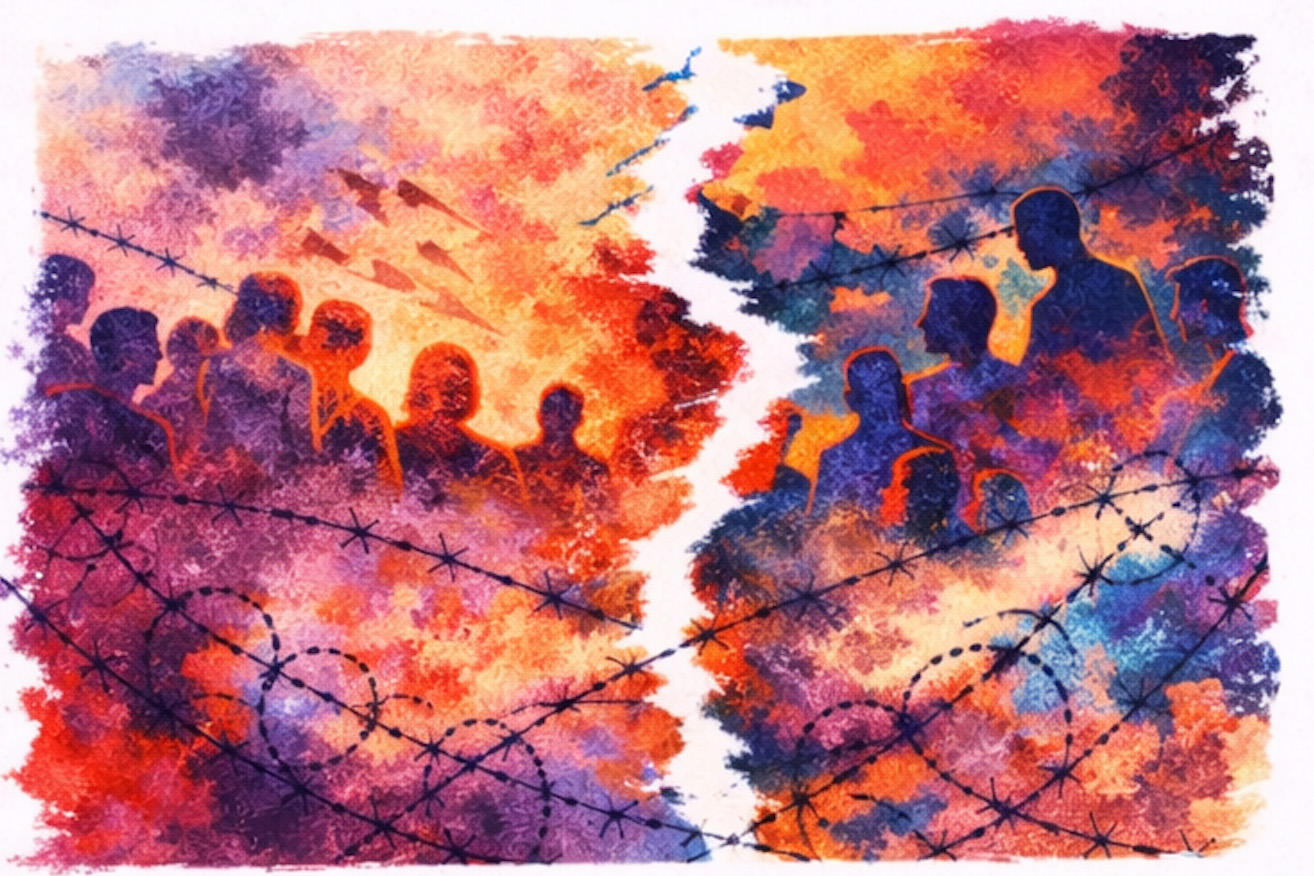
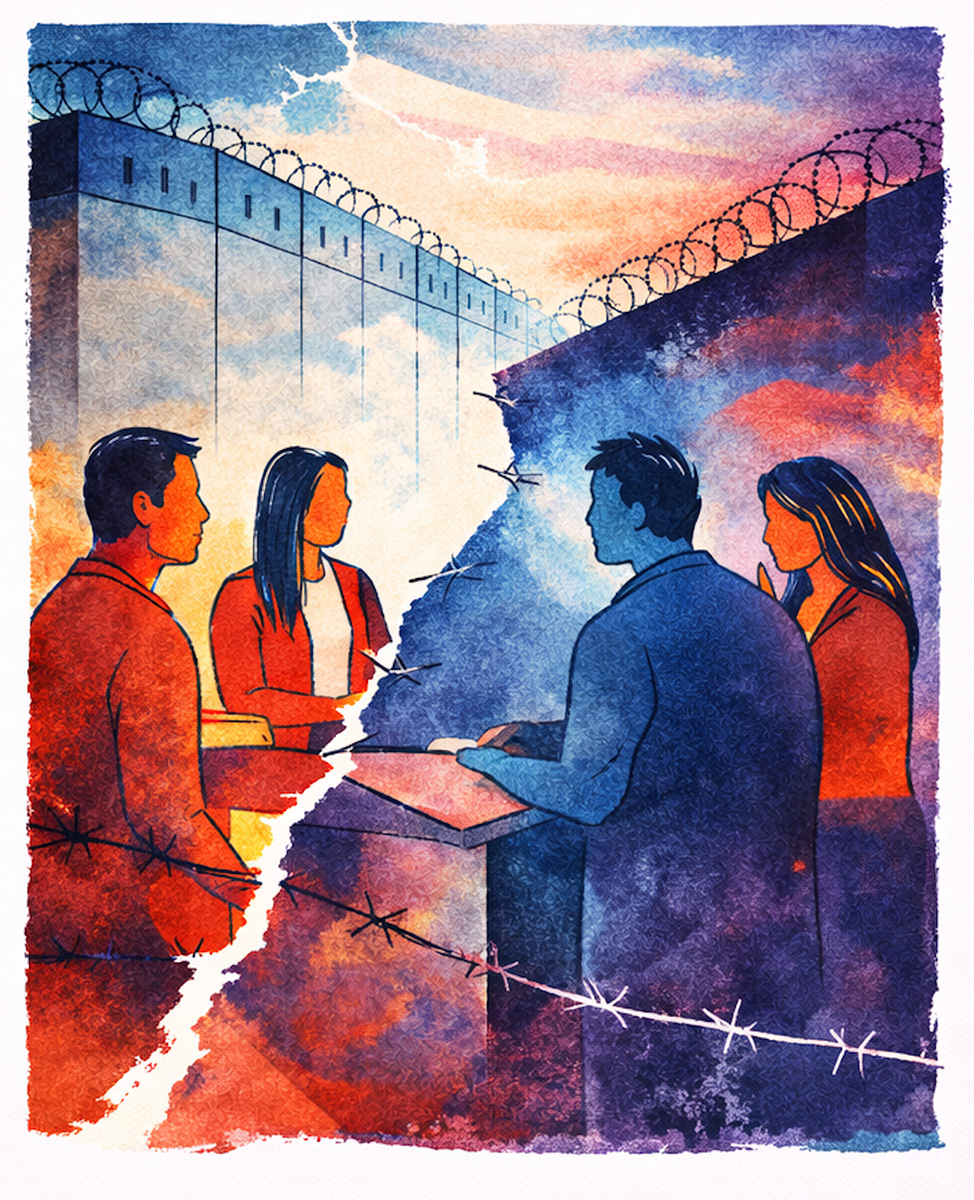
Talking borders AI generated visual

5. Borders as Lived and Negotiated Social Spaces

“Borders are constructed, and it is ourselves who define them.”

Audio file of the complete monologue:

In this oral history interview, the narrator—self-described as a border practitioner—reflects on borders as lived and relational phenomena. Borders are understood not merely as lines or institutions, but as social realities shaped by people who cross them, inhabit them, and actively participate in their construction and transformation over time.

A central theme of the interview is self-positionality. The narrator emphasises that how borders are perceived, defined, and negotiated depends on context, perspective, and lived experience. Borders may assume multiple identities simultaneously, functioning as sites of encounter, regulation, or opportunity, depending on who engages with them and under what conditions.

The interview further conceptualises borders as spaces of negotiation, influenced by shifting power relations—both constraining and enabling—and by the experiences and possibilities available to those involved. In this sense, borders are not static entities but evolving formations whose meaning changes alongside social relations, mobility, and agency.

The interview is presented here as a historically situated reflection on the everyday production of borders rather than as a normative or political statement. Curated in 2026 by editors external to the original 2018 conference context, the account reflects perspectives articulated at the time of recording, which may not fully correspond to present conditions.

  • Interview 5 – Audio 1

  • Interview 5 – Audio 2

  • Interview 5 – Audio 3

6. Imagining the Future of Borders

“What will borders be in the future?”

Audio file of the complete monologue:

In this oral history interview, recorded in Vienna in 2018, the border scholar reflects on the future of borders and the changing frameworks through which bordering processes may be organised. The interview adopts a forward-looking perspective, questioning the continued centrality of the nation-state and exploring how borders might be reshaped by emerging actors and domains.

Central to the interview is the consideration of alternative forms of bordering beyond classical political boundaries. The narrator discusses the potential roles of corporations, digital environments, and online communities, alongside more familiar territorial and urban borders. In doing so, the interview revisits fundamental questions of what constitutes a nation, how cohesion and difference are produced within it, and how borders may function at multiple spatial and social scales.

While political borders remain part of the discussion, the interview places particular emphasis on speculative and analytical reflections on how borders might evolve. Borders are approached as mechanisms that can both separate and connect, prompting reflection on belonging, identity, and interaction in future social formations.

The interview is presented here as a historically situated reflection articulated in 2018 and curated as part of the digital exhibition by the course instructors. It documents one perspective on the possible trajectories of borders rather than offering predictive claims or normative conclusions.

  • Interview 6 – Audio 1

  • Interview 6 – Audio 2

  • Interview 6 – Audio 3

  • Interview 6 – Audio 4

7. Borders as Historically Situated Relations of Integration and Division

“Borders are always interpreted from a position.”

Audio file of the complete monologue:

In this oral history interview, recorded in Vienna in 2018, the border scholar reflects on the Polish–Ukrainian border, drawing on both personal academic positioning and broader socio-political observation. Having studied in the context of the former Polish–Soviet border, the narrator explicitly situates their perspective, using this positionality to contextualise how borders are perceived, experienced, and interpreted.

A central focus of the interview is the transformation of attitudes along the Polish–Ukrainian border. The narrator discusses historical divisions and examines how these have been reshaped over time, particularly through two distinct phases of Ukrainian integration into Poland. These phases are presented as key moments that influenced social relations, perceptions of difference, and everyday bordering practices.

The interview further addresses how borders are interpreted differently depending on perspective, experience, and social position. References to broader European dynamics, including the refugee context, serve to underline the variability and subjectivity inherent in bordering processes. Despite these wider reflections, the Polish–Ukrainian border remains the primary analytical and experiential anchor of the interview.

The interview is presented here as a historically situated account articulated in 2018 and curated as part of the digital exhibition by the course instructors. It documents one perspective on changing border relations and integration processes without advancing normative or predictive claims.

  • Interview 7 – Audio 1

  • Interview 7 – Audio 2

  • Interview 7 – Audio 3

  • Interview 7 – Audio 4

8. Borders as Contingent and Transformative Constructions

“Borders are not truths; they are created, they move, and they change.”

Audio file of the complete monologue:

In this oral history interview, recorded in Vienna in 2018, the border scholar reflects on the contingent and mutable nature of borders, challenging their treatment as fixed or self-evident realities. Borders are described as constructed formations whose apparent stability often obscures their historical, political, and social production.

A central theme of the interview is the experience of changing borders and the effects such changes have on individuals and societies. The narrator reflects on how border transformations are sometimes directly witnessed and at other times only recognised retrospectively, yet in both cases leave lasting traces on perceptions, identities, and relations. Borders are thus framed not only as external structures, but as forces that actively shape those who live with them.

The interview further emphasises the importance of awareness—of recognising borders, their dynamics, and their consequences for both oneself and others. Developing such awareness is presented as a prerequisite for understanding how borders operate, how they exert power, and how they influence interaction, communication, and lived experience.

The interview is presented here as a historically situated reflection articulated in 2018 and curated as part of the digital exhibition by the course instructors. To protect the narrator’s anonymity, minor editorial adjustments were made without altering the substance of the account.

  • Interview 8 – Audio 1

  • Interview 8 – Audio 2

  • Interview 8 – Audio 3

  • Interview 8 – Audio 4

Talking borders AI generated visual

9. Borders as Lived Territorial Regimes

“Borders were never static; they appeared, disappeared, and re-emerged.”

Audio file of the complete monologue:

In this oral history interview, recorded in Vienna in 2018, the border scholar reflects on how early life experiences near the Iron Curtain shaped both their personal understanding of borders and their later academic trajectory. Growing up approximately thirty kilometres from the Austrian–Czech border, the narrator recalls childhood memories of a boundary that was alternately visible and invisible, present and absent, depending on shifting political power.

The interview traces how borders were experienced as geological and territorial demarcations, but also as instruments of political authority. Movement restrictions, surveillance, and administrative control disrupted everyday social life and produced sharp distinctions between “one side” and “the other.” These lived experiences foreground borders not as neutral lines, but as mechanisms that actively structure perception, mobility, and social relations.

Drawing on these early encounters, the narrator situates their scholarly interest in borders within a broader transformation of border studies—from understanding borders as static entities to analysing bordering processes and practices. This shift is further reflected in the narrator’s later academic engagement with other border contexts, including the U.S.–Mexico border, illustrating how personal experience and analytical perspective remain closely intertwined.

The interview is presented here as a historically situated reflection articulated in 2018 and curated as part of the digital exhibition by the course instructors. It documents how borders, experienced early in life, can become enduring analytical lenses rather than fixed territorial facts.

  • Interview 9 – Audio 1

  • Interview 9 – Audio 2

  • Interview 9 – Audio 3

  • Interview 9 – Audio 4

  • Interview 9 – Audio 5

10. Borders as Differentiating and Enabling Cultural Structures

“I think we should accept and celebrate the cultural diversity that borders enable.”

Audio file of the complete monologue:

In this oral history interview, recorded in Vienna in 2018, the border scholar reflects on the differentiating power of borders and their ambivalent role in shaping social and cultural life. Borders are discussed not only as instruments of separation, but also as conditions that enable cultural diversity, difference, and collective identity.

Drawing on historical examples, the interview highlights how borders have served contrasting functions. Some were constructed to keep people out, such as Hadrian’s Wall, while others, like the Berlin Wall, were designed to prevent people from leaving. These examples illustrate that borders are never neutral: they are built with specific intentions and consequences that structure movement, belonging, and exclusion.

Beyond physical and political boundaries, the interview extends the notion of borders to symbolic and cultural domains. Differences in language, academic background, and social position are described as forms of bordering that shape interaction and limit or enable exchange. At the same time, political and territorial borders are framed as conditions under which cultural plurality can emerge and persist.

Rather than presenting borders solely as obstacles, the interview invites reflection on their productive dimensions. It foregrounds the idea that borders, while differentiating, can also create spaces in which cultural diversity becomes visible, meaningful, and worthy of recognition.

  • Interview 10 – Audio 1

  • Interview 10 – Audio 2

  • Interview 10 – Audio 3

  • Interview 10 – Audio 4

  • Interview 10 – Audio 5

11. Mobility as a Relational Border Experience

“Mobility is never just movement; it is shaped by borders, positions, and perspectives.”

Audio file of the complete monologue:

In this oral history interview, recorded in Vienna in 2018, the border scholar reflects on mobility as a lived experience shaped by borders. The interview foregrounds how crossing borders is not a uniform process, but one that differs depending on legal status, social position, and everyday context.

Drawing on a range of perspectives, the narrator moves between personal experience and observed encounters with others, including truck drivers, border officials, and family members. These perspectives illustrate how mobility is negotiated differently by various actors and how borders structure interaction, delay, access, and belonging in unequal ways. Citizenship, professional roles, and institutional authority emerge as key factors that shape how borders are encountered and experienced.

Rather than presenting mobility as a purely individual practice, the interview highlights its relational character. Mobility is produced through interaction with infrastructures, regulations, and other people, making borders sites where multiple perspectives intersect. The interview thus reveals how borders operate not only as territorial limits, but as social arrangements that organise movement and differentiate experiences of mobility.

The interview is presented here as a historically situated reflection articulated in 2018 and curated as part of the digital exhibition by the course instructors. It documents how mobility experiences across borders are constructed through perspective, position, and everyday practice.

  • Interview 11 – Audio 1

  • Interview 11 – Audio 2

  • Interview 11 – Audio 3

  • Interview 11 – Audio 4

  • Interview 11 – Audio 5

12. Overall Narrative: Encapsulating Borders

“Borders are experienced as enclosing structures that shape perception, movement, and social life.”

Audio file of the complete monologue:

In this oral history interview, recorded in Vienna in 2018, the border scholar reflects on borders as encapsulating structures—frameworks that do not merely separate territories, but enclose social relations, perceptions, and everyday practices. Borders are described as environments that condition how individuals move, interact, and understand their position within wider political and social orders.

Drawing on examples ranging from migration and refugee experiences to everyday encounters with administrative and symbolic boundaries, the interview highlights how borders operate simultaneously at multiple levels. Borders emerge as political instruments, but also as lived realities that affect identity, security, and belonging. The narrator emphasises that borders often become most tangible not at the moment of crossing, but through prolonged exposure to systems of control, categorisation, and surveillance.

The interview further suggests that borders encapsulate not only space, but also narratives. They organise stories about who belongs, who is excluded, and how difference is managed. In this sense, borders are not static lines, but dynamic containers that shape social experience over time.

The interview is presented here as a historically situated reflection articulated in 2018 and curated as part of the digital exhibition by the course instructors. It invites reflection on how borders function as enclosing structures that permeate political, social, and personal dimensions of life.

  • Interview 12 – Audio 1

  • Interview 12 – Audio 2

  • Interview 12 – Audio 3

  • Interview 12 – Audio 4

13. Overall Narrative: Borders as Uniquely Experienced yet Structurally Shaped Phenomena

“Every experience of a border is unique, even though borders follow recurring structures.”

Audio file of the complete monologue:

In this oral history interview, recorded in Vienna in 2018, the border scholar reflects on the individualised experience of borders and the ways in which personal encounters with borders are shaped by broader structural conditions. While borders are often discussed in abstract or institutional terms, the interview foregrounds how they are lived, perceived, and interpreted differently by each individual.

A central theme of the interview is the tension between uniqueness and regularity. The narrator emphasises that no two border experiences are identical, as they are influenced by biography, social position, mobility, and situational context. At the same time, these experiences are not arbitrary: they are patterned by legal regimes, administrative procedures, and shared cultural understandings of borders and belonging.

The interview highlights how borders become meaningful through everyday interaction—through moments of crossing, waiting, categorisation, or exclusion. These encounters reveal how personal perception and structural constraint intersect, producing experiences that are singular yet recognisable across different contexts.

Presented as a historically situated reflection articulated in 2018, the interview is curated as part of the digital exhibition by the course instructors. It invites reflection on how borders are simultaneously lived as unique events and organised through enduring social and political structures.

  • Interview 13 – Audio 1

  • Interview 13 – Audio 2

  • Interview 13 – Audio 3

  • Interview 13 – Audio 4

  • Interview 13 – Audio 5

14. Overall Narrative: Borders as Institutional Mediators of Inequality
“What drives the difference in outcomes is not culture or genetics, but human institutions.”

Audio file of the complete monologue:

In this oral history interview, recorded in Vienna in 2018, the border scholar reflects on how borders operate through institutions to produce unequal life outcomes. Drawing on historical comparisons and thought experiments, the interview foregrounds borders as mechanisms that mediate access to rights, resources, and opportunities rather than as mere territorial divisions.

A recurring theme is the contrast between individuals or populations who share similar starting conditions but experience radically different trajectories depending on the institutional frameworks on either side of a border. Through references to the United States–Mexico border, divided Germany during the Cold War, and the Korean peninsula, the narrator illustrates how political systems, economic regimes, and social infrastructures shape everyday life over time.

The interview emphasises that borders work indirectly: their effects are often not immediate, but cumulative. Institutions—such as welfare systems, labour markets, education, and migration control—translate borders into long-term economic, social, and psychosocial consequences. These differences become visible in patterns of mobility, prosperity, security, and social participation.

Rather than treating borders as fixed lines or cultural fault lines, the interview frames them as institutionally sustained processes that organise inequality across space and generations. Presented here as a historically situated reflection articulated in 2018, the interview is curated as part of the digital exhibition by the course instructors and invites critical reflection on how borders shape life chances through the structures that uphold them.
  • Interview 14 – Audio 1

  • Interview 14 – Audio 2

  • Interview 14 – Audio 3

  • Interview 14 – Audio 4

  • Interview 14 – Audio 5

  • Interview 14 – Audio 6