Faculty of Science, Technology and Medicine
 Faculty of Law, Economics and Finance
 Faculty of Humanities, Education and Social Sciences
 Interdisciplinary Centre for Security, Reliability and Trust
 Luxembourg Centre for Systems Biomedicine
 Luxembourg Centre for Contemporary and Digital History
 Luxembourg Centre for European Law
 Luxembourg Centre for Socio-Environmental Systems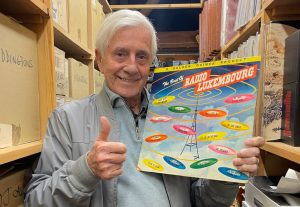
WORLD RADIO DAY 2026
On 5 October 1962, many Europeans got their first taste of the Beatles when the world première of the hit song Love Me Do was broadcast over the airwaves of Radio Luxembourg. From London to Moscow, from Lisbon to Athens, thousands of young people were listening, sometimes in secret under the covers, to this new music – which to older generations seemed unsettling, even subversive. Every night, over the crackly, hissing signal, Radio Luxembourg helped turn pop music into a ubiquitous cultural language, carving out a role for radio as a vehicle of modernity, a place where the imagination could run wild, and also to some extent a space for political transition, including beyond the Iron Curtain.
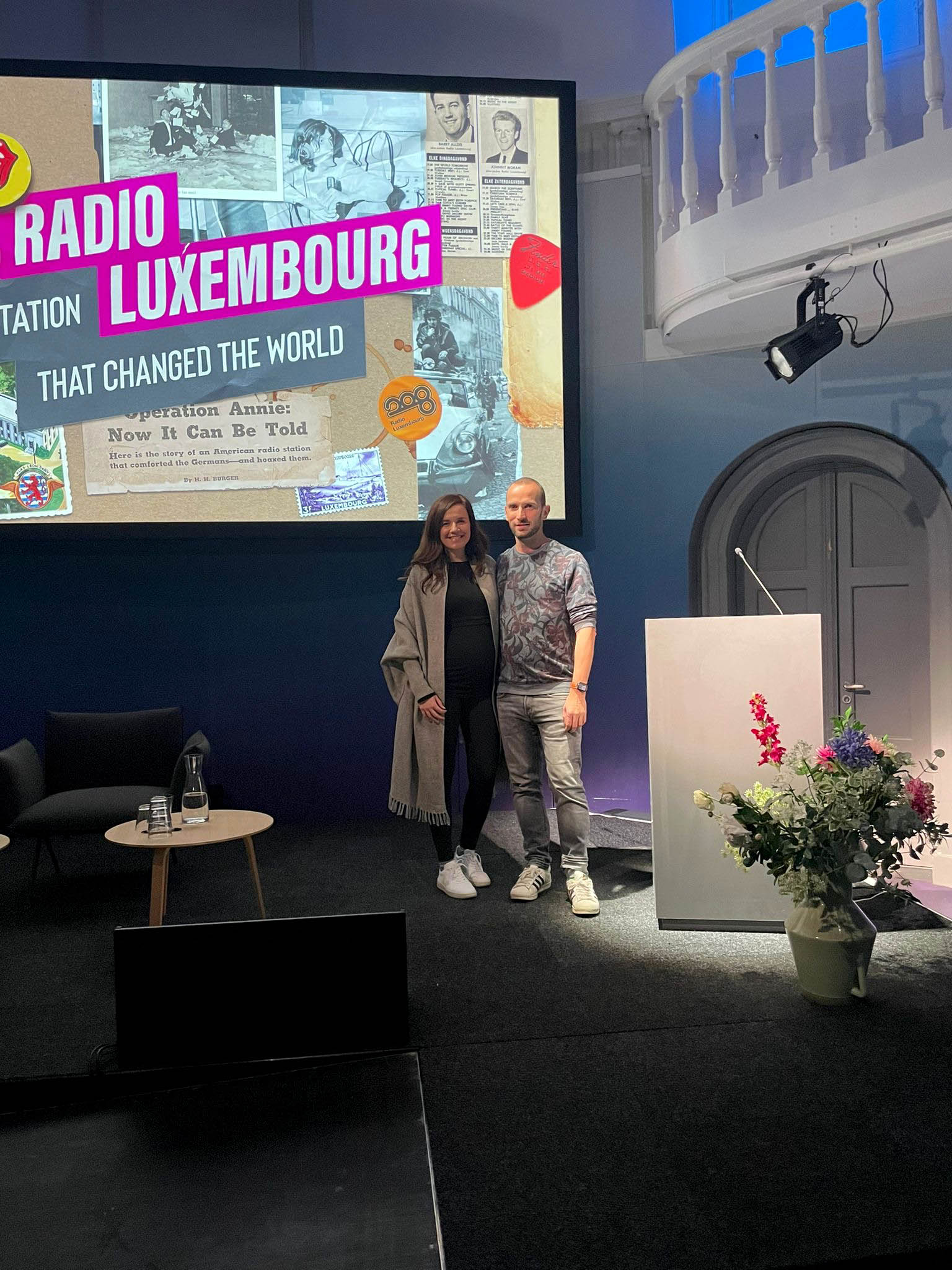
Dominique and Bernard during the various meetings with industry representatives at the IDFA International Documentary Filmfestival Amsterdam
It is this complex cross-border narrative that Dominique Santana and Bernard Michaux, two fans of radio and storytelling, are piecing together. Dominique is a researcher and filmmaker at the Luxembourg Centre for Contemporary and Digital History at the University of Luxembourg, and Bernard is a producer at Samsa Film. When Dominique first raised the idea for the project in 2022, she had a clear ambition, namely to go beyond the nostalgia and examine Radio Luxembourg as a media, cultural and political phenomenon in its own right.
In the hallowed corridors of Villa Louvigny in Luxembourg City, DJs and presenters would bump into each other, chat about the latest hit singles, comment on letters from listeners… and then don their headphones and settle into their studios. Like a Tower of Babel for the airwaves, the Luxembourgish, French, English, German and Dutch studios sat side by side, and together their broadcasts covered a large part of Europe. This was a rare privilege for a commercial radio station in the 1950s and 1960s, a time when most stations were broadcasting to a domestic audience and their programmes were not accessible beyond national borders.
In the 2000s, Bernard Michaux, then a young student fascinated by the international impact of Radio Luxembourg, began interviewing former DJs in London, including Keith Fordyce, Pete Murray, Paul Burnett and Ollie Henry. Dominique has now added several more interviews to the collection, creating a unique oral history archive. To quote just one interviewee, former Luxembourg City Mayor Colette Flesch, who sadly passed away recently, “Radio Luxembourg was an example of what a modern radio station could be. And that made it hugely popular with listeners, giving it an influence over radio and television in general that went far beyond our country’s borders. Radio Luxembourg was a very good ambassador for us, and that’s why politicians also took an interest in it.”
The project also involves extensive archival research. One of the most significant discoveries is hundreds of letters sent from Radio Luxembourg listeners in East Germany, intercepted by the Stasi during the Cold War and found in Berlin. These letters, which never made it as far as Villa Louvigny, are a poignant reminder of how radio served as a space for dreams, desires and symbolic freedom for listeners who had no direct access to Western popular culture.
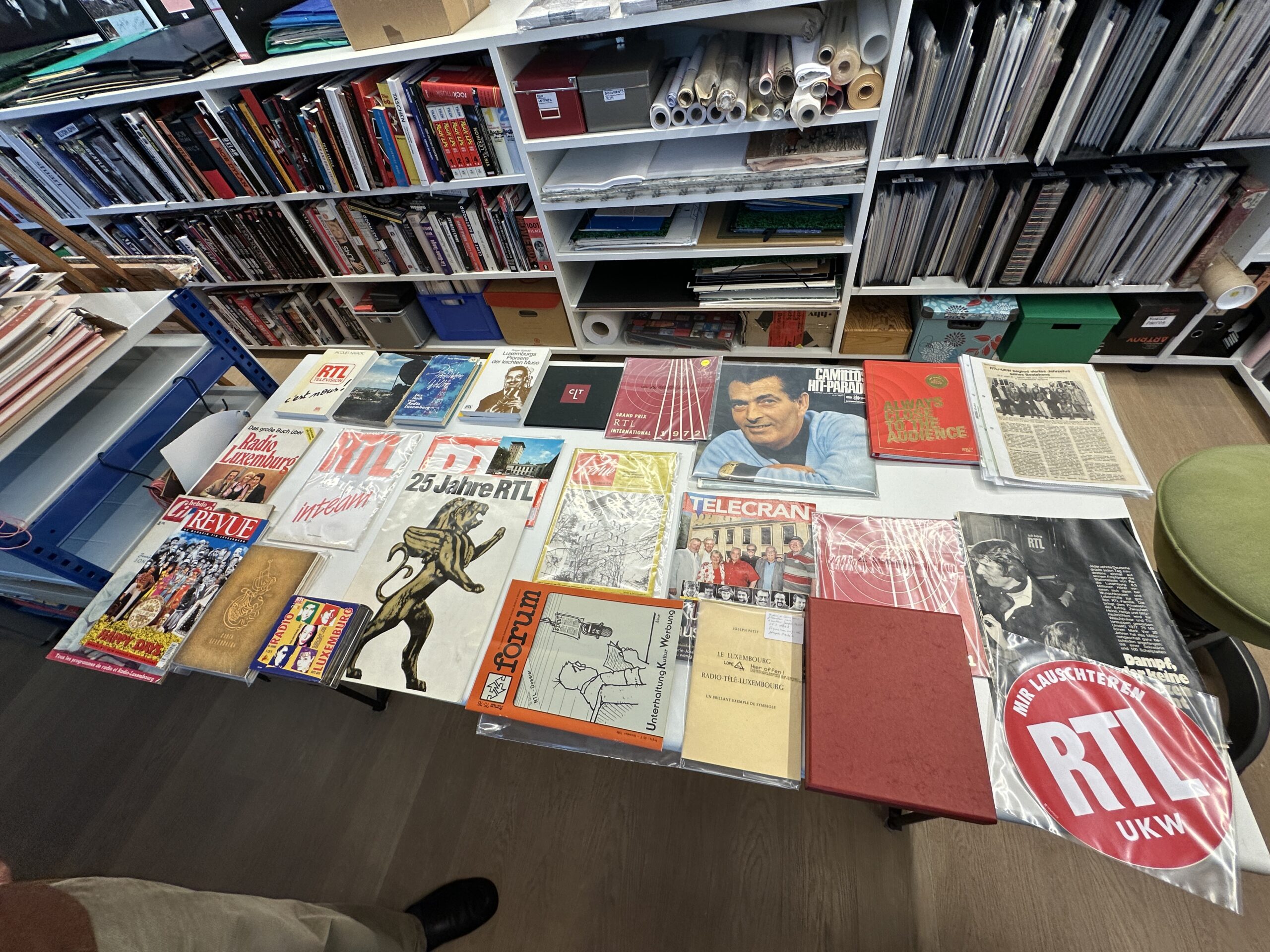
Broad selection of magazines and keepsakes neatly arranged on a table at Romain Hoffmann’s place
A selection of these letters, together with multiple accounts from former DJs and presenters – including Désirée Nosbusch, Pilo Fonck, Georges Lang, Tony Prince, Frank Elstner, Benny Brown, Erna Hennicot-Schoepges and Aline Pütz –, as well as engineers, international listeners and Luxembourgish politicians such as Colette Flesch, Jacques Santer and Jean-Claude Juncker, have been compiled to create the immersive audio experience “Radio Luxembourg – Ghosts of the Villa”. This unique interactive experience, housed in a vast space in Villa Louvigny, the home of Radio Luxembourg, is an opportunity for the public to explore the history of the station through sound.
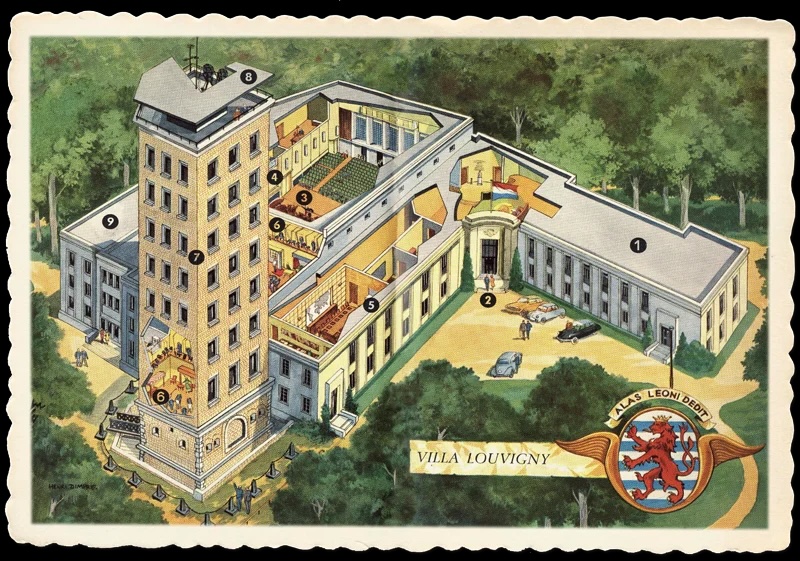
The Villa Louvigny housed the broadcast studios for the different language services as well as a TV station.
From 4 March to 3 April 2026, the exhibition “Radio Luxembourg – Ghosts of the Villa” offers an exclusive opportunity to step inside the legendary Villa Louvigny and let the sounds guide you through its remarkable history.Rooms pulse with the voices of DJs, pop stars and listeners, layered with archival footage, old broadcasts and atmospheric lighting.Every step unlocks a new story in this immersive experience that brings Villa Louvigny to life.At the same time, a podcast series, produced by students from the University of Luxembourg under the guidance of Dominique Santana and Andreas Fickers, will provide new narratives and perspectives on the history of Radio Luxembourg.
Over the next few years, the project will continue to be developed in multiple formats, each a unique opportunity to find out more about Radio Luxembourg. The website, currently mainly used for a crowdsourcing campaign, will become the online gateway to the project, offering access to a wealth of information, archive documents and analysis. In spring 2027, a documentary will hit screens in Luxembourg, charting the remarkable story of Radio Luxembourg through the medium of film.
Finally, in keeping with the roaming spirit of the station, the project will take to the road, in Luxembourg and abroad, with the support of local embassies. A multilingual teaching aid will also be developed and made available free of charge so that the story of Radio Luxembourg can be taught in schools, giving younger generations an insight into how a radio station helped forge cultural practices, perceptions and ways of listening that still resonate today.
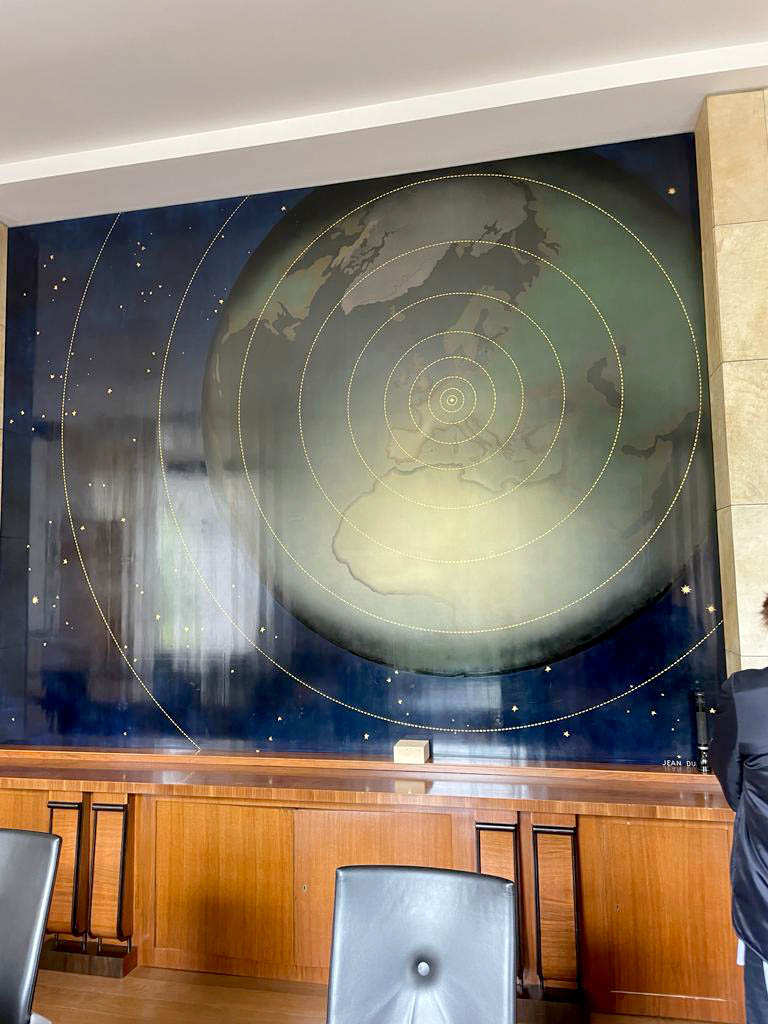
The former conference room of the Villa.