Faculty of Science, Technology and Medicine
 Faculty of Law, Economics and Finance
 Faculty of Humanities, Education and Social Sciences
 Interdisciplinary Centre for Security, Reliability and Trust
 Luxembourg Centre for Systems Biomedicine
 Luxembourg Centre for Contemporary and Digital History
 Luxembourg Centre for European Law
 Luxembourg Centre for Socio-Environmental Systems
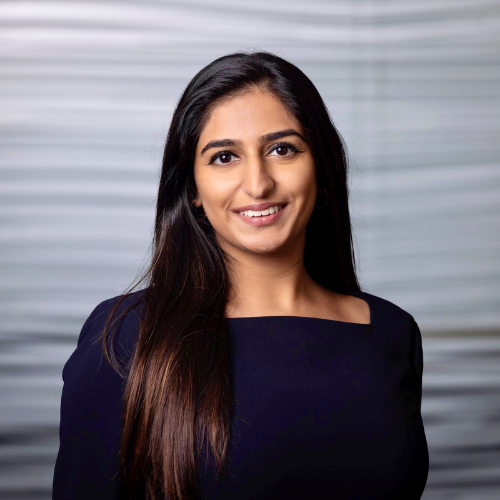
Recently, SnT welcomed Sabrina Alam as the new Space Lead, strengthening our growing activities across the space domain. In the fall, Alam was featured in Forbes Luxembourg’s first 30 under 30 list, in recognition of her breadth of experience across institutional, industrial and strategic parts of the space sector. She has worked at NASA, ESA, and SES, where she led work on space sustainability. Most recently she was at KPMG, where she served as EU Space Lead. Already making her mark on SnT’s space activities, we sat down with Alam to learn about her background, perspective on the space sector, and what she will be bringing to the role.
1. What is your role at SnT?
The space and defence industry are evolving at a rapid pace, and what has been missing is the glue that brings the research and early-stage R&D together with industry, and how requirements are defined. I have been a researcher but also worked in industry. I love my role here at SnT because it is using all that knowledge I have gained to bring everything together.
Here I get to be that glue between the research world and industry or public organisations. In this role I am embedded in the current space research and understand the cutting-edge science that is relevant for real-world applications. I then communicate these opportunities to industry and government. In those conversations I learn about their operational realities on the ground, and that helps bring new topics back to the table at SnT. This cycle helps make sure that the research we do is meaningful for industry, and for the public.
2. What drives you to do this work?
Everywhere I go I want to work hard and make a meaningful difference, and I think people appreciate sincerity when that intention is genuine. My long-term ambition has always been to contribute in a way that makes the world a little better, but I have never tried to define too rigidly what that should look like. Instead, I have stayed grounded in something simple: study hard, work hard, and remain open to where that effort can lead.
My passion or fascination with space is what directed me onto the path I am on today. I have worked at NASA, ESA, and more recently SES, the global satellite operator based here in Luxembourg. It was there that I felt most able to combine my passion for space with my drive to make the world a better place. At SES I built up the sustainability function, which over time developed into a dedicated team. To do this I pursued an MBA focused on Environmental, Societal, and Governance (ESG), and this new degree plus my technical qualifications made this ambition a reality. Once the department was created, I initiated a life cycle assessment of the entire value chain. This was complex because SES is a satellite operator and relies on external companies for both satellite manufacturing and launch. To carry out a full life-cycle assessment, I needed those different contractors to work closely with me. I was able to build those relationships and together we created something that ultimately benefited the wider industry. The work we did stands as one of the first life cycle assessments in the space industry across different corporate entities. I am very proud of that, and what it means for sustainability initiatives in space going forward.
3. Where did that path start?
When I was in school, I was told that pursuing a STEM degree would be out of reach for me. Looking back, I realise that this statement had much more to do with the expectations around me and the school environment in London, where I come from, than me. At the time, though, it felt like fact. Thankfully, my focus on studying hard and working hard brought me success in maths and sciences despite what I had been told, and that made my Bachelor in Theoretical Physics a reality. My passion for space led me from there, pursuing a Masters in Space Studies from ISU, and then later the MBA at the University of London I completed while at SES.
Now working within the field of space and defence I can appreciate the diversity I bring because of my background, my work experiences, and my personal life. More so, I am not afraid to bring that into service, and that has always proven valuable in any role I take on. This next step at SnT is meaningful to me as it weaves all of my experiences together naturally, for the benefit of researchers, industry and the public.
4. What is the most valuable thing you bring from these experiences?
Since I was about 15 or 16, I have always worked hard and taken on different kinds of jobs. I was a sports coach, worked in different retail stores, tutored, took on internships in data analytics and physics teaching, served as an ambassador for my university, and also spent time working for the UK Department for Transport, all in my early years. All those experiences taught me to respect everyone’s background. I learnt to be open. I never come in with one idea of how things work. I listen to everyone to build that wider perspective. I genuinely feel that people feel heard when I interact with them. Everything is learning, and I take that and build from it.
5. How would you say your unique perspective shapes change?
This is an interesting question because many of the projects and topics I work on involve a number of people, and real change usually happens collectively. At the same time, within those groups, I am aware that my contribution often comes through ideas or perspectives that help move discussions forward in a distinct way.
I am no stranger to being in rooms where I am one of the only women, one of the only people of colour, or one of the youngest people there. What has changed is that I am now increasingly being invited into those rooms in the first place. Having the opportunity to be there, whether in a meeting or on a stage, makes a real difference, because once I am there, I know I have something meaningful to contribute.
6. With such a variety of experiences, why have you come to SnT specifically?
SnT and the University of Luxembourg has a brilliant reputation within the space industry. It is one of the most active universities when it comes to industry projects or joint calls from the various public bodies – the Luxembourg Space Agency (LSA), the European Space Agency (ESA), etc. So many of the companies I have worked with have worked with SnT, whether through joint calls or partnerships. That has left me with the impression that SnT is everywhere, so why wouldn’t I want to be here?
The culture here also speaks to me and my own approach to work. Here there is a focus on innovation, both in research but also in methods of execution. And there is such a strong mindset of collaboration, which feels different to many other academic environments I have known. I have such a passion to use technology to make a difference and solve some of the biggest challenges we have in the world, and SnT embodies how that happens.
7. What are you most excited about?
True to my nature, I am most excited about everything I will be able to learn from the researchers and collaborators. I also am looking forward to supporting SnT’s growing global perspective. We recently signed an MOU with the Berkeley Space Center, and this is an exciting opportunity to build bridges across the Atlantic.