Faculty of Science, Technology and Medicine
 Faculty of Law, Economics and Finance
 Faculty of Humanities, Education and Social Sciences
 Interdisciplinary Centre for Security, Reliability and Trust
 Luxembourg Centre for Systems Biomedicine
 Luxembourg Centre for Contemporary and Digital History
 Luxembourg Centre for European Law
 Luxembourg Centre for Socio-Environmental Systems
Selection for March 2026
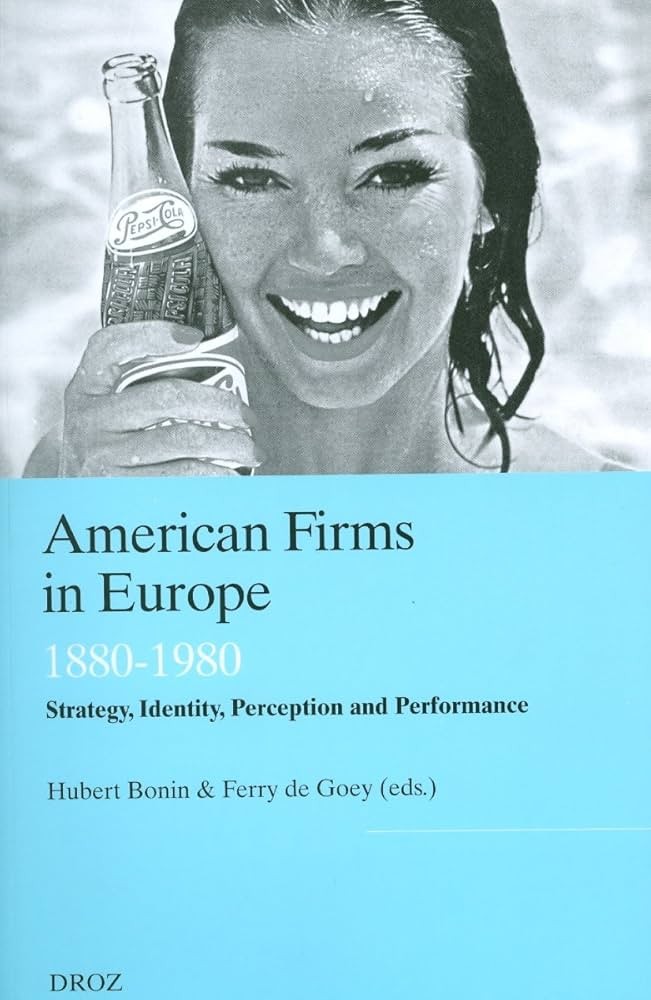
American firms in Europe: strategy, identity, perception and performance (1880-1980)
Hubert Bonin & Ferry de Goey, 2009
How did American companies conquer European markets long before the era of tech giants and platform capitalism? Drawing on nearly a century of history, this rich collective volume offers a deep dive into the strategies, images, and political reception of American firms operating in Europe.
Rather than telling a single story of “Americanisation”, the book reveals a plurality of trajectories shaped by national contexts, industrial sectors, labour relations, and consumer cultures. From corporate strategy to advertising, from public resistance to successful integration, the contributors show how American firms continuously negotiated their place within European societies.
Bringing together leading scholars in business and economic history and framed by a synthetic comparative essay, this volume stands out as a reference work that connects economics, politics, and culture in a truly transnational perspective.
I particularly recommend this book to:
- Bachelor in European Cultures / Bachelor in Social Sciences, where it provides historical depth to questions of European integration, transatlantic relations, and cultural transfer
- Master in European Economic and Financial Criminal Law and Master in European Governance, by offering long-term perspectives on corporate power, regulation, and the interaction between firms and public authorities
- Master in Contemporary European History and research-oriented tracks, as a strong example of comparative, transnational economic history grounded in rich empirical material
- Programmes in economics, management, and political science, where students will find concrete case studies on multinational strategy, international investment, branding, labour relations, and market adaptation
In conclusion, at a time when multinational corporations and global economic influence are under renewed scrutiny, this book provides essential historical depth. It helps readers better understand current debates on corporate power, economic sovereignty, and cultural influence by tracing their origins well before the digital age.