
 Faculty of Science, Technology and Medicine
 Faculty of Law, Economics and Finance
 Faculty of Humanities, Education and Social Sciences
 Interdisciplinary Centre for Security, Reliability and Trust
 Luxembourg Centre for Systems Biomedicine
 Luxembourg Centre for Contemporary and Digital History
 Luxembourg Centre for European Law
 Luxembourg Centre for Socio-Environmental Systems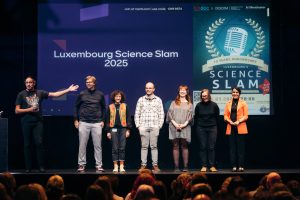
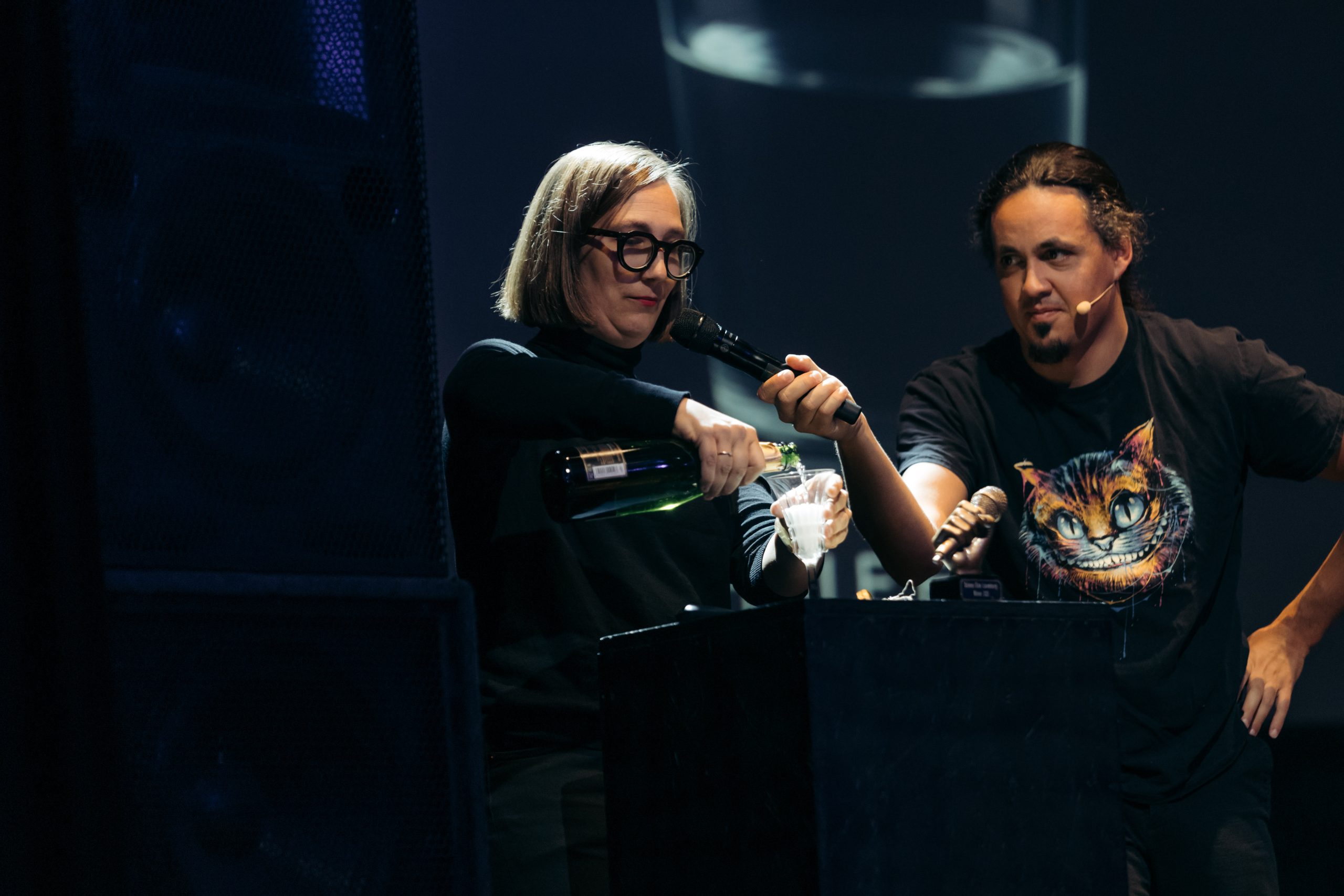
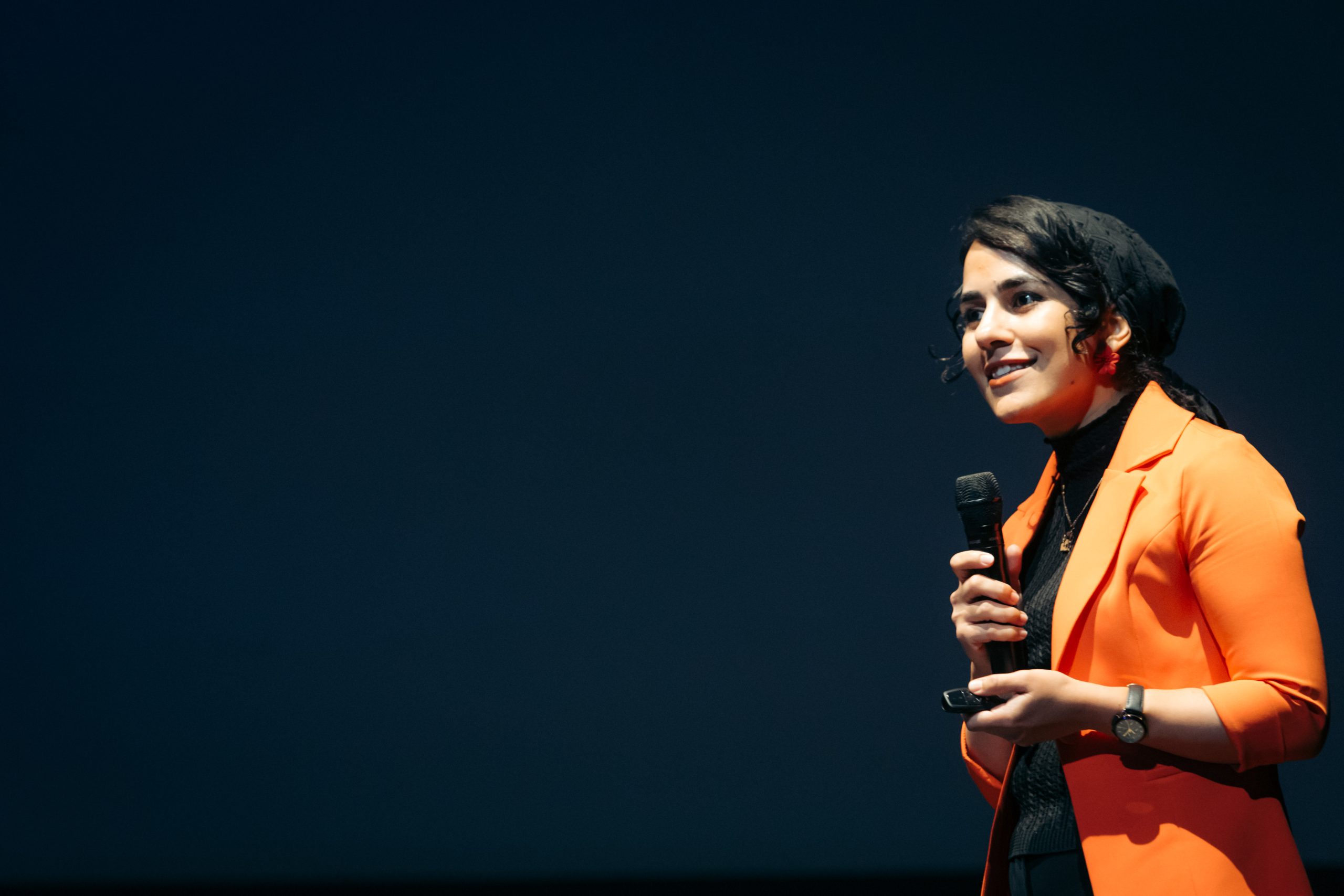
For its 10 years anniversary Luxembourg’s Science Slam moved to the Kulturfabrik in Esch-sur-Alzette. On 26 September 2026 six scientists competed in front of around 150 visitors. They had 10 minutes to present their research in an understandable but also entertaining way covering topics from space research, nursing, psychology, biology and chemistry.
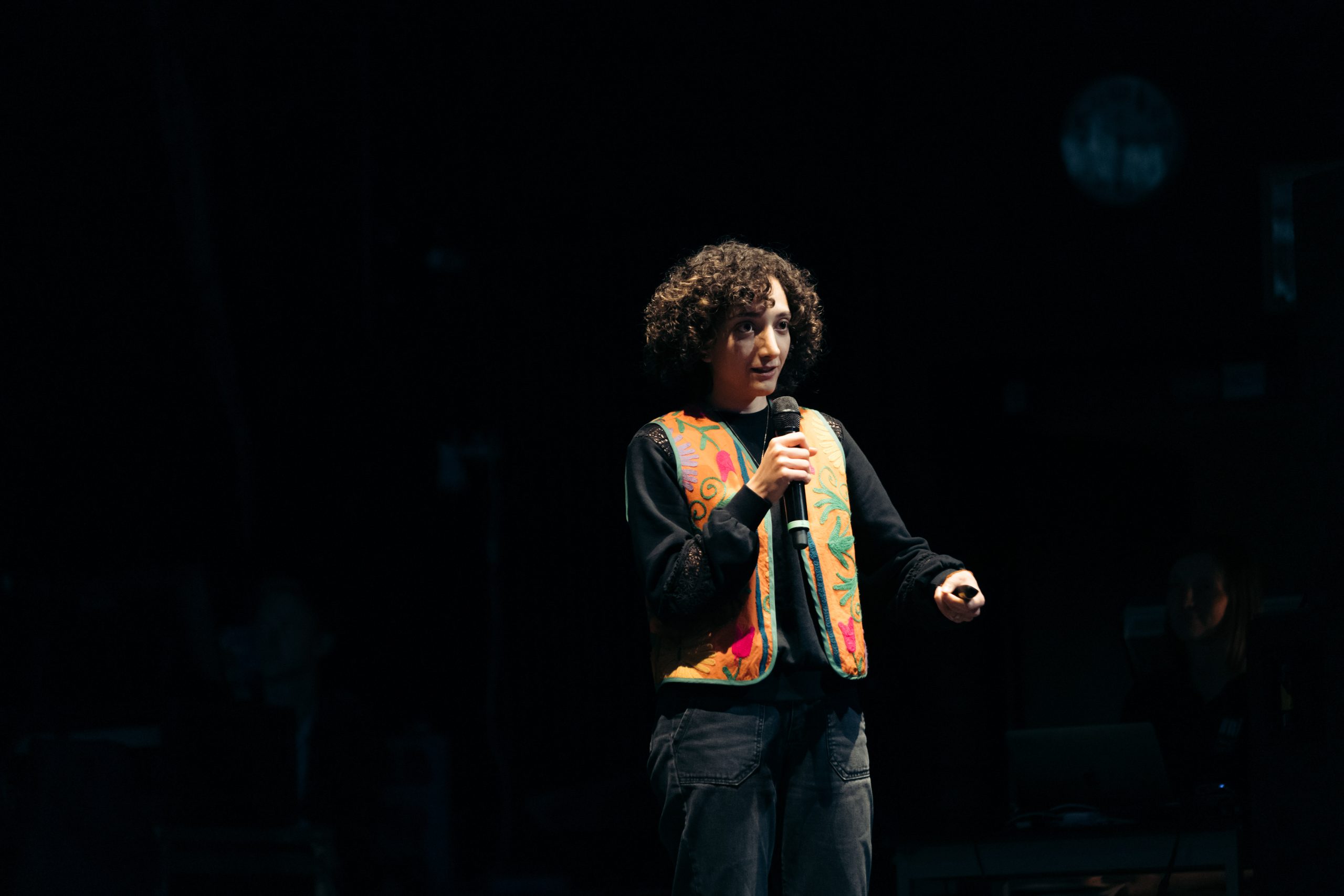
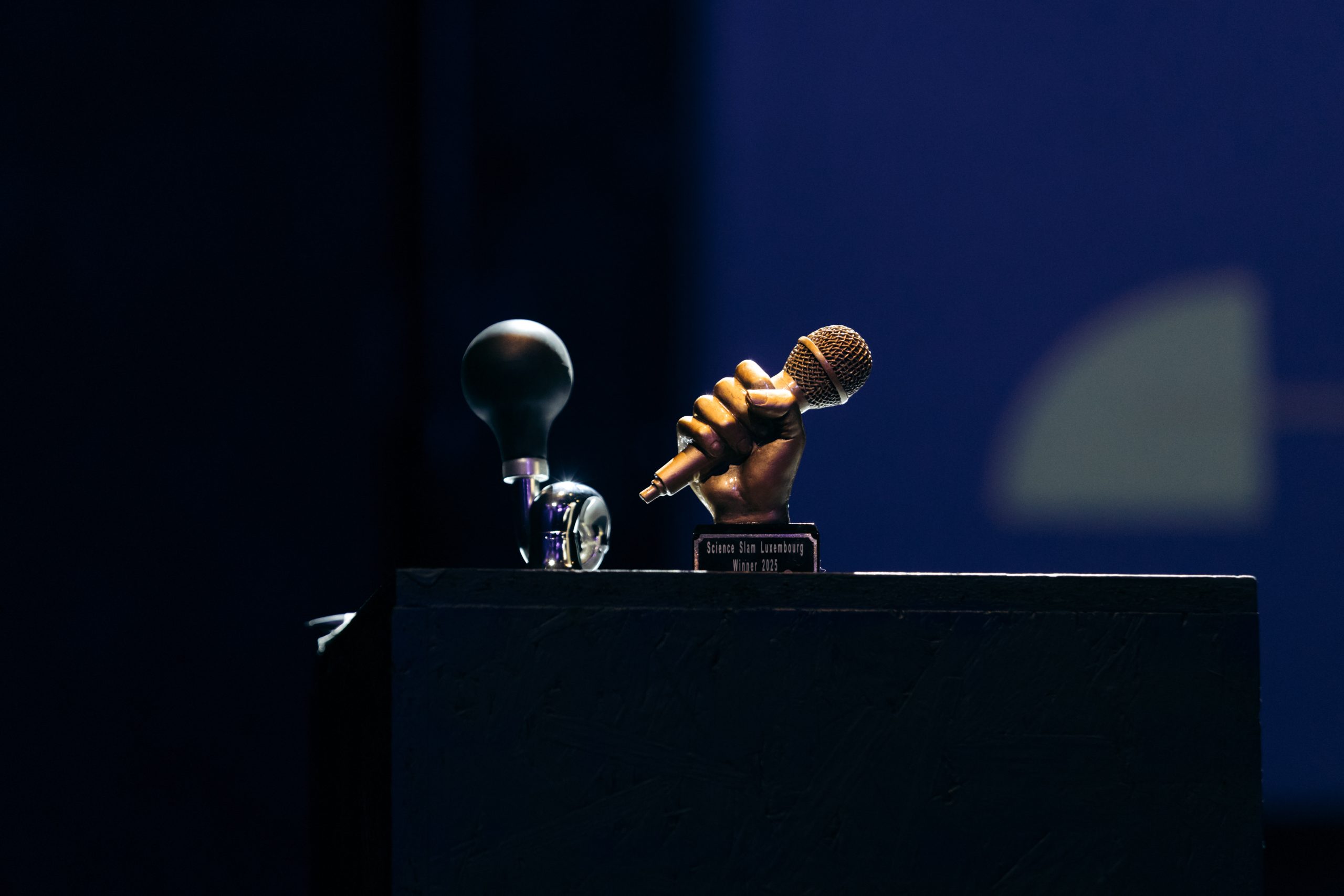
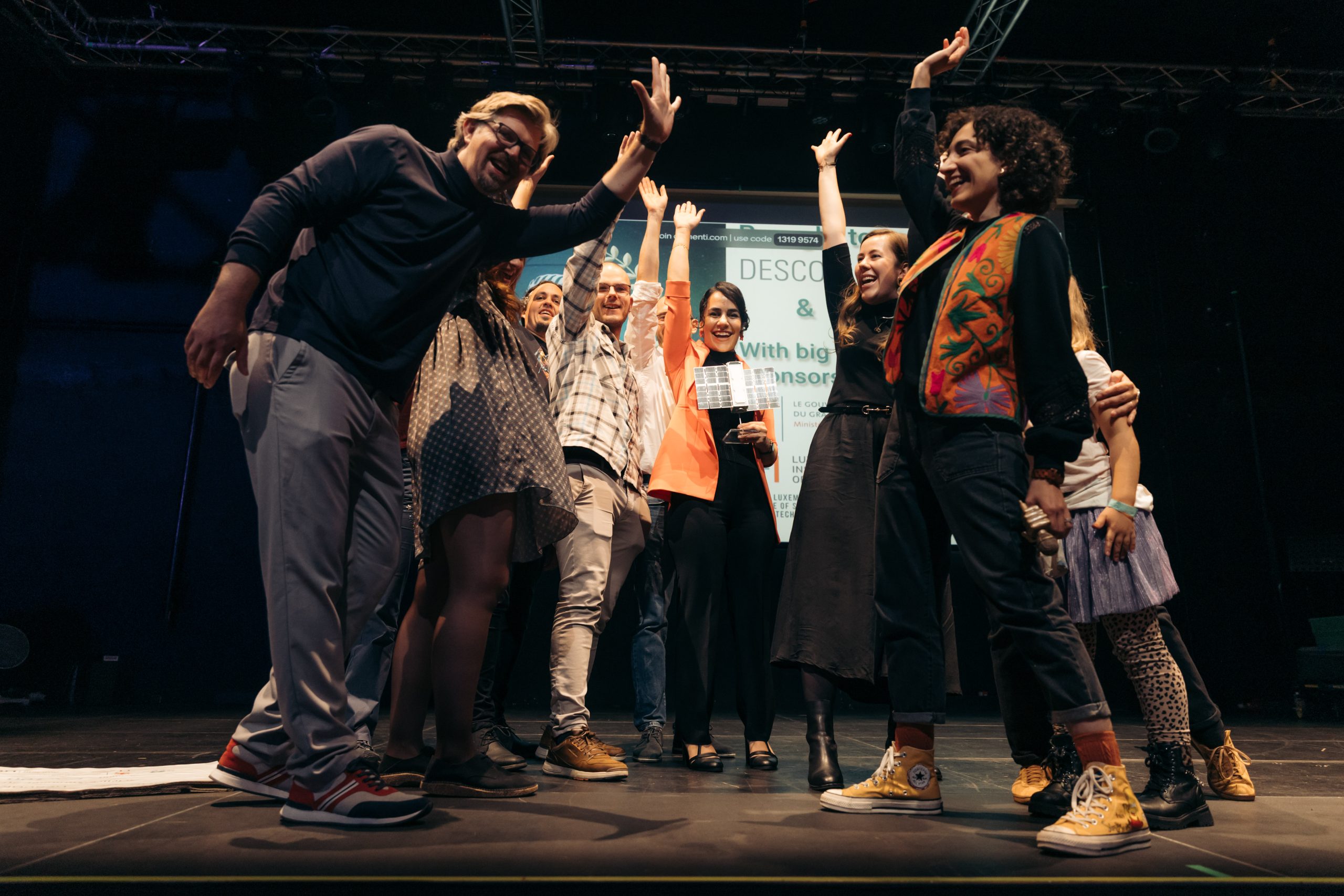
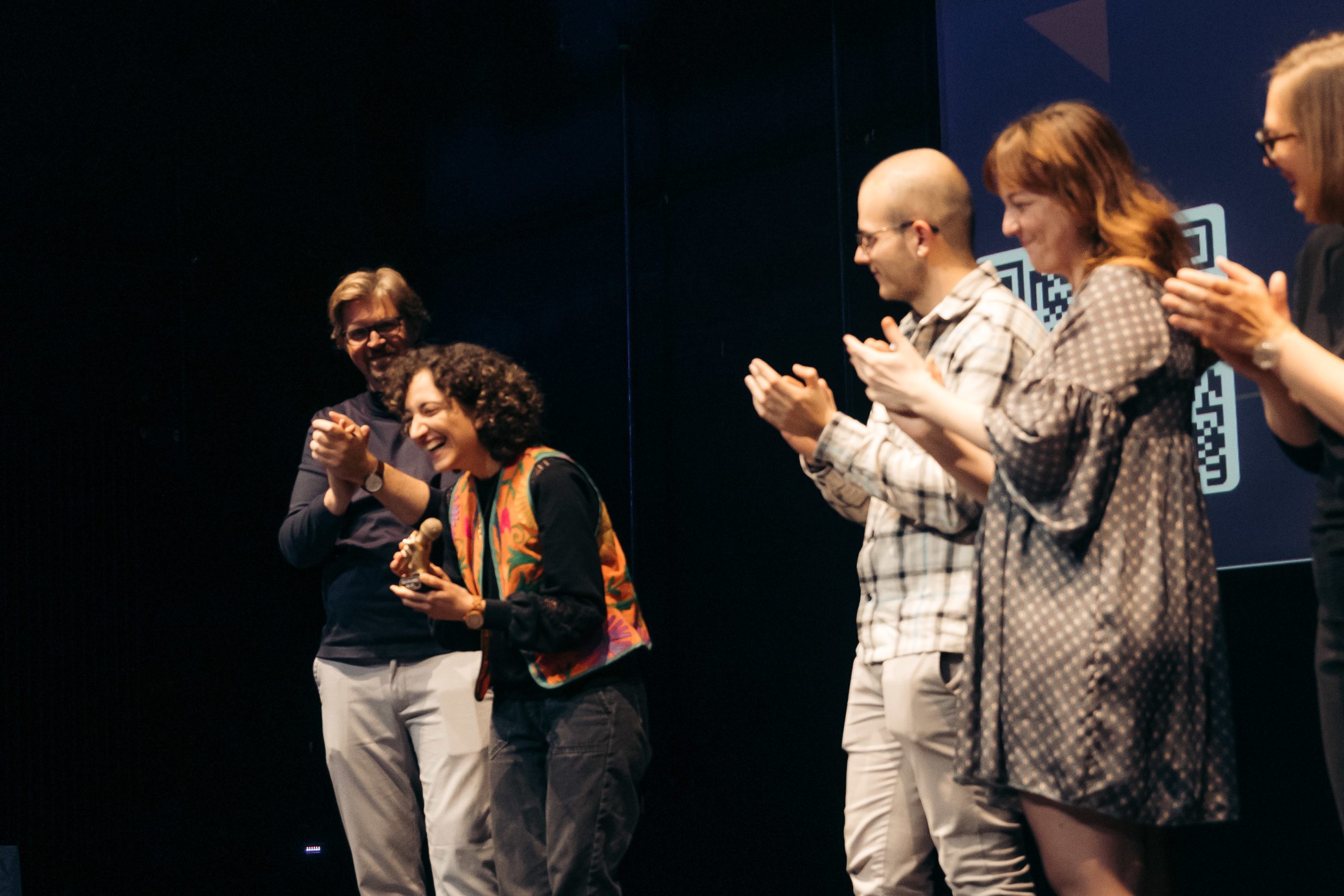
The audience voted for space engineer Niki Sajjad from the Interdisciplinary Centre for Security, Reliability and Trust (SnT) to become Luxembourg’s Science Slam Master 2025. She won the golden trophy with her slam on sustainability in space and an original song she created about satellites. You can also watch a recording of her slam at the end of this interview. Find out more about this year’s winner:
Can you please introduce yourself?
My name is Niki, and I am a postdoctoral researcher in the Space Systems Engineering Research Group (SpaSys) at SnT. I hold a PhD in space engineering, and I am deeply interested in education and outreach and how they can positively transform the world.
Why did you participate in the Science Slam?
I think most people experience loneliness at some point during their PhD. The feeling of working on your own and not sharing much of your work with others happens quite often, especially if you are not part of a large collaborative project. This was my experience for most of my PhD, until I realized that I am happiest when I engage in outreach activities.
I attended different conferences during my PhD, but I wanted to feel more connected with people and to talk about the challenges we currently face in space. Science Slam is exactly the kind of event that connects researchers and their work with the public.
My friend and colleague, Citlali, won the Science Slam last year and she knew about my interest in these activities. She encouraged me to participate, and I just needed that little push to make the decision.
What was your Slam about?
My Slam was based on my PhD research in space sustainability, specifically on tracking tiny satellites in orbit using existing satellites. Over the years, humans have launched a large number of satellites into space, and many of them remain in orbit for a very long time if no disposal mechanism is designed.
One of the biggest challenges is that many small objects remain untracked and can become serious threats to operational satellites through potential collisions. To track these objects, we typically rely on ground-based sensors or dedicated sensors in orbit. My research focuses on reusing existing satellites to take images of small objects in space and estimate their position and orientation.
How did you prepare for it?
I started developing the idea in June and sent a short concept description to the organizing team. All applicants then participated in a workshop in July with Manuel Maidorn and Nicole Paschek to learn about the Science Slam format and how to prepare for it. After the workshop, we submitted a pitch to the organizers, and the selected slammers were announced at the end of July.
I began preparing my material after the announcement. I am interested in a wide range of artistic approaches, including data sonification and animation, and I knew I wanted to include them in my presentation. I started searching for satellite launch data and explored ways to convert it into sound or music that would be understandable to a broad audience.
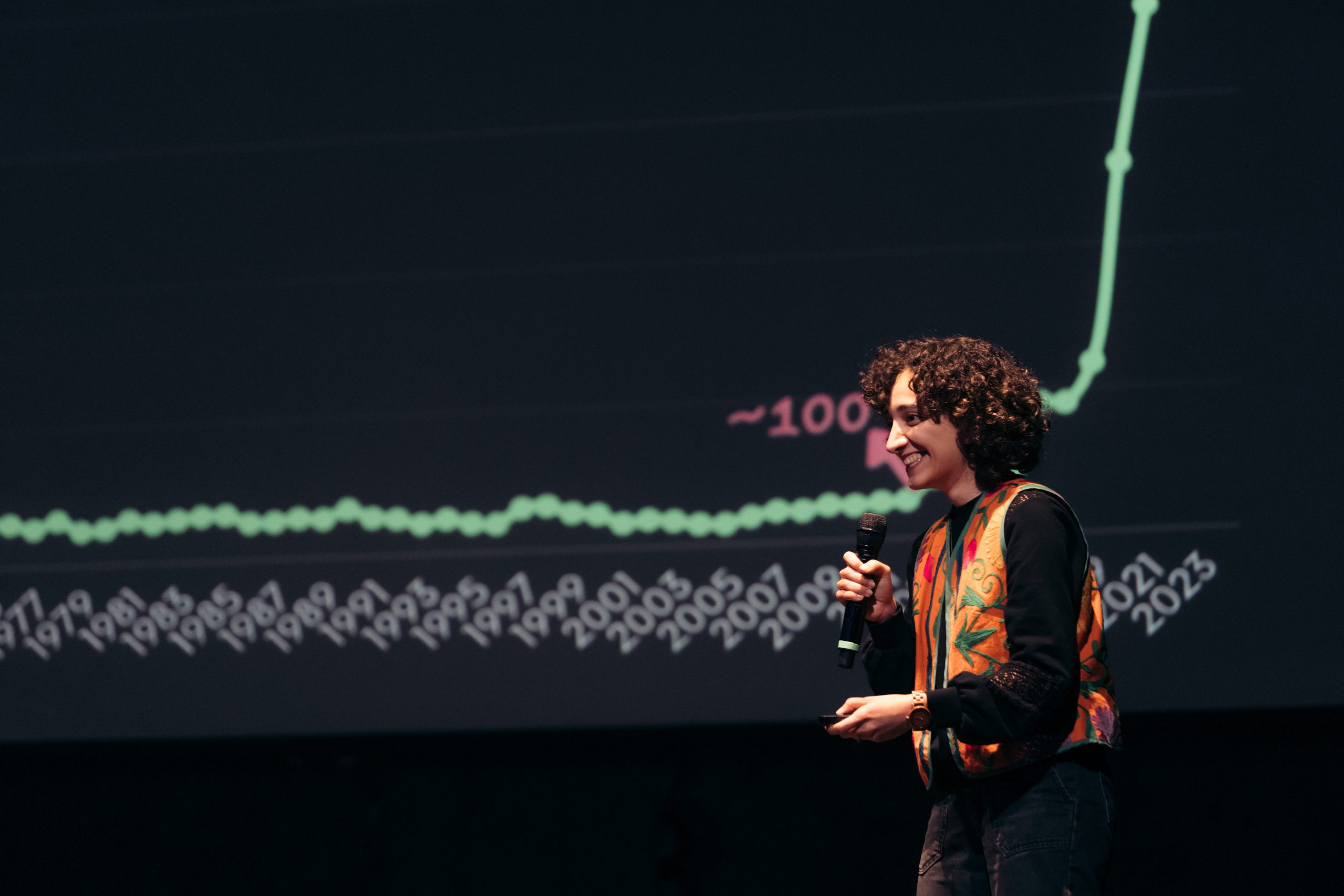
I digitally sonified the data by mapping satellite launches to piano notes, where the pitch represents the satellite’s orbital altitude. The piece starts in 1957 and continues until 2025, illustrating how frequently we have been launching satellites and how crowded Earth’s orbits have become. Creating this piece took about two weeks, and I also developed an animation to visually represent the issue.
After discussing the structure with Manuel, we decided to open the presentation with the animation and conclude with the sonified data, to clearly present the problem and leave a strong final impression. In between, I included slides presenting the challenges, solutions, and some results of my PhD research. I finalized the complete story just a few days before the Science Slam!
What was most challenging to you?
Accessing reliable data for sonification was the most challenging part. I wanted to present the information as accurately and clearly as possible, but collecting comprehensive data on all satellite launches is a long and complex process.
Another challenge was communicating science to a public audience. People come from very different backgrounds, and the terms we use daily in research may be unfamiliar to others. To address this, I tested my presentation with friends and family from different backgrounds to ensure it was clear and not overly complex.
Finally, it was challenging to create an engaging story that maintained interest throughout the presentation. I tried to keep it entertaining by incorporating artwork, while still conveying the core message of my research.
How did you like the event?
I loved it! The audience was incredibly passionate and kind, the organizers managed everything smoothly, and the mentors were always available and generous in sharing their knowledge. The atmosphere was friendly rather than competitive, which helped reduce stress while presenting. The slammers were very supportive of one another, and I learned a lot from them.
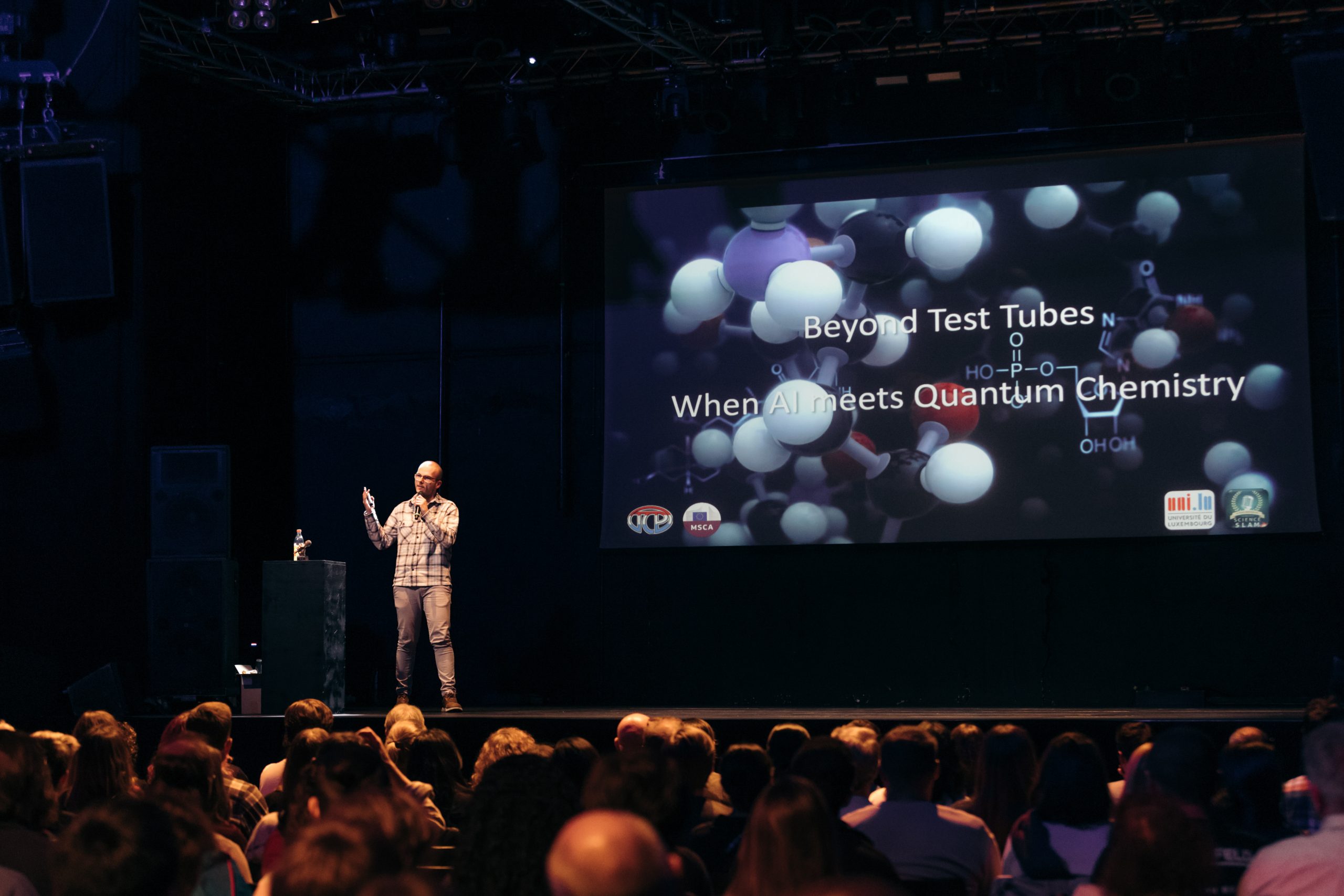
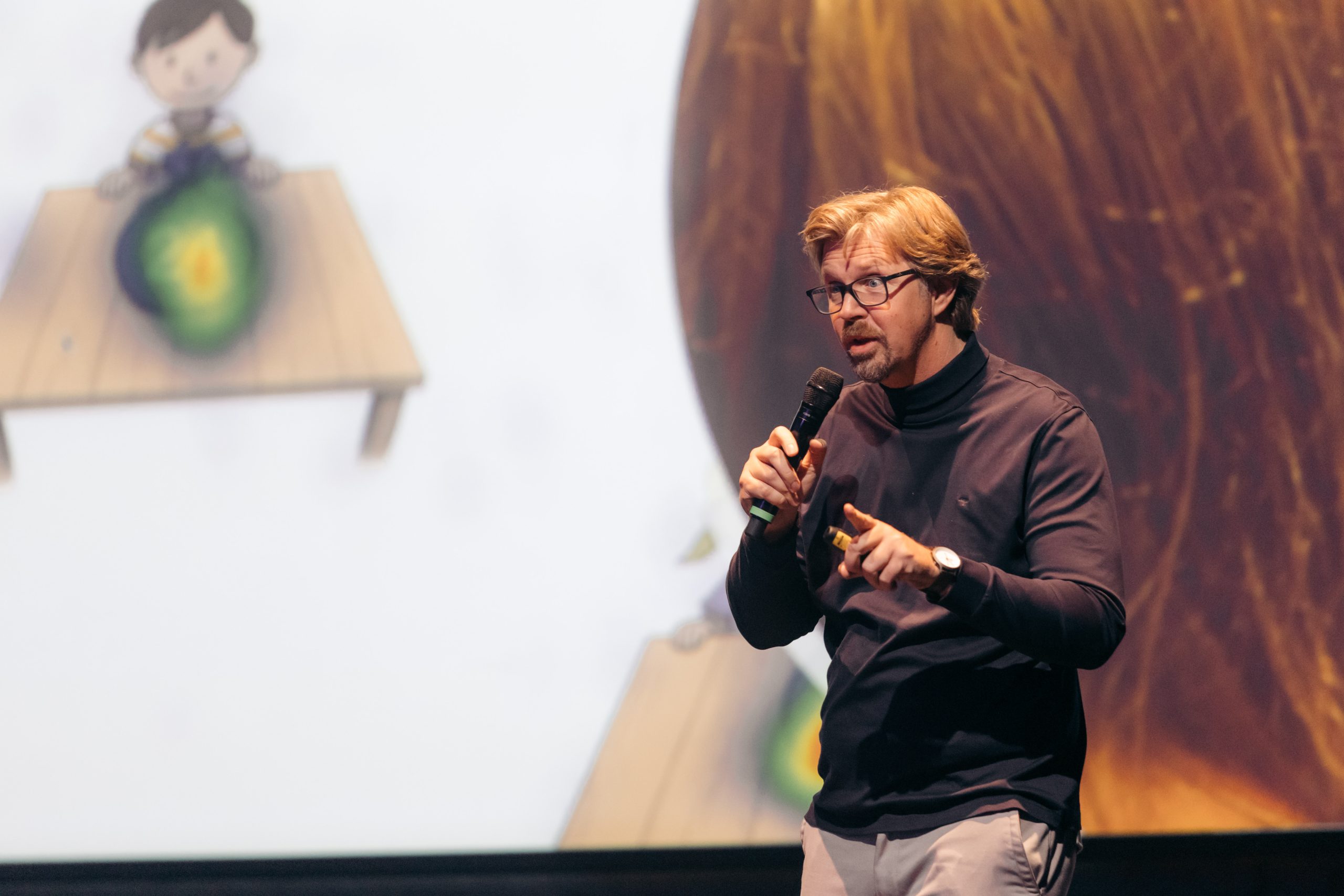
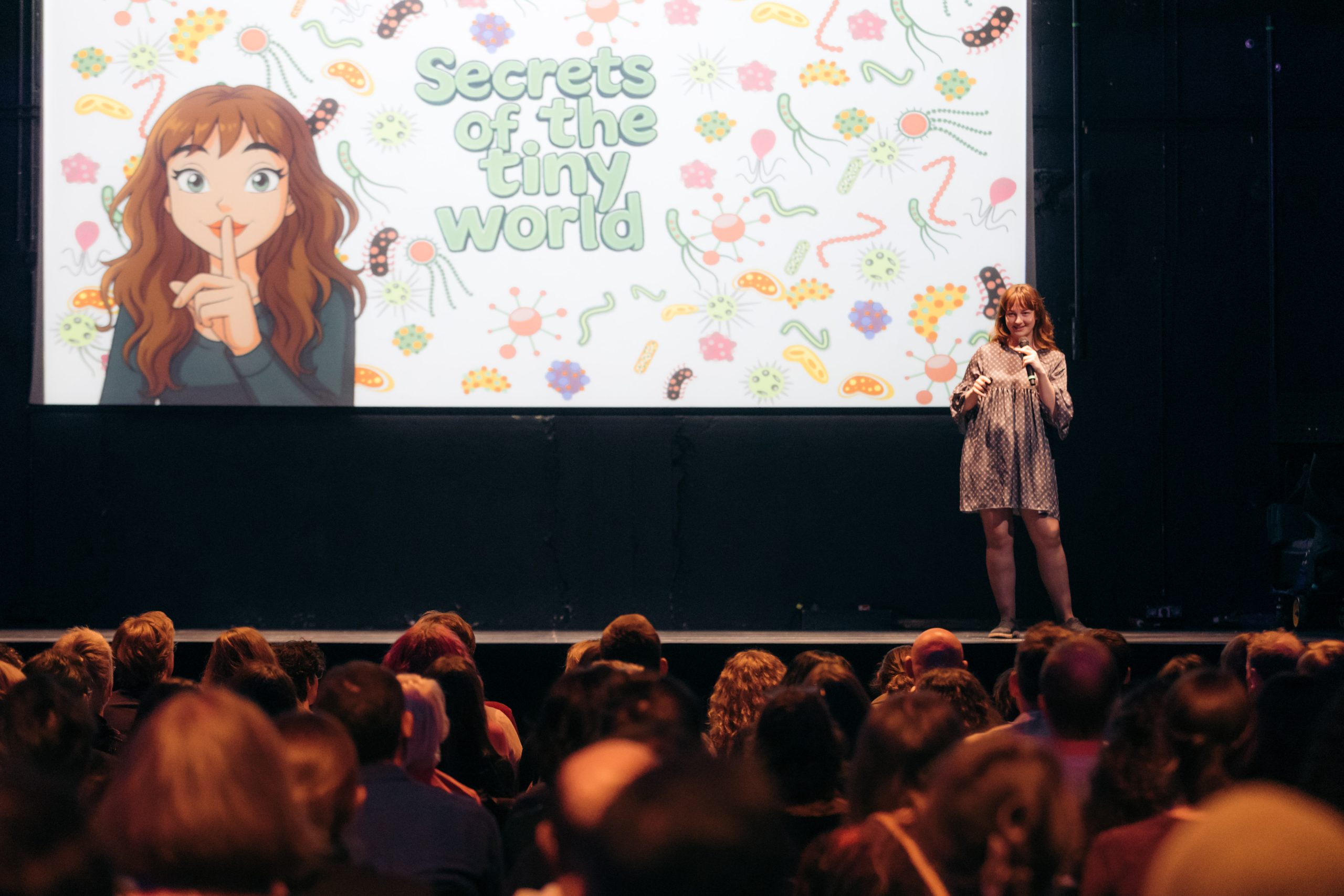
Photos: © LuxDoc asbl / Anne Lommel
What did you learn?
In addition to learning about the diverse research topics presented by other slammers, I gained valuable insights into science communication. I learned how to structure a clear narrative and use different tools to support storytelling. Most importantly, I learned that a good presentation is one that connects with people and draws inspiration from everyday experiences to make complex ideas more relatable.
Would you recommend participating as a slammer?
Absolutely. For anyone interested in sharing science with a wider audience, presenting research in a creative way, and developing storytelling skills, Science Slam is a wonderful opportunity.
Why is science communication important to you?
Science communication gives me the feeling that my research matters beyond academia and helps me feel more connected to the world. I also hope to have a positive impact on future generations, and I believe that sharing science is essential for building a peaceful and sustainable future.
Do you have anything else to share?
I used to be very shy and introverted, and I could never imagine myself presenting in front of a large audience. I am still like that sometimes, but when I talk about a topic I truly love, it feels completely different!
Why should people come to watch the next Science Slam?
It is a fun way to discover the wide range of research being conducted in the country you live in. In just a couple of hours, you can learn about interesting topics and gain insight into how research is done, all in an engaging and entertaining format.
The Science Slam is a yearly event organized by the doctoral student association LuxDoc asbl in collaboration with DESCOM, a science communication project from the University of Luxembourg. You can watch the recordings of all slammers of the previous years on YouTube. The Slam was recorded by the MEDIACentre of the Faculty of Humanity, Education and Social Sciences (FHSE). This year’s event was supported by the Ministry of Culture, the Luxembourg Institute of Health (LIH), the Luxembourg Institute of Science and Technology (LIST) as well as the University of Luxembourg.
Stay tuned for the next edition of Luxembourg’s Science Slam (date tbd) via scienceslam.uni.lu or by following the LuxDoc social media channels (Facebook, Instagram, X, LinkedIn).
If you would like to become a slammer as well, you send an e-mail to scienceslam@uni.lu briefly describing your background, your affiliation and the topic you have in mind. We will contact you once we have more details on the 2026 edition.