

 Faculty of Science, Technology and Medicine
 Faculty of Law, Economics and Finance
 Faculty of Humanities, Education and Social Sciences
 Interdisciplinary Centre for Security, Reliability and Trust
 Luxembourg Centre for Systems Biomedicine
 Luxembourg Centre for Contemporary and Digital History
 Luxembourg Centre for European Law
 Luxembourg Centre for Socio-Environmental Systems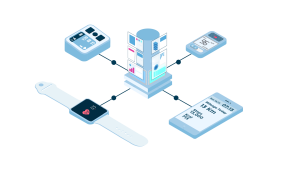
Parkinson’s disease is most often associated with tremors, slowness of movement and gait disturbances. Yet, for many patients the so-called “non-motor” symptoms limit daily activities even more. Among them, a condition known as orthostatic hypotension leads to dizziness or fainting because of sudden drops in blood pressure when standing up. As these events are unpredictable, they are notoriously difficult to assess during routine medical visits. To address this challenge, LCSB researchers from the Digital Medicine and AI Modelling and Prediction groups joined forces to explore how wearable technologies and advanced data analysis can enable continuous home monitoring of cardiovascular regulation in people with Parkinson’s disease.
Interdisciplinary collaboration to monitor non-motor symptoms
Called PDHOME, this project was initiated as a Tandem project to foster interdisciplinary collaborations within the LCSB. Projects such as this one are supported by internal funding to encourage partnerships between teams and help kick-start new research ideas. In this case, coming from the clinical perspective, the Digital Medicine group, led by Prof. Jochen Klucken, was seeking to move beyond motor symptoms and address non-motor manifestations of Parkinson’s disease. “When patients report dizziness or fainting, this often points to a dysfunction in cardiovascular regulation,” explains Prof. Klucken. “These symptoms are highly relevant for patient safety, yet they are difficult to capture with standard clinical tests in clinical settings as they often occur at home.”
This is where the extensive expertise of the AI Modelling and Prediction group when it comes to analysing complex time-series data from wearable sensors came in. Building on earlier feasibility work demonstrating that orthostatic reactions can be detected in real-world environments using wearables, the two teams combined clinical insight with advanced signal processing and machine learning to develop a shared analytical framework. “Our goal is to translate continuous sensor signals into information that is meaningful for clinicians,” says Prof. Jorge Gonçalves, head of the AI Modelling and Prediction group.
The researchers relied on certified medical technologies that could be readily deployed in a clinical study. Several participants were equipped with different wearable sensors which recorded movement and heart-related signals, and allowed detailed cardiovascular measurements. The project combined controlled assessments in clinical environments with longer monitoring phases at home. “In the clinic, doctors may have access to only a handful of data points,” notes Prof. Gonçalves. “With continuous monitoring, we suddenly have days or even weeks of information. The challenge lies in identifying which patterns truly matter.” This shift from snapshot measurements to continuous observation represents a fundamental change in how symptoms such as orthostatic hypotension can be studied and monitored.
Ongoing studies to further explore the potential of wearable devices
While the project itself focused on establishing technical and analytical feasibility, it also acted as a catalyst for additional research. Building on the PDHOME framework, several observational clinical studies, such as the OHVD and RePHLECS-PD studies, are now ongoing, in collaboration with hospitals across Luxembourg, to further investigate cardiovascular regulation and related symptoms in different patient cohorts. “The success of PDHOME lies in creating a common language between clinicians and data scientists,” underlines Prof. Klucken. The resulting datasets now allow researchers to return to the analytical phase, refining algorithms and exploring how continuous monitoring can support clinical decision-making.
In the long term, the researchers envision that approaches developed within PDHOME could support more personalised disease management, helping doctors evaluate treatment effects, adjust therapies based on objective data, or identify early signs of dysregulation before serious events occur. Beyond diagnosed patients, such tools could also prove valuable for monitoring individuals at increased risk of Parkinson’s disease.
The project also illustrates how targeted internal funding can catalyse sustainable collaborations. What began as a one-year Tandem project has evolved into a broader research trajectory linking computational science, clinical research and hospital partnerships. “Our skills are complementary,” concludes Prof. Gonçalves. “We develop better analytical tools, while our clinical colleagues focus on improving patient care. Together, we can turn complex data into insights that genuinely matter for patients.”