

 Faculty of Science, Technology and Medicine
 Faculty of Law, Economics and Finance
 Faculty of Humanities, Education and Social Sciences
 Interdisciplinary Centre for Security, Reliability and Trust
 Luxembourg Centre for Systems Biomedicine
 Luxembourg Centre for Contemporary and Digital History
 Luxembourg Centre for European Law
 Luxembourg Centre for Socio-Environmental Systems
Microbial Photonics Across Scales (MicroPAS)
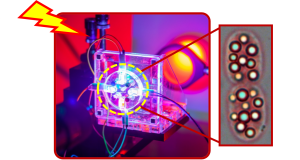
MicroPAS, a paradigm-defining project grounded in the physics of light-matter interactions, will pioneer light manipulation and guidance inside microbes.
The project at a glance
-
Start date:01 Apr 2026
-
Duration in months:60
-
Funding:ERC Consolidator Grant / Horizon Europe
-
Principal Investigator(s):Anupam SENGUPTA
About
Phototrophic microorganisms—including a wide variety of bacterial species—capture and convert sunlight to power their metabolic processes, making them foundational contributors to most aquatic food webs. Efficient light harvesting, which is essential for their survival and ecological fitness, is orchestrated through a suite of photoreceptors and light-responsive molecular actuators. These components drive regulatory cascades that shape gene expression, protein activity, and behavioural responses such as phototaxis. Our recent discoveries with sulfur-metabolising bacteria have demonstrated that tiny granular intracellular structures could possess distinct optical properties capable of interacting with light fields within single cells. Building on this insight, MicroPAS: Microbial Photonics Across Scales, introduces a transformative conceptual and experimental framework that treats organelles as active optical elements, governed by the fundamental physics of light–matter interactions. The project will employ an integrated toolkit of advanced microscopy, spectroscopy, and data-driven numerical modelling to investigate both laboratory-cultivated and naturally occurring sulfur-bacterial species. Through this multi-scale approach, MicroPAS will determine how the composition and distribution of such organelles define optical properties and modes internally, and thereby enable dynamic light guidance within living cells. Further afar, this ERC-CoG–funded project will probe emergent collective behaviour, asking how populations of bacteria might self-organise their optical responses. Such collective regulation could enhance light penetration, modify scattering patterns, or give rise to nonlinear optical phenomena, ultimately enabling the engineering of living photonic circuits that rely on biological feedback loops. By revealing how intracellular light modulation shapes microbial physiology, ecological performance, and adaptive behaviour, MicroPAS will lay the foundation for a new, data-rich bio-photonic paradigm. The project will pave the way for next-generation Living Optical Matter, inspired directly by nature’s strategies for manipulating light with exquisite precision. The project will be directed by Prof. Anupam Sengupta, Head of the Physics of Living Matter Group at the University of Luxembourg.
Organisation and Partners
- Department of Physics and Materials Science
- Faculty of Science, Technology and Medicine (FSTM)
- Physics of Living Matter

Project team
-
Anupam SENGUPTA
-
Jana KRIER KABASTOVA
-
Georgia KAPROU