

 Faculty of Science, Technology and Medicine
 Faculty of Law, Economics and Finance
 Faculty of Humanities, Education and Social Sciences
 Interdisciplinary Centre for Security, Reliability and Trust
 Luxembourg Centre for Systems Biomedicine
 Luxembourg Centre for Contemporary and Digital History
 Luxembourg Centre for European Law
 Luxembourg Centre for Socio-Environmental Systems
In recognition of his contributions to the cryptography field, Jean-Sébastien Coron has been named a Fellow of the International Association for Cryptologic Research (IACR), the leading organisation in cryptography.
From secure messaging to online banking and software updates, cryptography underpins much of today’s digital infrastructure. Ensuring that these systems are not only theoretically secure, but also robust in practice, remains a major challenge.
This is where the research of Jean-Sébastien Coron, professor of cryptography at the University of Luxembourg, comes in. His work focuses on designing and analysing cryptographic algorithms that combine strong theoretical foundations with practical efficiency, enabling their use in real-world systems.
Strengthening the security of real-world systems
A key part of Prof. Coron’s research is the study of widely used cryptographic standards. By examining digital signature schemes, such as ISO 9796-1 and ISO 9796-2, he identified concrete weaknesses in systems that were already deployed. These results contributed to improving the security of real-world applications and highlighted the importance of continuous scrutiny.
Beyond studying existing systems, his work also helps bring advanced cryptographic concepts closer to practical use. This includes contributions to fully homomorphic encryption, a technology that allows data to be processed while it remains encrypted. “This opens new possibilities for privacy-preserving services”, Prof. Coron explains.
‟ Modern society relies on cryptography for secure communication, payments, identity, and software integrity. Improving both security analysis and implementation techniques helps ensure that these systems remain trustworthy in practice.”
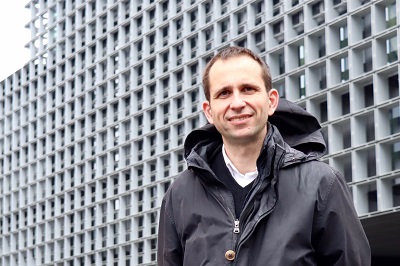
Head of Department of Computer Science, Professor in Informatics
Post quantum cryptography
More recently, Prof. Coron’s has focused on post-quantum cryptography. As emerging quantum technologies pose a long-term threat to current encryption methods, new cryptographic approaches for encryption and digital signatures, such as Kyber and Dilithium, are being standardised.
Prof. Coron and his team work to secure these schemes against practical attacks, including side-channel attacks, which exploit physical signals such as power consumption to infer secret information. They design hardened implementations and masking techniques to prevent attackers from inferring secret information from power consumption, timing, or electromagnetic signals.
‟ By combining theoretical insight with practical considerations, my research supports the development of cryptographic systems that can be trusted in everyday use, an essential requirement in an increasingly digital society.”
Looking ahead, Prof. Coron plans to continue his work on making advanced cryptographic techniques secure and usable in real-world systems. His future research will focus in particular on post-quantum cryptography, as well as further developments in fully homomorphic encryption, helping ensure that these technologies can be reliably deployed.