

 Faculty of Science, Technology and Medicine
 Faculty of Law, Economics and Finance
 Faculty of Humanities, Education and Social Sciences
 Interdisciplinary Centre for Security, Reliability and Trust
 Luxembourg Centre for Systems Biomedicine
 Luxembourg Centre for Contemporary and Digital History
 Luxembourg Centre for European Law
 Luxembourg Centre for Socio-Environmental Systems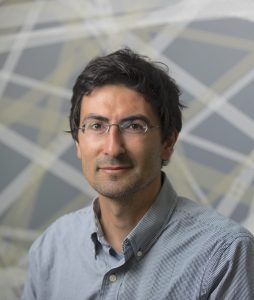
Richard Chahwan joined the University of Luxembourg in March 2026 as a Full Professor in Cell Biology and Molecular Biology within the Faculty of Science, Technology and Medicine. Discover more about his background and the motivations behind his decision to join our institution.
Could you introduce yourself?
I am a molecular biologist by training, a biotech entrepreneur by conviction, and – perhaps less conventionally – a youth basketball coach on weekends. My scientific journey has taken me from the old AMGEN Institute in Toronto, where I first developed my fascination with immunology, to the Gurdon Institute at the University of Cambridge, to the Albert Einstein College of Medicine in New York, and most recently to the University of Zurich. Throughout this path, one question has consistently driven my work: how does the immune system learn to protect us, and how can we harness that knowledge to design better therapeutics? Specifically, my research focuses on how B cells generate and refine antibodies. We also study a fascinating class of nano-sized particles called extracellular vesicles – tiny molecular messengers that all cells use to communicate. These two threads of research form the backbone of our work, from fundamental discovery to translational applications. When I am not in the lab, I find that coaching basketball to young kids is an unexpectedly good training ground for scientific leadership: both require patience, strategy, and knowing when to let go of the ball.
‟ I was looking for an institution that does not treat the space between academic science and real-world application as a gap to be tolerated, but as a territory to be actively explored.”
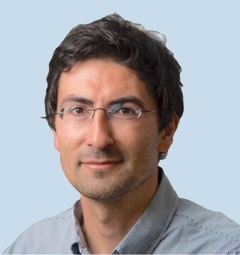
Full Professor in Cell Biology and Molecular Biology
What inspired you to join the University of Luxembourg?
The honest answer is that Luxembourg found me at exactly the right moment. I was looking for an institution that does not treat the space between academic science and real-world application as a gap to be tolerated, but as a territory to be actively explored. The University of Luxembourg does precisely that. The University and the broader national focus on precision and systems medicine represent a level of strategic ambition that is rare in Europe, particularly for an institution of this size and age. What struck me most is the density of collaboration possible here – between faculties, between the University and national research institutes, and between science and industry. I also saw a genuine openness to building something new rather than simply inheriting existing structures. For a researcher whose work sits at the intersection of immunology, genomics, and biotech, that combination is genuinely compelling. And, admittedly, the international character of Luxembourg as a country does not hurt – it mirrors the way science itself actually works.
What will be your main activities and challenges?
My primary mission is to establish a research group centered on smart antibody design, using machine learning and high-throughput genomic approaches to understand and predict how antibodies evolve and diversify. Rather than the traditional trial-and-error model of therapeutic antibody development, we are working towards a more rational, data-driven framework that can accelerate the discovery of next-generation biologics. A central part of this work will be carried out through a newly formed antibody-focused start-up, supported by the University’s Innovation Office, which will allow us to translate our most promising findings directly into therapeutic and diagnostic applications. This industry-facing dimension is something I care about because science that does not ultimately reach patients is science only half done. On the academic side, building a new lab means recruiting and mentoring the next generation of researchers. I am actively looking for talented PhD candidates and postdocs who are excited by the interface of immunology, computational biology, and biotechnology. Beyond recruitment, the broader challenge is cultural: creating a team environment where the rigor of academic science and the urgency of start-up thinking coexist productively. These two cultures do not always mix naturally, but I believe the University of Luxembourg – with its young, open, and entrepreneurial spirit – is one of the few places in Europe where that synthesis can genuinely happen.