Faculty of Science, Technology and Medicine
 Faculty of Law, Economics and Finance
 Faculty of Humanities, Education and Social Sciences
 Interdisciplinary Centre for Security, Reliability and Trust
 Luxembourg Centre for Systems Biomedicine
 Luxembourg Centre for Contemporary and Digital History
 Luxembourg Centre for European Law
 Luxembourg Centre for Socio-Environmental Systems
Education and training
Simulation is a core component of coursework. It enables students to practice clinical situations in a safe, supervised environment aligned with programme learning objectives. Simulation activities take place alongside or prior to internships and clinical placements, supporting the progressive development of professional skills and clinical confidence.
What students experience at SimUL
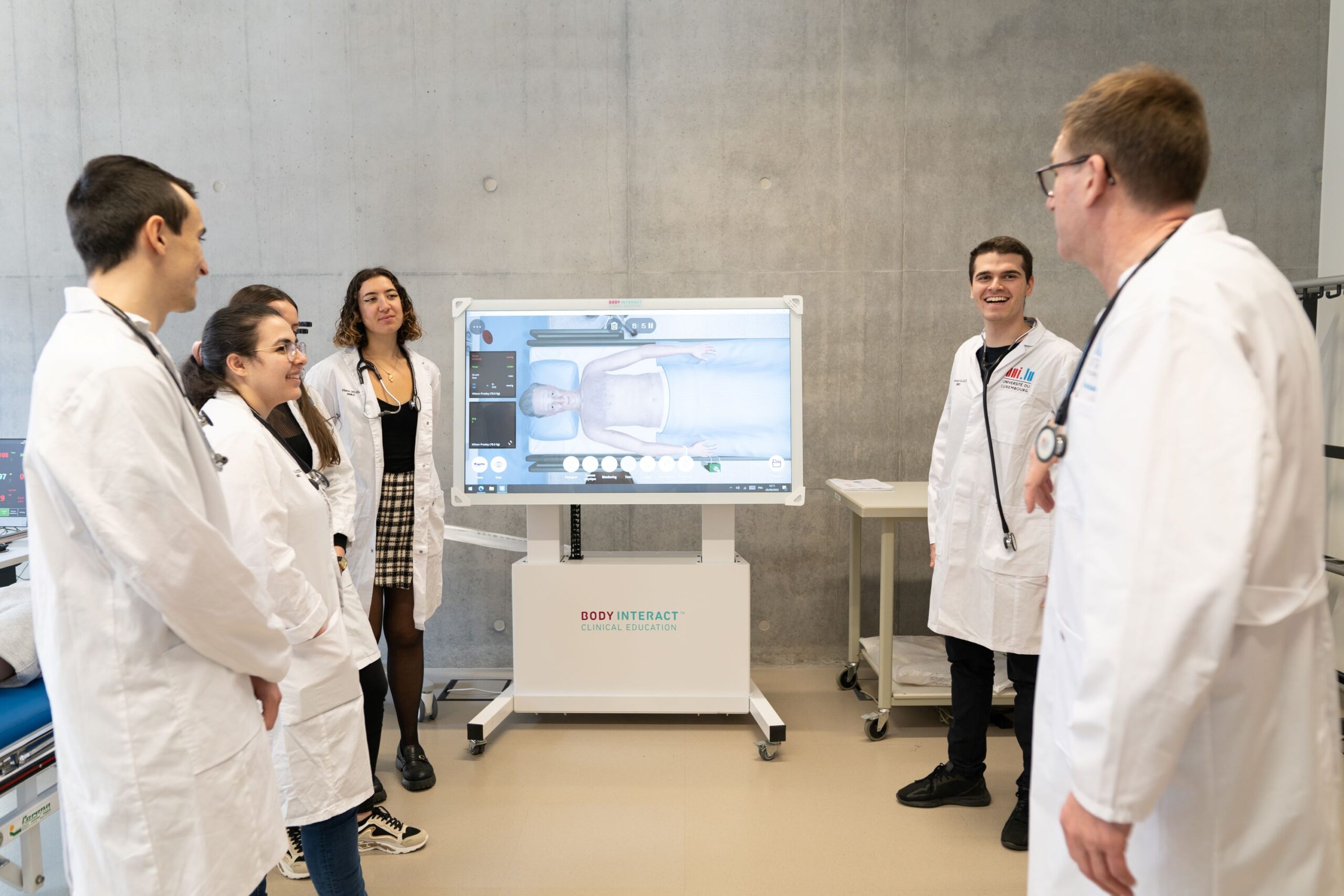
Simulation sessions may include:
- Hands-on task-training workshops
- Clinical examination practice using manikins
- Scenario-based simulations in realistic clinical environments
- Communication exercises with simulated patients
- Structured debriefing sessions with instructors
Debriefing is central to simulation-based learning. It provides a structured space to analyse decisions, behaviours, and outcomes, fostering reflective practice and clinical reasoning.
Learning outcomes
Simulation helps students:
- Practice clinical procedures and techniques safely
- Build confidence before clinical placements
- Develop teamwork and communication skills
- Prepare for the emotional and professional realities of clinical environments
- Learn from mistakes without risk to patients
Simulation complements — but does not replace — clinical learning. It prepares students to engage more confidently in real healthcare settings.
What our students say about simulation-based learning
‟
D’Simulatiounskuere ware fir mech e grousst Highlight am Studium, well een net nëmmen nogekuckt, mee direkt selwer bedeelegt war. Bei SimUL hu mir dank der moderner Ausstattung eist theoretescht Wëssen direkt an d’Praxis ëmgesat an dobäi klinesch Situatioune realitéitsno geüübt. Et huet vill Spaass gemaach, sech aktiv auszeprobéieren an dobäi en éischt Gefill fir d’Praxis ze entwéckelen, wat d’Léieren net nëmme méi effektiv, mee och méi interessant mëscht.
The simulation courses were a major highlight of my studies because you weren’t just observing, but actively involved yourself. At SimUL, thanks to the modern equipment, we were able to immediately put our theoretical knowledge into practice and train in clinical situations realistically. It was a lot of fun to actively try things out and develop an initial sense for practice, which not only makes learning more effective but also more interesting.”
Master in Medicine Candidate, Université de Strasbourg