

 Faculty of Science, Technology and Medicine
 Faculty of Law, Economics and Finance
 Faculty of Humanities, Education and Social Sciences
 Interdisciplinary Centre for Security, Reliability and Trust
 Luxembourg Centre for Systems Biomedicine
 Luxembourg Centre for Contemporary and Digital History
 Luxembourg Centre for European Law
 Luxembourg Centre for Socio-Environmental Systems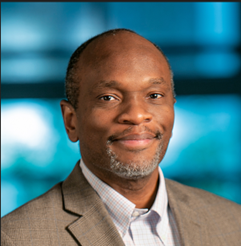
Filaments, Helices, Flat Droplets and More: Active Matter and Networks Encountered in Liquid-Liquid Crystal Phase Separation
Abstract:
Liquid crystals possess structural order that is intermediate between that of fully isotropic liquids and three-dimensionally periodic solids. Here, we explore the impact of liquid crystal order on the demixing of simple binary systems consisting of a small molecule mesogen and a hydrocarbon solvent. In the presence of appropriate mesophase elasticity, demixing occurs via the formation of filamentous intermediates that exhibit lower free energy relative to the canonical spherical domains or droplets seen during conventional liquid-liquid phase separation. We detail the subsequent cascade of events as filaments grow and collectively collapse into flat drops. This collective collapse occurs via arrested coalescence and the formation of helices that eventually relax to yield flat drops. At long times, the flat drops form nodes connected by filaments in tension in a ramified smectic network around which active flows are established as the phase separation proceeds. We highlight the role of LC energetics in the rich display of structures and dynamics in these systems.
About the speaker:
Dr. Osuji is the Eduardo D. Glandt Presidential Professor, and Chair, in the Department of Chemical and Biomolecular Engineering, and a secondary member of the faculty in Materials Science and Engineering, at University of Pennsylvania. He is an Associate Editor for Macromolecules and was a member of the Board of Directors of the Materials Research Society (2021-2024). He leads an experimental research group focused on structure and dynamics of soft materials and complex fluids. Topics of interest include structure-property relationships in ordered soft materials, directed self-assembly of block copolymers and molecular materials, and rheology of dense, disordered systems.
Prof. Osuji received his undergraduate degree in Materials Science and Engineering from Cornell followed by his Ph.D., also in Materials Science and Engineering from MIT in 2003. From 2003-2005 he was a Senior Scientist at a startup company, Surface Logix Inc., before moving to Harvard as a Postdoctoral Associate in Applied Physics (2005-2007). He was a member of the faculty at Yale University in the Department of Chemical and Environmental Engineering from 2007-2018 before moving to the University of Pennsylvania.
Prof. Osuji is a Fellow of the American Physical Society, and a recipient of a CAREER award from the National Science Foundation (2008). He received an Office of Naval Research’s Young Investigator award and a 3M Nontenured Faculty award in 2012. He is the recipient of the Dillon Medal of the American Physical Society (2015), the Hendrick C. Van Ness Award (2019), and the Nano Research Young Investigator Award (2019). In 2022 he received the Prince Sultan Bin Abdulaziz International Prize for Water (PSIPW).
The colloquium will take place on Wednesday, December 17, at 2:00 PM in room BSC 003 at the Bâtiment des Sciences, Limpertsberg campus.
Prior to the colloquium, we warmly invite you to a coffee break at 1:30 PM in the entrance hall of the Bâtiment des Sciences. This is a fantastic opportunity to engage with Prof. Dr. Osuji and connect with fellow attendees over a cup of coffee. For logistics purposes, please register for the coffee break by December 11 using the following button.
If you are unable to join us in person, you can still participate in the event remotely through the Webex link below.