

 Faculty of Science, Technology and Medicine
 Faculty of Law, Economics and Finance
 Faculty of Humanities, Education and Social Sciences
 Interdisciplinary Centre for Security, Reliability and Trust
 Luxembourg Centre for Systems Biomedicine
 Luxembourg Centre for Contemporary and Digital History
 Luxembourg Centre for European Law
 Luxembourg Centre for Socio-Environmental Systems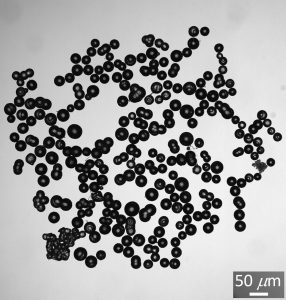
World Clean Energy Day 2026 © Sengupta Lab, University of Luxembourg
As the world seeks sustainable energy solutions, the potential of microalgae to produce renewable biofuels is gaining significant attention. These tiny photosynthetic powerhouses can convert sunlight and carbon dioxide into energy-rich lipids, offering a renewable alternative to fossil fuels. However, efficiently scaling up this process has faced a major hurdle: boosting lipid production often means sacrificing the overall amount of algae grown, limiting overall fuel output. Groundbreaking research from Prof. Anupam Sengupta, head of the Physics of Living Matter Group, is helping to overcome this challenge.
The lipid-biomass trade-off: a longstanding challenge
Professor Sengupta’s lab employs a unique, interdisciplinary approach, working at the interface of physics, biology, engineering, and machine learning to understand the intricate behaviours of microorganisms in response to environmental changes. Their work includes studying photosynthetic organisms like cyanobacteria and algae, which are vital for oxygen production and global biogeochemical cycles.A key challenge in the industrial production of lipids from algae is a trade-off: standard methods often involve nutrient starvation to encourage cells to produce more lipids, as lipids are energy-rich stores. While effective for boosting lipid content per cell, this starvation typically compromises the total biomass – the overall quantity of algae being cultivated. For industrial applications, both high lipid content and high biomass are needed to make the process economically viable. This has long been one of the “holy grails” in the field: how to get more lipid without compromising the biomass.
Crossing disciplines: physics meets biology in algae research
The research team tackled this problem by applying principles from physics and fluid mechanics. They sought to understand the precise relationship between fluid flow (mechanical stress) and lipid production in algae. Through careful experimentation, they discovered that by precisely timing nutrient starvation or mechanical stresses, such as fluid flow, at specific stages of the algae’s growth cycle, they could dramatically improve the outcome.
The result? They found a method that allows for significantly enhanced lipid production without compromising the biomass at all. This is a major breakthrough that could lead to a much more efficient and sustainable process for producing algae-based fuels. Practically, this means the same quantity of algae can yield substantially more biofuel components, paving the way for a potentially very long-lasting and productive pipeline for algae fuel.
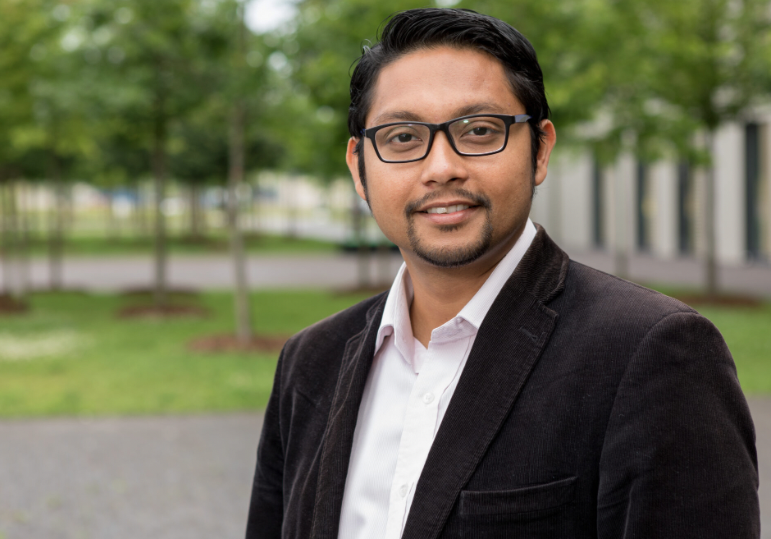
‟ By blending physics with biology, we’ve found a way to unlock algae’s full potential: more fuel, less compromise, and a step closer to sustainable energy. ”
Professor in Physics
The research was funded by an FNR PRIDE Doctoral Training Grant ACTIVE: Active Phenomena Across Scales in Biological Systems, as well as the FNR-ATTRACT Investigator Grant which allowed Prof. Sengupta to establish his research labs in Luxembourg.