

 Faculty of Science, Technology and Medicine
 Faculty of Law, Economics and Finance
 Faculty of Humanities, Education and Social Sciences
 Interdisciplinary Centre for Security, Reliability and Trust
 Luxembourg Centre for Systems Biomedicine
 Luxembourg Centre for Contemporary and Digital History
 Luxembourg Centre for European Law
 Luxembourg Centre for Socio-Environmental Systems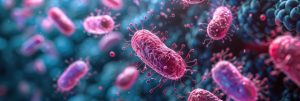
Deep in our guts lives a tiny bacterium you can’t see with the naked eye. It seems harmless, yet it can influence one of the deadliest cancer types that currently exists : colorectal cancer. This bacterium, called Fusobacterium nucleatum (Fn), has long been linked to cancer progression. But recently, Prof. Elisabeth Letellier and her team uncovered something unexpected. Fn doesn’t just interact with cancer and immune cells, it can also affect other cells in the tumor environment.
For Prof. Letellier, understanding these hidden interactions is more than just fascinating. It could help researchers develop therapies that block the bacterium’s harmful effects and improve outcomes for patients.
A hidden accomplice within the tumor
Imagine Fn as a silent collaborator within the tumor: it attacks immune cells, suppressing their anti-tumor activity. It can also invade epithelial cells —the cells that line the colon— and activate pathways that encourage tumor growth.
Now, Prof. Letellier and her team have discovered a surprising new twist. Fn can also invade fibroblasts, the cells that normally provide structure and support to body tissues. Once exposed to the bacterium, fibroblasts begin releasing inflammatory molecules called cytokines and higher levels of reactive oxygen species. This creates a pro-inflammatory environment around the tumor.
‟ Fn reprogrammes fibroplasts, which enhances the invasiveness of cancer cells, causing the disease to spread faster.”
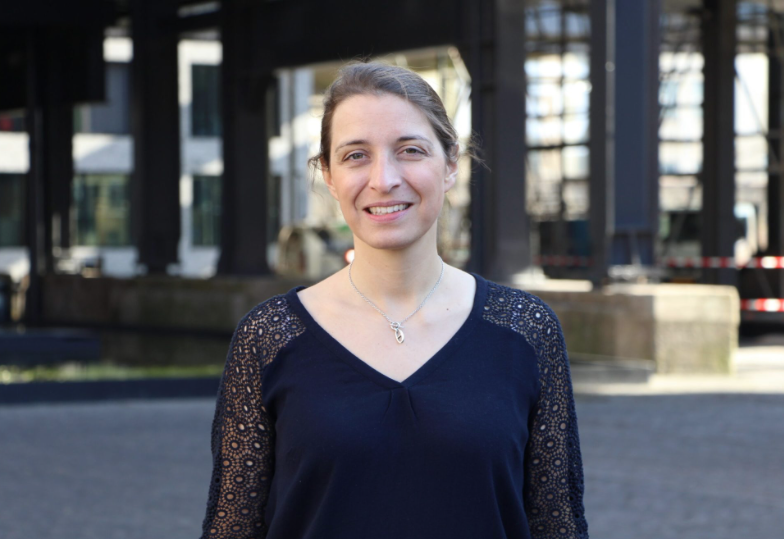
Assistant Professor
This discovery adds a new layer to the current understanding of the tumor microenvironment. By studying how these cells interact, researchers can explore new strategies to slow the progression of the disease.
A methodology built on biobanks and colorectal cancer cohorts
To validate their laboratory findings in a clinical context, researchers relied on a rich collection of clinical samples. These come from biobanks and colorectal cancer (CRC) cohorts they established with partners at Luxembourg Institute of Health (LIH), Laboratoire National de Santé (LNS), and several hospitals across Luxembourg. Having access to these samples — both fresh tissues and biobanked specimens — is crucial for validating their discoveries and understanding how they apply in real life.
Today, the biobank holds samples from over 250 patients, along with follow-up specimens and detailed clinical data. The project is supported by the Centre Hospitalier Emile Mayrisch, the Hopitaux Robert Schuman, and soon the Centre Hospitalier de Luxembourg. Already, the collection is being used widely across Luxembourg and is starting to gain recognition internationally.
“We hope that this cohort and its samples will support many future research projects, helping identify biomarkers and develop new strategies to treat colorectal cancer,” adds Prof. Elisabeth Letellier.
What it means for patients
The next big question is whether these findings could lead to new therapies. In theory, yes. Prof. Letellier and her group envision either targeting the activated fibroblasts, blocking the interaction between Fn and fibroblasts or targetting the bacteria. But for now, this work remains at a preclinical stage. Researchers need to conduct additional experiments in more models to confirm that disrupting this interaction can actually slow tumor growth.
There’s also potential for Fn to serve as a biomarker. Patients with high levels of this bacterium, especially those in Consensus Molecular Subtype 4 (CMS4), which has many fibroblasts, could be at greater risk of relapse. Identifying these patients early might one day enable to offer more personalised treatment strategies.
The research team is now exploring how diet might influence the bacteria living in tumors, and whether dietary changes could slow cancer progression or improve responses to therapy. They are also continuing to investigate how bacteria interact with cancer cells and other cells in the tumor environment. As Prof. Elisabeth Letellier put it, this study allowed them to add a small piece to the complex puzzle of how bacteria contribute to cancer progression. ‘’Each new finding brings us closer to microbiome-based therapies as a possible avenue in cancer research,” she concludes.