

 Faculty of Science, Technology and Medicine
 Faculty of Law, Economics and Finance
 Faculty of Humanities, Education and Social Sciences
 Interdisciplinary Centre for Security, Reliability and Trust
 Luxembourg Centre for Systems Biomedicine
 Luxembourg Centre for Contemporary and Digital History
 Luxembourg Centre for European Law
 Luxembourg Centre for Socio-Environmental Systems
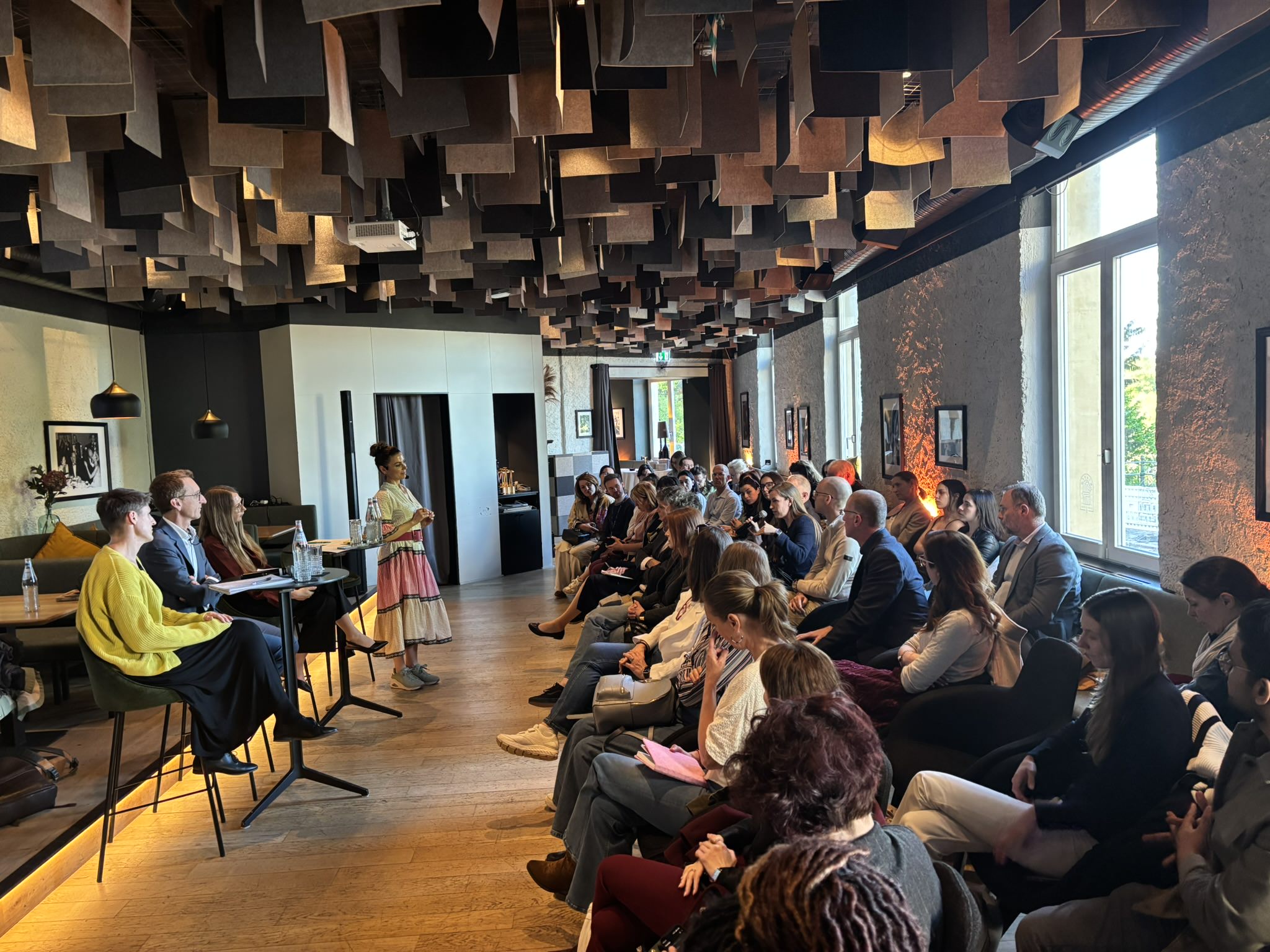
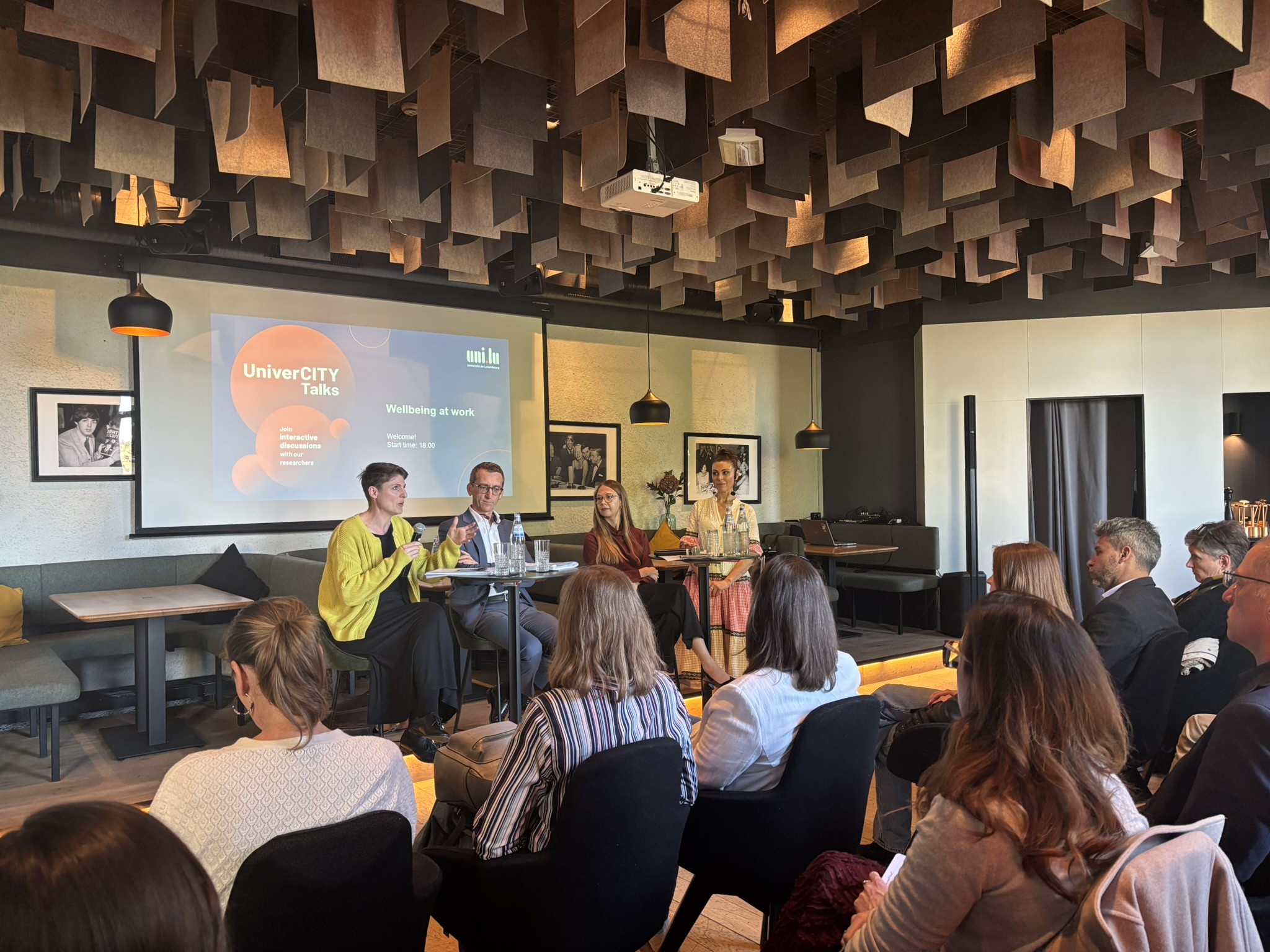
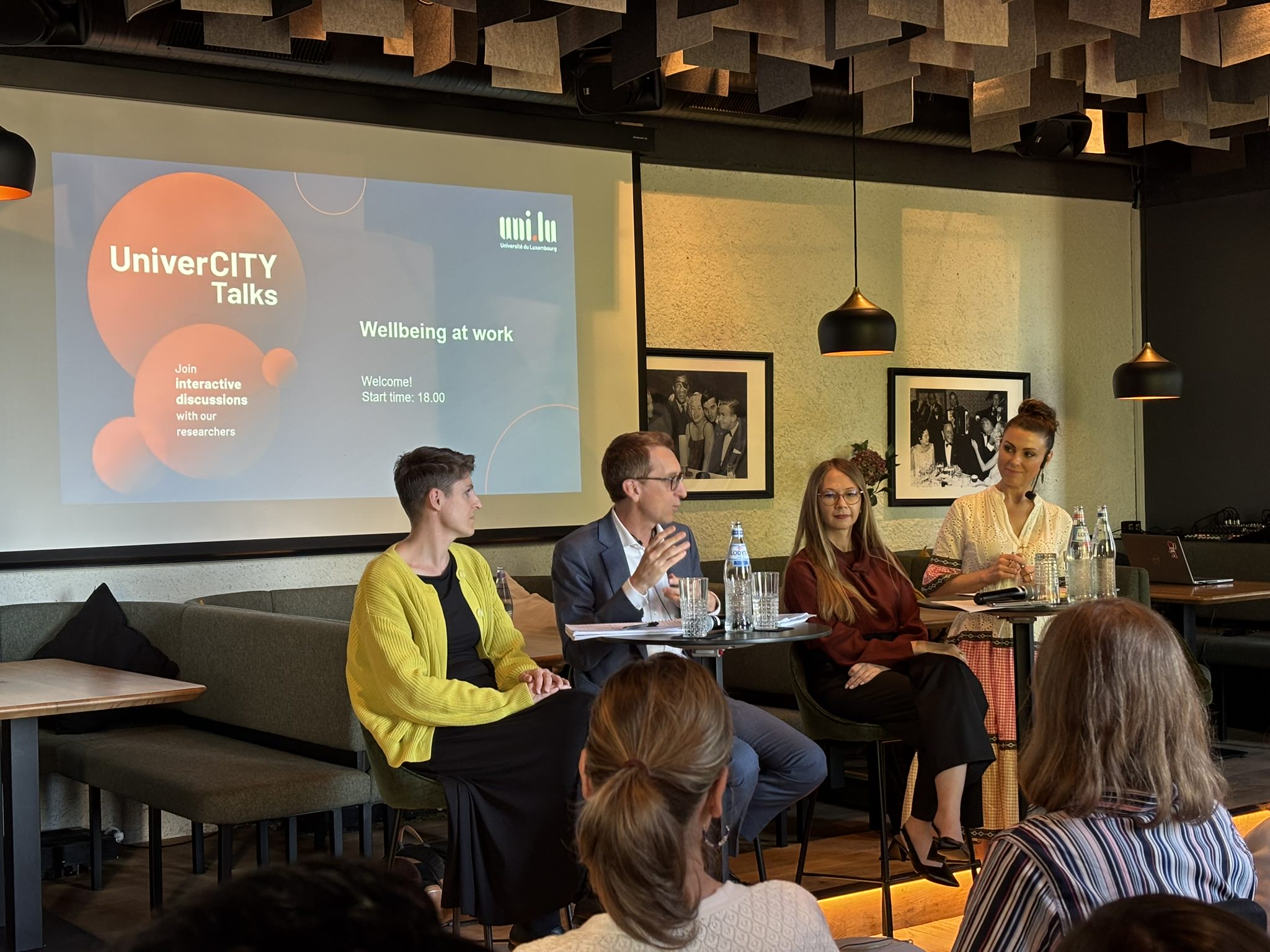
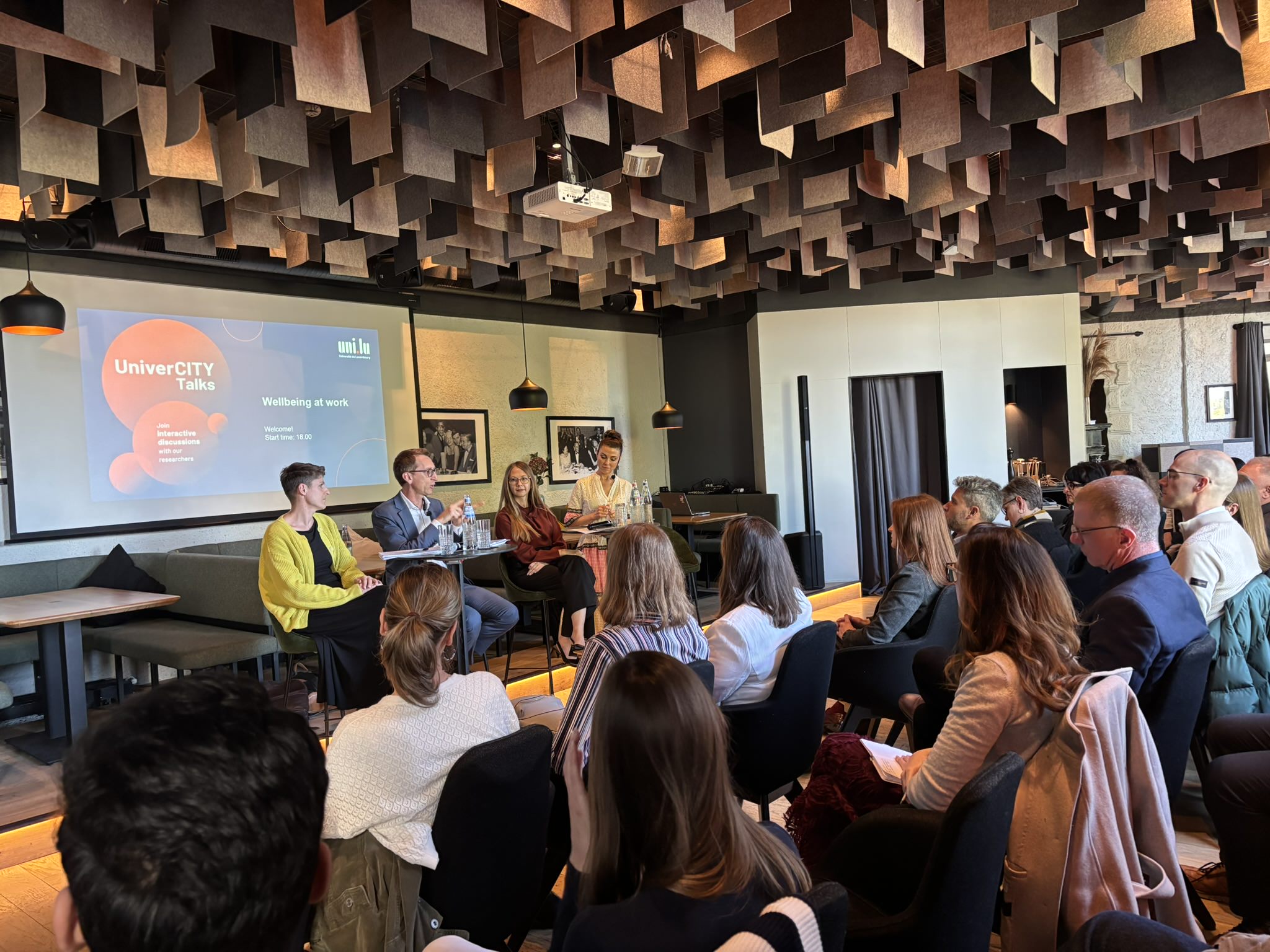
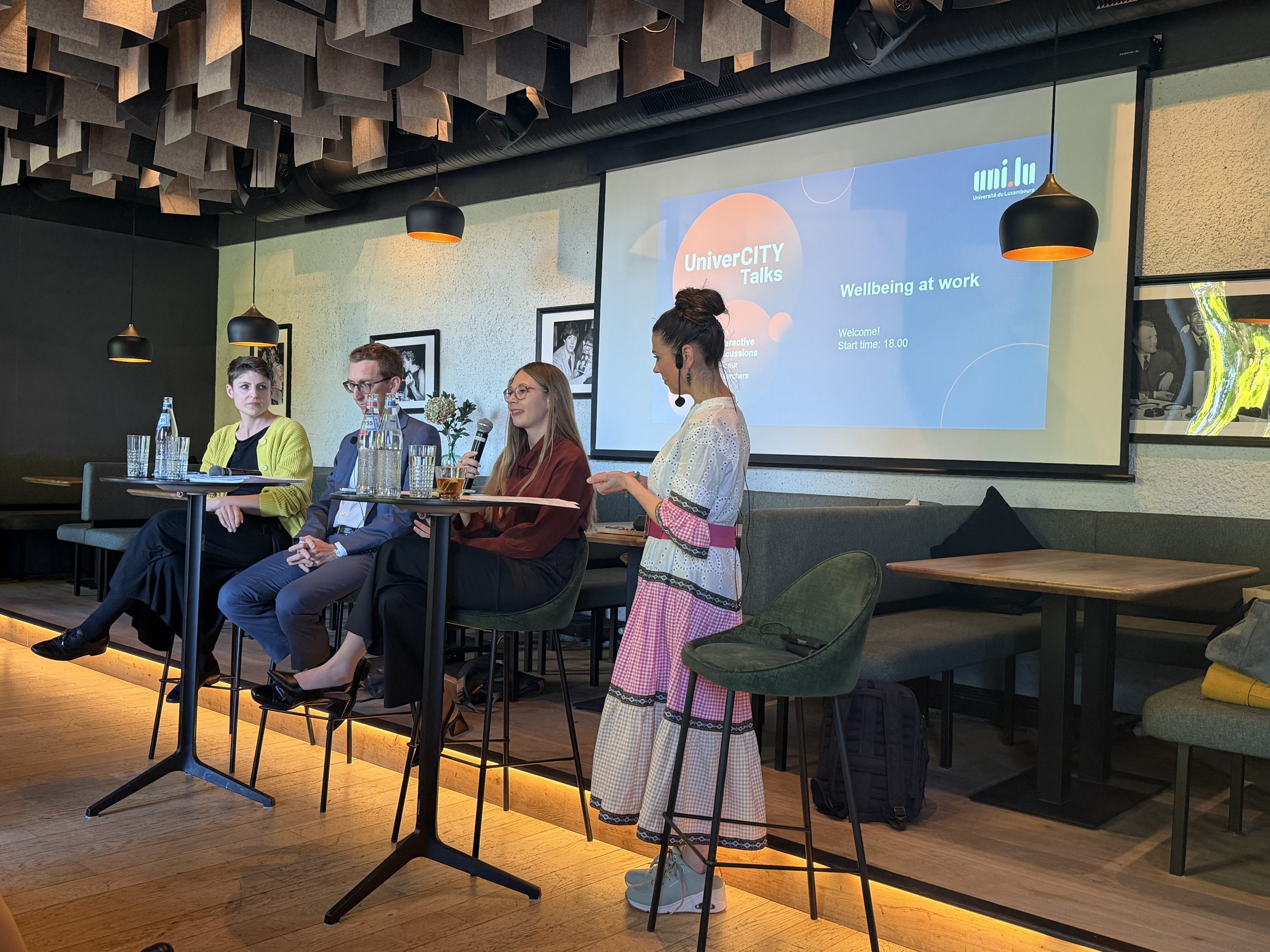
On 22 April 2026, the University of Luxembourg hosted a new session of its UniverCITY Talks series, exploring a topic that resonates with many professionals today: wellbeing at work in an increasingly flexible and digital environment.
Bringing together Prof. Anna KORNADT (Head of DBCS and Full professor in Psychology), Prof. Luca RATTI (Full professor in European and comparative labour law) and Dr. Nastazja POTOCKA-SIONEK (Postdoctoral researcher in labour law), the discussion focused on how evolving work patterns are transforming both our daily experience of work and the frameworks designed to protect it.
From workplace to “work sphere”
One of the central ideas discussed during the session was the concept of the “work sphere”, developed through “Wellbeing @ Work (W@W)” an interdisciplinary research project combining law and psychology, funded by the University’s Institute for Advanced Studies.
Rather than being tied to a fixed location, work is now understood as something that follows individuals across spaces and times: from the office to home and often beyond traditional working hours.
This shift raises complex questions. If work is no longer confined to a physical workplace, how can legal protections be applied? And how can employers ensure the wellbeing of employees when boundaries between work and private life are increasingly blurred?
Wellbeing: a subjective but essential concept
From a psychological perspective, wellbeing is not a one-size-fits-all concept. It is often defined as subjective wellbeing, referring to how individuals evaluate their own lives, including life satisfaction, emotional balance and a sense of purpose.
This subjectivity makes wellbeing difficult to regulate. While law seeks clear definitions and boundaries, psychology highlights that wellbeing depends on personal circumstances, resources and perceptions.
Flexibility: opportunity or risk?
Flexible and remote work offer clear advantages, such as autonomy and time management. However, the discussion emphasised that these benefits can quickly turn into challenges.
Participants pointed to risks including:
- blurred boundaries between work and private life
- constant availability
- increased work intensity
- social isolation and loss of informal interactions
Speakers highlighted that, overall, working from home does not automatically improve or worsen wellbeing. Instead, its impact depends heavily on individual conditions such as home environment, social connections and job characteristics.
The hidden cost of disconnection
While digital tools enable flexibility, they also reshape workplace relationships.
In remote settings, the loss of spontaneous feedback was highlighted as a challenge. Informal interactions (quick conversations, casual check-ins) play a crucial role in making employees feel valued and supported.
When these interactions disappear, feedback becomes more formal and less frequent, which can increase anxiety and reduce engagement.
Burnout and the limits of responsibility
Burnout was another central theme, described primarily as chronic exhaustion combined with emotional detachment from work.
The discussion highlighted the complexity of balancing responsibilities: individuals are expected to manage their own stress and wellbeing, and employers have a legal duty to ensure safe and healthy working conditions.
However, the boundary between these responsibilities remains unclear, particularly as wellbeing itself is not defined in law.
Law struggling to keep pace
From a legal standpoint, wellbeing at work is addressed through a fragmented set of regulations rather than a single coherent framework.
Existing instruments (such as working time rules, work-life balance policies and health and safety directives) touch on aspects of wellbeing, but do not fully capture emerging psychosocial risks.
The introduction of concepts like the right to disconnect reflects attempts to adapt. Yet, their effectiveness remains difficult to assess, particularly given the complexity of modern work environments.
Technology and new risks
Digitalisation and AI are adding another layer of complexity. While technology can improve efficiency and support workers, it can also lead to:
- increased monitoring
- time pressure
- anxiety linked to performance tracking, lack of transparency and job instability
The discussion stressed the importance of risk assessment and responsible implementation, rather than viewing technology as inherently positive or negative.
What can organisations and individuals do?
Despite the challenges, several practical insights emerged:
- Maintain regular check-ins between managers and employees
- Encourage meaningful breaks, fully disconnected from work
- Foster social connections, even in hybrid environments
- Ensure proper working conditions, including ergonomic setups
- Promote a supportive workplace culture where employees feel valued
At an individual level, participants were encouraged to proactively manage their workload, seek support when needed and reflect on how to align job demands with personal resources.
Rethinking wellbeing at work
The discussion underscored that wellbeing at work cannot be reduced to a single approach. It sits at the intersection of legal frameworks, organisational practices and individual realities.
As working patterns continue to evolve, approaches to understanding and supporting wellbeing need to adapt accordingly; calling for continued dialogue between research, policy and practice.
More about the series
UniverCity Talks is a series of interactive discussions where experts from the University of Luxembourg come into the city to explore key topics like AI, health, finance, space, and sustainability. Free and open to all, these sessions encourage dialogue between academics and the public, with Q&A opportunities to share your thoughts. All talks take place at Tero House 17 in Luxembourg City.