

 Faculty of Science, Technology and Medicine
 Faculty of Law, Economics and Finance
 Faculty of Humanities, Education and Social Sciences
 Interdisciplinary Centre for Security, Reliability and Trust
 Luxembourg Centre for Systems Biomedicine
 Luxembourg Centre for Contemporary and Digital History
 Luxembourg Centre for European Law
 Luxembourg Centre for Socio-Environmental Systems
Programme
Social events
The social programme creates space for collegial exchange and community building in an international setting. Join us for the opening reception, networking activities, and the conference dinner to connect with peers, strengthen collaborations, and celebrate the diversity of our field.
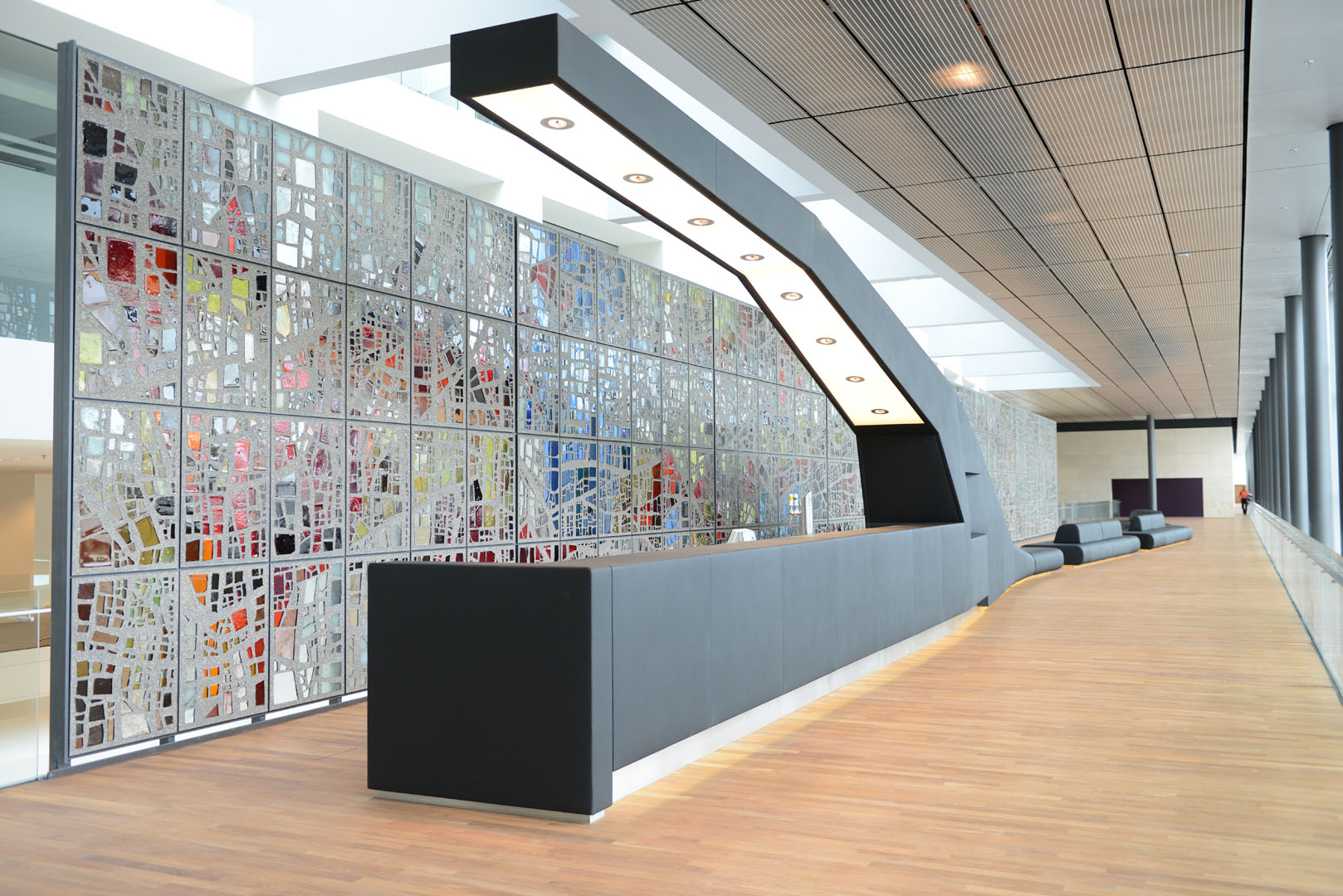
Conference reception
We warmly invite you to the official conference reception. The reception will take place immediately after the DGPs Award Ceremony. Light snacks and drinks will be served. Attendance is free of charge, but registration is required.

Congress dinner and party
The congress dinner will be held on 9 September at Abbaye Neumünster, followed by live music and a DJ. The ticket includes both dinner and the evening party.
“Party-only” tickets are also available, with entry at 21:00.

City tour
Explore Luxembourg City with a guided walking tour and discover its unique blend of history, culture, and mondern architecture.This complimentary tour is offered on three days and is free of charge. Please note that registration is required due to limited availability.
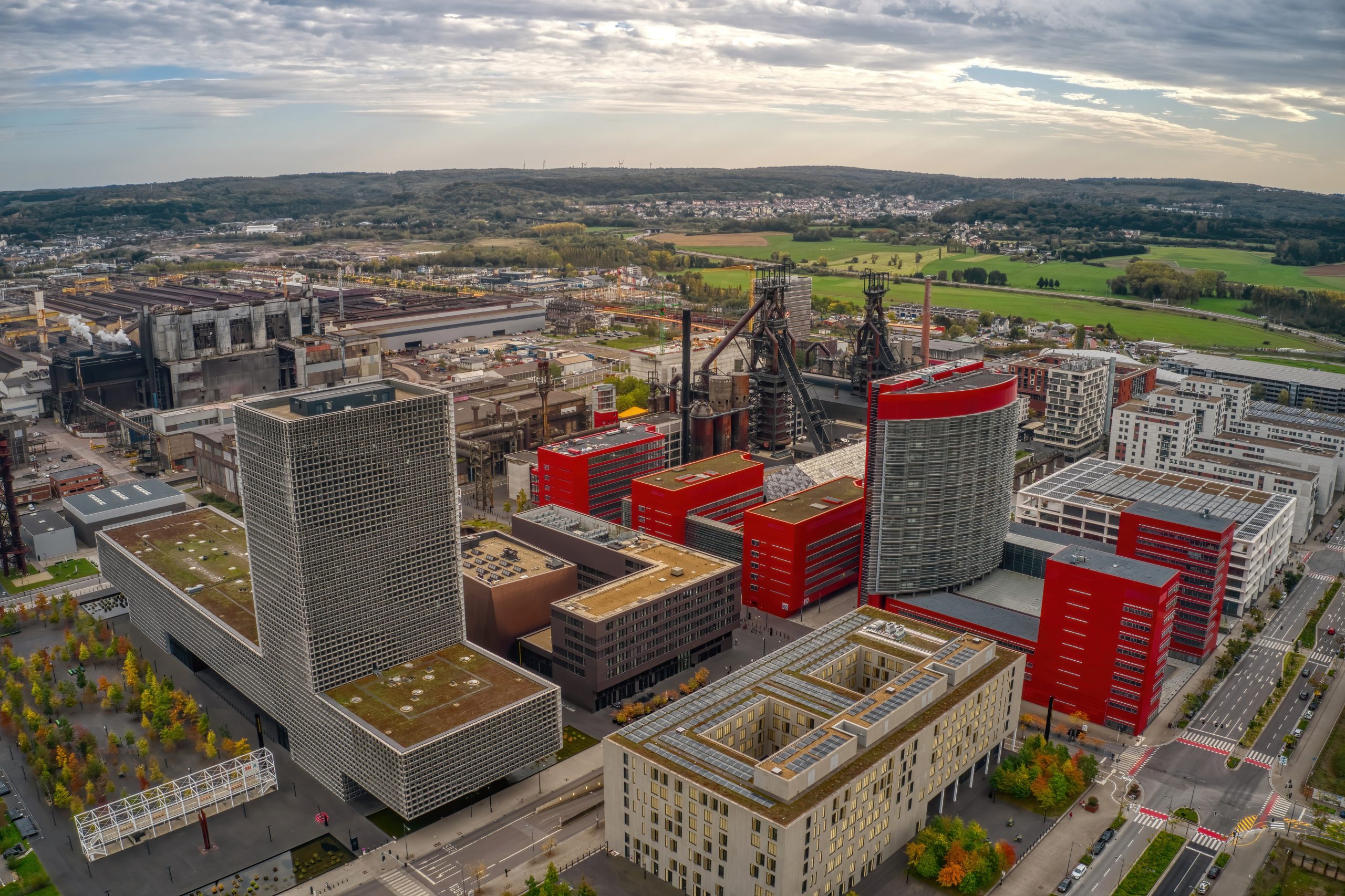
Campus tour
Join a guided tour of the Belval campus and discover its unique architectural blend of historic steel-mill heritage and modern design in the south of the country. Offered on three evenings during the congress, each tour lasts about two hours. While the tour is free of charge, please note that registration is required due to limited availability.
Pre-conference workshops
On Sunday, September 6th, several half- or full-day pre-conference workshops will be offered. These workshops are organized by early career researchers of the DGPs and are specifically designed for early career scientists (students, doctoral candidates, and postdocs). Our pre-conference workshops provide focused, hands-on training, emphasise practical skills, and open science.
Please register for workshops via the general registration system.
Full day workshops
Dr. Sven Passmann – Humboldt-Universität zu Berlin
Time: 8:00–18:00 ; Location: Melia, Foyer
Abstract
The need to make research data FAIR – i.e. findable, accessible, interoperable and ready for reuse in new projects – has led to the development of tools such as electronic laboratory notebooks (ELNs), which are particularly well known in disciplines such as chemistry. But beyond that, browser-based ELNs enable simple, structured, digital – and therefore easily searchable – storage of all important information about the project, the experiments and the collected data itself. This makes ELNs extremely useful for psychology in particular, with its vast amount of information collected in each experiment. Recording experimental data and the associated contexts (a.k.a. metadata) in an ELN, sorted by sessions, groups, projects and other aspects, is a very good alternative to the previous paper-and-pencil approach. The use of templates also simplifies documentation, as recurring information is already stored and data collection for all experimental sessions is regulated uniformly. In addition to the actual research data, scripts for analyses can also be linked to the project, enabling complete documentation. An API connection enables error-free transfer of data from devices to the ELN as well as to analysis scripts, which also allows the results to be transferred back to the ELN.
Prof. Dr. Marie-Ann Sengewald – Friedrich-Alexander-Universität Erlangen-Nürnberg & Leibniz-Institut für Bildungsverläufe (LlfBi)
Friedemann Trutzenberg, M.Sc. – Freie Universität Berlin
Prof. Dr. Steffi Pohl – Freie Universität Berlin
Time: 8:00–18:00 ; Location: Melia, Conference 3
Abstract
Causal statements are central to many psychological research questions. However, in various settings, randomized designs are either not feasible or are compromised by noncompliance. In this workshop, you will learn how to draw valid causal conclusions under quasi-experimental conditions. We begin with an overview of key concepts in causality. Based on the Potential Outcome Framework, we introduce different effect estimators that form the basis for describing the overall effectiveness of a treatment as well as for uncovering differences in treatment effectiveness across individuals. We introduce fundamental assumptions and discuss how they can be met in practice. Next, we explore methods for controlling confounding in quasi-experimental designs to estimate the causal effects and to investigate the differential effectiveness of a treatment. The focus is on regression-based adjustment methods, propensity score analysis, and their combination in doubly robust approaches. These methods are presented both theoretically and practically with hands-on applications using the statistical software R. Alongside the core principles for implementing the different analysis methods, we introduce recent developments, including the incorporation of latent variables for measurement error correction and the use of machine learning algorithms for covariate selection. Finally, participants receive practical guidance on study planning as well as for the selection of covariates and analysis strategies.
Dr. Christoph Kenntemich – JLU Gießen, TreadEd GmbH, Arbeitskreis Künstliche Intelligenz der DGPs
Time: 8:00–18:00 ; Location: Melia, Conference 2
Abstract
Dieser Workshop zielt darauf ab, Forschenden in den Sozialwissenschaften einen umfassenden Überblick über die Möglichkeiten generativer KI in ihrem Forschungsalltag und Forschungsfeld zu vermitteln. Zunächst wird ein grundlegendes Verständnis der Funktionsweise generativer KI aufgebaut, um eine fundierte Evaluation möglicher Anwendungsfälle zu ermöglichen.
Die konkreten Anwendungsfälle werden in zwei Hauptbereichen betrachtet:
1. Generative KI im Arbeitsalltag:
Hier werden bewährte Anwendungen für Aufgaben wie Brainstorming, Datenanalyse, Verständnisförderung, Lehre und wissenschaftliches Schreiben vorgestellt und diskutiert.
(Disclaimer: Als praktische Übung wird hier auch die Nutzung der Lehrplattform TreadEd.de vorgestellt)
2. Generative KI als Forschungswerkzeug: In diesem Teil werden spezifische Anwendungsfälle wie Textdatenanalyse, simulierte Befragungen, Versuchsperson-LLM-Interaktion und LLM-LLM-Interaktion besprochen und praktisch angewandt.
In beiden Teilbereichen wird theoretischer Input mit praktischen Anwendungen kombiniert.
Dr. Simone Brandstädter – Universität Heidelberg
Time: 8:00–18:00; Location: Novotel, Lab 1
Abstract
This workshop on promoting interdisciplinary competence is aimed at anyone who currently works or plans to work in an interdisciplinary setting and would like to facilitate interdisciplinary collaboration and reduce friction. It consists of several modules that include theory, application, and reflection elements. The workshop helps participants to reflect on their own discipline, better understand the viewpoints of other disciplines, and uses practical approaches to show how difficulties in interdisciplinary collaboration can be avoided. The content is based on the empirically developed model of interdisciplinary competence and the modular training as part of project InKo.
Dr. Nicolas Müller – Hochschule Aalen
Time: 8:00–18:00 ; Location: Novotel, Lab 3
Abstract
Das Programm R hat in den letzten Jahren in der psychologischen Forschung stark an Bedeutung gewonnen. Ziel dieses Workshops ist es, den Teilnehmenden einen praxisorientierten Einstieg in die Arbeit mit R zu ermöglichen. Nach einer Einführung in grundlegende Konzepte und die Bedienoberfläche der Programme R und RStudio werden anhand von Beispieldatensätzen zentrale Schritte der Datenaufbereitung und -analyse vermittelt. Der Workshop umfasst deskriptive Analysen sowie grundlegende statistische Verfahren wie t-Tests, Varianzanalysen (ANOVA) und Regressionsanalysen (inklusive Moderations- und Mediationsanalysen). Je nach Interesse und Vorkenntnissen der Gruppe können optional auch weiterführende Methoden wie Strukturgleichungsmodelle oder Multilevel-Analysen vorgestellt werden. Der Workshop verfolgt das Ziel, die Teilnehmenden in die Lage zu versetzen, eigenständig Datenanalysen in R durchzuführen und typische Einstiegshürden sicher zu meistern. Im Fokus stehen dabei nicht nur grundlegende theoretische Konzepte, sondern vor allem praxisorientierte Anwendungen und der direkte Transfer in die Forschungspraxis. Neben kompakten Inputs durch den Referenten arbeiten die Teilnehmenden mit realitätsnahen Beispieldatensätzen und erhalten Gelegenheit zum Austausch über Vorgehensweisen, Lösungen und typische Stolpersteine. Alle Materialien (Skript, Beispielcodes etc.) werden den Teilnehmenden zur Verfügung gestellt, sodass die Inhalte im Anschluss leicht auf eigene Forschungsprojekte übertragen werden können.
Dr. Melanie Vilser – Universität der Bundeswehr München
Dr. Natalie M. Michalik – SRH Berlin University of Applied Sciences
Time: 8:00–18:00 ; Location: Melia, Piccaso
Abstract
Eine Promotion ist mit einer Vielzahl an Herausforderungen verbunden – von der Wahl eines geeigneten Forschungsthemas und effektivem Zeitmanagement über Lehrverpflichtungen bis hin zum Umgang mit widersprüchlichen Erwartungen von Betreuenden. Diese Anforderungen führen nicht selten zu erheblichem Stress.
Der Workshop wurde speziell konzipiert, um Promovierende dabei zu unterstützen, konstruktive Strategien für den Umgang mit diesen Belastungen zu entwickeln.
Teil 1 (Vormittagssitzung, moderiert von Dr. Melanie Vilser): Stress verstehen und bewältigen
Im ersten Teil des Workshops werden auf Grundlage aktueller Studien (Vilser et al., 2022; 2023; 2024) sowie etablierter theoretischer Modelle wie dem Effort-Reward-Imbalance Modell und dem Transnationales Stressmodell praxisnahe Werkzeuge zur Stressreduktion und zur Förderung des persönlichen Wohlbefindens vermittelt.
Nach einer kurzen Begrüßung und einer Vorstellungsrunde, in der sich die Teilnehmenden gegenseitig kennenlernen, folgt ein theoretischer Input. Dieser wird durch individuelle Reflexionsübungen ergänzt, um den Transfer auf die eigenen Rezeptionssituation zu erleichtern. Anschließend arbeiten die Teilnehmenden in Kleingruppen an einem Thema, dass sie in ihrer Promotion als besonders herausfordernd erleben – zum Beispiel Zeitmanagement, Störessbewältigung oder Projektorganisation. Die Gruppen erarbeiten Lösungsansätze und präsentieren ihre Ergebnisse im Plenum, was den kollegialen Austausch und verschiedene Perspektiven fördert.
Teil 2 (Nachmittagssitzung, moderiert von Dr. Natalie Michalik): Selbstfürsorge in der Promotionszeit
Der zweite Teil des Workshops widmet sich der Selbstfürsorge: Was brauche ich, um langfristig gesund, motiviert und im Einklang mit mir selbst durch die Promotionszeit zu gehen?
Gemeinsam werden individuelle Strategien entwickelt, um die eigenen Ressourcen zu stärken, Belastungen frühzeitig zu erkennen und einen nachhaltigen Umgang mit den Anforderungen des Promotionsalltags zu fördern – zum Beispiel durch Achtsamkeits- und Atemübungen, Microbreaks, realistischer Zielsetzung sowie den reflektieren Umgang mit Perfektionismus und Selbstansprüchen. Ziel ist es, den Teilnehmenden konkrete, alltagstaugliche Tools an die Hand zu geben, die helfen, Energie, Fokus und Selbstmitgefühl im Promotionsalltag aufrechtzuerhalten.
Dr. Susanne Frick – TU Dortmund University
Stefan Inerle, M.Sc. – TU Dortmund University
Time: 8:00–18:00 ; Location: Melia, Conference 1
Abstract
Machine learning can facilitate screening abstracts or manuscripts for literature reviews and meta-analyses in diverse psychological fields and meta-science. In this workshop, we will teach techniques and share best practices on how machine learning can support the analysis of manuscript texts for these purposes. This workshop targets participants with no or little prior experience with text analysis. We will take a statistical perspective on the methods in order to gain a deeper understanding of how they work.
Using examples, we discuss the workflow from text extraction over model fitting and model application to uncertainty quantification. We will start with how text can be represented as numbers such as tokenization and n-grams. We will introduce both classical machine learning and statistical methods for regression and classification such as random forests, and more recent large language modeling approaches such as attention mechanisms. We will focus on methods that performed well across several meta-scientific tasks from the META-REP project. Last, we will introduce methods of uncertainty quantification to judge how much confidence one can have in the model output.
Participants can try out the techniques using practical examples in R or Python, upon individual choice.
Prof. Dr. Laura M. König – University of Vienna
Time: 8:00–18:00 ; Location: Novotel, Lab 2
Abstract
Psychologie hat hohe Relevanz für alltägliches Leben und Gesellschaft. Wissenschaftliche Erkenntnisse zu kommunizieren wird daher nicht nur immer häufiger gefordert, sondern ist auch sehr lohnenswert. Gleichzeitig ist die Kommunikation psychologischer Forschungsergebnisse mit Herausforderungen verbunden. Wissenschaft hat ihre eigene Sprache, die nicht immer alltagstauglich ist. Unsere Methoden sind kompliziert und unsere Ergebnisse nicht immer eindeutig. Zudem kann es viel Aufwand erfordern, ein größeres Publikum zu erreichen.
Das In-Mind Magazin (de.in-mind.org) ist ein von Wissenschaftler*innen getragenes, ehrenamtliches Projekt. Es möchte direkte Wissenschaftskommunikation als Plattform und durch praktische Unterstützung möglich machen. Die Dozent*innen des Workshop sind Herausgeber*innen bei In-Mind und geben im Rahmen des Workshops ihre Erfahrungen weiter. Der Schwerpunkt des Workshops wird auf dem populärwissenschaftlichen Schreiben liegen. Wir werden aber auch diskutieren, wie soziale Netzwerke zur Wissenschaftskommunikation und weiteren Verbreitung populärwissenschaftlicher Texte genutzt werden kann.Bitte bringen Sie zum Workshop einen Entwurf für einen kurzen Blog-Artikel mit. Sie können ein spannendes psychologisches Phänomen darstellen, einen interessanten Befund erklären oder eine gesellschaftliche Debatte aus wissenschaftlicher Sicht beleuchten. Auf https://de.in-mind.org/content/informationen-fuer-blog-autorinnen finden Sie zur Orientierung Autor*innenhinweise zu diesem Format. Unser Ziel ist, dass es am Ende des Workshops für jede*n Teilnehmer*in nicht mehr weit ist zu einem fertigen Text, den Sie bei In-Mind einreichen können.
Half day workshops
Dr. Sandra Zänkert – ZB MED – Information Center for Life Sciences
Maximilian Frank, M.Sc. – LMU Munich
Time: 13:00–17:00 ; Location: Melia, Tubbo
Abstract
How can psychology foster a research culture that learns from mistakes, supports openness, and builds fairer ways to acknowledge different kinds of scientific contributions? This workshop combines reflection on error culture with practical tools for improving the traceability, recognition, and evaluation of research outputs through Persistent Identifiers (PIDs).
The first part focuses on how error culture – or the lack thereof – and the resulting attitudes towards and perceptions of errors shapes the way scientists share their research outputs. It presents a classification of research errors and examines how they can arise at different levels of the research workflow (e.g. data colletion, analysis, publication). Participants will exchange experiences from their own work in handling errors and reflect on how a more constructiveerror culture can strengthen both research quality and collaboration.
Building on this reflection, the second part of the workshop introduces PIDs, such as ORCID, DOI, and ROR, as key components of a connected and transparent research ecosystem.
Participants will learn how to assign and link PIDs to their own publications, datasets, and other materials to make their work more discoverable, reusable,and measurable across diverse forms of scholarly contribution. By bridging cultural reflection with technical application, the workshop demonstrates how embracing a constructive approach to error and leveraging openidentifiers can strengthen both the integrity and visibility of research, while supporting more comprehensive and equitable research assessment. Participantswill leave with conceptual insights and practical skills to make their research practices more connected, visible, and valued.
Dr. Alexander Klamar – Hochschule des Bundes für öffentliche Verwaltung (Federal University of Applied Administrative Sciences)
Dr. Sanja Klever-Klein – DB Cargo
Time: 8:00–12:00 ; Location: Melia, Miró
Abstract
Viele Doktorand*innen stehen früher oder später vor der Frage, welchen beruflichen Weg sie einschlagen wollen. Welche Karriereperspektiven gibt es für promovierte Psycholog*innen außerhalb der Wissenschaft? Welche Möglichkeiten bestehen in der Verwaltung? Wie kann ein Einstieg gelingen? Und: Welche Möglichkeiten gibt es innerhalb der Wissenschaft, wenn es nicht die “klassische” Professur werden kann/soll? Diese (und weitere) Fragen möchten wir im Workshop zusammen mit den Teilnehmenden reflektieren.
Hannes Schilling, M.Sc. – Technische Universität Braunschweig
Mirjam Landowski, M.Sc – Humboldt-Universität zu Berlin & WISTA Management GmbH
Dr. Clara Zwettler – Universität Fribourg
Dr. Katja Wehrle – Justus-Liebig-Universität Gießen
Prof. Dr. Franziska Josefine Kößler – Leuphana Universität Lüneburg
Time: 13:00–17:00 ; Location: Melia, Dalì
Abstract
Current research trends in psychology highlight the importance of using qualitative methods alongside quantitative approaches to advance theory and practice. Consequently, qualitative research is experiencing a renaissance as a valuable tool in the psychologist’s toolkit. Yet many researchers across career stages and subdisciplines have received only limited methodological training in qualitative research practices. Although psychology programs are beginning to expand their curricula, established researchers often still need to explore qualitative methods independently. Therefore, the pre-conference workshop “Qualitative Research Lab” aims to create a space for dialogue around developing or existing research ideas that employ qualitative methods. The workshop is open to researchers and practitioners in psychology at all career stages who are currently engaged in, or planning, a qualitative project. Participants will first receive a brief introduction to contemporary qualitative practices, including clarifications of epistemological and ontological considerations, and the debunking of common myths. Following this, participants will join one of four roundtable groups, each consisting of up to eight participants and a workshop guide (one or two of the early-career qualitative or mixed-methods researchers organizing the workshop). Within the roundtables, participants will present their brought along qualitative research ideas and related questions. This format allows for constructive peer feedback and guidance from the workshop facilitator, fostering shared learning and addressing challenges in applying qualitative methods.
Felix Dietrich, M.A. – Johannes Gutenberg-Universität Mainz
Dr. Daniel Possler – Hanover University of Music, Drama and Media, Germany
Dr. Jule Scheper – Hanover University of Music, Drama and Media, Germany
Time: 8:00–12:00 ; Location: Melia, Tubbo
Abstract
Large Language Models (LLMs) represent a groundbreaking advancement in automatic text analysis, opening up immense possibilities for researchers across all areas of psychology who wish to analyze large corpora of texts in their research. Thanks to open-source initiatives, many powerful pre-trained models are now easily accessible to researchers. In particular, the Hugging Face platform (huggingface.co) provides free access to many powerful, ready-to-use models that can be applied to research questions with just a few lines of Python code.
This half-day workshop offers a beginner-oriented introduction to text classification with open-source Large Language Models (LLMs) hosted on the platform Hugging Face. The session combines theoretical insights with hands-on coding exercises.
We will provide an overview of LLM functionalities and introduce the most relevant model types for text classification—especially, (1) category-specific encoder models, (2) task-specific encoder models, and (3) universal decoder models. Participants will then learn in a hands-on tutorial how to use LLMs via Hugging Face to classify texts using Python. We will also discuss with the participants the advantages and limitations of LLM-based text classification, especially in comparison to established text analysis methods, as well as best practices for integrating LLM-based text analysis into psychological research.
The workshop is designed for beginners. No prior experience with machine learning, text mining, or Python is required, although basic familiarity with programming languages (e.g., R, MATLAB) will be helpful.
Prof. Dr. Astrid Kause – Leuphana University Lüneburg
Nicolas Neef, M.Sc. – University of Hohenheim
Friederike Stock, M.Sc. – Max Planck Institut für Bildungsforschung
Mia Gesa Lehn, M.Sc. – Institut für Ökologische Wirtschaftsforschung
Time: 13:00–17:00 ; Location: Melia, Miró
Abstract
Science is often tasked with developing solutions for societal challenges, including climate change, biodiversity loss, pandemics or the rise of artificial intelligence. Accordingly, psychologists often focus on a better understanding of how people can positively contribute to overcoming such challenges. This workshop is designed to support early-career (and other interested) researchers for increasing the applied impact of their research.
We will discuss (1) How to co-develop research questions that are relevant for improving real-world processes, together with practitioners This includes building networks between science and practice, findings a common language and acquire funding that allows applied research; (2) using research designs with high external validity. This includes methods, as well as how to deal with uncertainties inherent in empirical research, and (3) identifying effective channels for communicating research results to practitioners and ensuring research impact onto real-world processes, inlcuding policy making. For this workshop, we will invite two psychologists (TBA) from both research and practice for two talks that illustrate how psychological researchers can effectively bridge science and practice. Their talks will be followed by group work, for deepening insights, identifying further questions, and developing practical advice for psychologists on how to increase impact. Group discussions will feed into a short panel discussion that summarizes insights (and maybe even guidelines) for how to increase impact of psychological research.
Dr. Barbara Bergmann – University of Bonn
Nico Ruhara, M.Sc. – University of Bonn
Time: 8:00–12:00 ; Location: Melia, Dalì
Abstract
Virtual Reality (VR) opens new frontiers for psychological research by enabling highly realistic yet controlled simulations and settings. This workshop introduces participants to contemporary VR-based methods, taking legal and forensic psychology research as an example. We will hear from researchers actively using VR who will present their work (i.e. on topics such as eyewitness memory and juror decision-making) and offer insights into the opportunities and challenges of applying immersive technologies in psychological research. Participants will explore the potential of VR to enhance ecological validity while addressing methodological, ethical, and technical hurdles such as realism, cost, and participant safety. Together we aim to discover how VR can bridge the gap between laboratory studies and real-world processes and we invite those eager to integrate this technology into their research.