
 Faculty of Science, Technology and Medicine
 Faculty of Law, Economics and Finance
 Faculty of Humanities, Education and Social Sciences
 Interdisciplinary Centre for Security, Reliability and Trust
 Luxembourg Centre for Systems Biomedicine
 Luxembourg Centre for Contemporary and Digital History
 Luxembourg Centre for European Law
 Luxembourg Centre for Socio-Environmental Systems
Postdoctoral Researcher in Digital/Computational History
Job details
Your role
- Conduct original data-driven historical research on the theme of “media influences”
- Develop innovative computational research methods building on Impresso’s corpus of multilingual newspaper and radio sources provided by a network of Western European partners
- Contribute to the design of the Impresso Web App and the Impresso Datalab together with a team of designers and experts in natural language processing and history
- Contribute an interactive notebook based on a research case study to be published on the Impresso Datalab
Impresso – Media Monitoring of the Past II. Beyond Borders: Connecting Historical Newspapers and Radio is an interdisciplinary research project that leverages an unprecedented corpus of newspaper and radio archives, and uses machine learning to pursue a paradigm shift in the processing, semantic enrichment, representation, exploration and study of historical newspaper and radio collections across modalities, time, languages, and national borders.
For any questions regarding the advertised position, please contact Asst. Prof. Marten Düring (marten.during@uni.lu).
Your profile
- Demonstrable experience in humanities research using computational methods
- PhD in history or a related field or, alternatively a Phd in computer science with experience in conducting historical research
- Ability to meet deadlines and demonstrate methodological, organised, pragmatic and effective approaches to your work
- Fluency in English is required; knowledge of French, German and/or Dutch are considered an asset
Advantageous are:
- Knowledge of at least one programming language, preferably Python
- Knowledge of machine learning, more specifically representation learning
- Knowledge of current debates in media history
- Experience in working with data derived from historical newspaper and radio collections
We offer
- A modern, dynamic university with a personal and inclusive atmosphere. Multilingual and international character. Staff coming from more than 90 countries. Member of The Guild of European Research Intensive Universities
- An exceptional research environment, supported by skilled staff and high-quality equipment. Strong links to professional sectors and the Luxembourg labour market. A unique urban campus with excellent infrastructure
- A partner for society and industry. Cooperation with European institutions, innovative companies, the Financial Centre and a wide range of non-academic partners including ministries, local governments, associations, and NGOs
How to apply
Applications should include:
- Curriculum Vitae
- Cover letter detailing your motivation for applying to the advertised research topic and/or project, including how your background, interests, and career goals align with its objective
- PhD diploma or a letter/information indicating the expected defense date
- Transcript of all modules and results from university-level courses taken
- List of publications
Early application is highly encouraged, as the applications will be processed upon reception. To ensure full consideration, candidates should apply by 1st July 2026 ONLINE formally through the HR system. Applications by Email will not be considered.
All qualified individuals are encouraged to apply. In line with our values, the University of Luxembourg promotes an inclusive culture. We encourage applications from individuals of all backgrounds and are dedicated to upholding equality and respect for our employees and students.
General information:
- Contract Type: Fixed Term Contract 6 Month
- Work Hours: Full Time 40.0 Hours per Week
- Planned start date: 1 September 2026
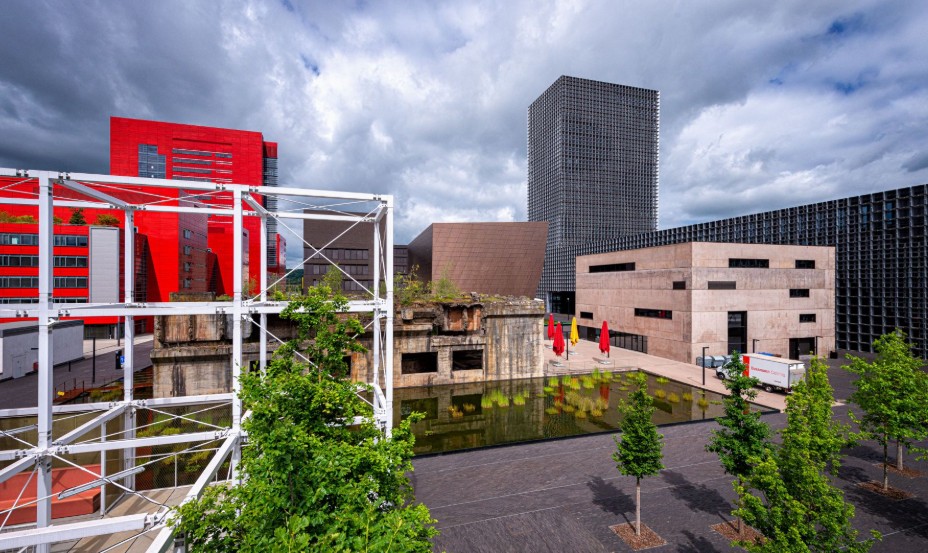
- Location: Belval Campus
- Internal Title: Postdoctoral researcher
- Job Reference: UOL08248
The yearly gross salary for every Postdoctoral Researcher at the UL is EUR 85176 (full time).
About us
The University of Luxembourg is an international research university with a distinctly multilingual and interdisciplinary character.
The Luxembourg Centre for Contemporary and Digital History (C²DH) at the University of Luxembourg is an interdisciplinary research centre committed to high-quality research and public dissemination in the field of contemporary history with a particular focus on digital methods and tools.The C²DH’s ambition is to venture off the beaten track and find new ways of doing, teaching and presenting contemporary history of Luxembourg and the history of Europe in the 20th and 21st centuries. It serves as a catalyst for innovative and creative scholarship and new forms of public dissemination.
Impresso is carried out by the Luxembourg Centre for Contemporary and Digital history (C2DH) and Swiss partners DHLAB at the École polytechnique fédérale de Lausanne (EPFL), the University of Lausanne’s History department, the University of Zürich’s Institute for Computational Linguistics. The project is funded by the Swiss National Science Foundation (SNSF) and the Luxembourg National Research Fund (FNR).