
 Faculty of Science, Technology and Medicine
 Faculty of Law, Economics and Finance
 Faculty of Humanities, Education and Social Sciences
 Interdisciplinary Centre for Security, Reliability and Trust
 Luxembourg Centre for Systems Biomedicine
 Luxembourg Centre for Contemporary and Digital History
 Luxembourg Centre for European Law
 Luxembourg Centre for Socio-Environmental Systems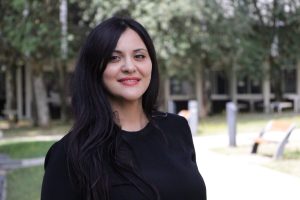
From Tunisia to Luxembourg: Inès Chihi has charted her own academic path. Since 2022, the electrical engineer has been an Assistant Professor at the University of Luxembourg. Today, Inès Chihi is Assistant Professor of Electrical Measurement and Sensor Technology and leads a research group of twelve at the Department of Engineering at the University of Luxembourg.
In an interview with science.lu, she explains her interdisciplinary research philosophy and the importance of observational skills and education in times of social upheaval.
How would you describe yourself?
Inès Chihi: I am Tunisian and completed all my studies, my PhD and my postdoctoral qualification in Tunisia. I never planned to leave my home country and worked for many years as a professor of electrical engineering at the University of Carthage in Tunis. I am proud of that. I am a researcher by nature, a professor by conviction and a mother out of love. All three areas are closely intertwined and together they describe who I am.
Were you interested in science and technology from a young age?
Inès Chihi: No. I was an active child and always played outdoors, whether it was football or with dolls. School went smoothly. I didn’t feel any particular passion for any specific subject, but I was always very curious, observed people and tried to learn from their experiences. After leaving school, I toyed with the idea of studying medicine, but I couldn’t stand the sight of blood. My best subject was maths; analytical thinking clearly came naturally to me. But I also loved practical, hands-on and artistic work; I enjoyed painting and pottery. I took my time making my decision and, through talking to others, realised that engineering was the right choice for me. Because it leads from abstract, logical thinking to very practical applications.
Was there a decisive moment?
Inès Chihi: Yes, the last few months before my A-levels. I felt under immense pressure. Someone in the family was constantly asking how many maths problems I’d done that day and whether I’d studied enough. At some point, it all became too much for me. I refused to go to school any longer and prepared for the exams on my own at home. That was, of course, a bizarre move; my teachers and family were worried. But lo and behold, I passed my A-levels with good results. Out of sheer relief, my teacher came to visit us at home. For me, that was the lesson of my life: listen to yourself! That experience helped me a great deal later on, both in my career and in life.
Why did the family put so much pressure on you?
Inès Chihi: Since the 2011 revolution, better known as the Arab Spring, Tunisia has gone through various economic and political crises. The only thing we have gained is education. The social value of a good education has risen even further. Tunisian parents are prepared to sell their house to pay for their children’s studies and give them a future through education. Consequently, there is immense pressure on young people, and on women almost even more than on men. My grandmother was adamant. Giving up on an education or an exam was out of the question for her. She said: ‘You’ll see it through to the end, and that’s that.’
How did you find your first few semesters in a subject that is still considered a male-dominated field?
Inès Chihi: The engineering lectures were attended almost exclusively by men. My best friend was dismayed and strongly advised me against the subject. But I simply went to the lecture and then back home, where I had my friends, and studied very independently. At first, the professors didn’t take me seriously, but over time my grades won them over. After my Master’s degree, I applied to companies. In Tunisia, everyone has to earn a living, and the government strongly promotes the idea of women’s independence. But I wanted to do a second Master’s degree. A company offered me a position as a project manager, with two days off a week for my studies. That allowed me to complete my Master’s degree alongside my job.
Why did you ultimately decide to go into research?
Inès Chihi: The professor who supervised my Master’s thesis said I was cut out for research. I did a research internship and found he was right: research was and is my passion. I’m fascinated by how permeable and holistic it is. The big scientific questions often require an interdisciplinary approach. As an electrical engineer, I have to be open to other disciplines – to mechanics, computer science, even psychology. I have a flair for innovation and want to approach technical challenges with curiosity and a fresh perspective. I then completed my PhD in 2013 after just two and a half years, taught alongside my studies, and realised that I also really enjoy teaching and interacting with students.
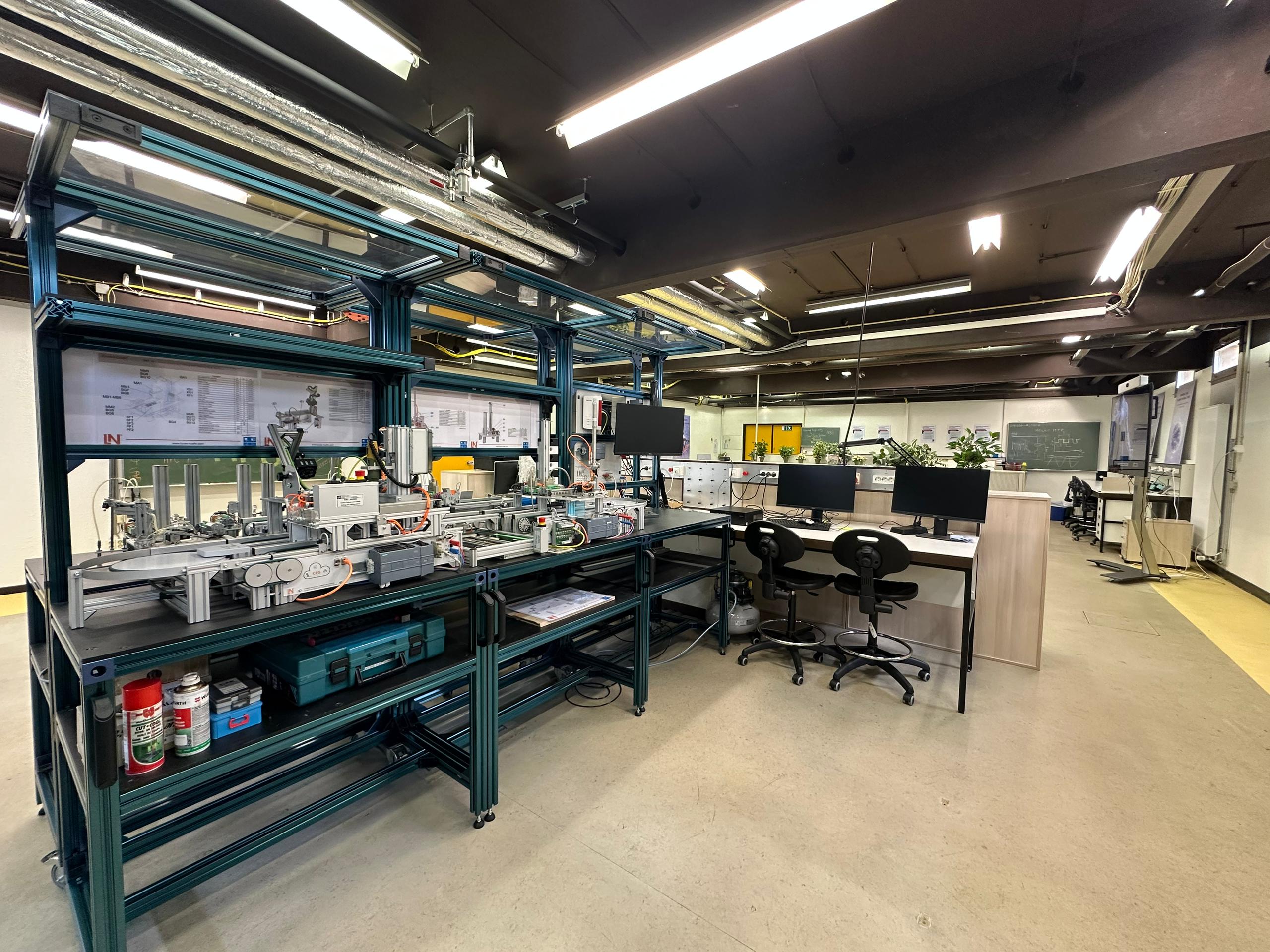
Prof. Chihi’s lab
And what brought you to Luxembourg?
Inès Chihi: Chance, like so much in life. After the revolution, I wanted to leave the country and emigrate to Canada – by then I was married with two children. Then the pandemic struck. A colleague wrote to me saying that the University of Luxembourg was urgently looking for a lecturer who could teach electronics – and that’s how I ended up with a one-year contract in Luxembourg. Then the university advertised an assistant professorship in electrical engineering. Many people tried to discourage me – as a woman, and from Africa at that, I wouldn’t stand a chance. Many also underestimate the standard of universities in Tunisia. That’s when I thought back to my A-level experience: don’t listen to others, you know your own strengths.
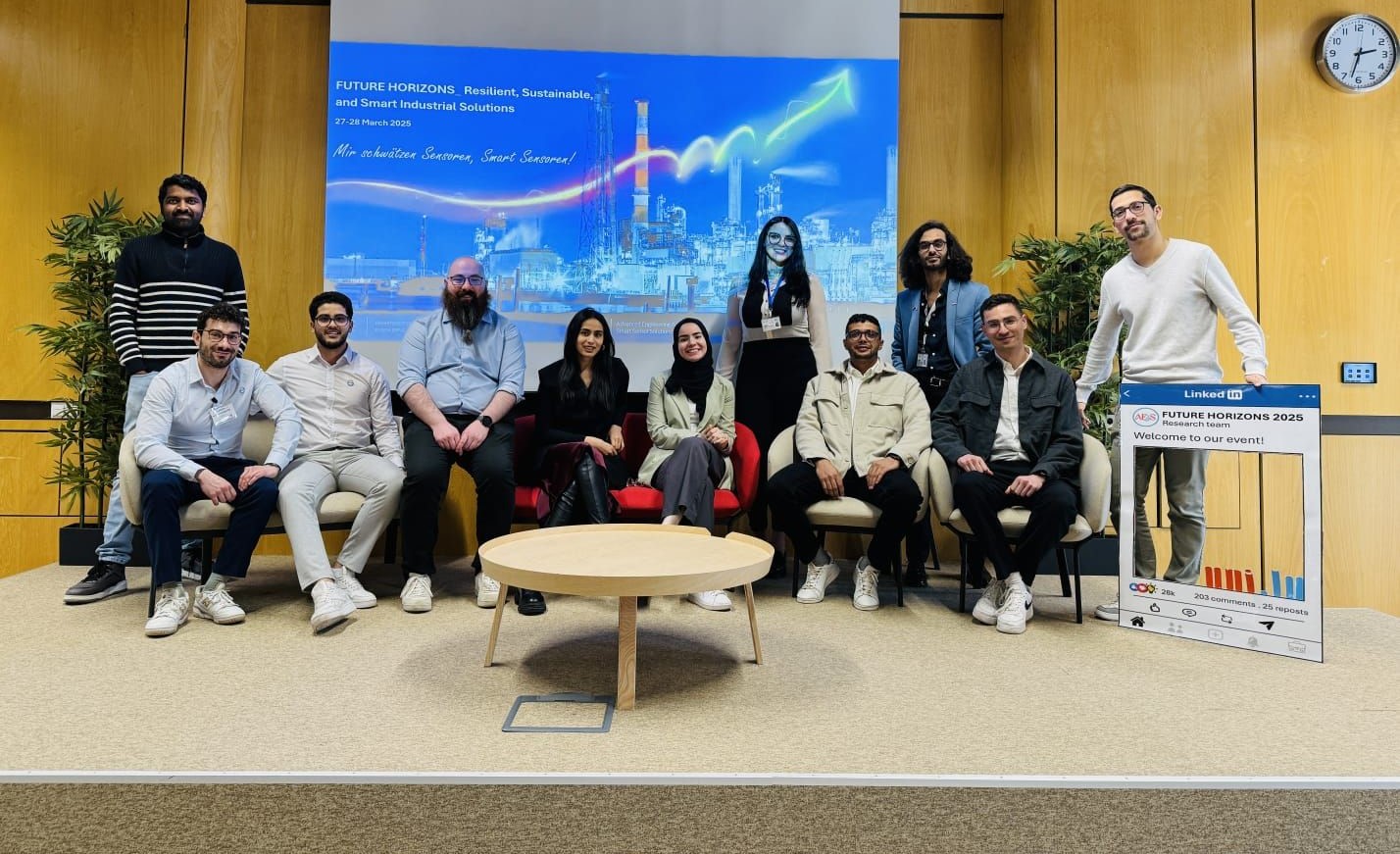
Pr. Chihi (fifth from left) and her team
What is your team currently working on?
Inès Chihi: We design and develop next-generation smart sensors for biotechnology and healthcare, for energy systems and Industry 5.0. In a current project, we are working on sensors for smart prostheses that not only enable people to perform simple movements, but also reproduce complex muscle activities such as handwriting. In collaboration with King’s College in the UK, we are planning to develop a low-cost, compact device for hospitals in poorer countries that can capture as much of a patient’s health data as possible using as few sensors as possible.
What are the challenges in your field?
Inès Chihi: When people hear the word ‘sensors’, many think it’s about abstract technology. But it’s about practical applications that benefit us all. It’s important first to understand the priorities of the country and Europe, and then to ask the right questions.
Another challenge with sensors is the reliability of the data they provide. We are working on ‘self-healing’ sensors that correct data themselves. Take an everyday product like pasta: energy accounts for over 50 per cent of production costs. If we manage to reduce these energy costs by 20 per cent in the production process using self-healing sensors, the benefit is obvious.
What advice would you give to young women interested in science?
Inès Chihi: Schoolgirls often look at me with wide eyes when I walk into the classroom and talk about my job. Because they think that as a woman in a technical field, you have to look like a man… Then I laugh and reassure them: even as an engineer, you can wear make-up and dress however you like. Above all, however, I advise them to observe closely. Observe other people and learn from them. Why is one person optimistic, another grumpy? Why does one person overcome a setback, whilst another doesn’t?
Then find out what your strengths are and which subject suits you. Make a decision and, if necessary, change your mind – you have plenty of time. Have the courage to go your own way. Don’t let yourself be pigeonholed. I am a human being first and foremost, before I am a woman. In research careers, gender doesn’t play a major role. Of course, you will encounter problems and obstacles. But view them as challenges. The obstacles are part of the journey, but they allow you to move forward and reinvent yourselves.
Interview: Britta Schlüter
Editor: Michèle Weber (FNR)