Faculty of Science, Technology and Medicine
 Faculty of Law, Economics and Finance
 Faculty of Humanities, Education and Social Sciences
 Interdisciplinary Centre for Security, Reliability and Trust
 Luxembourg Centre for Systems Biomedicine
 Luxembourg Centre for Contemporary and Digital History
 Luxembourg Centre for European Law
 Luxembourg Centre for Socio-Environmental Systems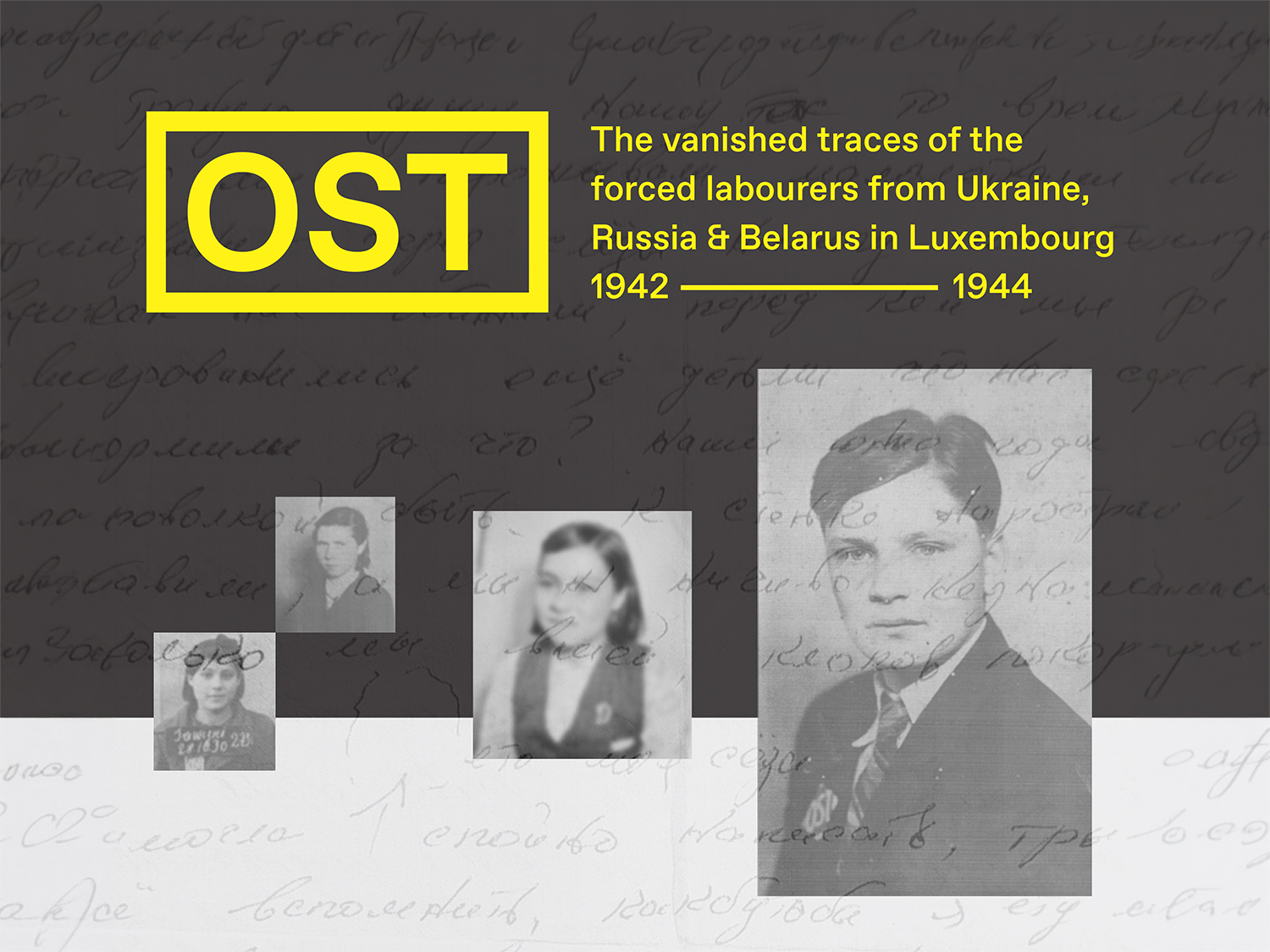
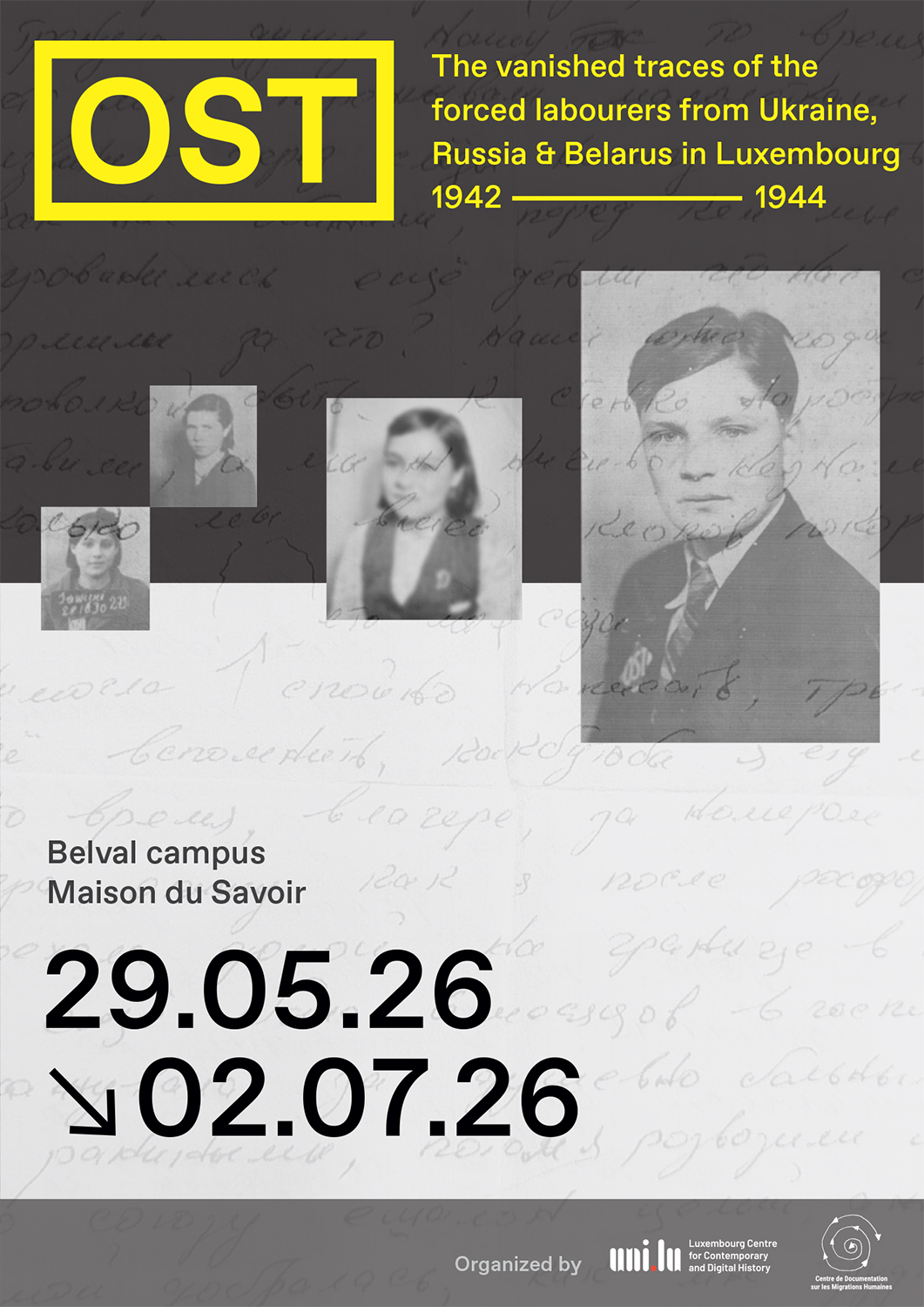
OST. This exhibition is about the forgotten young forced laborers who were brought to Belval – not to study, but to be exploited.
The OST exhibition, originally curated by Joëlla van Donkersgoed and supervised by Inna Ganschow, was on display at the CDMH in Dudelange. It is now being relocated to Belval in a different format and with adapted content to address the topic of the forced-labor camps near the Belval university campus.
Twenty posters designed by Kirill Mitsurov in the foyer of the MSA building on the university campus tell the story of young Ukrainians, Russians, and Belarusians. Using a map that marks six camps near the university campus as well as two factories that used forced labor, students and visitors are made aware of a difficult chapter in Luxembourg’s past. The forgotten and overlooked victims of Nazism gaze from the posters – bearing their camp numbers and the OST insignia on their chests – at their peers in the 21st century. Years later, three of them talk about their life in the barracks in Luxembourg in video and audio recordings available in the exhibition.
Two camps were situated on the Belval campus: one for women and one for men.
The camp for women was located where Rue de Raemerich stands today.
The camp for male Soviet prisoners of war was located in the former Belval mineral water factory between two red factory chimneys and the Lycée Bel-Val.
The exhibition is open from 29 May 2026 to 2 July 2026.
For guided tours and school visits, please contact c2dh@uni.lu