

 Faculty of Science, Technology and Medicine
 Faculty of Law, Economics and Finance
 Faculty of Humanities, Education and Social Sciences
 Interdisciplinary Centre for Security, Reliability and Trust
 Luxembourg Centre for Systems Biomedicine
 Luxembourg Centre for Contemporary and Digital History
 Luxembourg Centre for European Law
 Luxembourg Centre for Socio-Environmental Systems
Geophysical and Extraterrestrial Observations for Safety, Protection, Awareness, and prevention of Critical Effects (GEOSPACE)
The project at a glance
-
Start date:01 Jul 2025
-
Duration in months:36
-
Funding:SnT, University of Luxembourg
-
Principal Investigator(s):Olga KHABAROVA
About
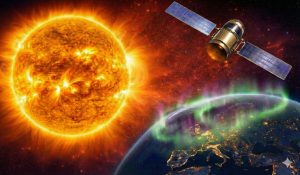
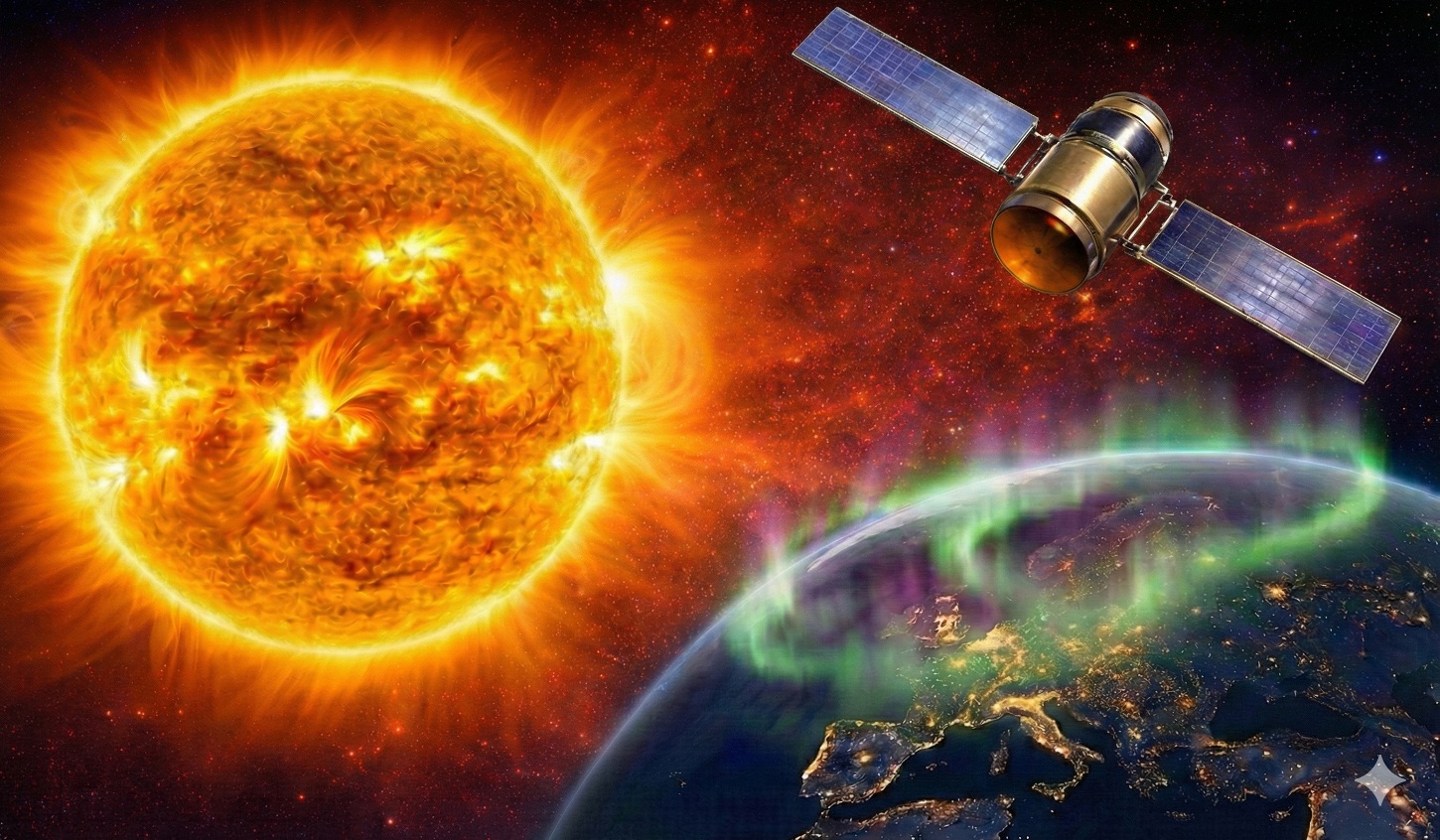
GEOSPACE is a research project led by the SpaSys group at SnT, launched at the end of 2025. The project focuses on the study of variable geospace conditions and their potentially adverse effects on critical space- and ground-based infrastructure. This includes impacts on Earth-orbiting satellites, interplanetary missions, signal propagation, electric power systems, autonomous systems, and human activities, both in space and on the Earth. Geospace is defined as a coupled, dynamic environment extending from the Sun through interplanetary space to the solid Earth. Its hazardous variability arises from multiple, physically distinct processes operating across different spatial and temporal scales. These include solar-driven space weather, meteoroids and micrometeoroids, atmospheric variability, and lithospheric phenomena such as earthquakes and volcanic activity, which may coexist, overlap, or modulate each other’s effects. Space weather represents a major component of geospace hazards, caused by solar flares, coronal mass ejections, and high-speed solar wind streams that interact with the terrestrial magnetosphere. Through magnetic reconnection, the intensification of large-scale current systems, particle acceleration, and precipitation into the upper atmosphere, energy from the solar wind modifies electromagnetic, plasma, and radiation conditions in near-Earth space. During geomagnetic storms, rapid variations of magnetospheric and ionospheric currents produce electric fields in space and induce currents in the conducting Earth, directly affecting electric power lines and damaging electric transformers. Storm-time changes in ionospheric conductivity, plasma density, and thermospheric structure further affect radio-wave propagation, navigation, satellite charging, and power-grid stability, with direct consequences for space- and ground-based infrastructure. GEOSPACE also addresses non–space-weather hazards. Meteoroids and micrometeoroids continuously interact with spacecraft and planetary atmospheres, causing mechanical damage, plasma generation, and transient electromagnetic disturbances. Atmospheric variability and lithospheric processes, including lightning, earthquakes, and volcanic activity, contribute to fluctuations in conductivity, electromagnetic noise, and signal propagation. While these phenomena are independent of space weather, they can overlap with or amplify its effects, increasing risks to technological systems. Humans are affected both directly and indirectly. Astronauts and crew on spacecraft are exposed to elevated radiation during solar particle events, increasing both acute and long-term health risks. On Earth, geomagnetic disturbances, atmospheric ionization, and related processes may interact with other environmental stressors, producing subtle biological effects that can accumulate or overlap, potentially influencing cardiovascular function and correlating with population-level indicators such as childhood leukemia incidence. Beyond health, geospace variability and natural hazards can disrupt daily life by causing electricity blackouts and outages in communication and internet infrastructure, affecting industrial operations, autonomous systems, navigation, and global connectivity. Even relatively weak effects can become significant when combined with other natural hazards, amplifying societal and technological risks. GEOSPACE studies hazardous geospace conditions, including space-weather and geophysical drivers, and analyzes their effects on space missions, critical infrastructure, autonomous technologies, and human activities in an increasingly space-dependent world. The project is led by Dr. Olga Khabarova, with support from Prof. Andreas Hein, in collaboration with leading European and US scientists. The SpaSys group organises a weekly scientific seminar under the same title.
Project team
-
Olga KHABAROVA
-
Andreas HEIN
Keywords
- Space Weather
- Critical Infrastructure
- Satellite
- Radiation Risk
- Geohazard