

 Faculty of Science, Technology and Medicine
 Faculty of Law, Economics and Finance
 Faculty of Humanities, Education and Social Sciences
 Interdisciplinary Centre for Security, Reliability and Trust
 Luxembourg Centre for Systems Biomedicine
 Luxembourg Centre for Contemporary and Digital History
 Luxembourg Centre for European Law
 Luxembourg Centre for Socio-Environmental Systems
Can artificial intelligence help bring greater transparency to the art market? Researcher Afshin Khadankishandi is exploring how AI could make art valuation more transparent and evidence-based. His work looks at how artificial intelligence could help experts, insurers, and investors better assess the value and authenticity of artworks in an increasingly complex market.
In November 2024, a painting attributed to Andrea del Verrocchio, Leonardo da Vinci’s teacher, sold at Sotheby’s for nearly $10 million. The sale reignited a longstanding debate: in a market where attribution can shift a work’s value by an order of magnitude, how can buyers, insurers, and financiers ever be fully confident in what an artwork is worth? At the latest FutureFinTech Lecture, researcher Afshin Khadankishandi presented one possible answer: auditable, multimodal AI systems designed to support evidence-based appraisal.
“Art is not only a cultural object”, Afshin explained during the lecture. “It is also an illiquid asset, a collateral object, an insurance exposure and an alternative investment”.
A market in need of infrastructure
The global art market generated an estimated $65 billion in sales in 2023, according to the Art Basel and UBS Art Market Report. Yet despite its size, the market remains structurally opaque. Private sales account for a major share of transactions, provenance records are often incomplete, and valuations still rely heavily on specialist judgement that can be difficult to verify externally.
This is not just a cultural problem. The Deloitte Art and Finance Report has repeatedly highlighted the growing role of art as a financial asset used in lending, wealth management and portfolio diversification.
As artworks increasingly become investment instruments and collateral assets, pressure is growing for more transparent and auditable valuation methods. Afshin’s research aims to address that challenge.
When authentication fails
The risks of poor valuation are not hypothetical. The Beltracchi forgery scandal exposed weaknesses in expert-led authentication after forged paintings attributed to major modern artists sold for millions of euros.
More recently, the Swiss AI firm Art Recognition made international headlines when its algorithms challenged attributions previously accepted as authentic Rembrandts and Caravaggios, raising uncomfortable questions about the reliability of the existing appraisal ecosystem.
These cases illustrate a point central to Afshin’s lecture: visual analysis alone, whether human or machine, is a weak predictor of value. Provenance depth, social signals and market context matter considerably more.
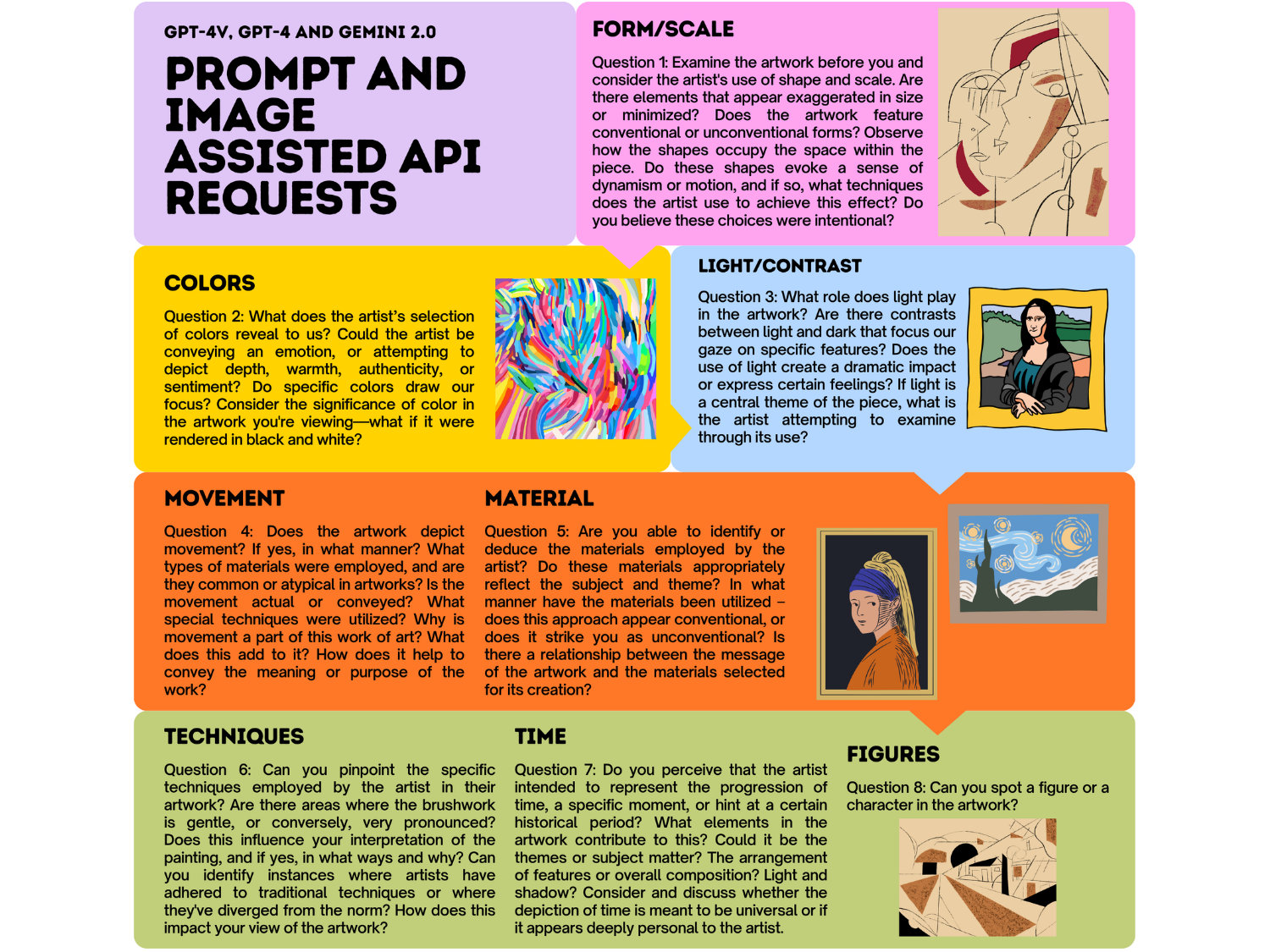
In response, Afshin presented a large-scale study analysing 15,000 digitised artworks across 23 artists using large language models to decode stylistic and historical patterns. The system examined:
- Composition
- Lighting
- Movement
- Colour
- Painting technique
- Symbolic cues
- Archival and catalogue information
The research showed that AI systems perform better when they combine image analysis with historical, textual, and market information instead of relying only on visuals.
Introducing multiagent artwork appraisal engine
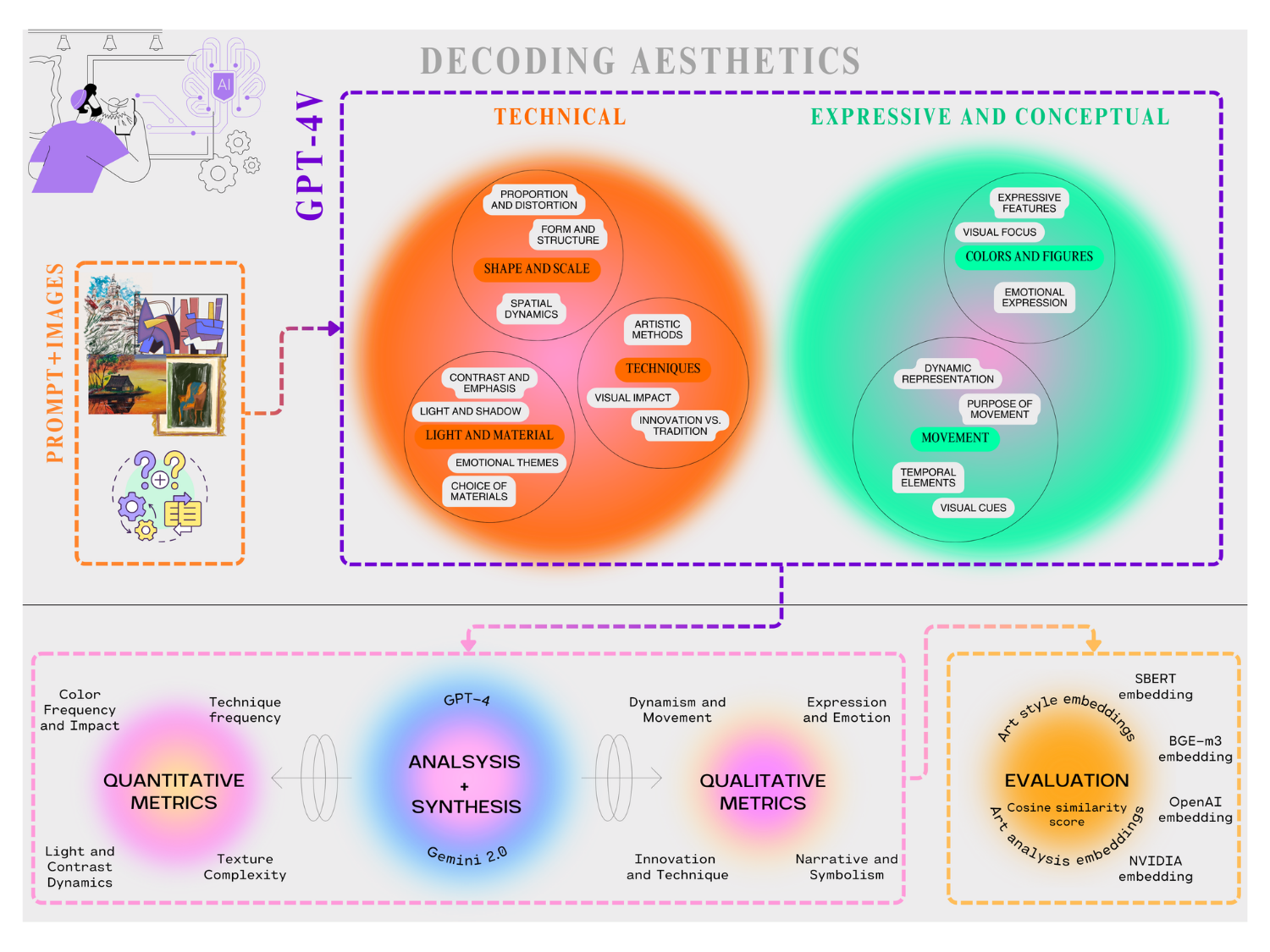
The central contribution of the research is extension of the CognArtive1, a multi-agent AI framework that deploys eight specialist agents, each analysing a distinct dimension such as composition, luminosity, and technique. A mediation process resolves disagreements between agents, while a market research component incorporates external evidence. In an expert study, the proposed multiagent framework delivered a 0.56 percentage points improvement in price prediction accuracy over a baseline model.
A key feature of the framework is auditability. Each stage of the appraisal process can be reviewed, challenged, and refined by experts.
This matters in a sector facing increasing regulatory scrutiny. In the European Union, anti-money laundering legislation now requires art dealers to conduct due diligence on clients and transactions above 10,000 euros.
Systems like CognArtive could help support growing demands for transparency and accountability in the art market.
The limits of the machine
Afshin was candid about what AI cannot yet do. Hallucinations (the tendency of AI models to generate plausible but inaccurate outputs), cultural bias, and the difficulty of decoding emotion and symbolism in visual models all remain genuine challenges.
Christie’s and Sotheby’s have each invested in data and analytics capabilities in recent years, yet both publicly maintain that human expertise remains indispensable, a view Afshin shares.
CognArtive is a prototype, and realising its potential as a deployed art finance tool will require sustained collaboration between AI researchers, professional appraisers, and the financial sector.
Why this matters
Art is no longer an outlier in the private assets landscape. As FutureFinTech looks to develop research around the digitalisation of private assets, work such as CognArtive points towards a future where cultural assets are subject to the same evidential standards as any other financial instrument.
AI is already beginning to influence art finance. The next challenge is building systems that are transparent enough for experts, institutions, and investors to trust.
People in this story
About FutureFinTech
FutureFinTech, founded by researchers from the Interdisciplinary Centre for Security, Reliability and Trust (SnT) and the Faculty of Law, Economics and Finance (FDEF) at the University of Luxembourg, takes a holistic approach to fintech innovation. By combining technical expertise with financial knowledge and regulatory understanding, FutureFinTech develops practical solutions that address real-world needs in our rapidly evolving financial landscape.
FutureFinTech is supported by the Luxembourg National Research Fund and the Ministry of Finance.