

 Faculty of Science, Technology and Medicine
 Faculty of Law, Economics and Finance
 Faculty of Humanities, Education and Social Sciences
 Interdisciplinary Centre for Security, Reliability and Trust
 Luxembourg Centre for Systems Biomedicine
 Luxembourg Centre for Contemporary and Digital History
 Luxembourg Centre for European Law
 Luxembourg Centre for Socio-Environmental Systems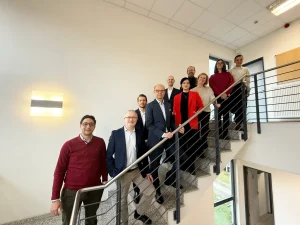
Microsoft announces the awardees of its LINGUA Open Call, an initiative designed to strengthen the inclusion of low-resource languages in AI (Artificial Intelligence). Among the selected projects is LuxVLD (Luxembourgish Vision-Language Dataset for Education and Digital Inclusion) led by the University of Luxembourg’s Interdisciplinary Centre for Security, Reliability and Trust (SnT). LuxVLD will create high‑quality datasets to support AI systems in Luxembourgish. This underscores Luxembourg’s AI commitment and reflects Microsoft’s ambition to have all languages represented in the digital world.
Linguistic diversity is under pressure
According to UNESCO, more than 2,500 languages are at risk of disappearing this century. As digital technologies advance, languages with limited online content face a higher risk of exclusion from the benefits of AI. Today, nearly half of all web content is in English, while only 5.1% of the global population has English as a mother tongue. Luxembourgish, spoken by approximately 400,000 people, just 0.005% of the world’s population, faces challenges of digital under-representation. This imbalance affects the quality of AI systems’ output.
Recent research from the Microsoft AI for Good Lab shows that countries where low-resource languages dominate adopt AI 20% more slowly, even when connectivity and digital skills are comparable. Without intervention, the gap will continue to widen.
Introducing the LINGUA initiative
To address this challenge, Microsoft launched LINGUA, a European open call supporting projects that build open, high‑quality datasets for under-represented languages. These datasets can be used to train multilingual AI models and enable communities to develop language technologies that reflect their cultural and linguistic realities. As part of the LINGUA program, selected projects receive financial support for dataset creation as well as technical guidance through Microsoft’s collaboration with the APERTUS research consortium.
The awardees selected through LINGUA span 16 languages across 10 countries, representing more than 65 million speakers. The projects range from Icelandic and Basque to Maltese, Romani and Luxembourgish, and cover text, speech, and multimodal datasets. LINGUA is part of EU Digital Unlock and is developed in coordination with the APERTUS project, a fully open Large Language Model (LLM) developed by EPFL & ETH Zurich, and in consultation with the Council of Europe, reinforcing Europe’s digital sovereignty and linguistic heritage.
Strengthening Luxembourgish in AI
Among the selected projects, LuxVLD aims to advance the availability of multimodal datasets for Luxembourgish, a language central to the country’s identity yet historically under‑represented in digital environments. By supporting the development of these datasets, Microsoft and SnT contribute to strengthening the presence of Luxembourgish in the next generation of AI systems used in education, research, public services, and everyday communication. LuxVLD aligns with the national AI strategy of Luxembourg, which intends to position the country as a leading digital society through human-centric AI development.
“I am proud to see this initiative take shape to strengthen the presence of Luxembourgish in the world of AI,” says Pierre-Adrien Grange, Country Manager at Microsoft Luxembourg. “By enabling AI systems to reason directly in Luxembourgish, LuxVLD will spark educational innovation, support digital inclusion, and lay the foundations for future Luxembourgish AI powered applications.
The CVI² research group at the University of Luxembourg, led by Professor Djamila Aouada, has achieved European recognition as one of only ten pioneering teams selected for Microsoft’s LINGUA initiative. This honor spotlights CVI²’s innovative work in AI and digital inclusion, positioning Luxembourg at the forefront of innovative research supporting linguistic diversity.
“Through the LINGUA initiative, Microsoft is committed to help ensure that linguistic richness remains at the heart of Luxembourg and Europe’s AI future,” concludes Pierre-Adrien Grange.
Building an AI future that serves every language
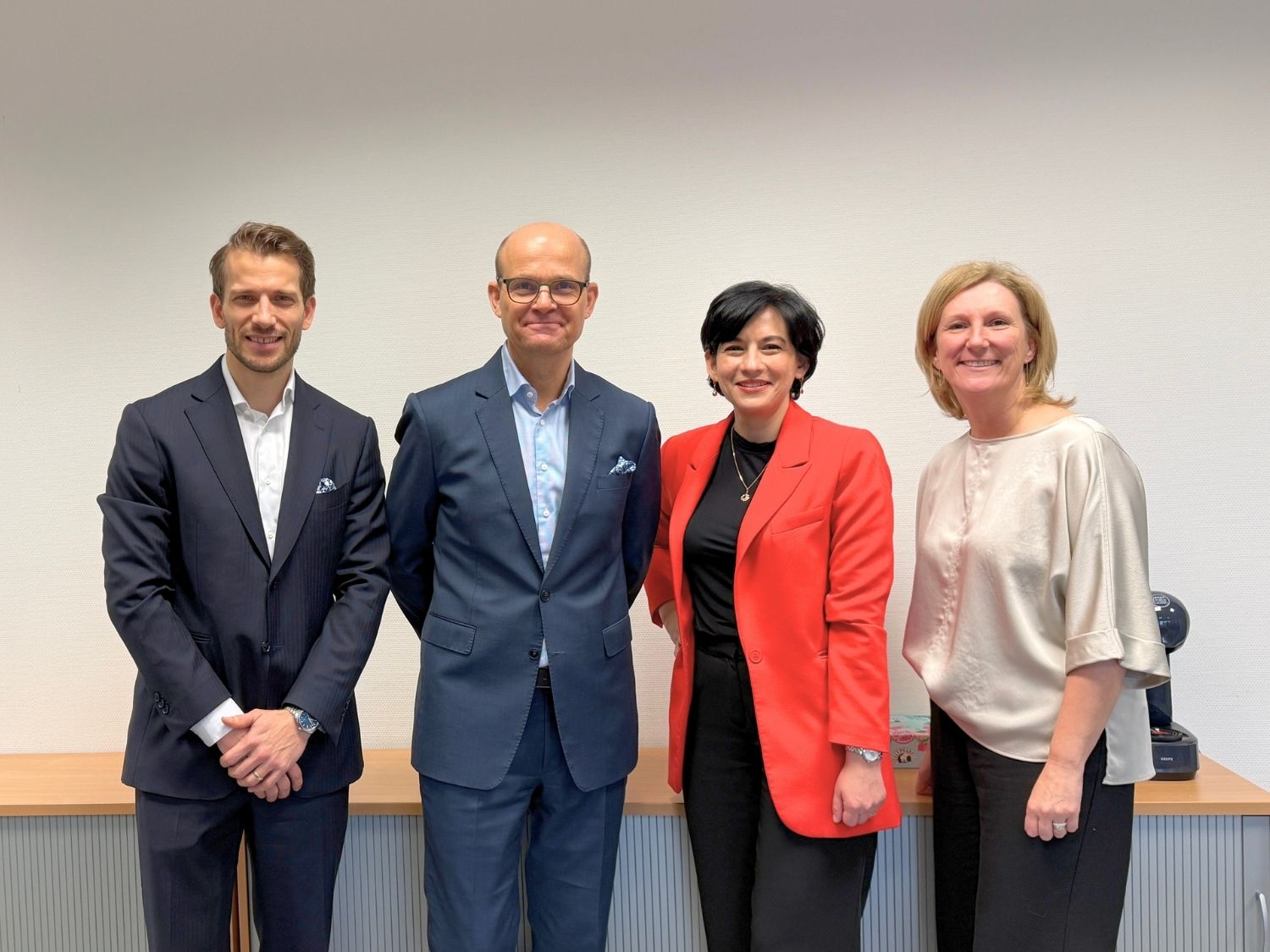
“We have learned that AI adaptation happens much faster when people can use their own language,” said Marijke Schroos, General Manager of Microsoft Belux. “When we support projects like LuxVLD, we help to ensure that Luxembourgish speakers can fully participate in the AI revolution without having to leave their language behind. That’s the kind of technological progress we want to see: innovation that actually includes everyone.”
By expanding open data resources for low-resource languages, LINGUA supports a more representative and equitable AI ecosystem. These efforts contribute to the development of multilingual models such as APERTUS, EuroLLM and SmolLM3, ensuring that Europe’s linguistic and cultural diversity is reflected in future technologies.
“The LuxVLD project lays the foundations for a Luxembourgish Vision-Language Model that can understand, reason, and interact in Luxembourgish across text and images. This ambition opens the door to a new generation of human-centric AI applications developed for Luxembourg and in Luxembourgish,” said Prof. Djamila Aouada, deputy director of SnT and head of the CVI2 research group. “Wingos is an immediate example that will benefit from a Luxembourgish-aware vision-language model to support inclusive and personalised education. Microsoft’s support for our project recognizes its lasting impact, particularly for future students and learners. All residents of Luxembourg will be able to participate in our data collection campaign for LuxVLD and help shape the future of AI in Luxembourgish.”
This announcement reinforces Microsoft’s commitment to creating AI that benefits everyone, in every language, amplifying the voices of European communities in the digital era.