Faculty of Science, Technology and Medicine
 Faculty of Law, Economics and Finance
 Faculty of Humanities, Education and Social Sciences
 Interdisciplinary Centre for Security, Reliability and Trust
 Luxembourg Centre for Systems Biomedicine
 Luxembourg Centre for Contemporary and Digital History
 Luxembourg Centre for European Law
 Luxembourg Centre for Socio-Environmental Systems
‟ I don’t limit myself from the experience of others, I try things simply because I am curious”
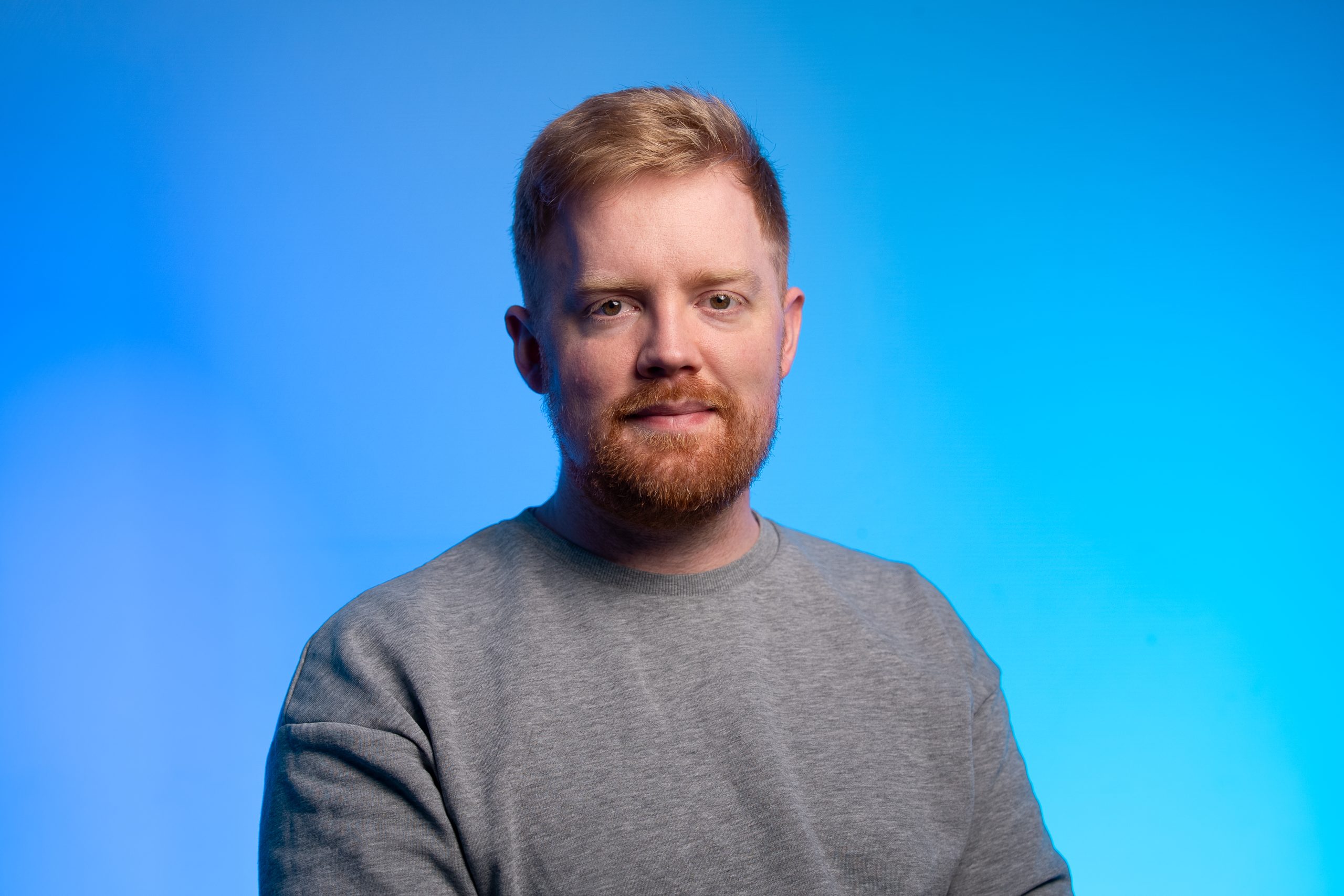
Meet Thomas Feuillen: a Belgian researcher whose unexpected COVID-era detour led him to SnT where he entered the world of radars. Blending curiosity with problem-solving, he explores how this often-overlooked technology can reveal what we usually cannot see. From whiteboards to lab prototypes, Thomas thrives where ideas meet experimentation, and surprising discoveries follow.
Relive the conversation – transcript below!
How did you end up joining SnT?
I’m originally from Belgium and moved near the Luxembourg border to work remotely for an American research lab during COVID. Wanting colleagues around me, I reached out to the University of Luxembourg. The former director connected me with the radar team at SnT, where I worked while still employed by the U.S. research lab. When that contract ended, I officially joined SnT.
What is your academic background?
I studied electromechanical engineering at UCLouvain in Belgium, essentially building robots. For my PhD, I shifted into radar signal processing, still at the same university. Although I stayed in Belgium, my research environment was always very international, with colleagues from outside Europe. I always found that to be a plus.
What does your daily work environment look like?
In the office, I work with a two-monitor setup and a whiteboard for brainstorming and reviewing papers. In the lab, things get more hands-on: soldering stations, prototype Printed Circuit Boards (PCBs), radar sensors, and mock targets. We also use an anechoic chamber – a room without electromagnetic echoes – to collect clean radar measurements. My work shifts constantly between theory and practical experimentation.
Can you explain your current research project?
I’m studying how to acquire high dynamic range signals, so signals that include extremely strong and extremely weak components at the same time. It’s like, when you take a selfie with the sun behind you: cameras often capture the bright sun, but lose the details on your face. Radar has similar challenges. I’m developing a co-design solution to help optimise radar technology and processing in this respect, using non-linear acquisition.
‟ Imagine you have to measure a very tall building, but your ruler is only 30cm long. That’s similar to my challenge: I try to measure something really big with something really small.”
Why did you decide to pursue research?
It was never planned. During my master’s thesis, my supervisor encouraged me to continue because I was doing well. I liked the idea of contributing to knowledge and working in an environment not driven purely by profit.
What fascinates you about radar?
Radar may not seem exciting at first, but it has incredible applications. It can see through vegetation and sand, which helped discover Mayan temples and ancient riverbeds from space. People often only think about speed cameras, but the technology is much broader. I also enjoy how elegant the mathematics behind radar is, because abstract ideas can often be directly connected to real-world applications.
What challenges do you face in your research?
My research covers the entire process, from developing mathematical ideas to running computer simulations and finally testing them on real hardware. This means I have to understand every step, which can be challenging, but also very rewarding. Bringing theory and hardware together often leads to new insights that you wouldn’t get from working on just one of them.
How has your background influenced your approach to research?
I’m the first in my family to pursue a scientific career, so I don’t always have the same vision as other researchers whose families have professors through generations. I don’t limit myself; I simply try things because I’m curious. SnT’s multicultural environment reinforces that feeling. There’s no dominant culture here, so everyone can be themselves.
What is an underrated skill in research?
Communication. Strong results matter, but without clear communication, the impact is limited. Researchers must explain their work not only to specialists but also to the rest of society. And this also requires a lot of work.
‟ Strong results matter, but without clear communication, the impact is limited”
How would you explain your research to a five-year-old?
Imagine you have to measure a very tall building, but your ruler is only 30 centimetres long. That’s similar to my challenge: I try to measure something really big with something really small.
Supported by the Luxembourg National Research Fund.