

 Faculty of Science, Technology and Medicine
 Faculty of Law, Economics and Finance
 Faculty of Humanities, Education and Social Sciences
 Interdisciplinary Centre for Security, Reliability and Trust
 Luxembourg Centre for Systems Biomedicine
 Luxembourg Centre for Contemporary and Digital History
 Luxembourg Centre for European Law
 Luxembourg Centre for Socio-Environmental Systems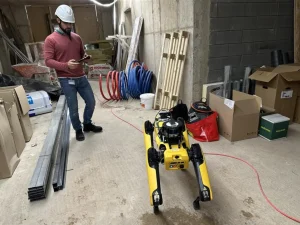
Two SnT researchers are helping robots understand people, movement and context, so that humans and robots can safely collaborate in real-world environments.
Robots are moving beyond controlled factory floors and into places full of people, movement and uncertainty, such as hospitals, construction sites, warehouses and even homes. At the University of Luxembourg’s Interdisciplinary Centre for Security, Reliability and Trust (SnT), two PhD researchers are addressing a key question behind this shift: how can robots understand the world well enough to work safely and naturally alongside humans?
Robots struggle with change and context
For humans, understanding a scene comes naturally. We know that a chair can be moved, that people have intentions, and that spaces evolve over time. For robots, this kind of understanding is far from straightforward.
“Robots might see objects and obstacles,” explains Laura Ribeiro, a first-year PhD researcher at SnT, “but they do not understand the components of the workspace in a deep way.”
Marco Giberna, a second-year PhD researcher, looks at the same limitation from another angle: movement. “Today, most robots simply stop when someone crosses their path,” he says. “They react, but they don’t anticipate.”
This becomes a serious challenge in environments such as hospitals, warehouses and construction sites, where conditions and spatial dynamics change constantly. Without the ability to reason about movement and change, robots are either overly cautious, inefficient, or potentially unsafe.
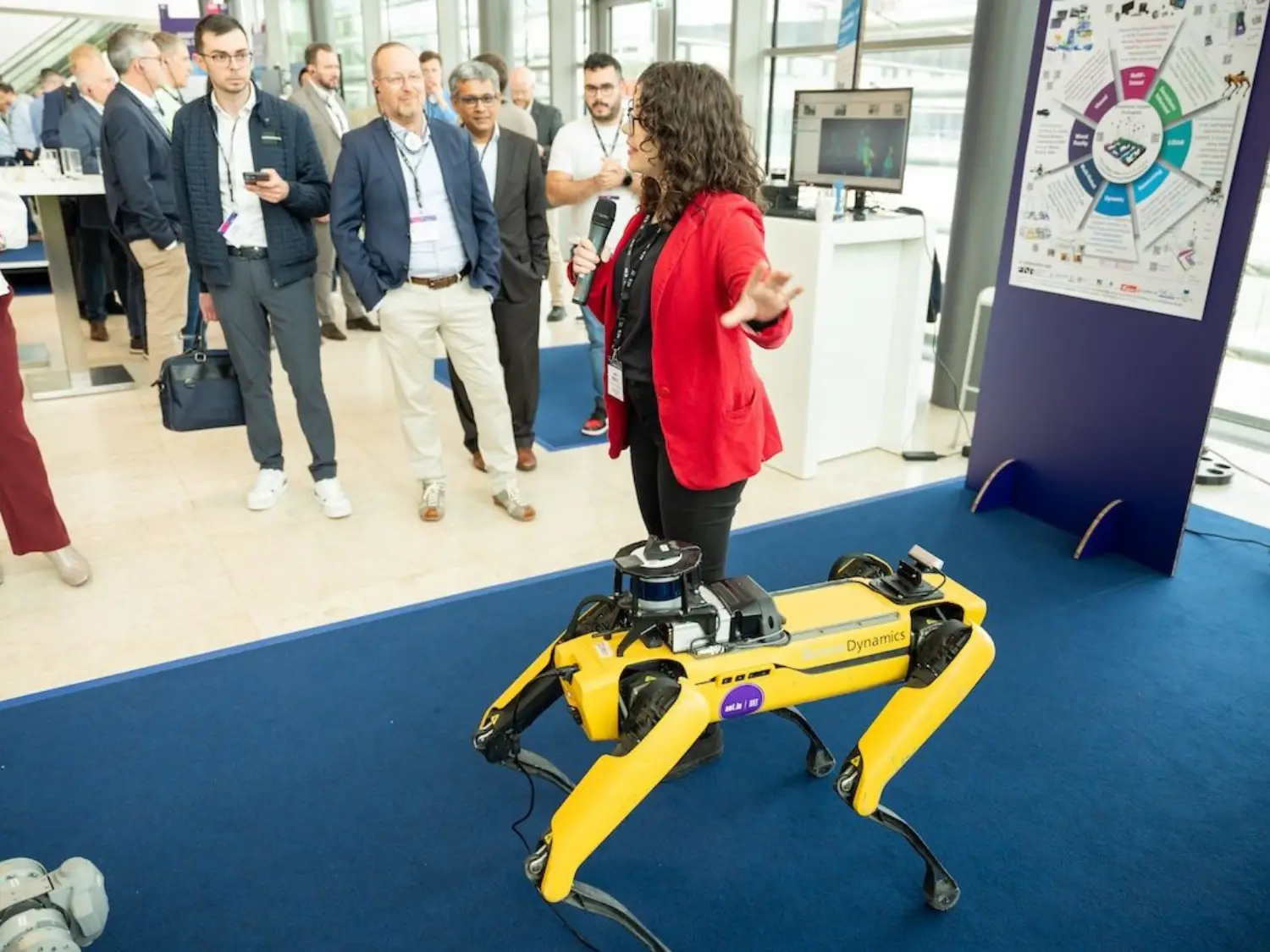
Laura Ribeiro presenting her research at SnT’s Partnership Day.
Prediction, memory and shared understanding
Marco’s research focuses on giving robots a more human-like ability to reason about movement.
“My work allows robots to predict and reason about dynamic elements, even when they are out of sight, exactly as we humans do,” he explains.
In practical terms, the robot learns to remember what it has seen and to use that memory along with other information inferred by the context to anticipate what might happen next.
Laura’s research complements this approach by bringing humans directly into the robot’s understanding process. Using a mixed reality device, Microsoft’s HoloLens, she creates a shared visual environment between human and robot, allowing knowledge to flow in both directions.
Her aim is to enable people to point, click or speak to the robot, rather than interacting through code. This lowers the barrier to communication and shifts human–robot interaction away from rigid commands towards genuine collaboration.
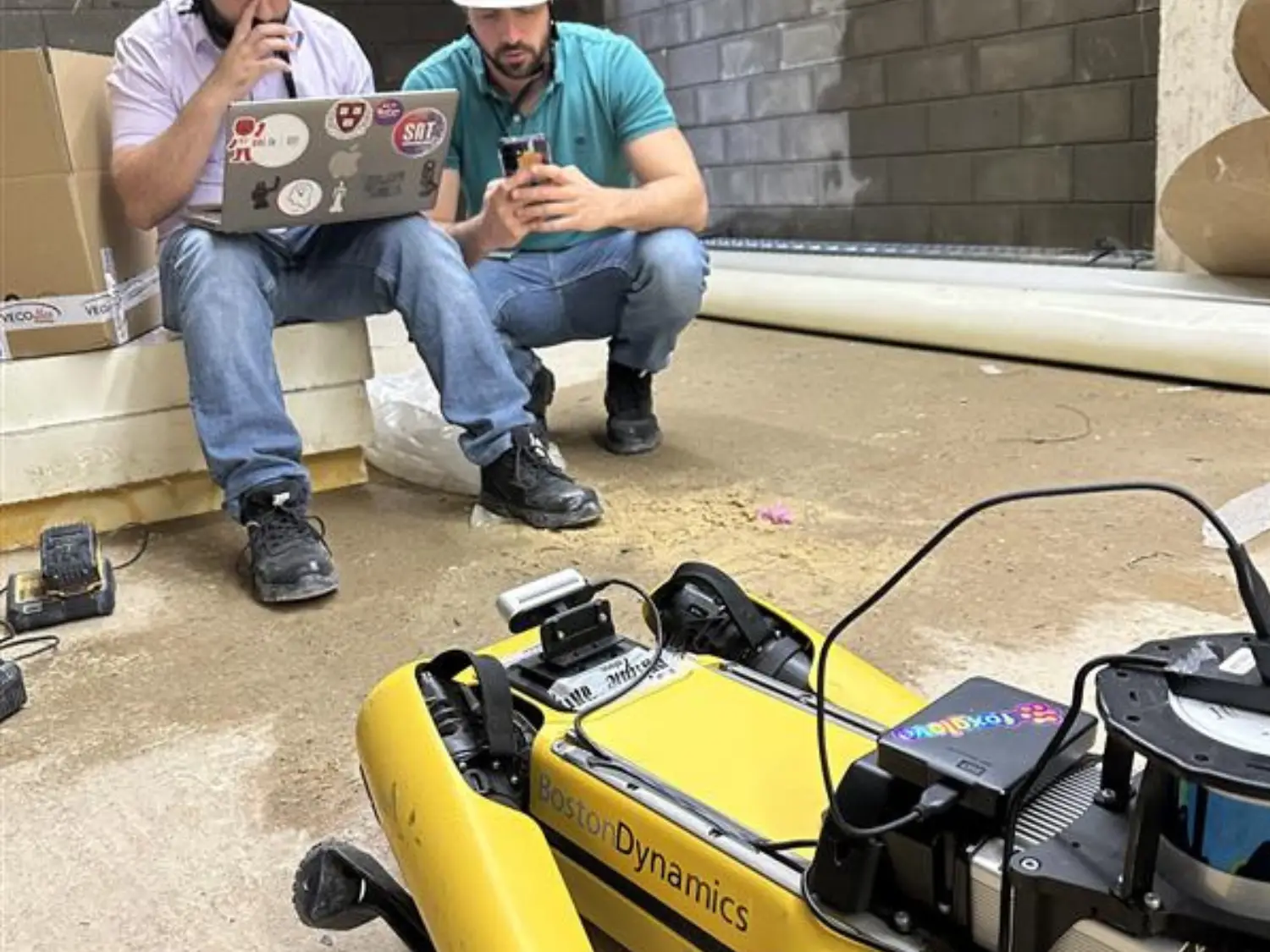
Researcher testing a robot at a construction site.
Why these two research paths fit together
The connection between Marco’s and Laura’s work is a natural one. “Marco helps robots understand that a chair can move,” Laura explains. Her work then enhances the robot’s understanding of what that movement means within the environment.
Both researchers describe the learning process as similar to guiding a child. Humans supervise, explain and correct. Robots learn, adapt and improve.
“Trying to make robots reason in a more human-like way helps us understand what they are actually doing,” Marco says, “and avoid unpredictable or harmful behaviour.”
Safer spaces and better collaboration
The real-world impact of this research lies in shared environments where humans and robots work side by side. Examples include robots delivering equipment in hospitals, inspection robots navigating unsafe construction sites, or household robots responding to cleaning instructions.
Laura highlights safety as a key benefit. “In a construction site, I can see what the robot sees in dangerous areas while staying safe myself,” she says.
Both researchers are clear that their goal is not replacement. “We don’t want robots to replace humans,” Laura says. “We want both of them working together.”
Both Marco and Laura’s PhD research are supported by the Luxembourg National Research Fund (FNR), reflecting the strategic importance of human-centred robotics.
Humans and robots as teams
With the rapid rise of generative AI, the gap in human–robot interaction and collaboration is closing quickly. Both researchers agree, however, on the direction this collaboration should take. “The future is not humans or robots,” Laura says, “but humans and robots working together.”
At SnT, that future is already being shaped by teaching robots not only how to see and move, but how to understand the environment, ask questions, reason and collaborate.
People in this story
-
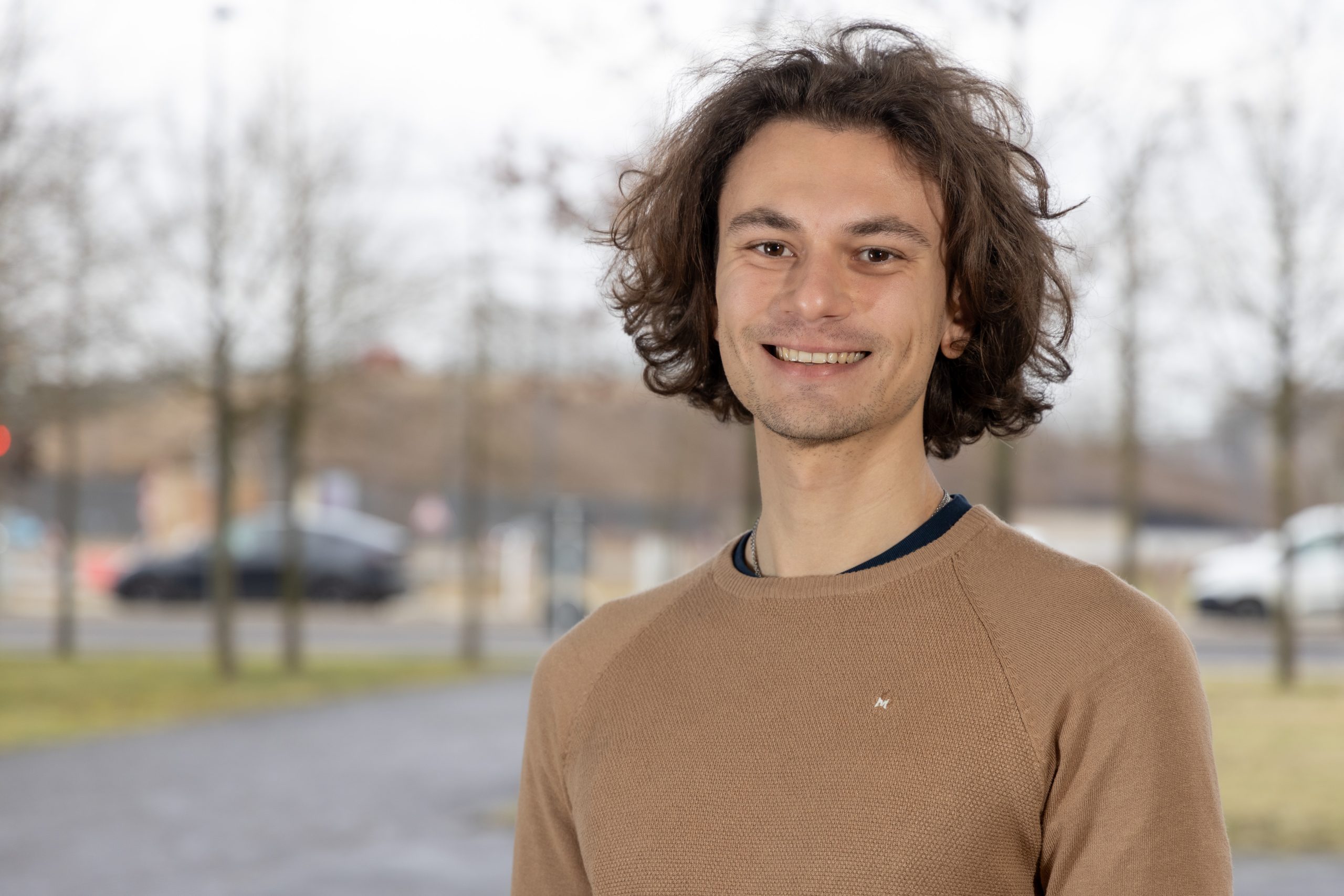
Marco Giberna
PhD researcher at SnT working on robot perception and prediction in dynamic environments, supported by the FNR’s Joint Call Defence Project.
-

Laura Ribeiro
PhD researcher at SnT focusing on human–robot interaction through extended reality, supported by FNR AFR funding.