
 Faculty of Science, Technology and Medicine
 Faculty of Law, Economics and Finance
 Faculty of Humanities, Education and Social Sciences
 Interdisciplinary Centre for Security, Reliability and Trust
 Luxembourg Centre for Systems Biomedicine
 Luxembourg Centre for Contemporary and Digital History
 Luxembourg Centre for European Law
 Luxembourg Centre for Socio-Environmental Systems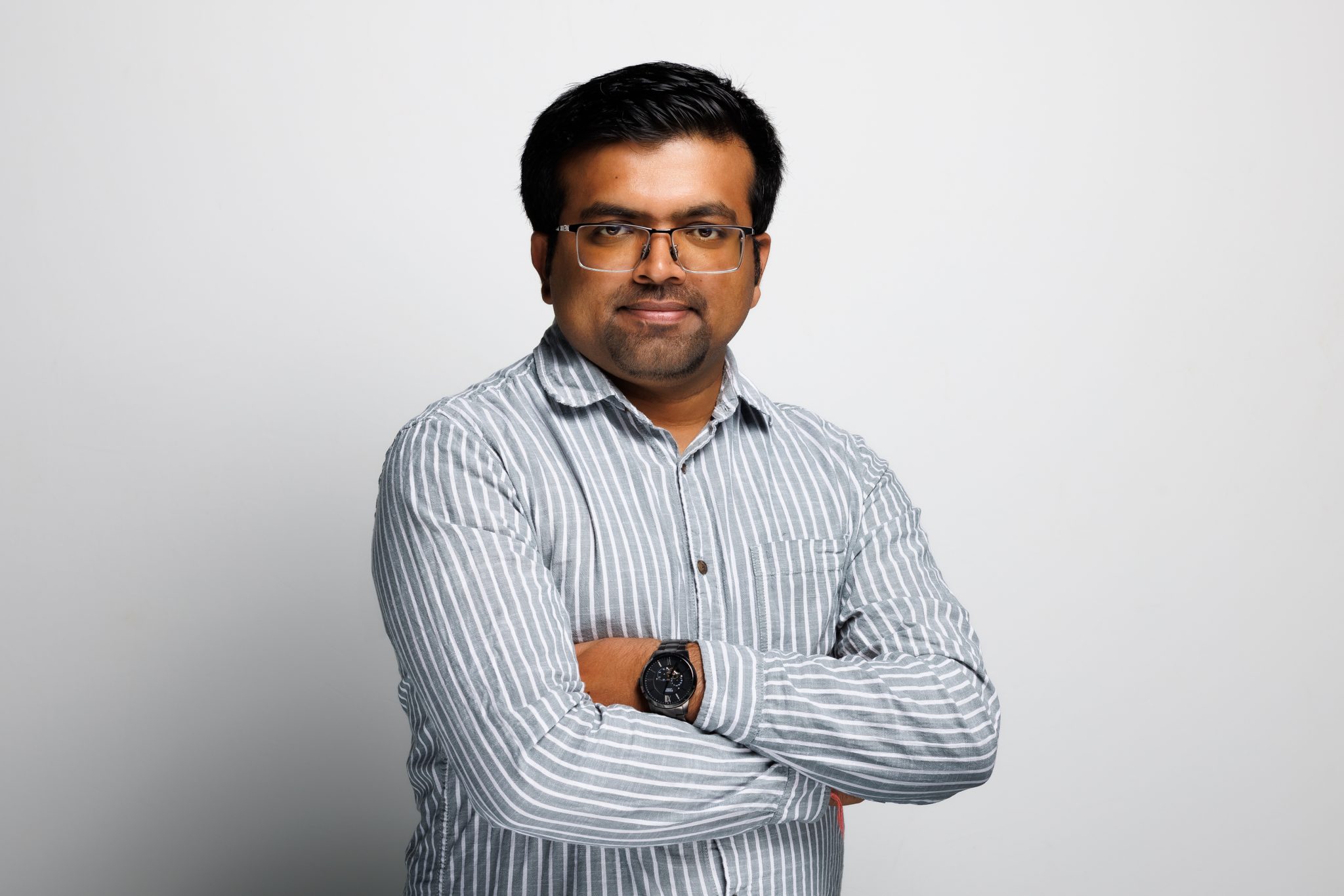
The Doctoral School in Sciences and Engineering is happy to invite you to Sovit BHANDARI’s defence entitled
Intelligent Resource Management and Service Optimization in Fully Regenerative Non-Terrestrial Networks
Supervisor: Dr. Thang Xuan VU
Recent advancements in satellite launch technologies and phased array antennas have enabled large constellations of spaceborne non-terrestrial networks (NTNs), such as medium Earth orbit (MEO) and low Earth orbit (LEO) systems, to provide global broadband and direct-to-cell connectivity, complementing terrestrial network infrastructure. However, current NTN payloads are mostly (digitally) transparent, functioning as bent-pipe relays with limited channelization, which restricts their ability to dynamically optimize scarce communication and computational resources (e.g., power, bandwidth, and computing capabilities). This, in turn, has led to inefficient satellite spectrum utilization, increased reliance on ground stations, and challenges in maintaining ubiquitous connectivity during frequent satellite handovers (HOs).
To achieve seamless connectivity and meet the key performance indicators (KPIs) envisioned by the International Mobile Telecommunications (IMT)-2030 framework for sixth-generation (6G) networks, this thesis investigates next-generation non-terrestrial network satellite architectures. These architectures integrate full gNodeB (gNB) functionality along with on-board caching to support user-centric intelligent services that adapt dynamically to changing user demands by fully exploiting the available communication and computational resources. They are designed to be fully reconfigurable and incorporate advanced on-board interference mitigation techniques enabled by flexible bandwidth resource management strategies, as well as inter-satellite link (ISL) connectivity to support frequent HOs without reliance on ground stations. This advanced regenerative architectural (fully digital) approach addresses many of the inherent challenges of NTNs, particularly those associated with their non-geostationary nature, and aligns with ongoing standardization efforts led by key telecommunications regulatory bodies such as the 3rd Generation Partnership Project (3GPP).
Building on this foundation, the thesis makes three main contributions to fully leverage the capabilities of such systems:
- the design of the flexible resource management algorithm for LEO satellites (FLARE-LEO), which efficiently optimizes satellite radio resources for both HO and non-HO scenarios, enabling the delivery of the user-centric media contents in the soonest manner;
- the development of an on-demand, flexible Satellite-as-a-Service (SaaS) framework, capable of performing and delivering critical Earth observation (EO) tasks in near-real-time through on-board computation within space-air-ground integrated network (SAGIN) nodes under diverse beam management schemes; and
- the integration of IMT-envisioned advanced capabilities, including integrated sensing and communication (ISAC) and artificial intelligence (AI), to enable intelligent and seamless HOs, ensuring uninterrupted connectivity.