
 Faculty of Science, Technology and Medicine
 Faculty of Law, Economics and Finance
 Faculty of Humanities, Education and Social Sciences
 Interdisciplinary Centre for Security, Reliability and Trust
 Luxembourg Centre for Systems Biomedicine
 Luxembourg Centre for Contemporary and Digital History
 Luxembourg Centre for European Law
 Luxembourg Centre for Socio-Environmental Systems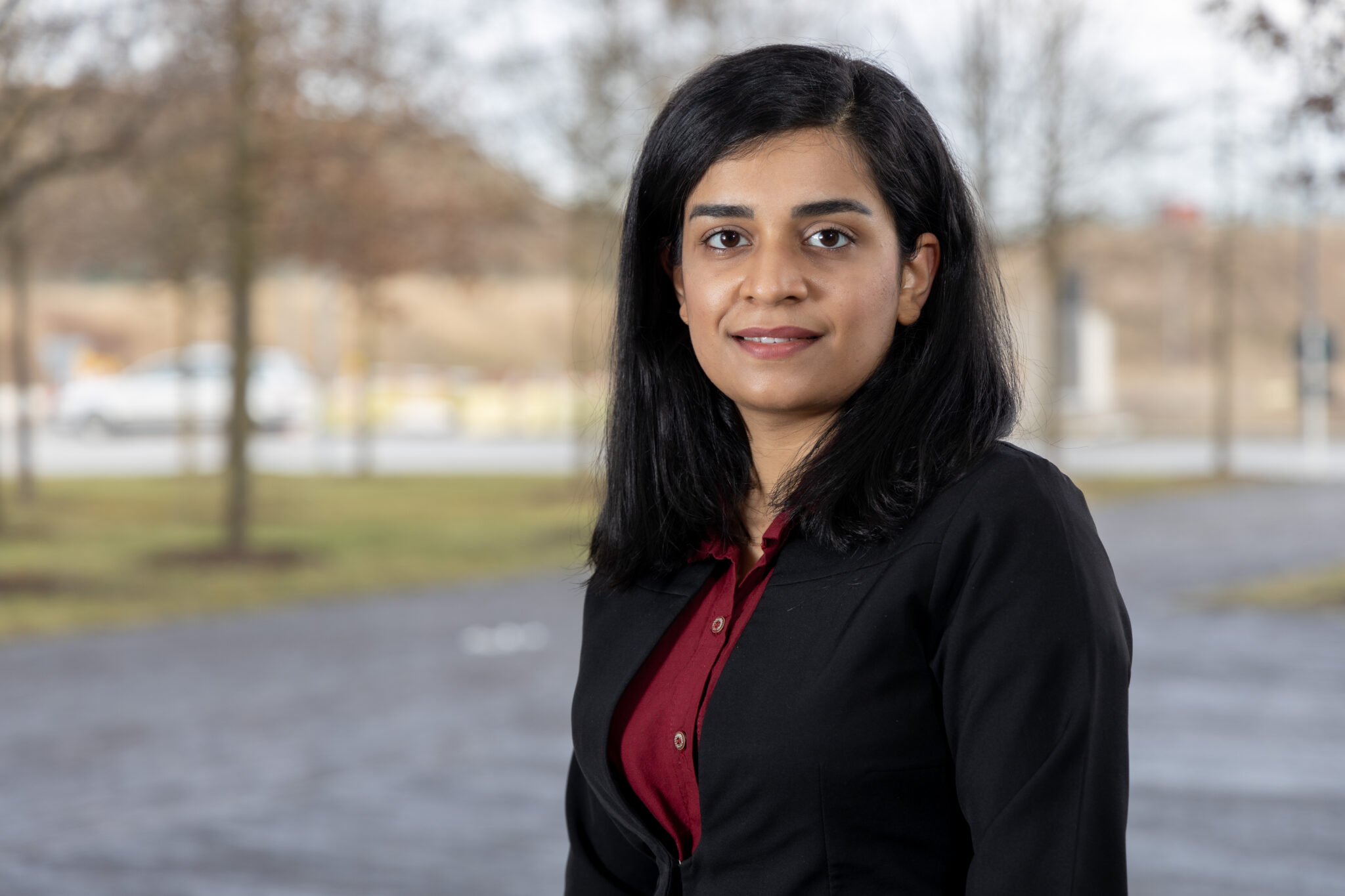
The Doctoral School in Science and Engineering is happy to invite you to Hedieh HADDAD defence entitled
HYPERPARAMETER OPTIMIZATION OF CONSTRAINT PROGRAMMING SOLVERS
Supervisor: Prof Pascal BOUVRY
The performance of constraint programming solvers is highly sensitive to the configuration of search heuristics, restart policies, and propagation levels. Manually tuning these hyperparameters is inefficient, expertise-dependent, and rarely generalizes across diverse problem instances. This thesis addresses this fundamental bottleneck by automating solver configuration through formalized hyperparameter optimization, aiming to create adaptive, reproducible, and self-configuring constraint solvers.
In the first part, we establish the theoretical and practical foundations. We formalize solver configuration as a hyperparameter optimization problem over discrete, categorical, and often conditional parameter spaces. We then conduct a comprehensive evaluation of optimization strategies, including grid search, random search, Hamming-distance local search, Bayesian optimization, and Hyperband, within the context of constraint programming. This analysis reveals that model-based methods, particularly Bayesian optimization, offer superior sample efficiency and robustness under strict time budgets, providing a principled basis for automated configuration.
Building on these insights, the core contribution of this thesis is the introduction of the probe and solve algorithm, a novel, solver-agnostic framework for time-budgeted hyperparameter optimization. The framework operates in two adaptive phases: a probing phase for exploring the configuration space and a solving phase that executes with the most promising configuration. It incorporates key mechanisms such as dynamic timeout scheduling, stagnation-aware early stopping, and memory-based caching to maximize efficiency without requiring internal solver modifications. This design enables robust, near-parameterless operation across varying computational constraints.
Next, we present an extensive empirical validation of the framework. Through large-scale benchmarking on the ACE and Choco solvers using XCSP3 and MiniZinc problem sets, we demonstrate that the probe and solve algorithm consistently outperforms default solver configurations. We perform a full-factorial analysis of its modular components, time allocation, timeout evolution, and stopping conditions, to identify optimal configurations and validate the framework’s generalization across solver architectures and modeling environments.
In the final part, we transition from solver-centric optimization to real-world application within the architecture, engineering, and construction domain. We develop an integrated pipeline that transforms building information models and textual engineering standards, such as ISO 10077-1 for thermal performance and ISO 717-1 for acoustic insulation, into executable constraint programming models. This enables automated, multi-objective design optimization with guaranteed regulatory compliance. We further enhance this pipeline with a hierarchical search strategy, combining the probe and solve algorithm for learned intensification with large neighborhood search for structural exploration, resulting in a comprehensive method for generating diverse, high-quality Pareto-optimal design solutions. This thesis bridges algorithmic innovation with practical application, advancing both automated solver configuration and standards-aware optimization in combinatorial problem solving.