
 Faculty of Science, Technology and Medicine
 Faculty of Law, Economics and Finance
 Faculty of Humanities, Education and Social Sciences
 Interdisciplinary Centre for Security, Reliability and Trust
 Luxembourg Centre for Systems Biomedicine
 Luxembourg Centre for Contemporary and Digital History
 Luxembourg Centre for European Law
 Luxembourg Centre for Socio-Environmental Systems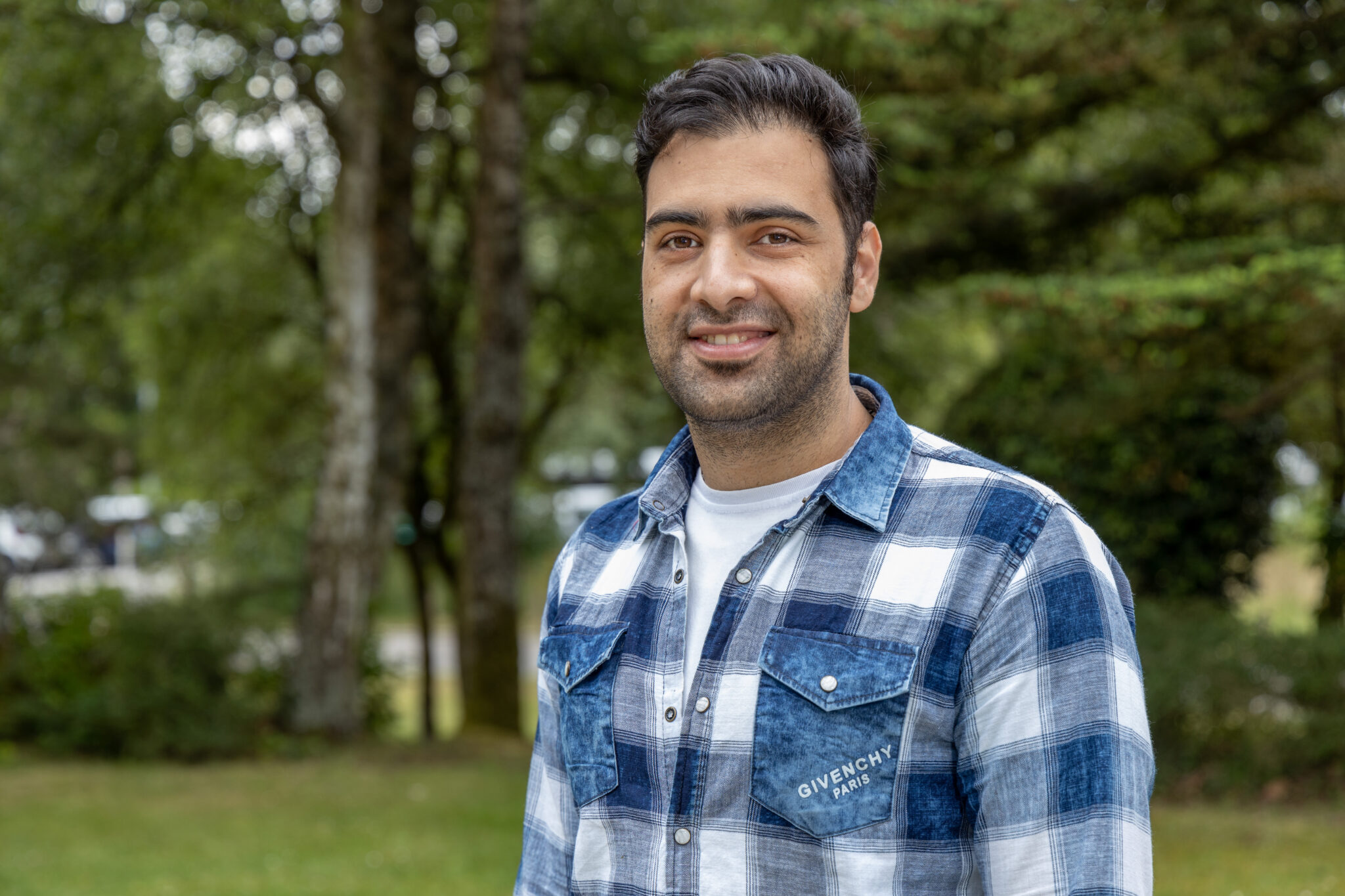
The Doctoral School in Science and Engineering is happy to invite you to Ali TOURANI’s defence entitled
Enhancing Robots’ Situational Awareness using Imperceptible Artificial Landmarks
Supervisor: Prof Holger VOOS
Fiducial markers have long served as reliable geometric and visual anchors for establishing correspondences between 3D world points and their 2D image projections, and are widely used in augmented reality, computer vision, and robotics. In robotic systems, they support visual calibration, sensor synchronization, human–robot interaction, and Visual Simultaneous Localization and Mapping (VSLAM). However, environments densely populated with conventional markers quickly become visually intrusive, highlighting a fundamental tension between robot-friendly visibility and human-centric aesthetics. This thesis investigates iMarkers: unobtrusive, ideally invisible fiducial markers that remain reliably detectable by robots. iMarkers replace traditional pigments with microscopic Cholesteric Spherical Reflector (CSR) shells, enabling information to be embedded directly onto surfaces without altering their appearance. The thesis presents five contributed papers covering fabrication, sensor design, detection algorithms, and robotic applications, with the overarching goal of enhancing robotic situational awareness while preserving environmental aesthetics. As a robotics case study, the thesis first demonstrates how classical markers can support semantic reasoning within marker-aware VSLAM, enabling the extraction of spatial entities such as walls and rooms. This is extended through optimizable, hierarchical 3D scene graphs that organize semantic components into human-interpretable digital twins. The work then introduces the first robotics-oriented integration of iMarkers, validating their detectability and semantic utility. These contributions culminate in vS-Graphs, a scalable RGB-D VSLAM framework that unifies visual perception, geometric mapping, and semantic scene understanding to infer building components and structural elements within a coherent 3D scene graph. Overall, the thesis demonstrates that integrating geometric reasoning, semantic understanding, and artificial cues enables robust, explainable, and human-aligned robotic situational awareness.