
 Faculty of Science, Technology and Medicine
 Faculty of Law, Economics and Finance
 Faculty of Humanities, Education and Social Sciences
 Interdisciplinary Centre for Security, Reliability and Trust
 Luxembourg Centre for Systems Biomedicine
 Luxembourg Centre for Contemporary and Digital History
 Luxembourg Centre for European Law
 Luxembourg Centre for Socio-Environmental Systems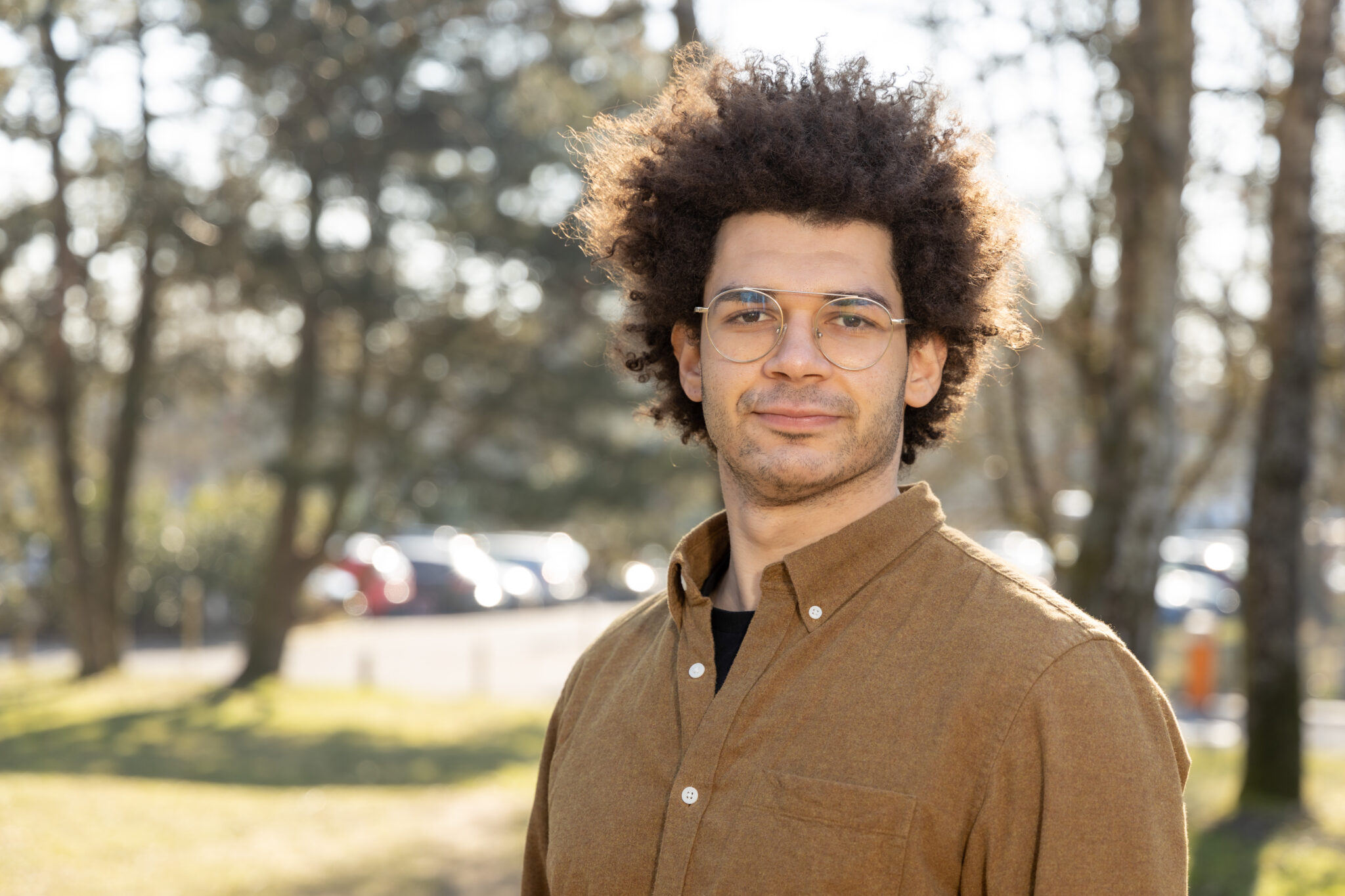
The Doctoral School in Science and Engineering is happy to invite you to Mhamed Matteo EL HARIRY’s defence entitled
Deep Reinforcement Learning Control for Autonomous Robots Mobility in Highly Uncertain Environments
Supervisor: Assoc. Prof Miguel Angel OLIVARES MENDEZ
This thesis explores the use of deep reinforcement learning (DRL) for enabling robust, autonomous control of robotic systems operating in highly uncertain environments. Motivatedby space applications and the need for generalizable learning pipelines, we develop a series of simulation frameworks and experimental platforms that progressively expand the scope, realism,and generalization capability of DRL-based controllers. We begin by introducing GPU-accelerated simulation tools tailored to spacecraft-like dynamics (RANS), showing that physically grounded models and disturbance injection can yield transferable control policies. These findings are validated through DRIFT, a holonomic floating plat-form testbed where learned controllers achieve sub-centimeter trajectory tracking despite stochastic forces. Building on this, we propose RoboRAN, a modular IsaacLab-based framework that decouples robot and task specifications, enabling reproducible training across diverse platforms—ground robots, USVs, and microgravity analogs. Sim-to-real evaluations confirm the framework’seffectiveness for low-level policy transfer. Finally, FALCON-S extends DRL to fixed-wing aircraftin ground effect by incorporating 6DoF aerodynamics, actuator dynamics, and dual CPU-GPU backends. It supports both learning-based and classical controllers, facilitating benchmarking and cross-validation. Together, these contributions demonstrate that DRL can be scaled, generalized, and validated across a range of robotic platforms, provided that simulation fidelity, modularity, and hardware alignment are preserved. Additional studies explore policy learning for visual spacecraft inspection and sensor-driven estimation for satellite angular dynamics, broadening the thesis impact. We conclude by outlining directions toward continual learning, sim-to-real-to-sim adaptation, and in-tegrated world model architectures for real-world deployment.