
 Faculty of Science, Technology and Medicine
 Faculty of Law, Economics and Finance
 Faculty of Humanities, Education and Social Sciences
 Interdisciplinary Centre for Security, Reliability and Trust
 Luxembourg Centre for Systems Biomedicine
 Luxembourg Centre for Contemporary and Digital History
 Luxembourg Centre for European Law
 Luxembourg Centre for Socio-Environmental Systems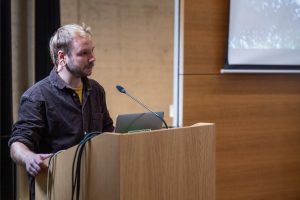
As part of the second year of their ongoing collaboration, Casino Display and the University of Luxembourg have welcomed sound engineer and artist Sam Erpelding to participate in their in-university artistic residency. Reflecting the shared commitment to interdisciplinary dialogue, this year’s residency has once again reinforced the strong ties between art and sciences.
During the first two months of his residency in Luxembourg, split between Casino Display and the University of Luxembourg, Sam Erpelding has further developed his doctoral research while actively engaging with students and researchers. Central to this first period in the residency, his ecoacoustic investigations have sparked new conversations around technology, ecology, and art. Framed through an interdisciplinary lens, this residency offers new ways of perceiving and engaging with our environment.
Following a series of performances, talks, workshops, and a symposium held at both the University and Casino Display, Sam Erpelding’s recent work now culminates in a public exhibition at Casino Display (1 Rue de la Loge, 1945 Ville-Haute Luxembourg). The exhibition invites visitors to consider how sound, technology, and ecology interact at the core of contemporary artistic practice.
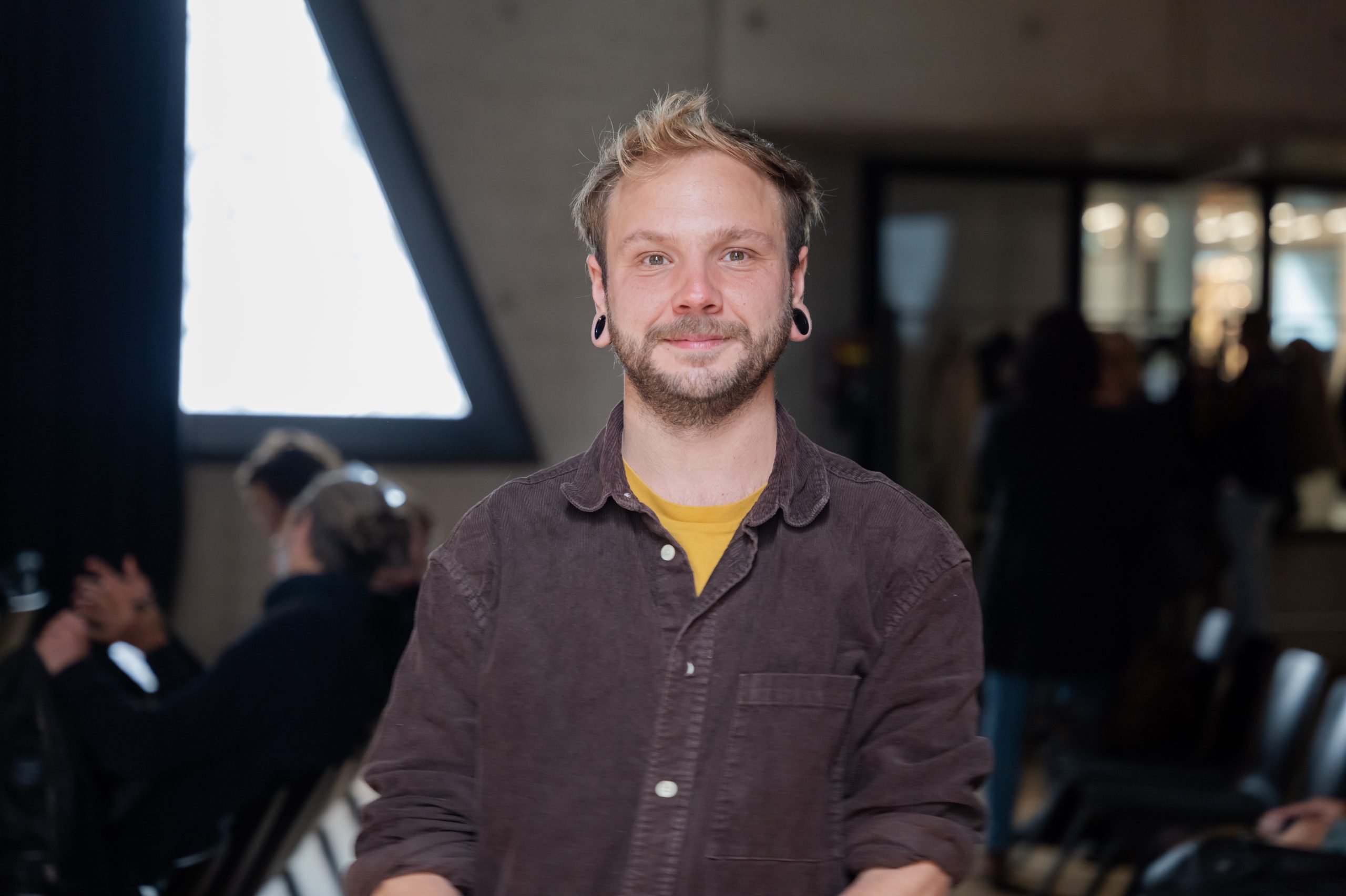
Sam Erpelding is a sound engineer, sound artist, and ecoacoustician. He studied sound engineering, computer-assisted music, and digital media technologies in Austria. As an electric guitarist, he performs with the trio ARGON and under the solo moniker Dankwart. Erpelding is also a co-founder of the Luxembourg-based art collective D’Kréiennascht and a member of Radiôme, a cross-border radio and art network of the Greater Region.
He is currently pursuing a PhD at Anton Bruckner Private University in Linz, in collaboration with the Paris Lodron University of Salzburg, Donau-Auen National Park, and Kalkalpen National Park. His current doctoral research supported by Nationalpark Austria, delves into ecoacoustic practices and investigates the role of soundscapes in the understanding of ecological issues.
©Christian Wilmes
Biography
Sam Erpelding is a sound engineer, sound artist, and ecoacoustician. He studied sound engineering, computer-assisted music, and digital media technologies in Austria. As an electric guitarist, he performs with the trio ARGON and under the solo moniker Dankwart. Erpelding is also a co-founder of the Luxembourg-based art collective D’Kréiennascht and a member of Radiôme, a cross-border radio and art network of the Greater Region.
He is currently pursuing a PhD at Anton Bruckner Private University in Linz, in collaboration with the Paris Lodron University of Salzburg, Donau-Auen National Park, and Kalkalpen National Park. His current doctoral research supported by Nationalpark Austria, delves into ecoacoustic practices and investigates the role of soundscapes in the understanding of ecological issues.
Translating research into artistic practice
Sam Erpelding began his residency September 2025 with a rich array of ideas and research directions to pursue. Alongside progress on his doctoral thesis, this residency highlights his commitment to weaving his research process into artistic experimentation and offering new ways of experiencing and understanding his work.
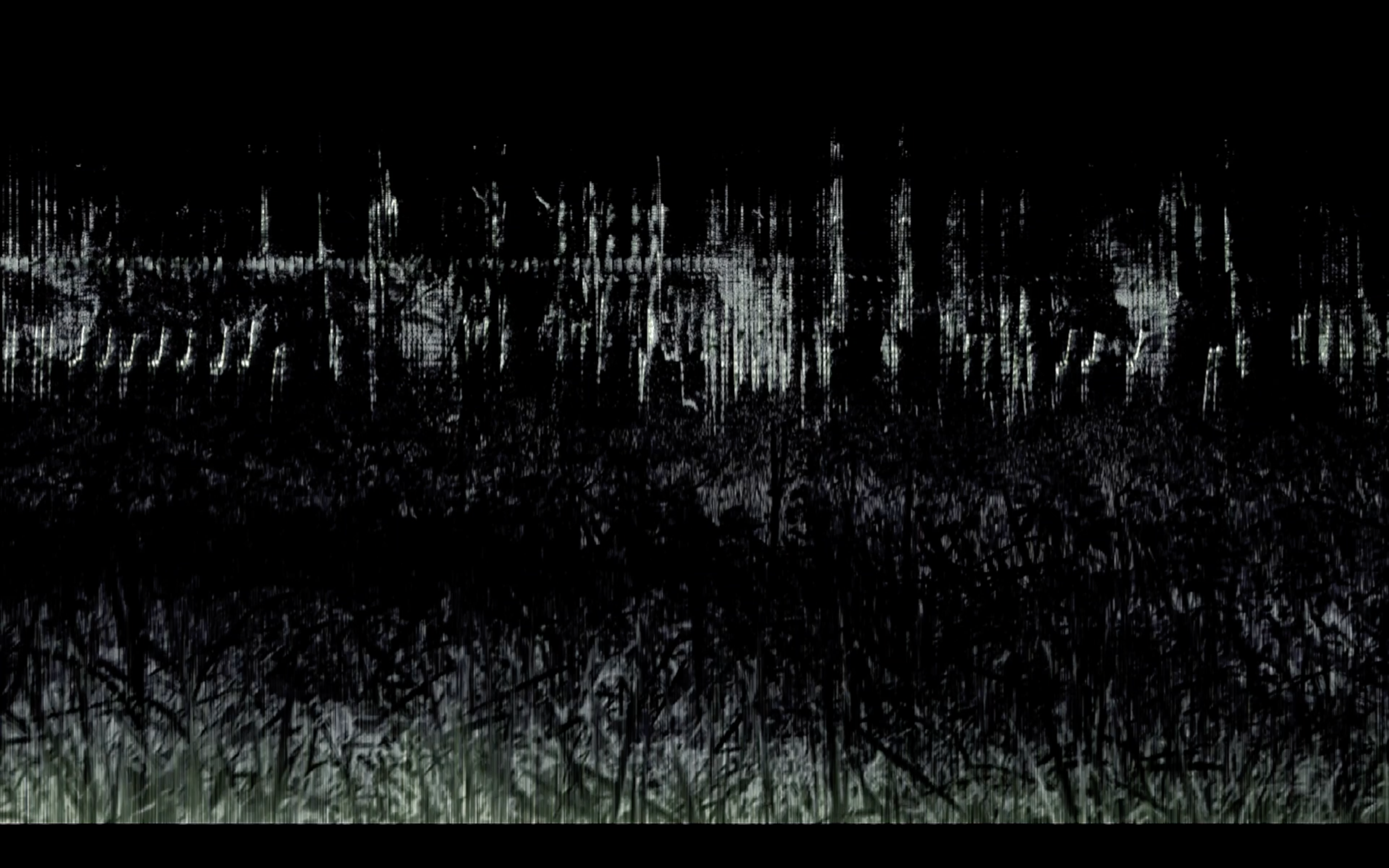
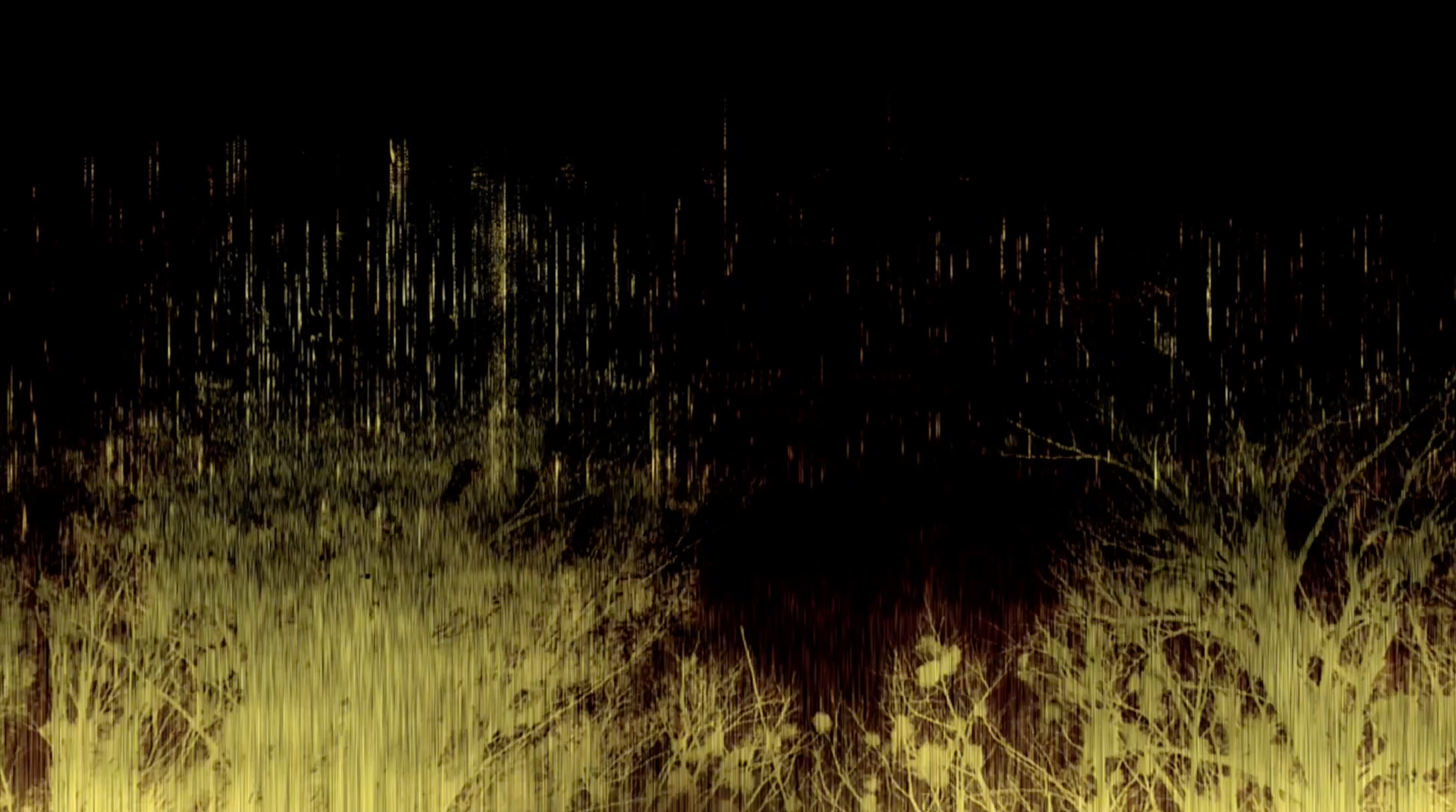
The exhibition title, To the Dead Poplar / To the Old Beech Tree, immediately introduces a poetic tension and opens a reflective space where nature, humanity and evolution converge. The Dead Poplar, familiar and ever-present in our surroundings, and the Old Beech Tree, a sentinel of Europe’s primeval forests, stand as contrasting symbols of disappearance and ecological fragility. Together, they give voice to a broader ecological narrative, one informed by Sam Erpelding’s academic research at Anton Bruckner University, his collaborations in Luxembourg, and his artistic explorations carried out during the residency.
The exhibition becomes a space of transition, where scientific research meets sensory experience and artistic expression. It embodies a hybrid and interdisciplinary practice in which listening serves as the primary tool of inquiry.
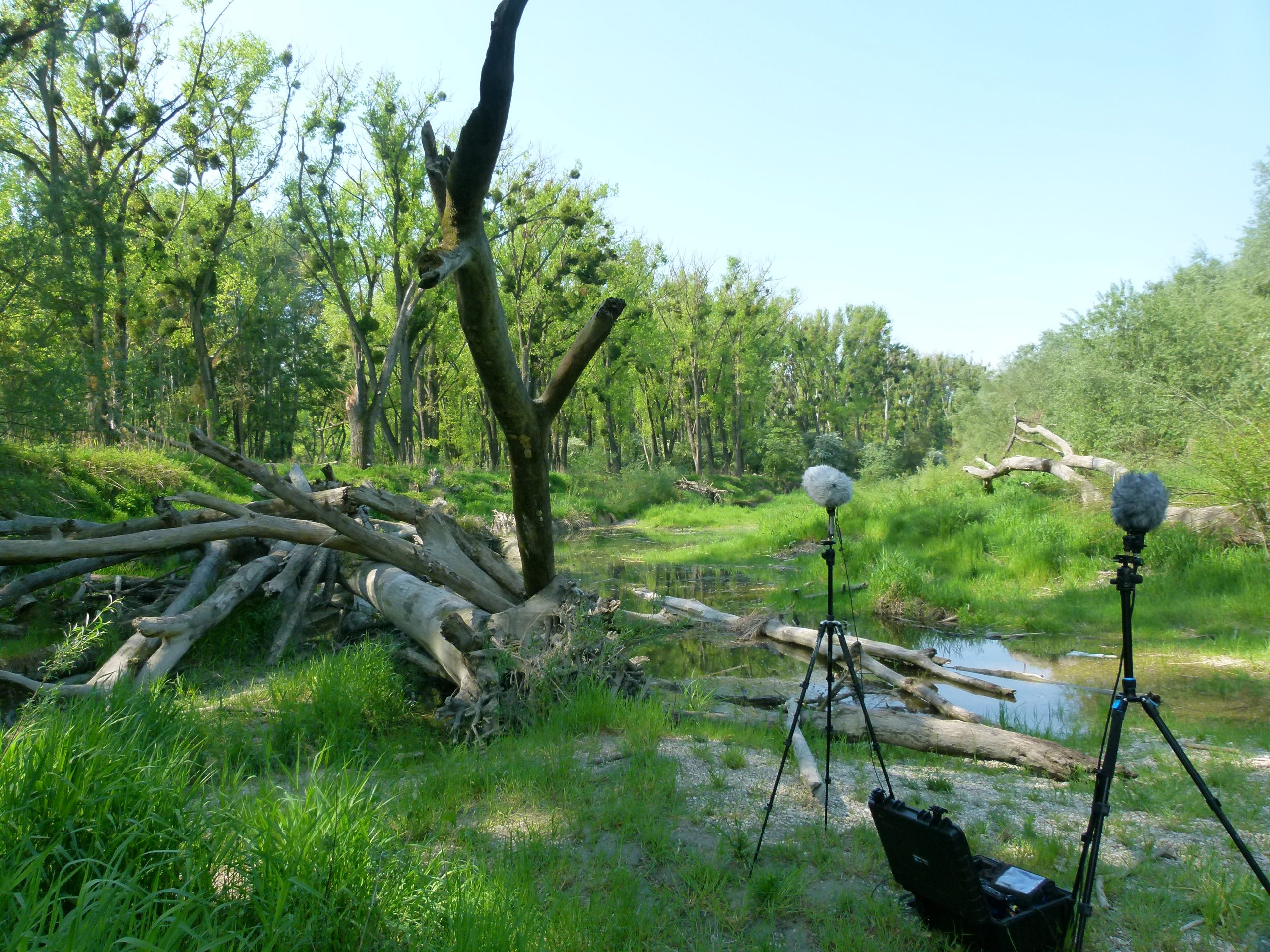
Visitors are encouraged to slow their pace and listen closely. At the core of Sam Erpelding’s work, sound becomes the gateway to a deeper exploration of nature’s complexity and fragility. Through field recordings, that are sometimes composed or sometimes presented in their raw form, the artist transforms listening into an active act prompting a shift in perception and encouraging an intimate dialogue with vegetal and animal presences.
In doing so, Sam Erpelding invites us not only to experience our surroundings anew, but also reflect on the ways we listen, relate to and act in our environment.
-
©Sam Erpelding
-
-
An in-university residence driven by exchange and experimentation
A central aspect of the collaboration between the University of Luxembourg and Casino Display has been the rich exchanges between the artist, students, and researchers at the University. Throughout the residency, a diverse program of events fostered Interdisciplinary dialogue while also inviting the wider public to engage with the field of ecoacoustic research.
A Meet & Greet in the Ellipse Room of the Luxembourg Learning Centre introduced Erpelding’s work to the university community, sparking conversations among researchers and students from various disciplines. Building on these exchanges, The Listening Lab series at Casino Display brought together technology, music and artistic research in ecoacoustics, inviting participants to reflect on how sound and ecology can merge within an artistic practice. In addition, students could also participate in recording sessions set in the urban landscape of Belval, capturing the particular and dynamic soundscape of the site.
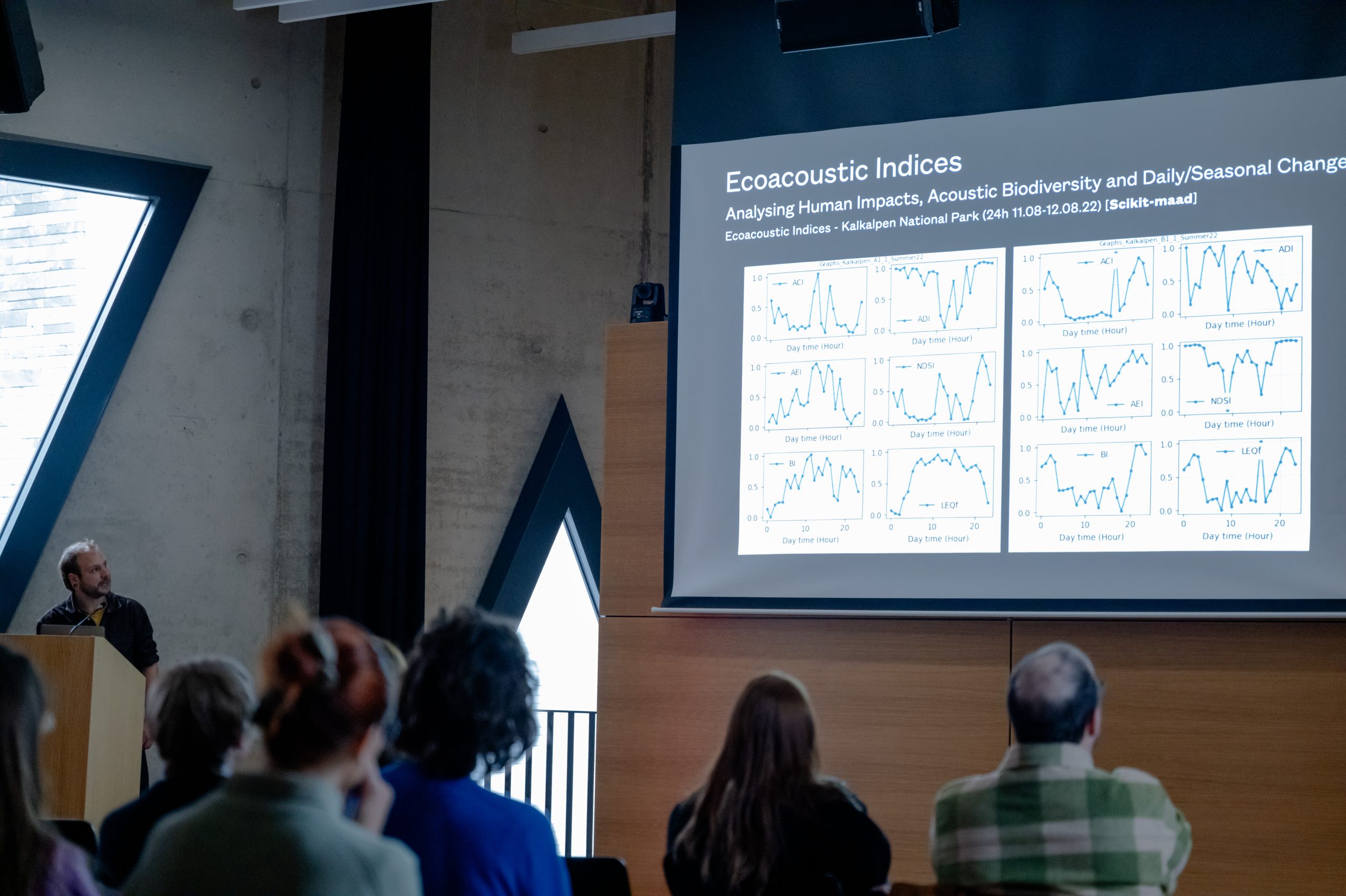
The first part of the residency concluded with a symposium on 21 October 2025 where César Reyes Nájera, Sebastian Döring, Enrique Mendoza, and Sam Erpelding offered diverse perspectives and sparked cross-disciplinary dialogue on sound, technology and the environment. These talks also introduced the public to Erpelding’s exhibition at Casino Display, which he worked on during the previous two months. The evening continued with a live performance and concert, followed by a DJ set that carried the event until 22:00.
©Christian Wilmes
Local to global: an expansion to Taipei
For the first time, the residency will continue internationally. Sam Erpelding will present his research, and sound works to the Taiwan Sound Lab at C-Lab (Taiwan Contemporary Culture Lab), one of Asia’s leading centers for experimental sound art. This next phase of immersion will further expand his exploration of sonification, the translation of data into sound, making subtle ecological dynamics perceptible through listening.
Written by: Chloé Sobczyk