

 Faculty of Science, Technology and Medicine
 Faculty of Law, Economics and Finance
 Faculty of Humanities, Education and Social Sciences
 Interdisciplinary Centre for Security, Reliability and Trust
 Luxembourg Centre for Systems Biomedicine
 Luxembourg Centre for Contemporary and Digital History
 Luxembourg Centre for European Law
 Luxembourg Centre for Socio-Environmental Systems
This is an online event. Tune in via Webex here.
Generative models for designing binding proteins and peptides
We introduce BoltzGen, an all-atom generative model for designing proteins and peptides across all modalities to bind a wide range of biomolecular targets. BoltzGen builds strong structural reasoning capabilities about target-binder interactions into its generative design process. This is achieved by unifying design and structure prediction, resulting in a single model that also reaches state-of-the-art folding performance. BoltzGen’s generation process can be controlled with a flexible design specification language over covalent bonds, structure constraints, binding sites, and more. We experimentally validate these capabilities in a total of eight diverse wetlab design campaigns with functional and affinity readouts across 26 targets. The experiments span binder modalities from nanobodies to disulfide-bonded peptides and include targets ranging from disordered proteins to small molecules. For instance, we test 15 nanobody and protein binder designs against each of nine novel targets with low similarity to any protein with a known bound structure. For both binder modalities, this yields nanomolar binders for 66% of targets.
About the speaker
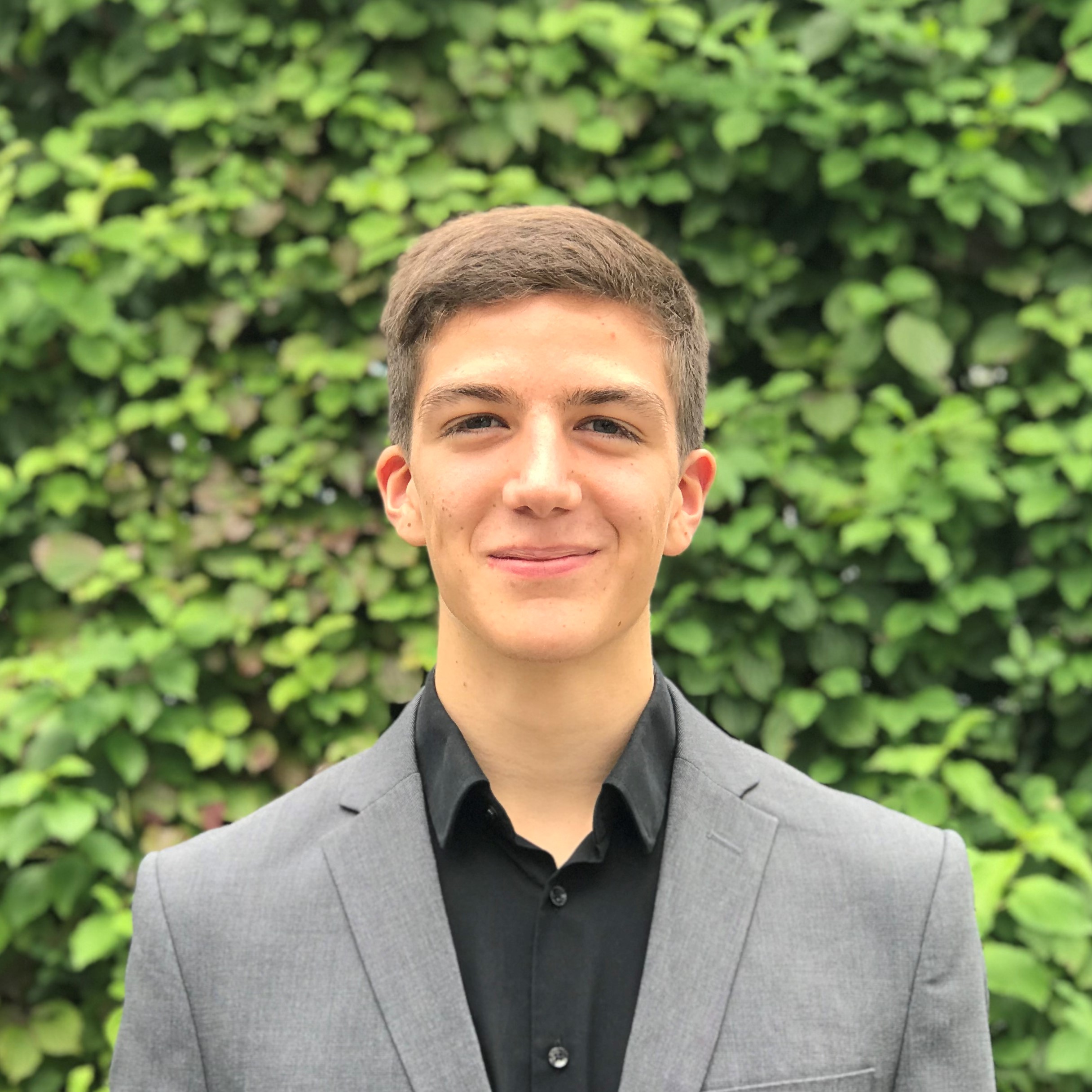
Hannes Stärk is a researcher at the MIT Computer Science & Artificial Intelligence Laboratory, where he works in the labs by Tommi Jaakkola and Regina Barzilay. His research focuses on generative models for biomolecules, including structure prediction, molecular design, and dynamics. He is the co-author of BoltzGen and DiffDock, pioneering diffusion-based approaches for molecular docking and universal binder design. Prior to MIT, he completed his M.Sc. at Technical University of Munich.
The Causal Analysis of Biomedical Data Lecture Series is supported by the Luxembourg National Research Fund (FNR) RESCOM Program.
