

 Faculty of Science, Technology and Medicine
 Faculty of Law, Economics and Finance
 Faculty of Humanities, Education and Social Sciences
 Interdisciplinary Centre for Security, Reliability and Trust
 Luxembourg Centre for Systems Biomedicine
 Luxembourg Centre for Contemporary and Digital History
 Luxembourg Centre for European Law
 Luxembourg Centre for Socio-Environmental Systems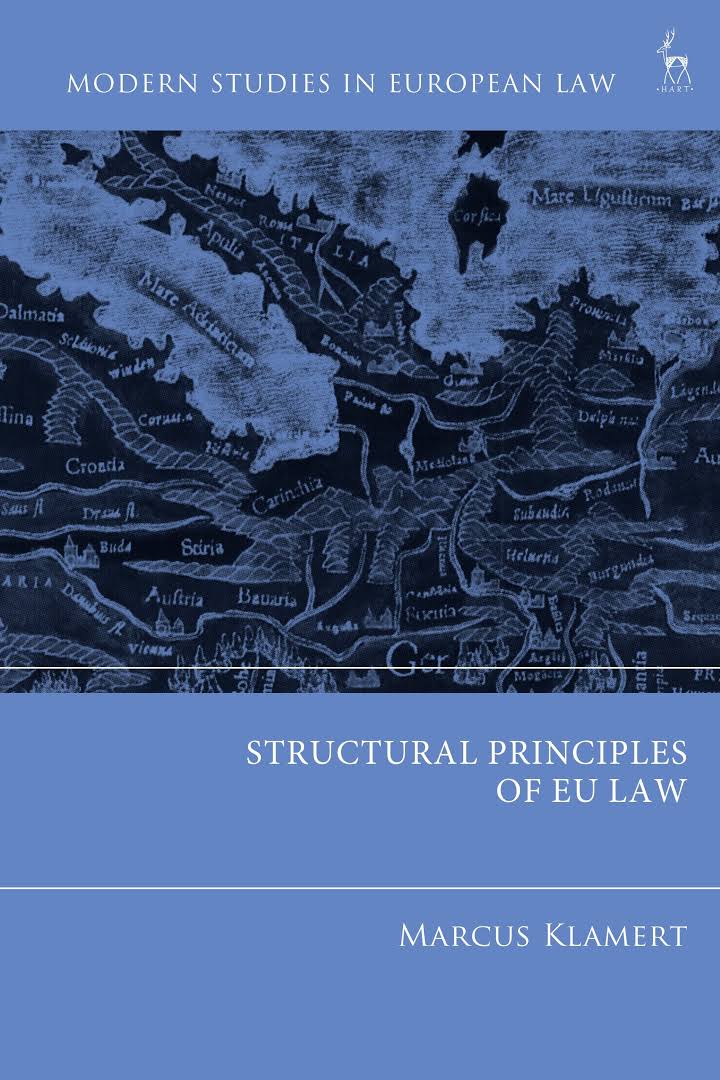
This book provides the first comprehensive treatment of the principles shaping EU law: autonomy, conferral, equality, national identity, loyalty, solidarity, supremacy, and effectiveness.
Much has been written about principles of EU law inspired by national law such as fundamental rights, but what of the principles that are specific to EU law? This book discusses the origins of the EU’s structural principles, where they are located, and how they are applied in practice. It is suggested that these principles are deeply interrelated and ensure the legal unity and uniformity of EU law. Their role in the EU’s external relations is also explored. This book lends a much-needed focus on the network of structural principles upholding the EU’s constitutional order.
-
14.00 – 14.10
Opening remarks
Prof. Takis Tridimas (Director, Luxembourg Centre for European Law, University of Luxembourg) -
14.10 – 15.00
Presentation of the book
Prof. Markus Klamert (University of Graz) -
15.00 – 15.30
Q&A
Prof. Markus Klamert

Marcus Klamert is a Legal Adviser at the Federal Chancellery of Austria and affiliated with the Institute for European Law at the University of Graz. He held (visiting) fellowships with the Austrian Academy of Sciences, the Institute of European and Comparative Law at the University of Oxford, and the European University Institute in Florence. He passed the Austrian bar exam, practiced law with a leading global law firm in Vienna, and worked as a contract agent for the European Commission in Brussels. He has represented Austria repeatedly before the Court of Justice and the General Court. His publications include The Principle of Loyalty in EU Law (OUP 2014), Services Liberalization in the EU and WTO – Concepts, Standards and Regulatory Approaches (CUP 2014), and a leading Austrian textbook on EU law (EU-Recht, 4th ed, Manz, 2025). He is co-editor (with Manuel Kellerbauer and Jonathan Tomkin) of The EU Treaties and the Charter of Fundamental Rights – A Commentary (2nd ed, OUP, 2024) and (with Sacha Garben) of the Competence section in the Online Encyclopaedia of EU Law (OUP).