

 Faculty of Science, Technology and Medicine
 Faculty of Law, Economics and Finance
 Faculty of Humanities, Education and Social Sciences
 Interdisciplinary Centre for Security, Reliability and Trust
 Luxembourg Centre for Systems Biomedicine
 Luxembourg Centre for Contemporary and Digital History
 Luxembourg Centre for European Law
 Luxembourg Centre for Socio-Environmental Systems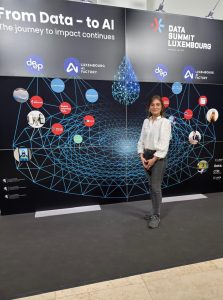
University of Luxembourg Master in Entrepreneurship and Innovation student Miné wants to tackle one of sustainable finance’s weaknesses: verifying climate risk data using AI.
The trillion-dollar trust problem
Financial institutions manage trillions of dollars based on self-reported climate data, that is often difficult to verify. Banks rely on voluntary corporate disclosures to assess physical risks – essentially trusting companies to evaluate their own performance. Our student Miné IZ believes that, for Luxembourg’s €5 trillion financial sector, relying on such data represents both capital and reputational risks.
Miné, who is enrolled in Master in Entrepreneurship and Innovation (MEI) at the University of Luxembourg, calls the lack of reliable asset-level data the “industry’s Achilles heel.” Her solution: an AI-powered platform using satellite imagery to independently verify physical climate risks for individual assets.
From problem to solution
While ESG data providers and rating agencies, such as Morgan Stanley Capital International (MSCI) and Morningstar, aggregate company self-reports, Miné is developing an AI-powered, data-driven product. It’s a geospatial risk monitoring platform that will use real-time satellite data. With this, Miné aims to provide independent, science-based verification of physical climate risks. Satellite imagery provides baseline observations such as flood extent, drought indicators, and land-use changes. AI models process imagery at scale across thousands of assets simultaneously.
“We will use AI to automate the aggregation of this high-resolution data, offering a level of granularity that standard Environmental, Social, and Governance (ESG) ratings cannot match,” Miné explains. “This will allow us to bridge the trust gap by measuring ground-level reality.”
The platform targets banks and asset managers, particularly those operating in private equity and wholesale markets, that must comply with the Sustainable Finance Disclosure Regulation (SFDR).
Miné explains that what distinguishes the platform she is building is the shift from disclosure-based data to science-based data. She believes this may help protect the industry from reputational damage and greenwashing.
“By enhancing the accuracy of regulatory reporting, we could help prevent capital destruction from unpriced physical/climate risks,” Miné says. “I hope my work ensures that the trillions managed in Luxembourg are directed toward genuinely sustainable and resilient assets.”
At this stage of her project, Miné has defined the core problem-solution fit and mapped the technical output to specific regulatory requirements. The next phase involves validating the prototype with pilot partners in Luxembourg’s financial sector, testing whether the platform dashboard meets their practical needs.
Applying skills from her Master’s programme
Miné already holds a Master’s degree and has professional experience as a sustainability officer. Through her work with Sustainable Finance Disclosure Regulation (SFDR) classifications, she became aware of the scale of the challenge, as fund managers struggle with unreliable data and greenwashing concerns.
She therefore chose to pursue the Master in Entrepreneurship and Innovation at the University of Luxembourg to bridge the gap between identifying systemic market problems and developing scalable solutions in sustainable finance.
The programme has shifted her perspective from viewing entrepreneurship as merely starting a business to seeing it as a method for solving industry pain points:
‟ It has taught me that true innovation in finance isn’t just about new technology, but about finding viable business models that enhance market integrity. I now view problems, such as data gaps, as strategic opportunities to create value rather than just obstacles,”
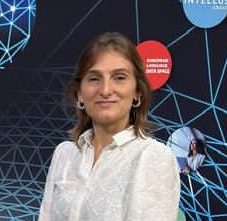
Student in Master in Entrepreneurship and Innovation
Miné believes the Master in Entrepreneurship and Innovation programme has already equipped her to evaluate different strategic paths – launching independently, partnering with fintech firms, or building institutional solutions.
She plans to leverage the programme’s courses on business model planning and innovation to make her platform scalable. The practical projects focused on market validation, she thinks, will play an important role in testing its usability with future clients. In addition, she also sees the programme’s strategic networking opportunities as essential for building the partnerships required to successfully launch her platform.
Looking ahead
Recently, Miné was selected for the 2026 NXTGen Women in Finance & Technology programme, a mentorship initiative hosted by the Luxembourg House of Financial Technology (LHoFT). Through this programme, she aims to receive guidance from senior finance leaders to refine her product for institutional clients, expand her professional network, and gain support in positioning her technology-driven solution for investment committees and risk boards.
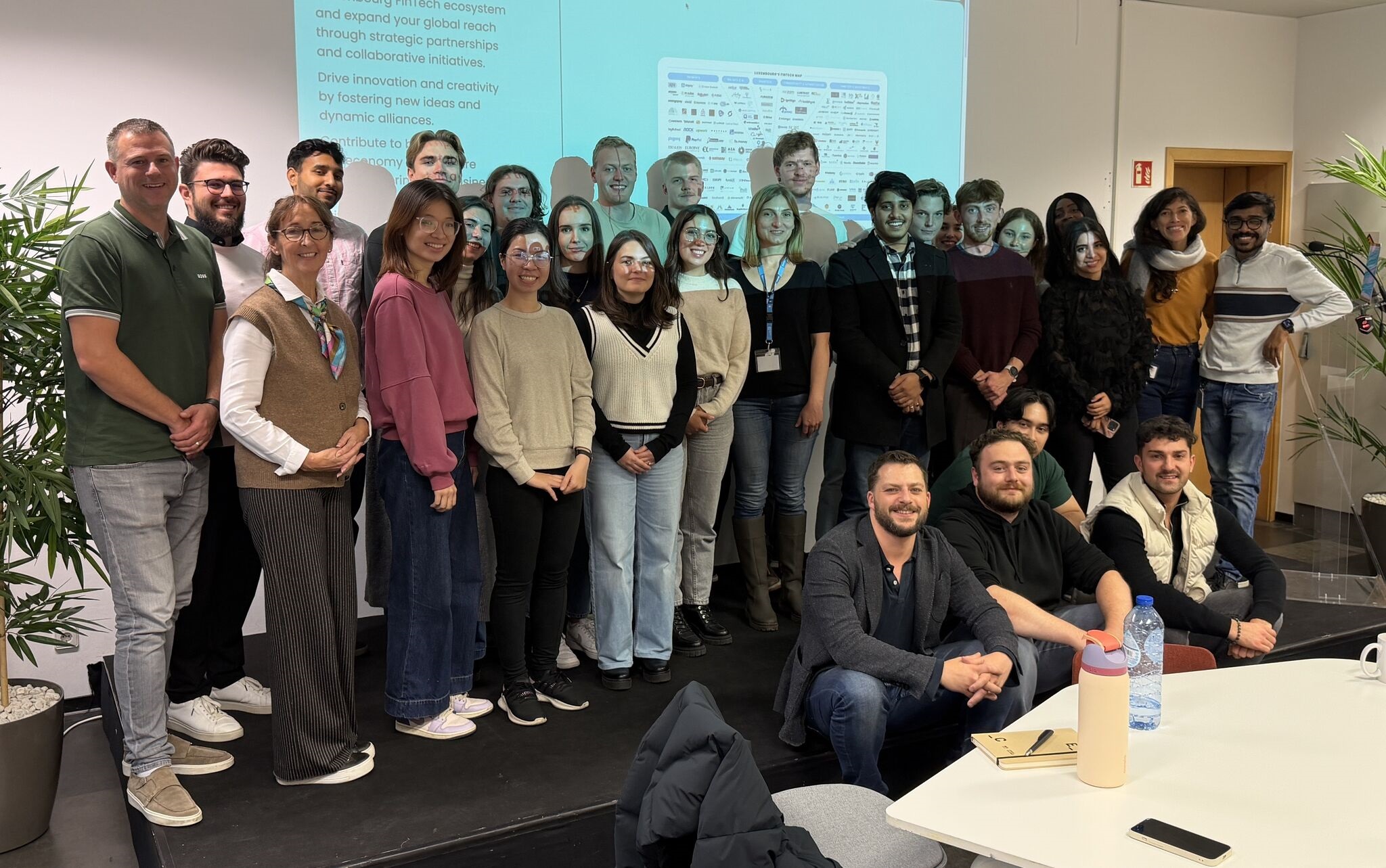
MEI students and LHoFT representatives at LHoFT
After graduation, she plans to work directly with industry practitioners, solving their most pressing sustainability investment challenges.
“I aim to be at the forefront of the industry, bridging the gap between advanced technology and financial regulation to build practical solutions that truly serve the market,” she concludes.