

 Faculty of Science, Technology and Medicine
 Faculty of Law, Economics and Finance
 Faculty of Humanities, Education and Social Sciences
 Interdisciplinary Centre for Security, Reliability and Trust
 Luxembourg Centre for Systems Biomedicine
 Luxembourg Centre for Contemporary and Digital History
 Luxembourg Centre for European Law
 Luxembourg Centre for Socio-Environmental Systems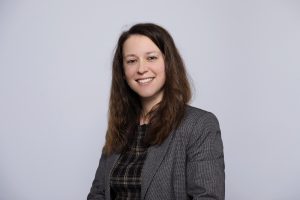
Documenting a fundamental pillar of the labour landscape in Luxembourg
With her background in political and social history and journalism, C²DH postdoctoral researcher Estelle Berthereau was delighted to be given the chance to delve into the history of Luxembourg’s Chamber of Employees.
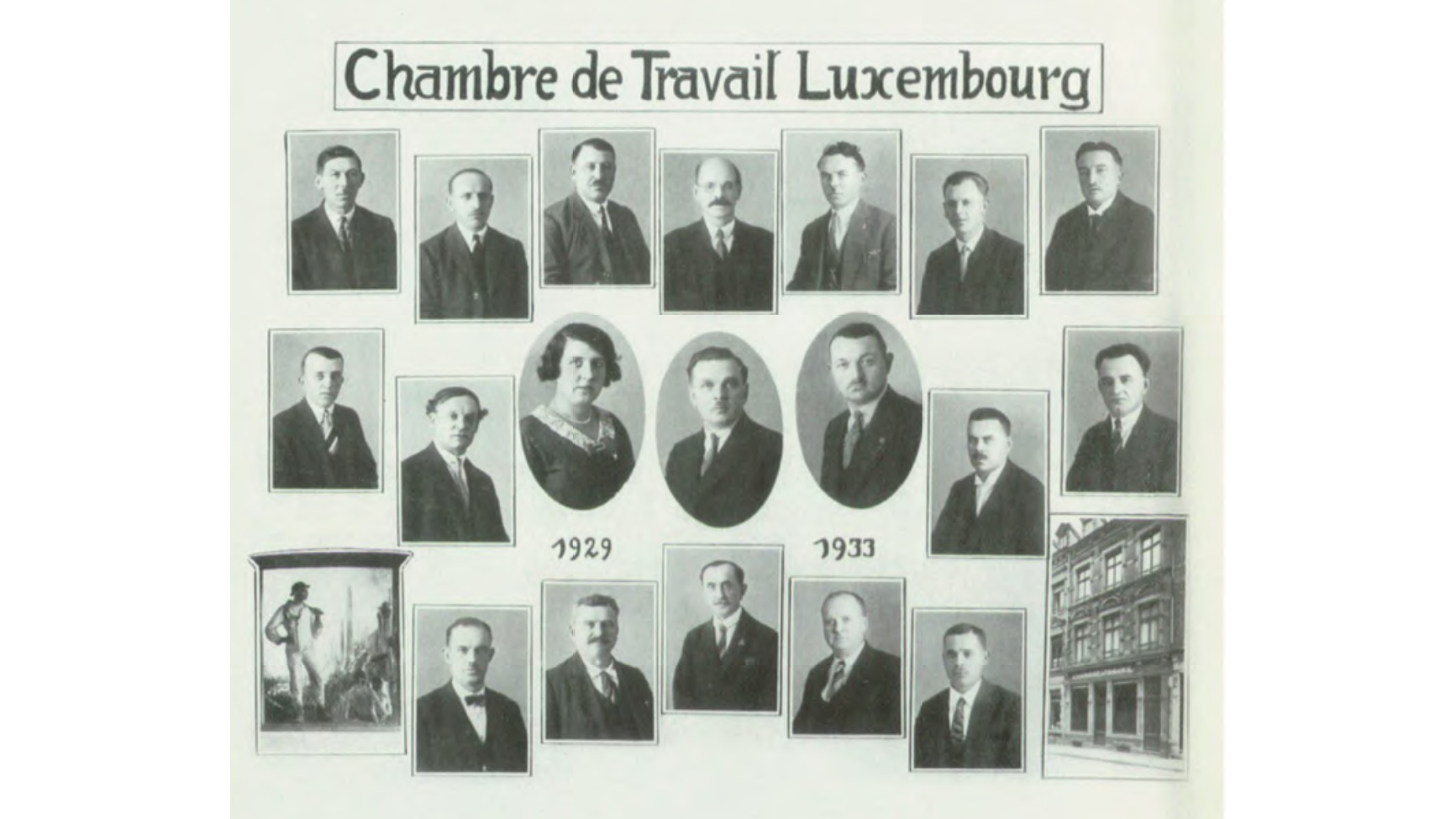
In 2024, the Luxembourg Chamber of Employees (Chambre des salariés, or CSL) celebrated its 100th anniversary. This representative body for workers, first established in 1924, has grown today to more than 630,000 members, making it the largest professional chamber (out of a total of five) in Luxembourg. Members now include all employees (apart from civil servants), apprentices, job seekers and pensioners.
In addition to defending the interests of its membership, the CSL serves in various national advisory bodies, informs employees about their rights through publications and position papers on socio-economic issues, and plenty more. Each year, for instance, it delivers around a hundred opinions on draft laws and regulations on a variety of topics, ranging from social and economic issues to social security and education. C²DH postdoctoral researcher Estelle Berthereau calls it a “fundamental pillar in the working landscape in Luxembourg and also a crucial body for the implementation of the social state… it organises democratically to encourage social dialogue.”
Finalising a publication in one year
As part of the CSL’s 100th anniversary celebrations, Berthereau was recruited to work on a two-year project documenting the chamber’s history. This was a perfect match for her background, which includes studies in political and social history, gender studies and political philosophy at a variety of institutions, including EHESS, Université Paris 8 and Columbia University. In one year, she completed a printed publication just shy of 300 pages which details the CSL’s history and the key people that helped shape it. (A longer electronic version of the publication, with additional annexes, is also available.)
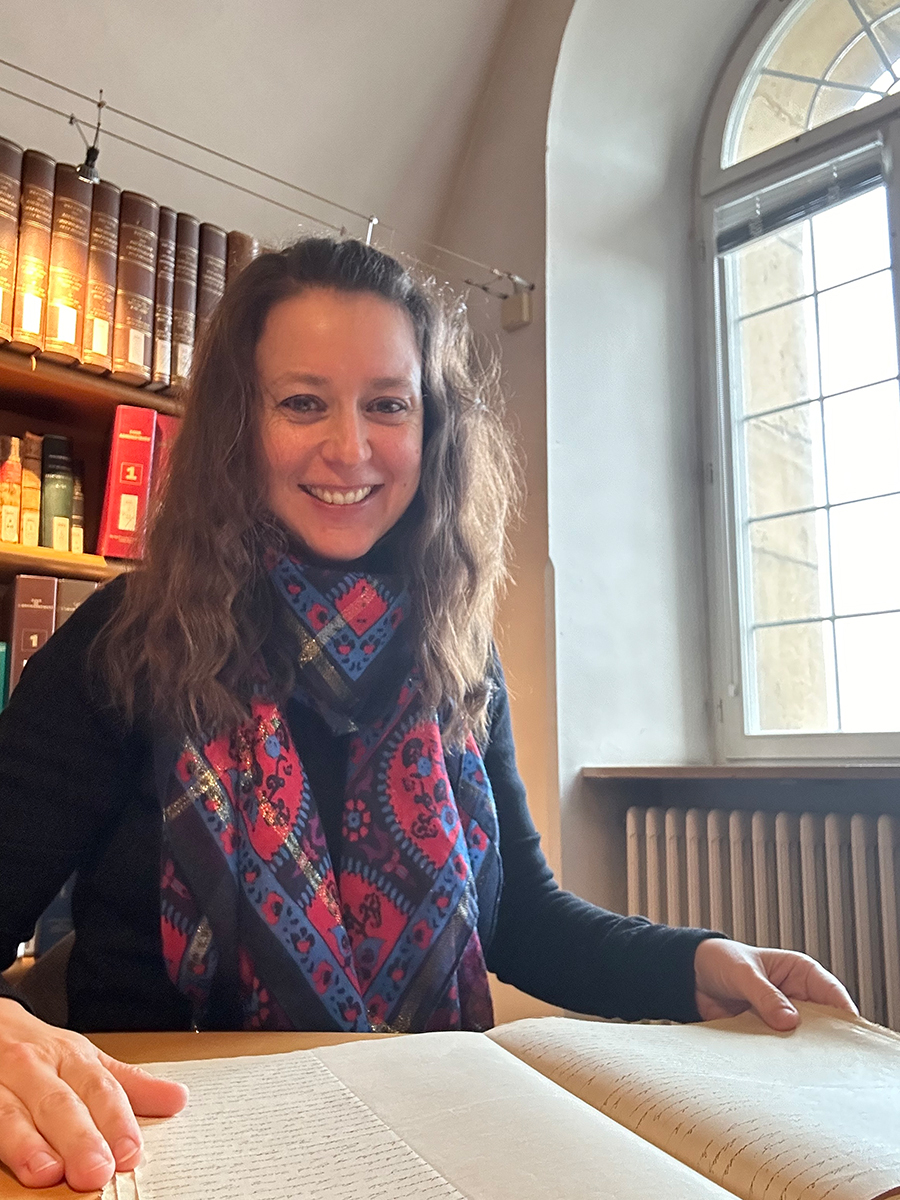
“There were a lot of archives – and that’s not always the case for researchers. We completed the project in record time, which was a challenge,” Berthereau explains. “But I love working in archives. They can be sources of treasures that you can’t find elsewhere.”
There was only one major gap in the archive, and that was the period during World War II. Back then, there were two chambers: the Chamber of Private Employees and the Chamber of Labour, which merged in 2008 to become the CSL. From 1937 to 1950, there are no annual reports for the Chamber of Private Employees – perhaps because during the German occupation, the chamber’s desks, furniture and money were requisitioned by the Nazis under the leadership of Gauleiter Gustav Simon.
Part of Berthereau’s archival work was at the Geneva-based International Labour Office, where she found press images, lists of workers and even cartoons. She compares her exploration of the archives to the film Being John Malkovich, adding: “I like to get into the skin of people at the time, think how they thought, try to understand them.”
‟ I like to get into the skin of people at the time, think how they thought, try to understand them.”
Postdoctoral researcher
Her work also included several interviews, 12 of which are in video format and accessible via the CSL website and also through QR codes in the book. For Berthereau, writing the book in just one year was a challenge, but as she says, “I really enjoy writing! I feel a lot more comfortable writing than speaking.”
The impact of the CSL
Part of what Berthereau finds fascinating about the CSL is that it touches on many different areas, including socio-economic, educational and environmental issues, and has helped drive democratic change across various fronts via a collaborative approach. To take one example, Berthereau cites how former Luxembourg Prime Minister and European Commission President Jean-Claude Juncker worked with ministers Mars Di Bartolomeo and François Biltgen on the 2008 merger of the two chambers, shortly before the crisis, and how their cross-party negotiations resulted in a positive outcome for workers.
The CSL also runs a wide range of vocational training courses that have historically been very popular. “Before the University of Luxembourg existed, one of the only options for continuing vocational education was the courses run by the CSL, through its Luxembourg Lifelong Learning Centre,” she explains.
‟ Before the University of Luxembourg existed, one of the only options for continuing vocational education was the courses run by the CSL, through its Luxembourg Lifelong Learning Centre”
Berthereau lights up when speaking about some of the fascinating personalities that have shaped the history of the CSL. Headed since 2019 by Nora Back, General Secretary of the OGBL union, the CSL has a history that includes a number of other notable figures, like Barthélémy Barbel, former Prime Minister Pierre Krier and his wife Lily Becker-Krier, John Castegnaro, Michel Hack, Antoine Krier, Léon Weirich and Alex Werné. One of the pivotal moments for the CSL, Berthereau explains, was Pierre Krier’s efforts to overhaul the social security system and give workers more rights in 1945.
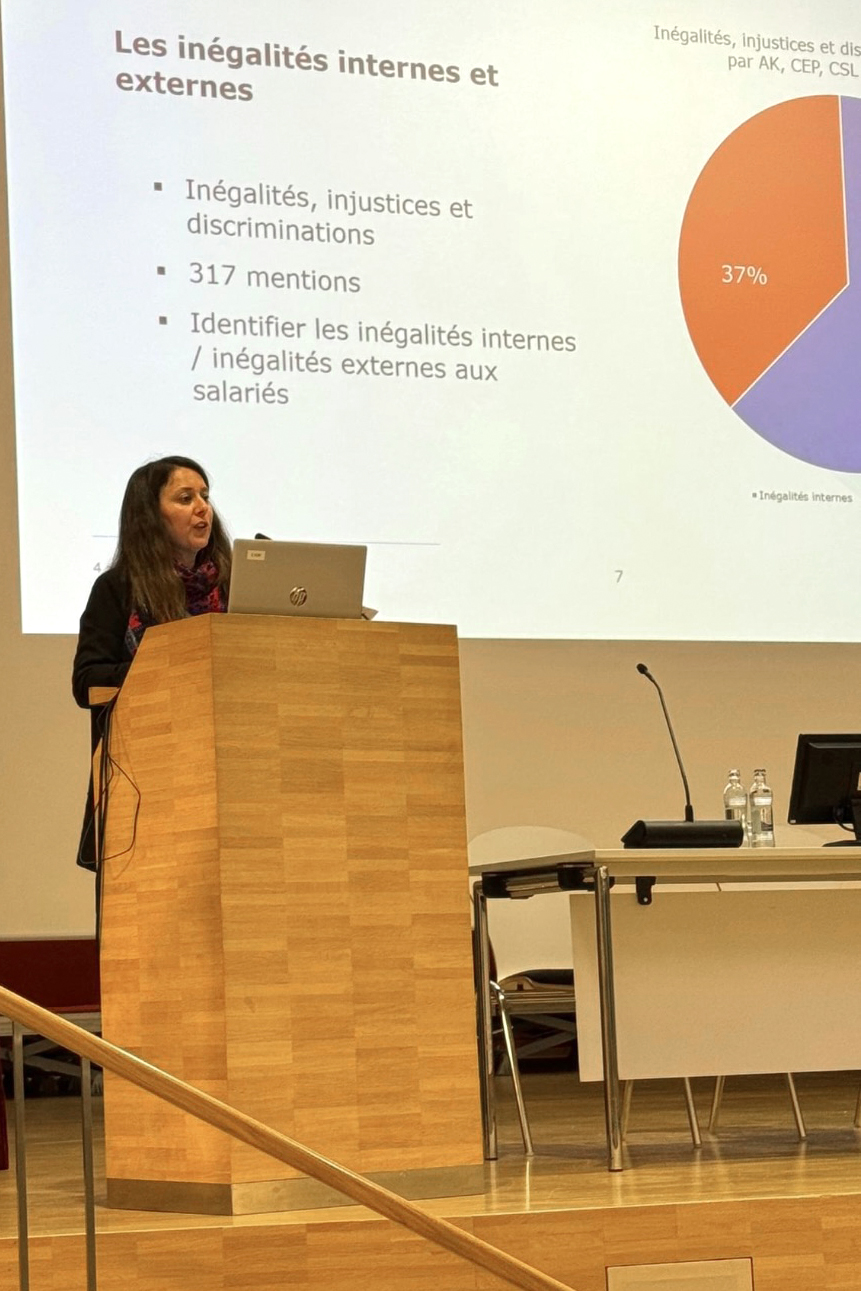
Berthereau also notes that the CSL has pushed for gender equality over the years, promoting equal opportunities and calling for fair pay. As its membership includes non-resident workers, it also takes into account Luxembourg’s unique cross-border worker situation. “For cross-border workers, even if salaries in Luxembourg are attractive, they have to decide whether it is worth spending so much time in traffic every day.” The CSL has also worked on well-being indicators – are people happy with their general quality of life? “That’s an important question to consider when examining inequalities,” she adds.
Between the C²DH and the CSL
Berthereau has lived in Luxembourg for 12 years, during which time she has also become a naturalised citizen. Being in Luxembourg and part of the C²DH team has provided her with the opportunity to put her multidiscplinary background to work. “It has been a real honour for me to work on current issues and historical topics in Luxembourg, as I get to combine a lot of my interests,” she explains.
Given the nature of her work, she spends most of her working time at the CSL, but one day a week is spent on site at the C²DH. She tries to attend meetings on that day. “Sometimes these help give me new ideas, open my mind to angles I hadn’t thought about that might push my work in a different direction,” she explains.
The researchers also share their tools and experiences with one another. Berthereau particularly appreciates such exchanges: “This atmosphere of mutual curiosity is a real source of inspiration.”