

 Faculty of Science, Technology and Medicine
 Faculty of Law, Economics and Finance
 Faculty of Humanities, Education and Social Sciences
 Interdisciplinary Centre for Security, Reliability and Trust
 Luxembourg Centre for Systems Biomedicine
 Luxembourg Centre for Contemporary and Digital History
 Luxembourg Centre for European Law
 Luxembourg Centre for Socio-Environmental Systems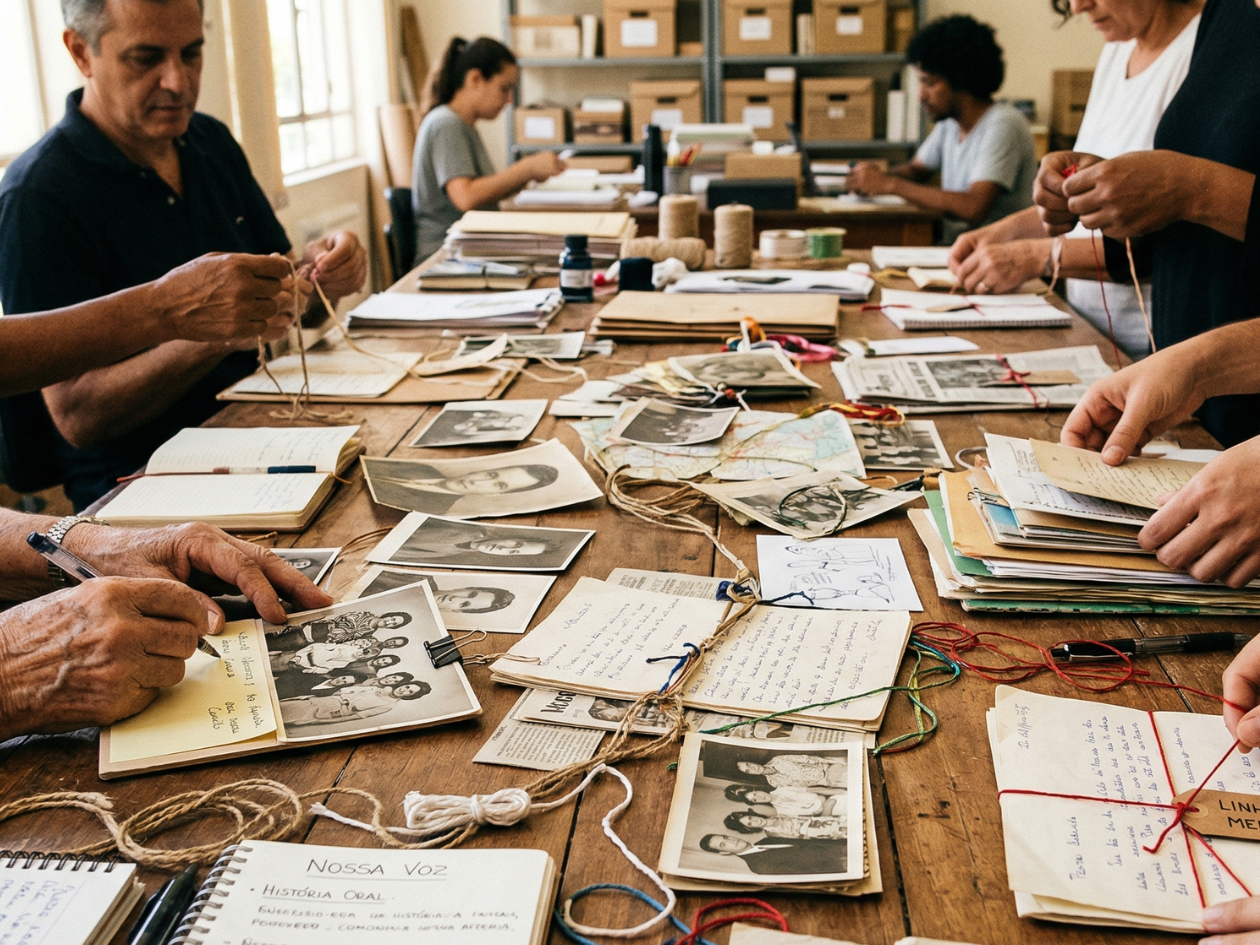
Who produces history, and under what conditions? While historical knowledge has long been shaped within academic frameworks, the involvement of non-professional actors—from historical societies to community archives and activist associations—has a rich history. The international conference “Citizen Practices in Producing and Preserving the Past” examines the processes, methodologies, and collaborations through which citizen historians engage in collecting, classifying, and interpreting the past from the nineteenth century to the digital age.
The conference takes place at the University of Luxembourg, Belval Campus, on 11 and 12 May 2026. Hosted by the Luxembourg Centre for Contemporary and Digital History (C²DH), the event is part of the research project Citizen Participation in History and Heritage Production (CIPHH), funded by the Luxembourg National Research Fund (FNR), in collaboration with the Laboratoire d’histoire et de patrimoine de Montréal (LHPM, Université du Québec à Montréal) and the research project “Agents mémoriels, un engagement citoyen d’hier à aujourd’hui” (Montréal, Canada).
The programme features seven panels covering topics such as collaborative practices in digital history, heritage disputes, community activism, and participatory research, and will be held in a hybrid format.
Programme
-
08.30
Registration & Welcome Coffee
-
09.00
Opening, Professor Thomas Cauvin, Natália Gonçalves
-
09.15
Panel 1: Collaborative Practices in Digital History
Moderator: Julia Göke
Olalekan Ojumu: It Takes a Community: Archivi.ng and the Power of Citizen Participation in Preserving Nigeria’s History (online)
Lorna Elms: The Irish Community Archive Network (iCAN) is the leading organisation championing and supporting digital community archives in the Republic of Ireland
Fien Danniau, Ishka Desmedt and Fons Verheyde: Nature Periodicals as Knowledge Networks: Past Practices and Digital Futures
-
11.00
Panel 2: Citizen Engagement, Heritage, and Disputes
Moderator: Monyck de Sá Santos
Laura Boever: Politics of Memory After 1945: The role luxembourgish government concerning memory culture conflicts.
Zhanat Kundakbayeva: From Grassroots to Institution: The Association of Victims of Unlawful Political Repressions and Kazakhstan’s State Rehabilitation Project
Wojciech Bedyński and Kornelia Kończal: Economies of Memory: Difficult Heritage in a Post Displacement Landscape
-
12.30
Lunch break
-
13.30
Panel 3: Community Practices, Activism, and Historical Knowledge
Moderator: Cássia Hosni
Anath Ariel de Vidas: What history? The construction of oral traditions versus historical knowledge within the context of Afro-descendant activism in Mexico (online)
Ali Almutawakel: Digital Storytelling and Social Media as Tools for Documenting Refugee Experiences: A Humanitarian Perspective (online)
Lara Ergül Claeys, Emilia Gyselinck and Fien Danniau: Environmental History for and by Activists. Insights from a student-led project history week
-
10.45
Coffee break
-
15.00
Coffee break
-
15.15
Panel 4: Participatory Research and Territorial Practices
Moderator: Marie Mathevet
Rein Debrulle: Beyond the Map: How Collaborative Georeferencing Supports Engaged Historical Research
Krzysztof Wasilewski: Grassroots online heritage activists in the Polish-German borderland and the production of transcultural memory (online)
Grace Njeri Gatere: The Role of Citizen Historians of Taita Taveta: Keeping Time in the Hills (online)
-
16.45-17.00
Conclusion of Day 1
-
09.00
Morning coffee
-
09.30
Panel 5: Special Panel: Are you on the list? History, methods and roles of list-making for World War II veterans and victims
Moderator: Masha Meleshko-Sudina
Zoé Grumberg: Fighting against oblivion: David Diamant and the lists of Jewish communists’ fighters in the French Resistance
Éric Cheynis: The resistance on index cards: categorisation and recognition of the population of the Vercors maquis
Blandine Landau: “Counting the Jews”: issues linked to list-making and memory policies in Luxembourg
Fred Pailler: Technologies of categorisation, technologies of memory: post-WW2 lists of people still in the making…
-
11.00
Coffee break
-
11.15
Panel 6: Co-production and Collaborative Methods
Moderator: Emilia Sánchez González
Geoff Belknap: Making Space to Talk: Creating Community-led Collections Projects in the Archive and Online (online)
Rosanna Farbol and Tommy Cassøe: Pride and Prejudice – Productive Friction in Co-produced Cold War History
Bendjedid Rachad Sanoussi: Tourist guides as citizen producers of the past: heritage practices in Fes, Morocco
-
12.45
Lunch break
-
14.00
Panel 7: Historical Societies and Amateurs (Societés historiques et amateurs – session in French)
Moderator: Roxane Perez
Aurore Cartier and Catarina Pereira: Société archéologique de Namur (SAN)
Véronique Moulinie: D’un livre à l’autre : la double écriture de la captivité des prisonniers de guerre français en Allemagne pendant la Seconde Guerre mondiale (online)
Neila Rhouma: Practical proposal for citizens regarding the production and preservation of history (online)
-
15.30-16.00
Closing Remarks
Practical information
How to get to Belval Campus
- Public Transport: Public transport is free throughout the Grand Duchy of Luxembourg. We highly recommend downloading the Mobiliteit.lu app to plan your journeys.
- By Train: Take the train to the “Belval-Université” station. The campus is a short walk from the platform.
- By Bus: Several lines serve the “Esch-sur-Alzette, Universitéit” stop.
- By Plane: Luxembourg Airport (Findel) is connected to the city centre and Belval by bus and train (approx. 45-60 minutes).
Registration
Attendance is open to both in-person and online participants. Registration is required and will remain open until the day of the event. Certificates of participation will be issued to all registered attendees, provided their presence is confirmed (including for those joining us online).