

 Faculty of Science, Technology and Medicine
 Faculty of Law, Economics and Finance
 Faculty of Humanities, Education and Social Sciences
 Interdisciplinary Centre for Security, Reliability and Trust
 Luxembourg Centre for Systems Biomedicine
 Luxembourg Centre for Contemporary and Digital History
 Luxembourg Centre for European Law
 Luxembourg Centre for Socio-Environmental Systems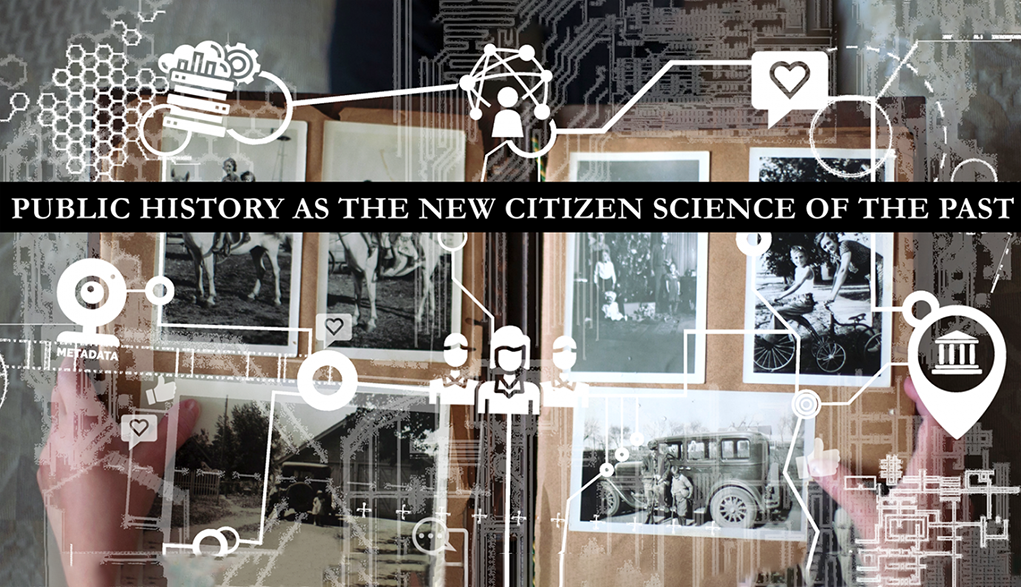
What happens when a research project ends? What remains, and what has it set in motion? Initiated in 2020 during COVID19 and hosted at the Centre for Contemporary and Digital History (C²DH), PHACS (Public History as the new Citizen Science of the Past) is reaching its end in 2026. Join us to discover what PHACS has sparked, to revisit what it has made possible, and to imagine together how these ideas and collaborations can continue.
About the event
After several years of research and collaboration, the PHACS project (FNR ATTRACT) is reaching an important milestone as it comes to an end. On this occasion, we warmly invite you to join us on 23 April 2026, first at the Black Box in the Maison des Sciences Humaines on Belval Campus.
Rather than presenting a conventional overview of project “results”, we conceive this event as a moment to reflect on what PHACS has enabled within and beyond the University of Luxembourg: the collaborations it has sparked, the initiatives it has supported, and the questions and research directions that have emerged along the way.
The afternoon will combine short inputs, emerging project pitches, and open discussion on how to pursue the ongoing activities. We will be creating opportunities to engage with the work developed through PHACS, share feedback, and exchange ideas on how these activities and collaborations might continue to evolve.
We would be delighted to welcome colleagues, students, collaborators and anyone interested in these themes to join us for this moment of exchange.
Participation and attendance
The afternoon event will take place from 14.00 to 17.00 in the Black Box (MSH, Belval Campus).
Participants will have the opportunity to discover and engage with a range of presentations and project pitches, take part in Q&A moments, and contribute to discussions around the outcomes and future directions of PHACS.
The session will also be accessible online via Webex, but we hope many of you will be able to join us in person to fully take part in the exchanges. Please register if you want to attend in-person.
Programme
-
14.00
PHACS: Mapping an Ecosystem of Public Participation
An introduction to PHACS by Prof Dr Thomas Cauvin, tracing its development, mapping its network of collaborators, and reflecting on the forms of participation it has enabled.
-
14.10
What PHACS Set in Motion
This session explores how PHACS has shaped ongoing work and future directions.Chair: Dr Camilla Portesani
- Dr Camilla Portesani, CARESTORY: Participatory Public History in Care Settings
CARESTORY is a participatory public history project proposal co-produced with Stëftung Hëllef Doheem, embedding historical research within care settings to document and share elderly people’s life histories as part of Luxembourg’s contemporary history.
- Dr Myriam Dalal, The Virtual House of the Rejected: Rehumanizing the Lives Lost in the Mediterranean
The Virtual House of the Rejected proposes to co-create an affective archive with survivors, witnesses, and family members of people who went missing in the Mediterranean Sea over the past decade.
-
14.50
The Future Needs Public History Research
A reflective intervention on the trajectory of PHACS and its broader implications by Prof Dr Thomas Cauvin.
-
15.10
Coffee Break
-
15.30
Beyond PHACS: New Projects, New Directions
This session highlights new projects and collaborations emerging from PHACS.
Chair: Dr Myriam Dalal
- 15.30 – 16.10 | Charo Havermans, The Pub Museum
A project exploring the co-production of the world’s first pub museum by foregrounding the (hi)stories of the people who shape pub culture.
- 16.15 – 17.15| Roundtable Bringing Theatre and Historical Research Together: Reflections on a Participatory Research-Creation Project (Les sens de la porte)
with La Morsure (Marie Parent & Christophe Le Cheviller), Gaïd Andro, Fanny Le Bonhomme & Katell Robion
This roundtable reflects on an experimental research-creation project that brings together theatre practitioners and historians to examine the history of the former Jacques-Cartier prison in Rennes. It explores how historical research and creative processes intersect, and examines the conditions for participatory collaboration and shared authority in practice.
-
17.15
Closing Reflections
A short collective conclusion reflecting on the future of PHACS, not as an end point, but as a transformation into new forms, projects and collaborations.
Speakers
Prof. Thomas Cauvin
Thomas Cauvin is Professor of Public History at the University of Luxembourg. FNR ATTRACT Fellow since 2020, he leads the Public History as the New Citizen Science of the Past (PHACS) project. He is the director of the Master in Digital and Public History (MADiPH).
Dr Camilla Portesani
Dr Camilla Portesani is a public historian specialising in participatory and inclusive approaches to history. She holds a PhD in public history from the University of Luxembourg. Her work explores how historical research can be made participatory, accessible, and meaningful for diverse audiences, with a strong commitment to widening representation. She has extensive experience working with museums and cultural institutions internationally, developing exhibitions and projects that link academic research with public engagement and outreach.
Dr Myriam Dalal
Dr Myriam Dalal is a Research Associate currently affiliated with Goldsmiths, University of London. Her work draws on participatory practices, public history, and artistic research to document absence and silence in contexts of political violence. She holds a PhD in Sciences of Art from the Sorbonne University in France and recently concluded a postdoctoral fellowship in public history at the University of Luxembourg.
Charo Havermans
Charo Havermans (she/her) is a public historian of the hidden politics of everyday life. She specialises in marginalised histories of the public house, and brings these to life as a practising public historian and historic pub tour guide in London. Charo holds an MA in Public History from University College London, where she organised the inaugural Sensory Public History Conference in 2025.
La Morsure (Marie Parent & Christophe Le Cheviller)
La Morsure is a theatre company exploring a range of artistic forms, including theatre, music, dance and performance. Their work is based on improvisation as a central creative method, integrating the creative process into the performance itself. They develop immersive, collective and sensory experiences, often working with so-called “non-traditional” audiences and fostering inclusive, participatory artistic practices.
Gaïd Andro
Gaïd Andro is a historian and Associate Professor at Nantes Université (INSPE), and a researcher at CREN. Since 2023, she has been a junior member of the Institut Universitaire de France (Chair in Science Communication). A founding member of AMuloP and Cartier Libre, her research focuses on science-society relations, public history, and participatory research practices. She is part of the ANR PatCaM research project.
Fanny Le Bonhomme
Fanny Le Bonhomme is a historian and Associate Professor at the University of Poitiers, and a researcher at Criham. Her work focuses on the social history of confinement and on the relationship between historical research and participation. A founding member of Cartier Libre and GREM, she coordinates the ANR PatCaM project (2024–2028), with a particular interest in the history of psychiatry in prison contexts.
Katell Robion
Katell Robion is a secondary school history and geography teacher and a PhD candidate in history didactics at Nantes Université (CREN). Her research examines science communication and its impact on school audiences. A member of Cartier Libre, she participated in the research-creation project as a facilitator, and studied the roles and dynamics within the research team.