

 Faculty of Science, Technology and Medicine
 Faculty of Law, Economics and Finance
 Faculty of Humanities, Education and Social Sciences
 Interdisciplinary Centre for Security, Reliability and Trust
 Luxembourg Centre for Systems Biomedicine
 Luxembourg Centre for Contemporary and Digital History
 Luxembourg Centre for European Law
 Luxembourg Centre for Socio-Environmental Systems
Report of the 8th Conference on Digital Humanities and Digital History
On 15–16 June 2026, the C²DH hosted AI for History, History for AI, the eighth Conference on Digital Humanities and Digital History. The conference ran across two full days and was co-organised with the German Historical Institute Washington (GHI), the Chair for Digital History at Humboldt-Universität zu Berlin, and NFDI4Memory.
As the title suggests, the conference was not only about what AI can do for history, but also about what historians can contribute to AI development and how their expertise can help advance a more critical and reflective approach to AI. The opening was led by Andreas Fickers, Frédéric Clavert and Sarah Oberbichler (C²DH) together with Daniel Burckhardt (GHI Washington). As Sarah Oberbichler emphasized in her opening remarks, the conference was less concerned with whether we should use AI than with the recognition that AI is already part of our work: we are already in the middle of it. If AI has become unavoidable, the challenge is how to involve the humanities more directly in the processes through which AI is developed. The conference therefore sought to reflect on best practices and workflows for using AI in historical research, the infrastructures required to support such research, and the development of models tailored to historical inquiry.
-
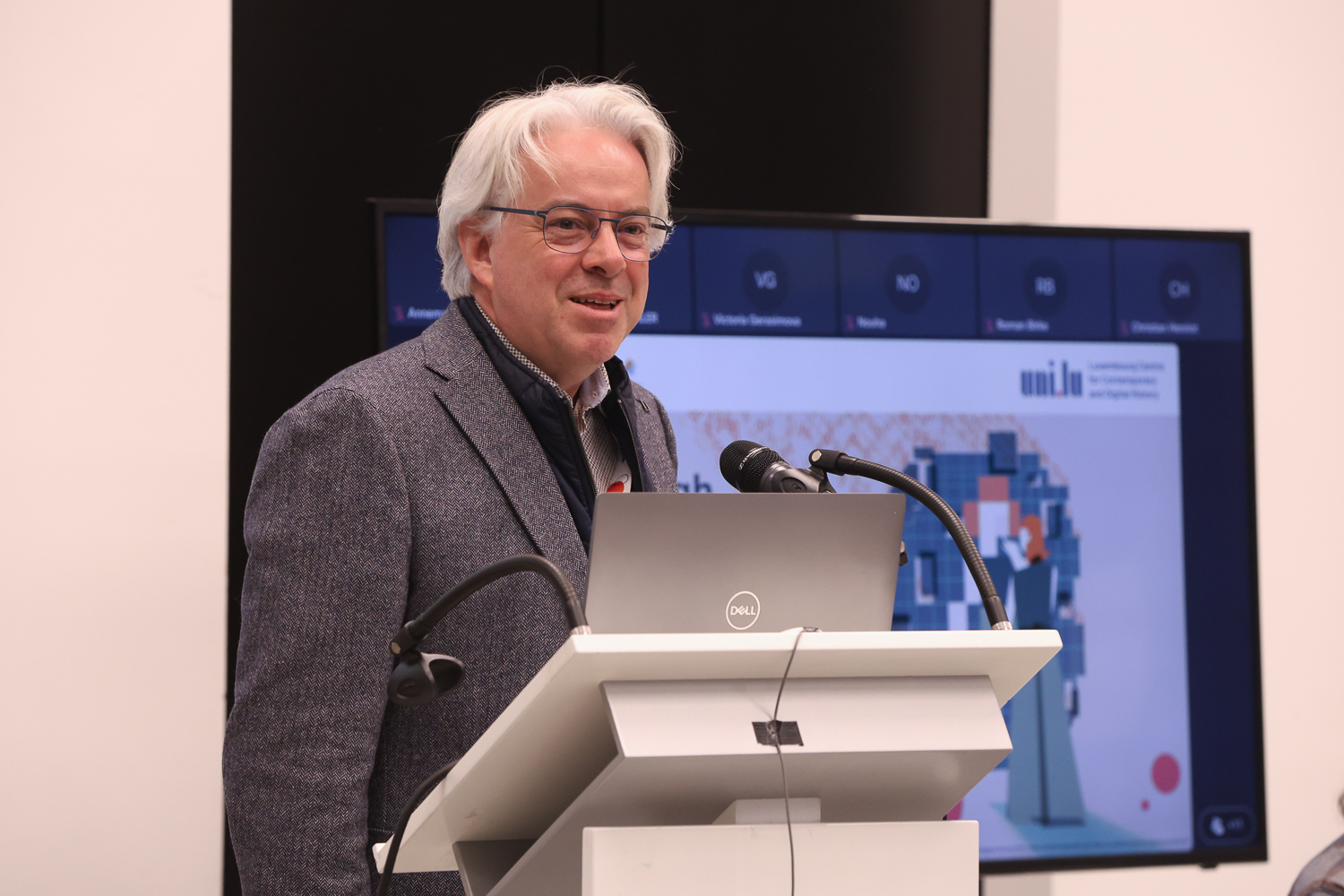
Opening words by Prof .Andreas Fickers
-
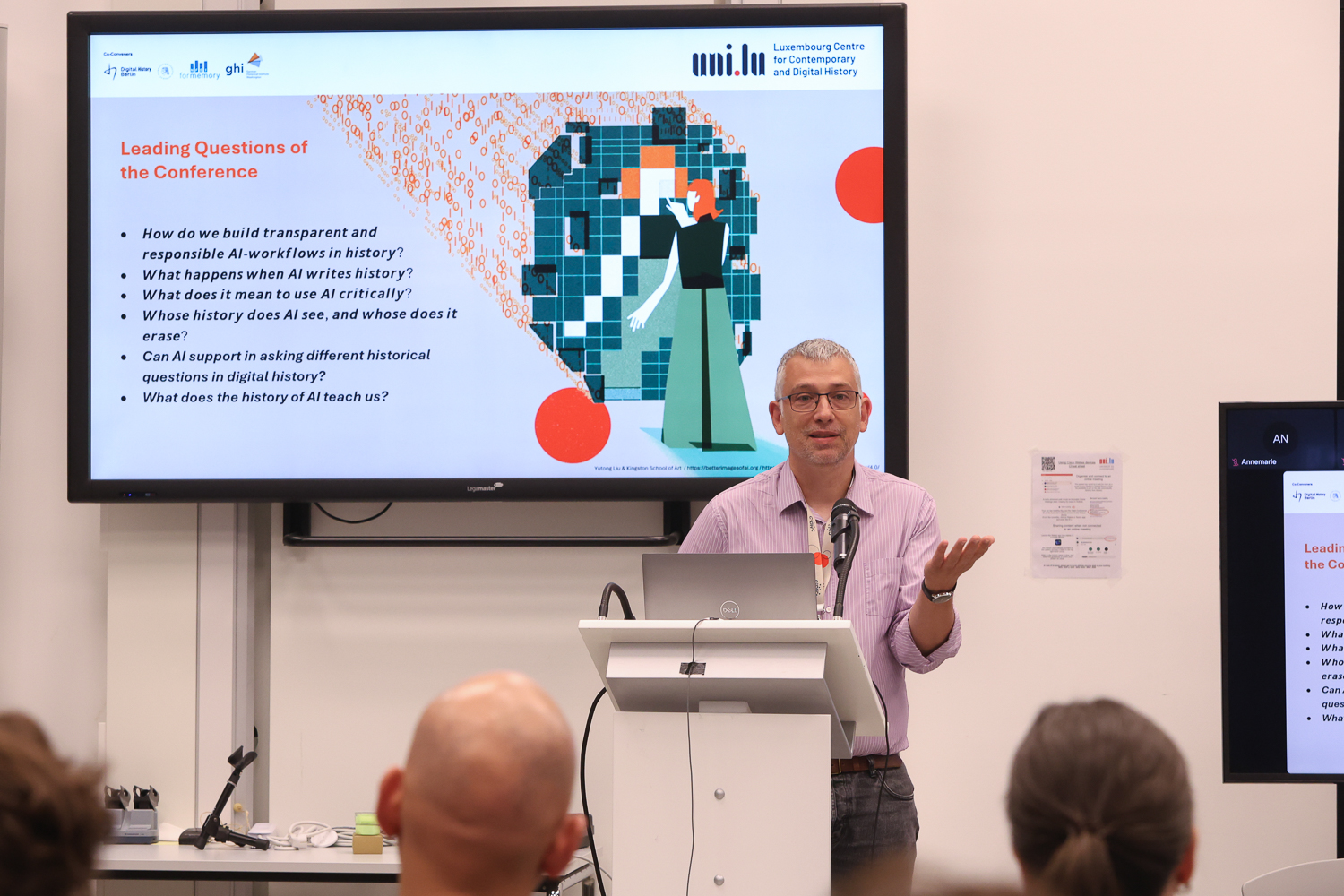
Opening words by Frédéric Clavert
-
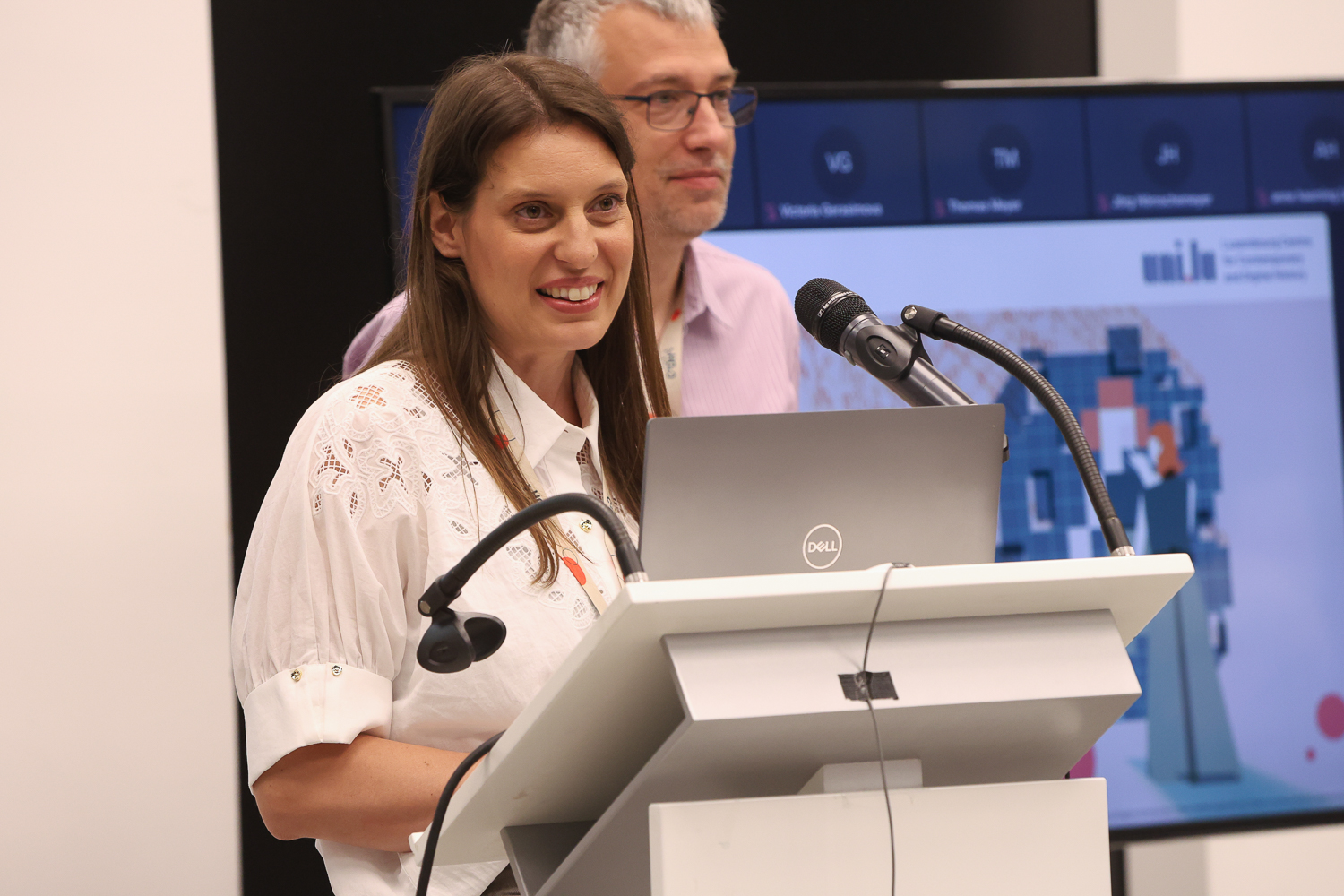
Introduction by Sarah Oberbichler
-
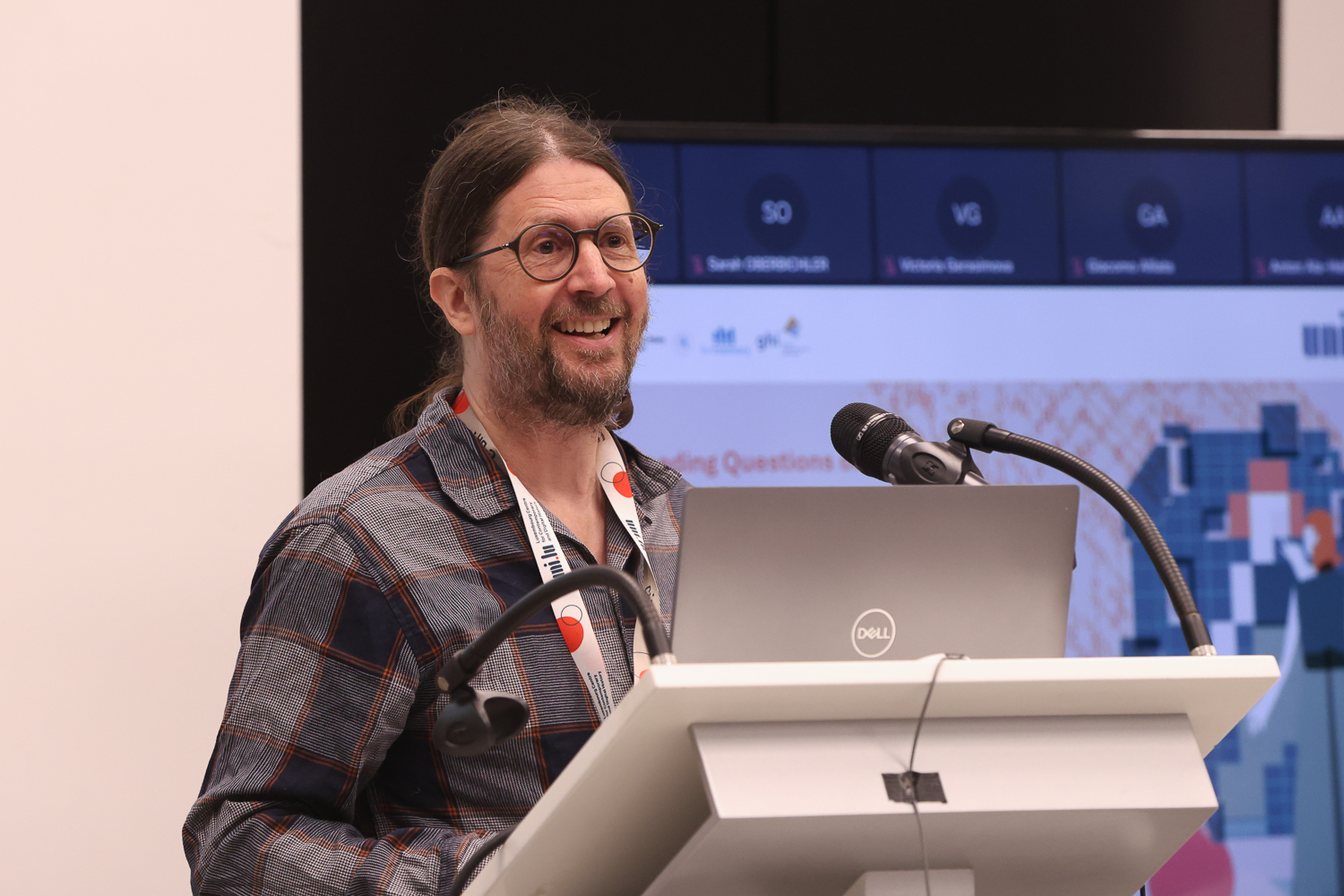
Introduction by Daniel Burckhardt
Four main directions emerged from the conference (see full program and all presenters):
- 1. AI to augment historical analysis. Some speakers demonstrated how embeddings and knowledge graphs can be used to explore large corpora (e.g., Italian newspapers), create domain-specific vocabularies (e.g. climate in Dutch archives), and track quotations across sources, as illustrated by the Remarx project.
- 2. AI to reduce archival gaps. Several presentations addressed how AI can both reinforce and help mitigate existing biases and omissions, particularly in under-digitized archives, colonial contexts, and low-resource languages. At the same time, LLMs can facilitate access to marginalized histories (e.g., West Africa), democratize technological progress (e.g., OCR), and contribute to the preservation or restoration of endangered archives (e.g. Colonial Paraguayan Archives).
- 3. AI to stimulate historical imagination. Speakers presented creative uses of AI as a hermeneutic tool for research and teaching. AI was employed to support simulation, speculation, and counterfactual reasoning, opening new avenues for historical inquiry and pedagogy.
- 4. Critical AI: ethics, epistemology, and pedagogy. This theme encompassed discussions of AI literacy, the skills historians should develop, E.U. regulations, and the challenges raised by generative AI in academic and public contexts.
In academic settings, researchers from Humboldt-Universität presented a fascinating investigation into the risks associated with generating podcasts from scholarly reviews using NotebookLM. At the same time, AI can serve as an editorial aid capable of improving peer-review processes. The case of the Journal of Digital History (JDH), for example, showed how editors are developing a retrieval-augmented evidence system to assess the quality of reviews by identifying biases, unsupported claims, and gaps in evidence.
In the field of public history and memory studies, Todd Presner (head of the Large Language Lab at UCLA) highlighted in his keynote the risks associated with using AI to generate images and narratives about the Holocaust. Because AI-generated narratives are fundamentally probabilistic, they tend toward homogenization, reducing complexity rather than enriching it and potentially erasing minority experiences and statistical outliers. Another risk concerns the historian as a professional storyteller. Historians may find themselves displaced if they fail to develop new theories of narrative capable of engaging critically with generative AI. This requires taking AI seriously: understanding how AI-generated narratives are produced, what makes them persuasive, and where their limitations and distortions lie.
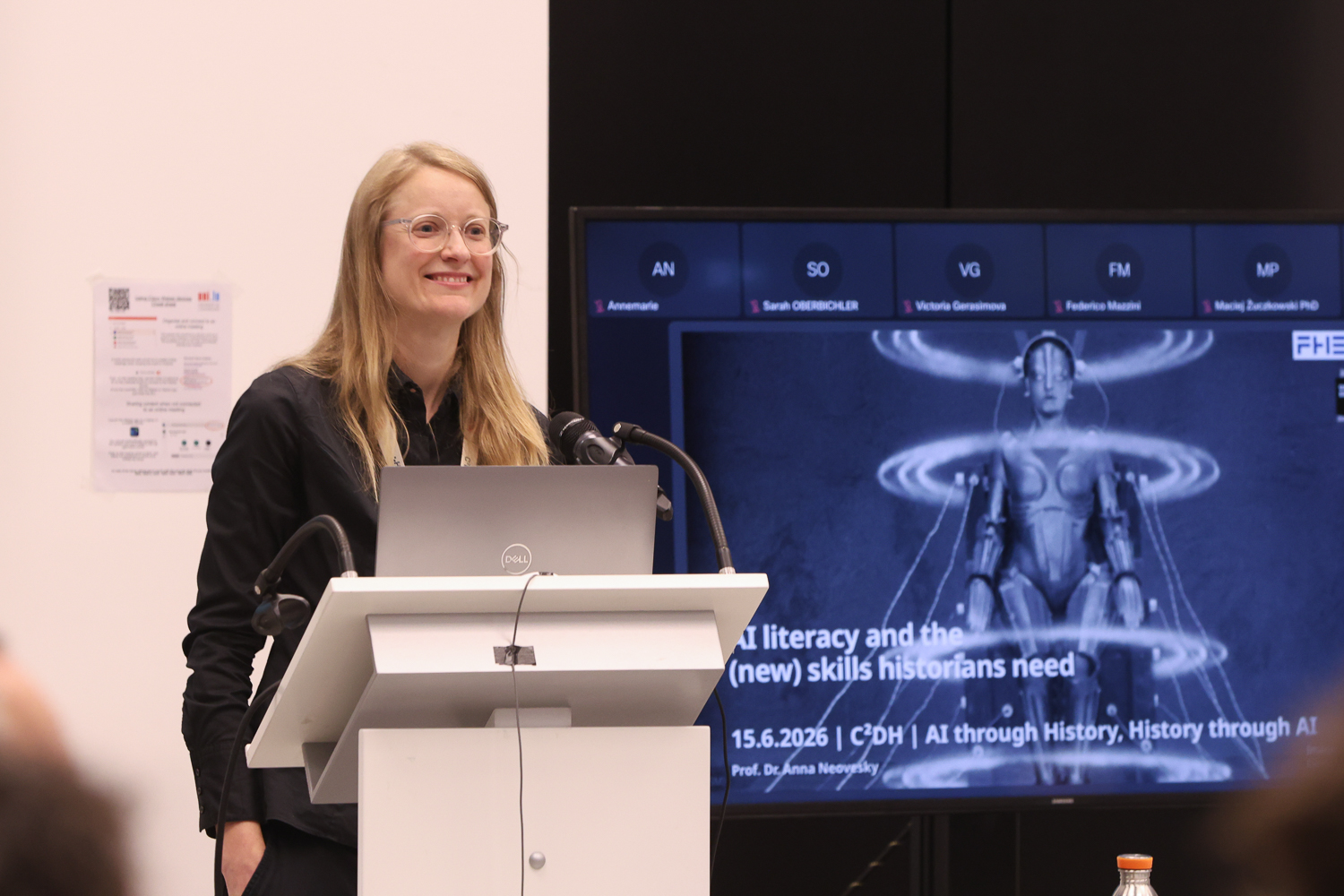
Keynote by Anna Neovesky
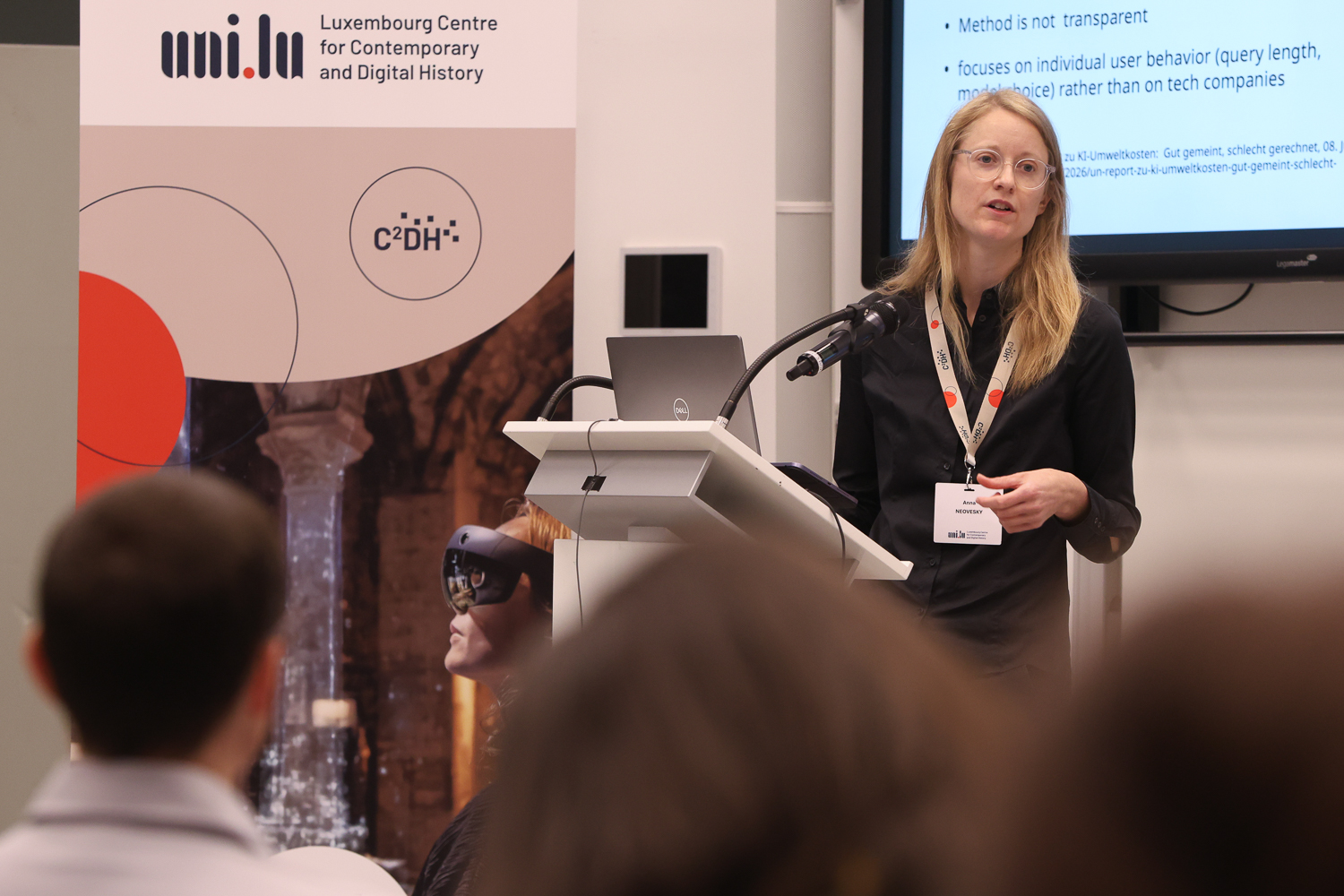
The conference’s opening keynote had already placed a different emphasis on these questions. In it, Anna Neovesky (Universität Erfurt; Fachhochschule Erfurt) focused not on the risks of generation but on the skills historians now need. Noting that AI is already embedded in historians’ workflows, from text recognition to source analysis and writing, she set out a practice-oriented understanding of AI literacy, situating it within digital hermeneutics and the everyday activities of the research process.
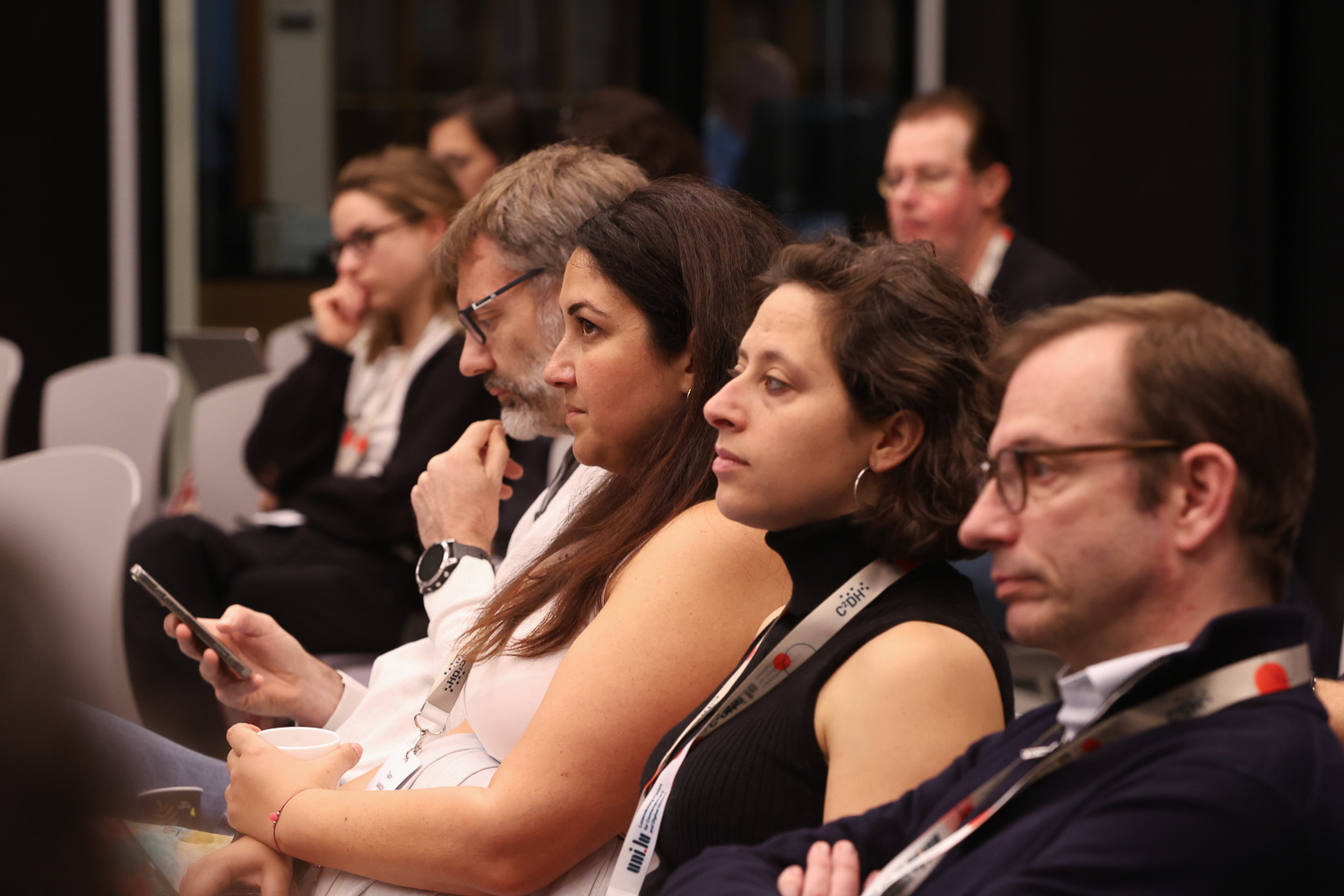
The conference struck an ideal balance between reflective discussions and practical demonstrations, combining conceptual presentations with hands-on workshops. The diversity of participants (historians working on a wide range of topics, engineers, computer scientists, specialists in art history and media studies, digital humanists, and many people working between these fields) illustrated the kind of interdisciplinary “trading zone” that emerges through digital practices and that the C²DH embodies so well.
Congratulations and sincere thanks to all the speakers for their inspiring and thought-provoking presentations, and to the organizers for making this event possible!

Author(s)
Cécile Armand