

 Faculty of Science, Technology and Medicine
 Faculty of Law, Economics and Finance
 Faculty of Humanities, Education and Social Sciences
 Interdisciplinary Centre for Security, Reliability and Trust
 Luxembourg Centre for Systems Biomedicine
 Luxembourg Centre for Contemporary and Digital History
 Luxembourg Centre for European Law
 Luxembourg Centre for Socio-Environmental Systems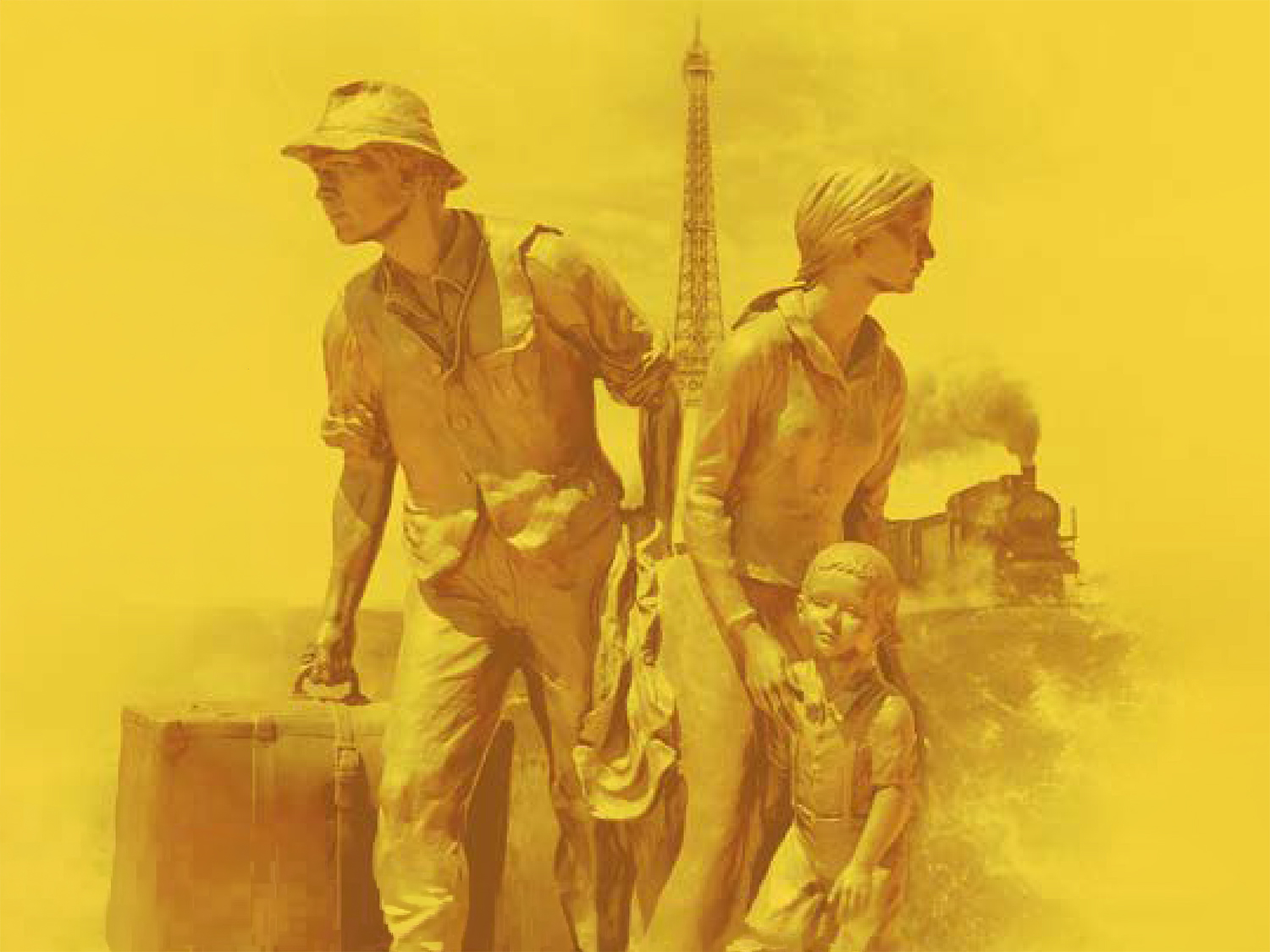
Summer University at the German Historical Institute Paris
How does migration history change when it draws on digital sources and methods? In this summer university, a group of international scholars proposes to explore how different kinds of source materials—ranging from archival records to large-scale datasets—can be transformed and analysed as data.
Sessions and workshops focus on both the analytical potential of specific approaches, e.g. textual analysis, Geographic Information Systems (GIS), and network analysis, and the challenges they raise in terms of bias, interpretation, and data modelling. The programme offers a space for critical reflection on the perspectives and limitations of digital migration history.
Organisers:
- Mareike König (GHI Paris)
- Denis Scuto (C²DH, University of Luxembourg)
- Machteld Venken (C²DH, University of Luxembourg)
- Giovanni Vitali (Université de Versailles Saint-Quentin-en-Yvelines)
- Claire Zalc (CNRS/EHESS)
Practical information
Programme
-
17.30
Registration and arrival
-
18.00
Welcome Address by Klaus Oschema (Director GHI Paris) and Introduction by the Organisers
-
18.30
Keynote lecture
Chair: Mareike König (GHI Paris)
Lorella Viola (Vrije Universiteit Amsterdam)
Mapping Migrant Worlds: Digital Approaches to Narratives, Identity, and BelongingDinner for speakers and registered participants at the GHI Paris.
-
9.30
Hands-on workshops
parallel sessions, registration via dh@dhi-paris.fr
- Introduction to Handwritten Text Recognition with eScriptorium (Pauline Spychala, GHI Paris, and Hippolyte Souvay, University of Fribourg)
- From Scratch to Maps: Digital Mapping for the Humanities. An Introduction to QGIS (Giovanni Vitali, Université de Versailles Saint-Quentin-en-Yvelines)
-
13.00
Lunch for speakers and participants
-
14.30
Plenary session: Data Modelling, Critical Data Practices, and Ethical Reflections
Chair: Lorella Viola (Vrije Universiteit Amsterdam)
Noel Mariam George (London School of Economics)
From Registration to Data Infrastructure: the United Nations High Commissioner for Refugees (UNHCR), Category Dri, and the Making of Migration KnowledgeDaniel Richter (C²DH, University of Luxembourg)
Marriage Registers as Heuristic Sources for Migration History: Comparative Perspectives on Stability and Change Across Towns and Villages (1850–1923) -
15.30
Coffee break
-
16.00
Plenary session: Mapping Migration: GIS, Visualization, and Spatial Analysis I
Chair: Denis Scuto (C²DH, University of Luxembourg)
Blandine Landau (C²DH, University of Luxembourg) and Maël Le Noc (EHESS, Paris)
Biographies, Testimonies, Visualization: Mapping Individual Migration Paths of the Jews of Luxembourg 1935–1947Ekaterina Iakovleva (C²DH, University of Luxembourg)
Beyond a Database: Wikibase as Research Infrastructure for Migration Prosopography
-
9.15
Plenary session: Mapping Migration: GIS, Visualization, and Spatial Analysis II
Chair: Giovanni Vitali (Université de Versailles Saint-Quentin-en-Yvelines)
Catrina Langenegger (University of Basel)
Refugee Care in Switzerland During World War II in the Light of Historical Statistics and GISAlex Relicovschi (C²DH, University of Luxembourg)
Présentation d’une chaîne de traitement en histoire digitale des migrations: mise en cartes et mise en données. Dudelange (Luxembourg), XIXe–XXe siècles -
10.35
Coffee break
-
11.00
Plenary session: Transforming Sources Into Data: OCR and HTR Methods and Their Challenges
Chair: Pauline Spychala (GHI Paris)
Christelle Al Haddad (C²DH, University of Luxembourg)
Written Language in Correspondences and Parish Letters of Luxembourgish Missionaries (1795–1900)Sandra Velebit (Johannes Kepler University Linz)
Digitizing Migration Data into Data Frames Using OCR and R. Problems and WorkaroundsLing Zi (École normale supérieure/Beijing Normal University)
OCR, Romanization, and the Searchability of Chinese Migrants in European Digital Archives (1900–1950) -
13.00
Lunch for speakers and participants
-
14.00
Hands-on workshops
parallel sessions, registration via dh@dhi-paris.fr
- Building LLM-Assisted Workflows for Entity and Geospatial Data Processing (Alex Relicovschi, Ekaterina Iakovleva, both at C²DH, University of Luxembourg)
- How to Process Interviews of Persons at Risk? Insights from the U-CORE project (Machteld Venken, Vladyslav Siulhin, both at C²DH, University of Luxembourg)
-
9.15
Plenary session: Modelling and Analysing Migration through Textual Data
Chair: Joanna Wojdon (University of Wrocław)
Timur Mitrofanov (University of Heidelberg/Herder Institute for Historical Research on East Central Europe)
Latvian Diaspora Press Published in English-Speaking Countries in the Second Half of the 20th CenturyFrederica Schiaffino (Scuola Normale Superiore, Pisa)
Mapping the “Imaginary East”: A Digital Analysis of West German Travel Reports (1967–1973 -
10.35
Coffee break
-
11.00
Plenary session: Datafication and Migration Databases
Chair: Claire Zalc (CNRS/EHESS)
Valentin Rhodius (Université de Caen Normandie)
Traversées maritimes des déplacés et réfugiés (1946–1952): une analyse par base de donnéesTobias Perschl and Pauline Schmidt (both at the University of Passau)
Scaling Migration History: Normalization and Enrichment of 735,000 Bremen Passenger Records (1830–1939Théo Behra (Université de Strasbourg)
Germanosearch et le portail “Archives disséminées”: enjeux méthodologiques et épistémologiques pour l’étude des migrations allemandes aux XIXe et XXe siècles -
13.00
Lunch for speakers and participants
-
14.30
Visit to the Musée de l’histoire de l’immigration, Palais de la Porte Dorée
-
18.00
Keynote Lecture at the GHI Paris
Chair: Mareike König (GHI Paris)
Christoph Rass (University of Osnabrück)
How Migration Became Data, How Data Makes Meaning, and How Reflexive Migration Research IntervenesFollowed by a wine reception.
-
9.15
Plenary Session: Exploring Migration Using Digital Network Analysis I
Chair: Christoph Rass (University of Osnabrück)
Alexandre Binoux (Université Paris 1 Panthéon-Sorbonne/École française de Rome)
Comprendre les hiérarchies d’une communauté migrante par les réseaux et la statistique. Lettres, registres paroissiaux et bases de données (colonie grecque de Corse, XVIIIe siècle)Jorit Jens Hopp (Ludwig Maximilian University of Munich)
Collaboration and Migration Networks of Theatre Professionals in the Habsburg Empire of the 19th Century -
10.35
Coffee break
-
11.00
Plenary session: Exploring Migration Using Digital Network Analysis II
Chair: Machteld Venken (C²DH, University of Luxembourg)
Katharina Isaak (University of Münster)
Mapping the Immigrant Public Sphere. The Networked Russian Language Press in the United States, 1917–1941Piotr Budzynski (University of Łódz)
Network Analysis of Polish Fulbright Scholars (1968–1990) -
12.20
General discussion
-
13.00
End of conference