

 Faculty of Science, Technology and Medicine
 Faculty of Law, Economics and Finance
 Faculty of Humanities, Education and Social Sciences
 Interdisciplinary Centre for Security, Reliability and Trust
 Luxembourg Centre for Systems Biomedicine
 Luxembourg Centre for Contemporary and Digital History
 Luxembourg Centre for European Law
 Luxembourg Centre for Socio-Environmental Systems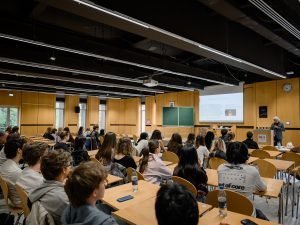
Workshop report
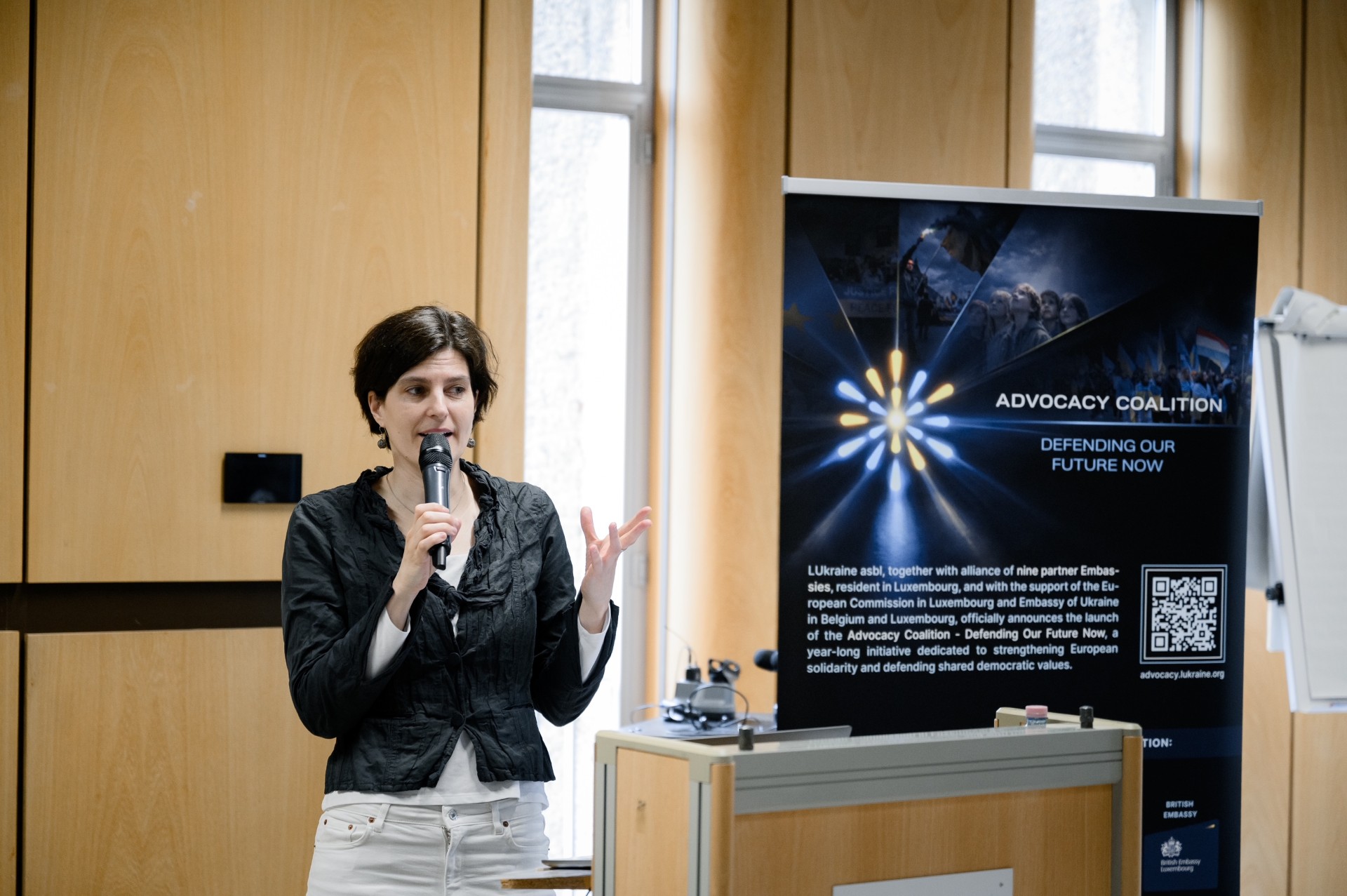
Prof Dr Machteld Venken © Tetiana Popyk (tanitaphoto.lu)
On 5 May 2026, the workshop “The Smartphone as Historian – Smartphones for Justice and Freedom” took place at the University of Luxembourg’s Kirchberg Campus. The workshop was the third event of LUkraine Asbl’s “Advocacy Coalition – Defending Our Future Now” initiative and was organized in cooperation with the Embassy of Germany in Luxembourg and the Centre for Contemporary and Digital History (C²DH) of the University of Luxembourg. Four researchers from our project researching the collecting, preserving, analysing and disclosing of Ukrainian Testimonies of the War (U-CORE), which is financed by the Luxembourg National Research Fund, guided the participants through the event. The workshop gathered around forty pupils aged sixteen and above. It was also attended by the Ambassadors of Belgium and the Czech Republic. The workshop is part of a broader diplomatic initiative aimed at raising awareness of Ukraine’s ongoing fight for democracy.
The workshop engaged young people in understanding the importance of documenting experiences, particularly in contexts of war and displacement, and ensuring that digital material can serve as reliable historical evidence. Through a documentary screening and three practical exercises, pupils examined how they can use their phones differently from what they are used to. In that process, they discovered how historians rely on the same tools, but with different objectives.
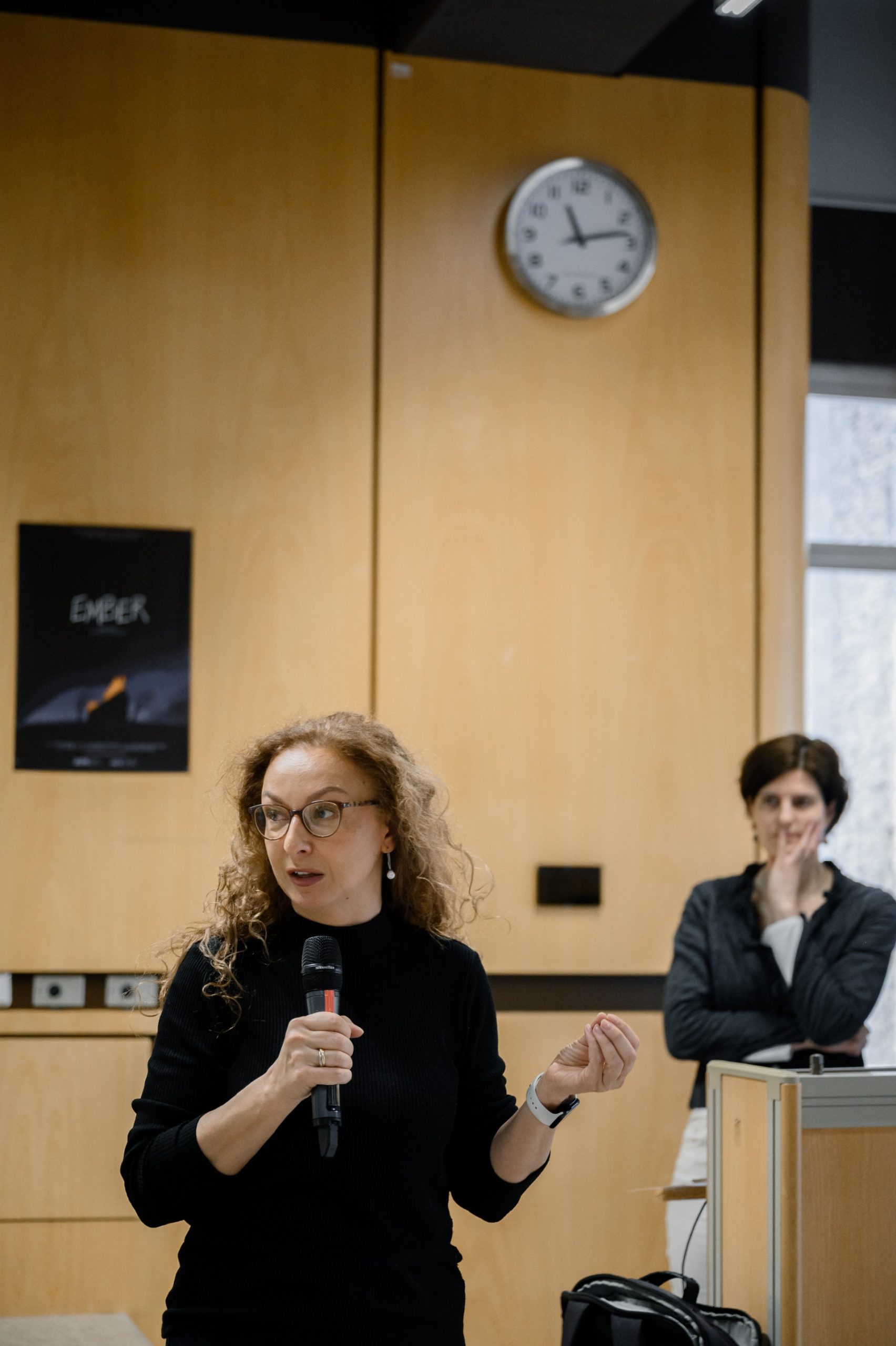
Dr Inna Ganschow © Tetiana Popyk (tanitaphoto.lu)
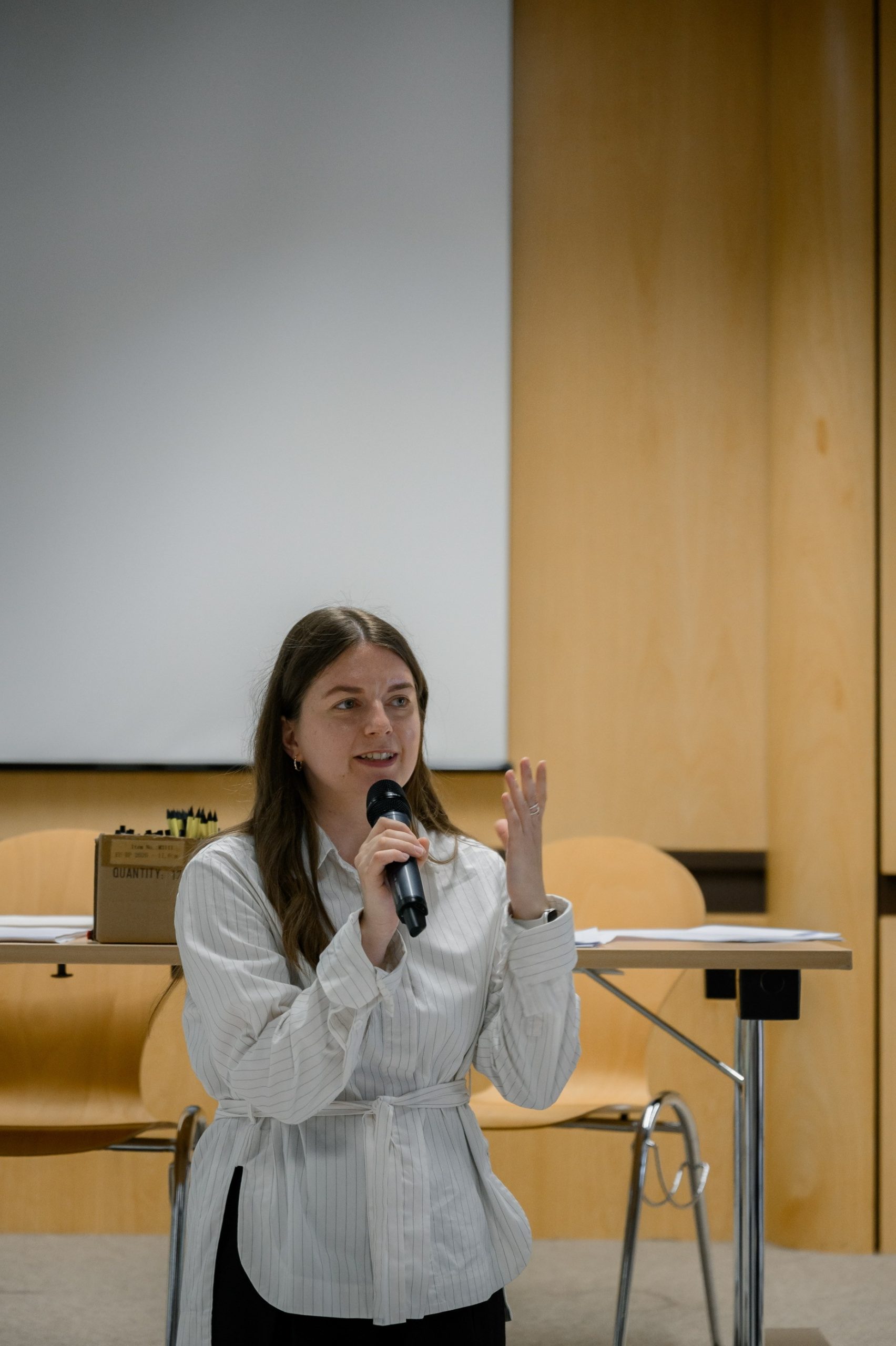
Ira Yeroshko, MA © Tetiana Popyk (tanitaphoto.lu)
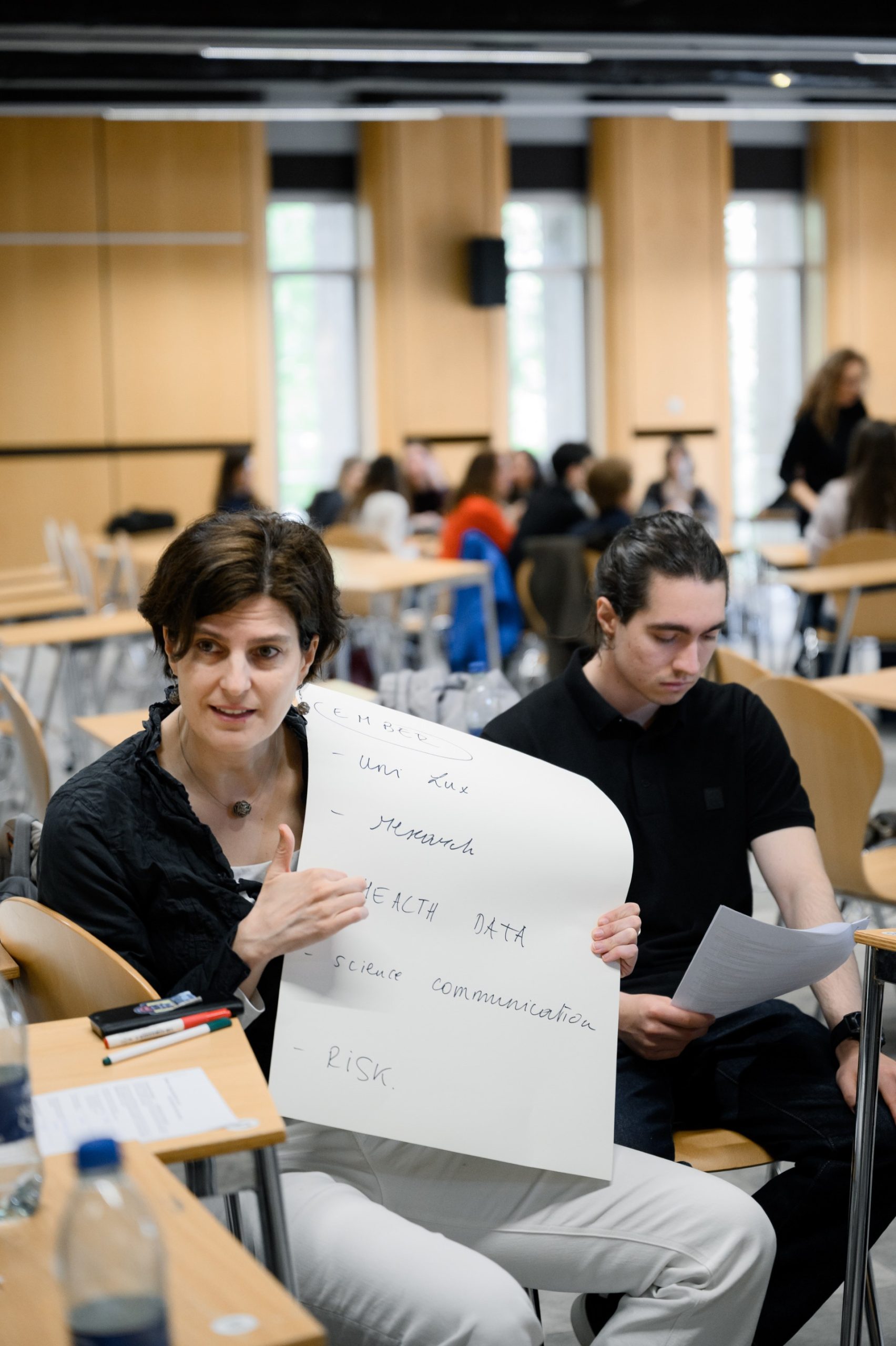
Hands-on learning © Tetiana Popyk (tanitaphoto.lu)
The workshop began with a reflective task in which students – under the guidance of Dr Inna Ganschow – retraced their morning routines, uncovering how frequently they rely on their phones and how much digital trace they leave behind without noticing. The second exercise focused on photography and was supported by PhD Candidate Ira Yeroshko. Pupils revisited one of the oldest images stored on their phones and explained its background to a classmate, illustrating how essential contextual information—such as time, place and visual cues—is for interpreting a photograph. In the final workshop, Prof Machteld Venken and Vladyslav Siulhin, BA guided pupils through the use of audio recordings as historical documentation. The session highlighted the responsibility that comes with capturing someone’s voice, from securing consent to guaranteeing digital safety for wartime materials.
In closing, pupils and teachers articulated their mutual learning process to each other, and Prof Andreas Fickers, Director of C²DH, emphasised the importance of contextualising digital content.
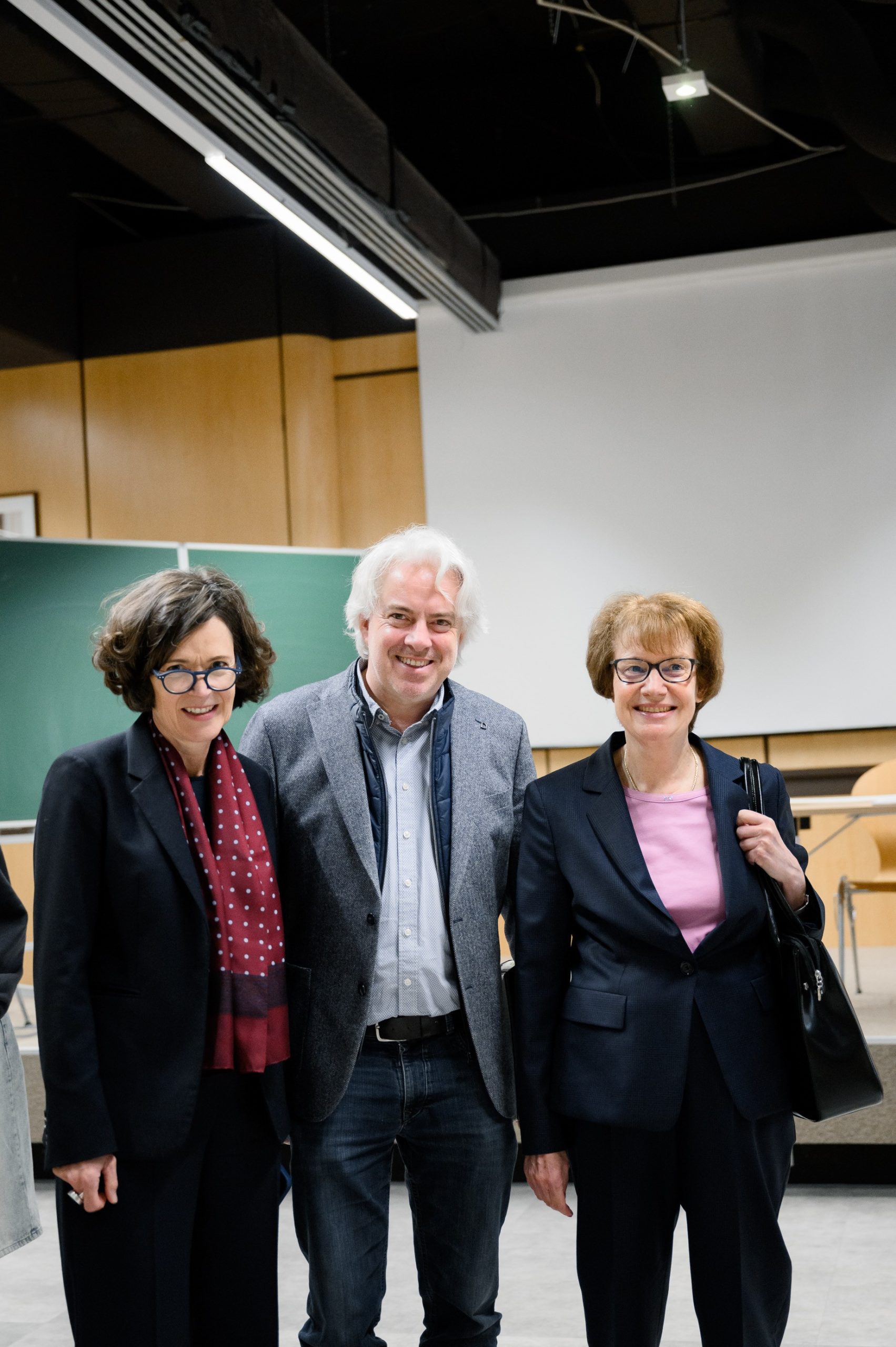
Dr Heike Peitsch, Ambassador of Germany, Prof Dr Andreas Fickers, Director of C²DH, and Judith Reicherzer, Communication Specialist, Lycée Aline Mayrisch © Tetiana Popyk (tanitaphoto.lu)
Author(s)
Prof Machteld VENKEN
Full professor/Chief scientist 1 of Transnational Contemporary History (19th-20th century)