

 Faculty of Science, Technology and Medicine
 Faculty of Law, Economics and Finance
 Faculty of Humanities, Education and Social Sciences
 Interdisciplinary Centre for Security, Reliability and Trust
 Luxembourg Centre for Systems Biomedicine
 Luxembourg Centre for Contemporary and Digital History
 Luxembourg Centre for European Law
 Luxembourg Centre for Socio-Environmental Systems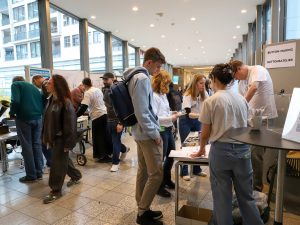
Thoughts on the first C²DH history festival in the Belval Plaza shopping centre
It must have been sometime around 9 November 2019 – luckily my phone knows it better than I do: it was 15 October 2019, what one would not immediately assume given the rather light clothes the people on this photo are wearing – that I first saw a GDR watchtower and a presumably authentic section of the Berlin Wall in the open-air atrium of the Mall of Berlin. The mall, located just a few meters away from the former sector boundary, opened in 2014 on the site of the once biggest department store in Europe, Wertheim, which did not survive WW2.
With the 30th anniversary of its fall approaching, the Wall and representations of it were literally omnipresent in Berlin in the autumn of 2019, but this particular section really caught my attention: why? Because it was in a mall, an unexpected place that is yet highly frequented and accessible to people from all walks of life. Cool, is it not? If shopping malls can be places of recreation and entertainment, why would not they be places of history, too? This is not to say that malls have never before hosted exhibitions or fairs of different kinds, but rather to question how well they fare as locations for interactive history-related content. I would in fact argue they definitely serve the purpose, based on last year’s experience. Keep reading/scrolling for more details.
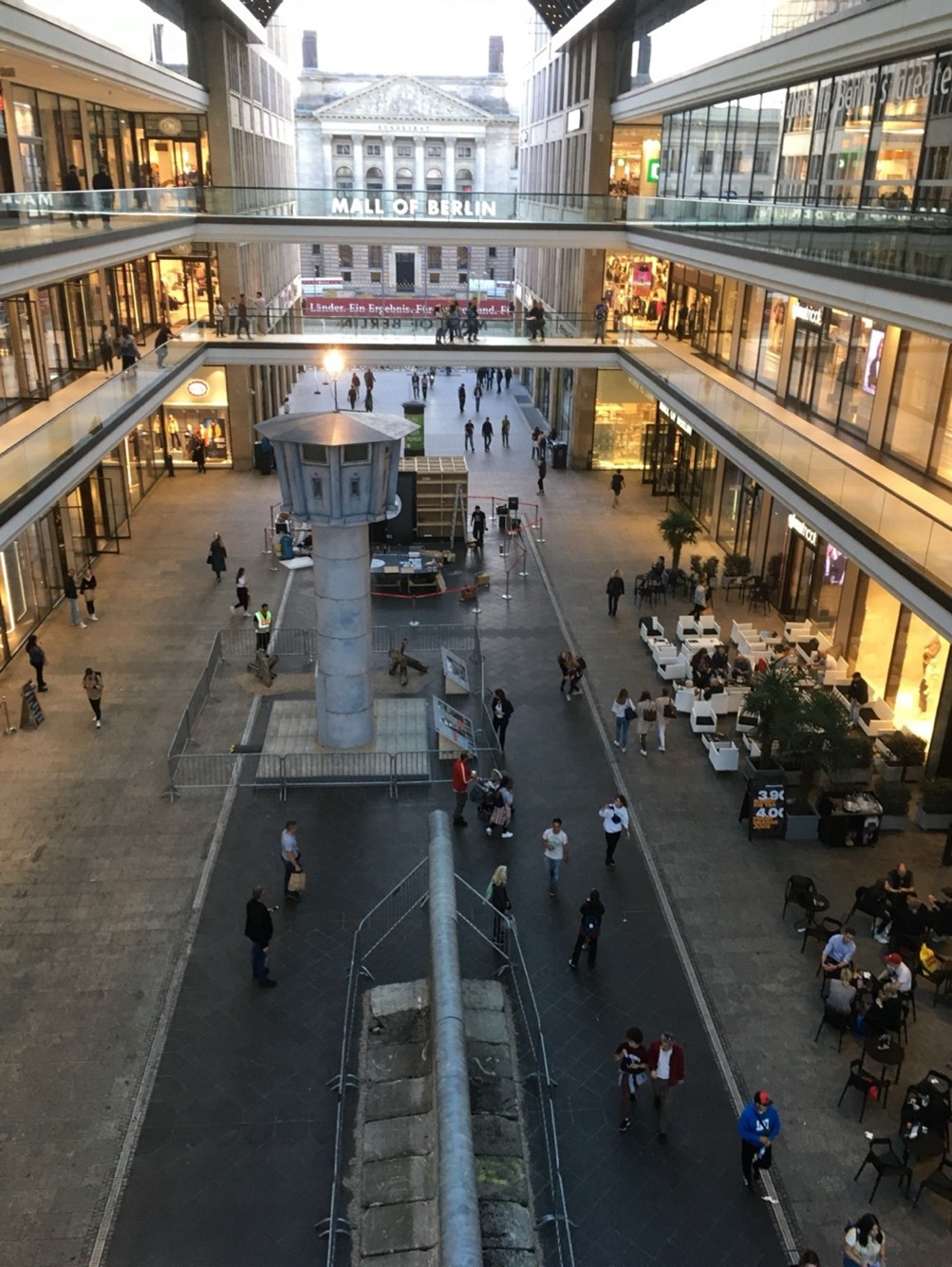
The presumably authentic segments and the less-authentic-looking watchtower. Photo by Dora Komnenovic, 2019
On another 15 October (what a coincidence!), six years later, in 2025, the first ever history festival of the Luxembourg Centre for Contemporary and Digital History (C²DH), the Histofest, took place in the Belval Plaza shopping centre. This initiative was and still is an expression of the desire to experiment with new ways of practicing public history and engaging with local communities, as well as creating a networking platform where existing partnerships could be expanded and new ones created. With its multifaceted programme consisting of hands-on activities, a project’s fair, a multimedia exhibit, a music performance, and a film programme, the pilot edition of the festival laid the groundwork for a recurring (annual) event combining networking, edutainment, and promotion. Approximately 300 visitors attended the event at the Belval Plaza mall and the Kinepolis cinema located within the shopping mall.
The atmosphere on the day of the festival and some of the tunes played by Ivan K. are perhaps best conveyed in the following recap video.
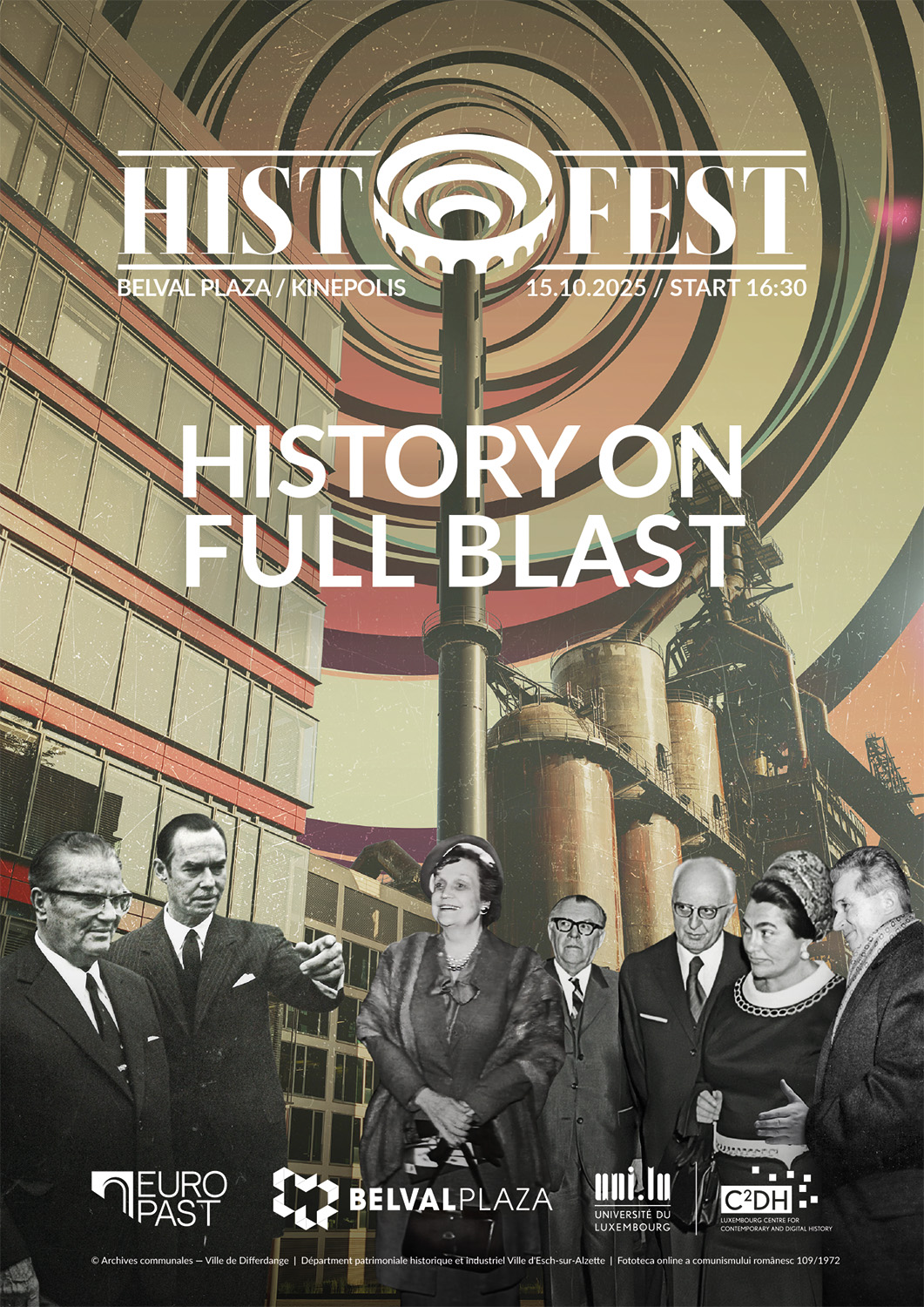
Flyer of the event designed by Kirill Mitsurov
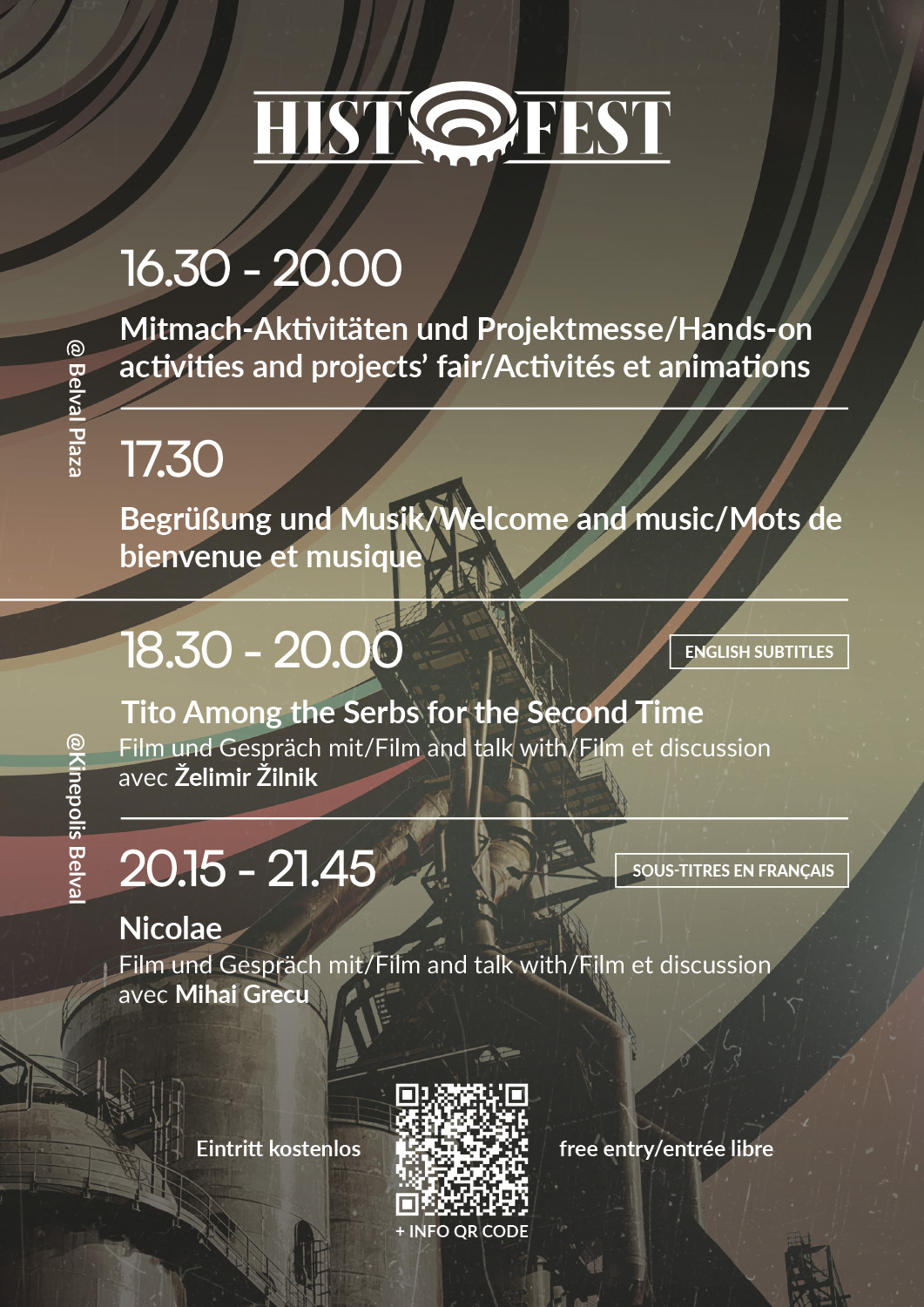
The film programme featured two documentary films, “Tito Among the Serbs for the Second Time” by Želimir Žilnik and “Nicolae” by Mihai Grecu. Although created almost thirty years apart (in 1994 and 2022 respectively), both films explore the effects a blast from the past, i.e. the sudden “resurrection” of long dead communist leaders can have on people. The two screenings were followed by a lively discussion about the political uses of the past and the future role of holography with the filmmakers Želimir Žilnik and Mihai Grecu. Interestingly, both Tito and Ceaușescu visited Luxembourg and the city of Esch-sur-Alzette in 1970 and 1972 respectively. You can read more about these state visits in my article “Tito und Ceaușescu zum zweiten Mal in Luxemburg” published in German in the Tageblatt newspaper.
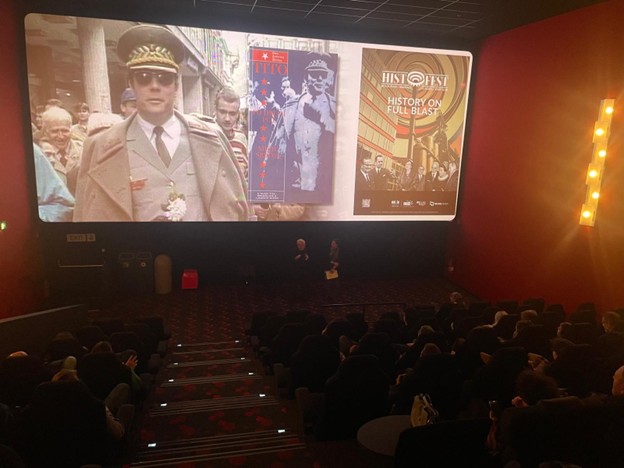
Q&A with Želimir Žilnik after the screening of his 1994 film. Photo by Aliénor Gandanger
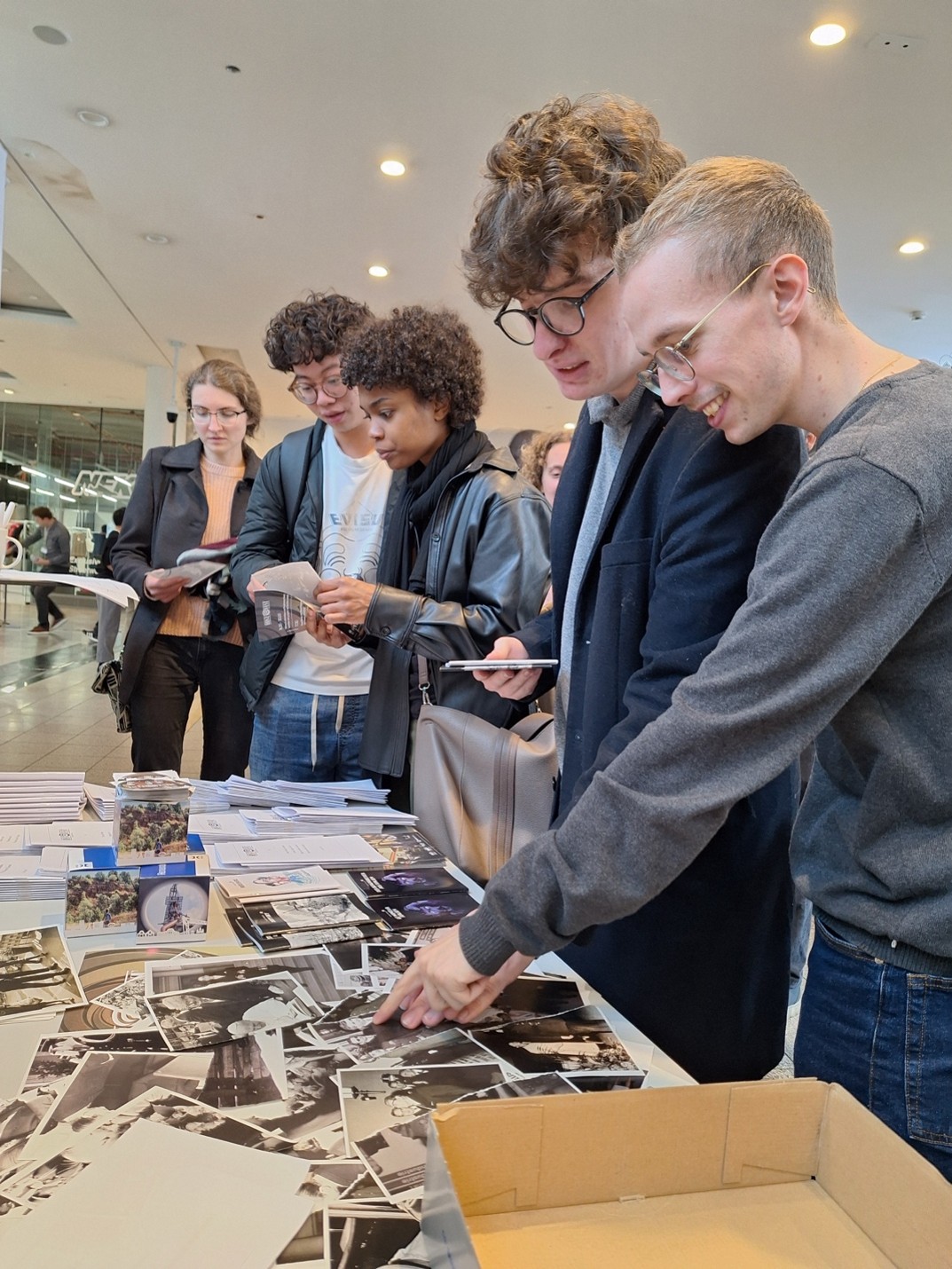
Photo challenge. Photo by Snejana Granatkina
It was this fact that turned state visits into the topic of the pilot edition of the Histofest, while at the same time adding a local history dimension to it. In fact, in the “photo challenge”, visitors were required to put back together torn pictures of state visits (dear archivists, relax: only facsimiles were used!) and identify the prominent personalities on the photos. In return, they could win prizes and learn more about the people on the pictures.
The protocol of state visits often includes the signing of a Golden Book. At the first Histofest two such books were exhibited, the Golden Book of the City of Esch signed by Pope John Paul II and the Visitors’ Book of the National Museum of resistance and Human Rights signed by Tito, among others. Next to them, the hologram of Ceaușescu that was created for the purposes of the film “Nicolae” was displayed.
-
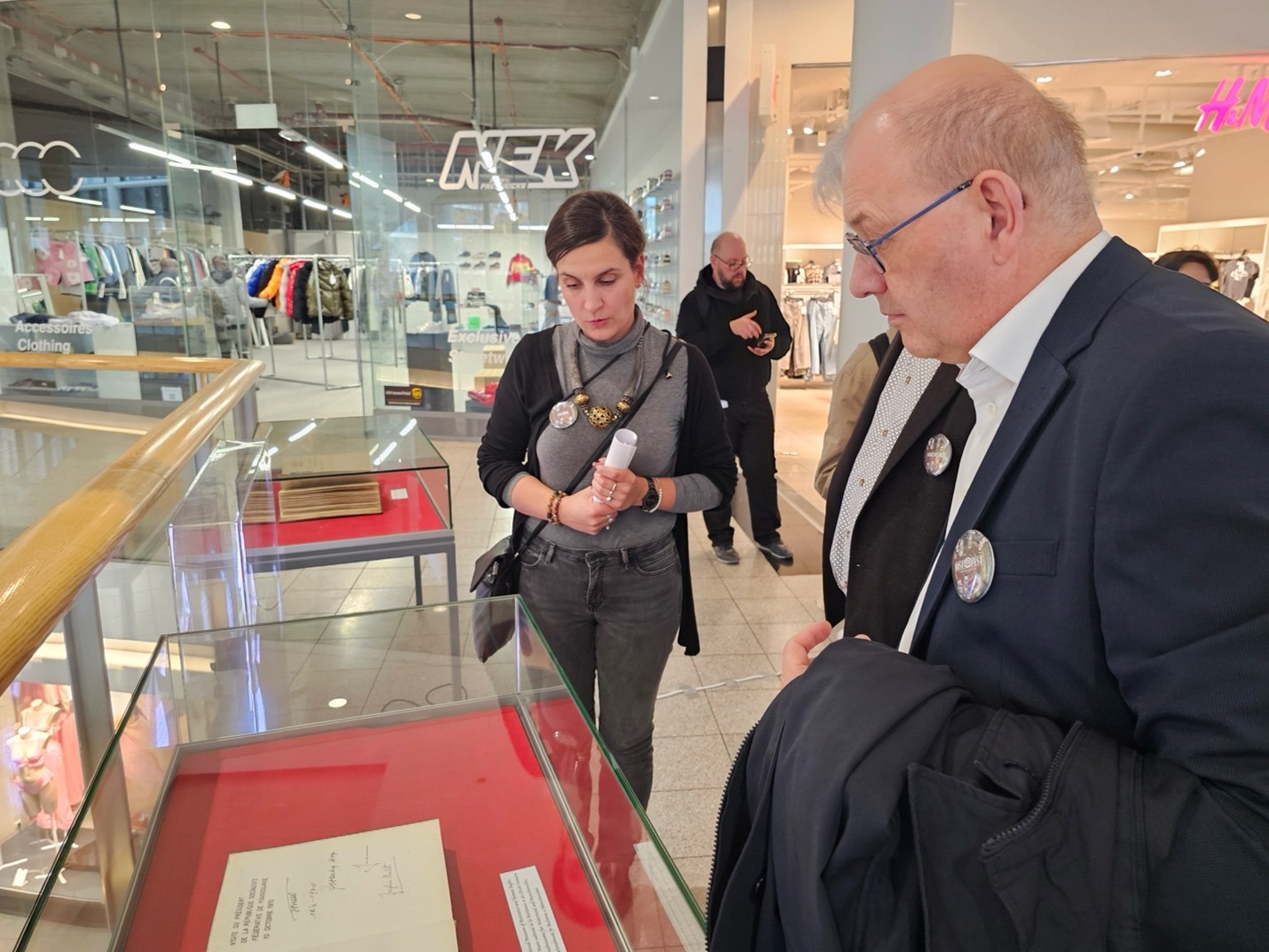
Golden Books and hologram on display. Photo by Robert Beta
-
-
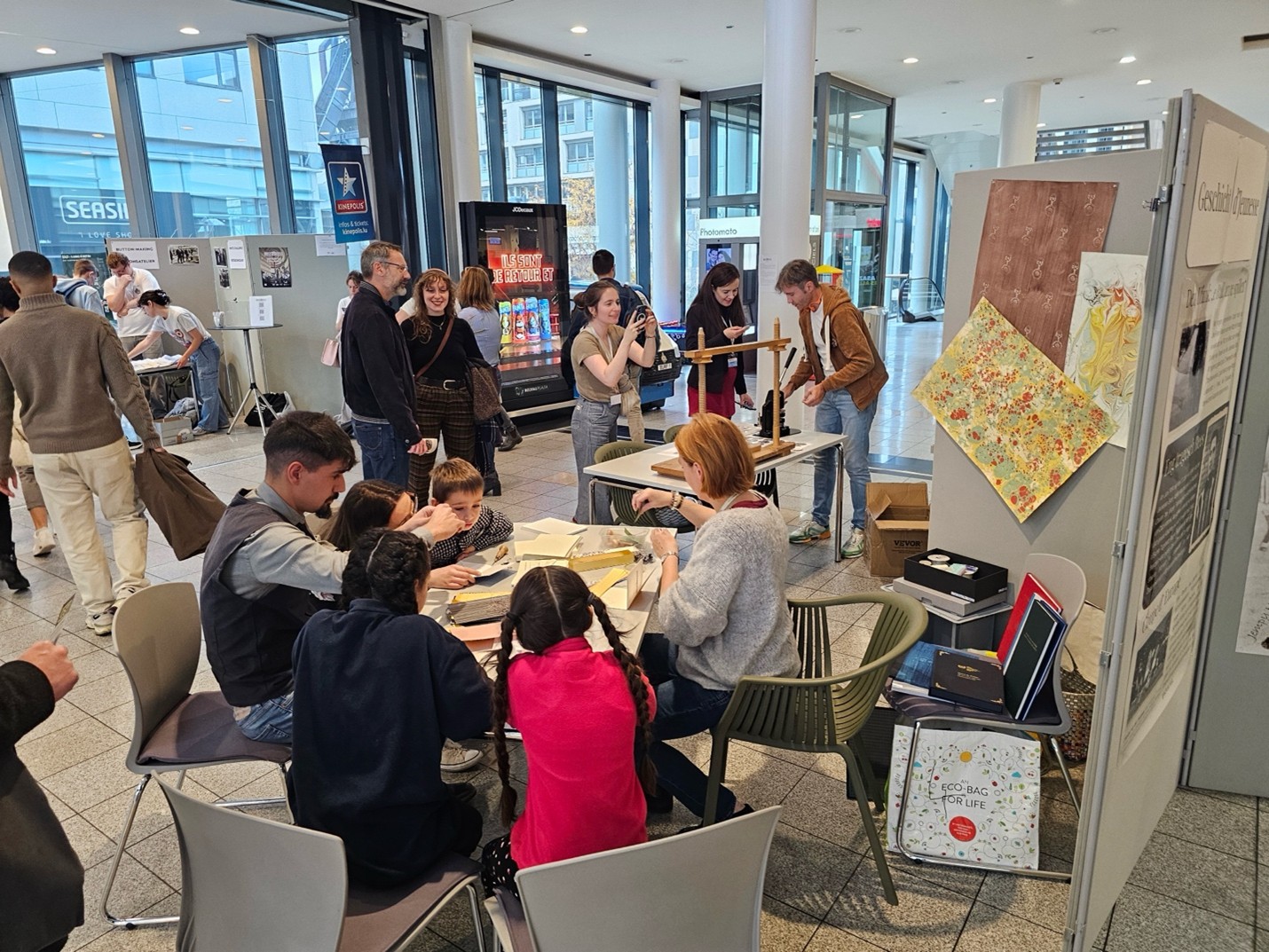
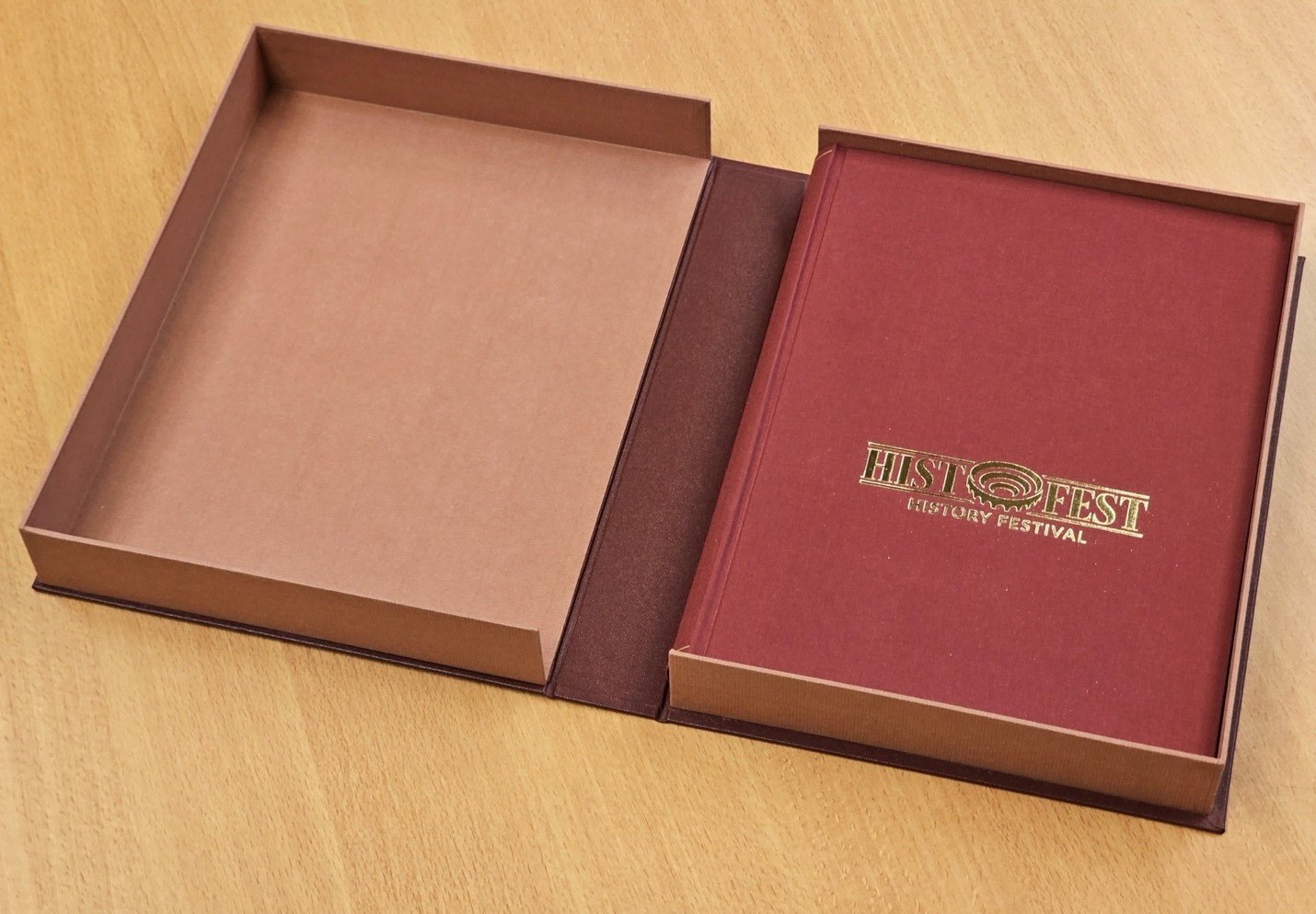
Bookbinding and button making. Photo by Robert Beta
The projects’ fair invited visitors to explore the different stands and learn more about C²DH projects such as Impresso – Media monitoring of the past, Radio Luxembourg – The station that changed our world (RadioLUX), A Colônia Luxemburguesa, Historesch Gesinn, and Maison du Son, or share their experiences and insights by talking to project leaders and members. The pilot edition of the festival thus allowed us to present our work to a wider audience and to promote the values we stand for when doing (public) history.
The Public History and Outreach (PHO) research group at the C²DH came up with the term ACTIVE principles, deriving from the first letter of each value its members cherish: accessibility, collaboration, transparency, inclusivity, versatility and engagement.
The festival embodies these in different ways: holding it in a mall allowed us to reach audiences that we potentially would not have reached, i.e. to expand the number, or rather the profile of potential visitors beyond the “usual suspects” that normally attend similar events organized by the Centre or other similar institutions. Nevertheless, due to the openness and publicness of the event, it was hard to distinguish between intentional visitors and passersby.
The programme was multilingual, with French, German, Luxembourgish and English texts available, while the hands-on activities were designed in such a way to be of interest to both children (puzzle photo challenge and bookbinding) and adults.
The festival location inside the mall as well as the cinema are accessible by mobile escalator, elevator and stairs and as such low barrier. The mall has parking spaces for visitors and is well connected to major cities in Luxembourg and abroad (France and Germany) by public transport. All the activities including the two screenings were free of charge. In such a setting, it is not an exaggeration to characterize the event as accessible and inclusive, with amelioration potential in terms of contents catering to visitors with impaired vision and hard of hearing.
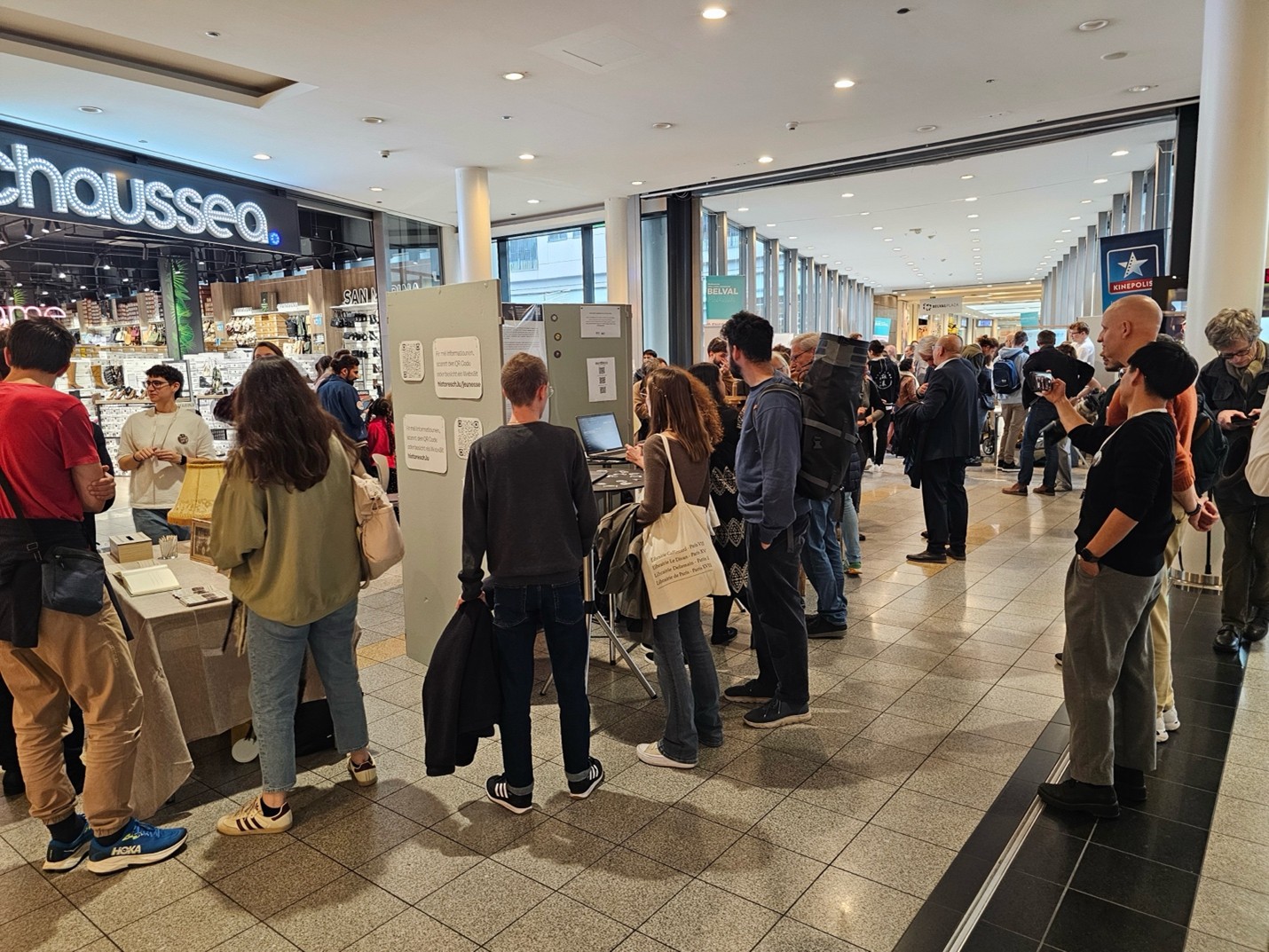
Projects’ Fair. Photo by Robert Beta
Besides engaging visitors by offering interactive activities on the day of the festival, we tried to do so before the event by asking questions and looking for help in identifying some of the personalities on the photographs we later used for the photo challenge but also on the poster, flyers, stickers and buttons of the event. This small social media campaign was equally aimed at promoting the event and complementing the efforts of a number of volunteers (mostly students of the Master in Digital and Public History in distributing flyers and posters around Belval, Esch-sur-Alzette and Luxembourg City.
Digital and paper feedback forms were available in three languages but filling them out was not mandatory nor a requirement for visitors to access the activities, which might be one of the reasons why we got less responses than expected. This is why incentives such as prizes are sometimes used by organizers to increase the number of responses. Besides retrieving statistical data (age, gender, place of residence), we wanted to learn how the visitors discovered the event, whether they liked it, what they enjoyed the most, if they would come again and whether there is something they wish to see in future editions. Two slightly more “ambitious” questions were asking the visitors whether they experienced the event as accessible to every age range and whether it had changed their relationship towards history. Most answers to the first question were yes, with little additional comments, while the second question remained largely unanswered, which leads me to conclude that other methods and formats (focus groups?) might be needed to discuss slightly more complex questions and the impact of outreach activities in general.
Most of the prizes given out to those who had successfully participated in the photo challenge were goodies provided to us by our hosts Belval Plaza and our partners Explore Esch, i.e. the tourism portal of the city of Esch-sur-Alzette. Two visitors attending the screening of Želimir Žilnik’s film also won two tickets each for the screening of his newest film, which were sponsored by our partner, the CinEast film festival. In fact, Žilnik first presented his 1994 film at the Histofest and the day after was a guest of the 18th edition of the CinEast festival in Luxembourg City. Two collaborations materialized in the form of loans: the National Museum of Resistance and Human Rights kindly allowed us to exhibit their Visitors’ book, while the City of Esch, i.e. the archive department lent us their Golden Book and supported us with the research in their photo archive. Archival research was also carried out in preparation for the festival in the archive of the city of Differdange, the Luxembourg City archive, the archive of Yugoslavia in Belgrade and at the Diplomatic archives of the Romanian Ministry of Foreign Affairs. This leads me to another important point that some readers might be wondering about, which is research. The festival (output) might have been non-scholarly, but at its core is research done by historians. So, one issue at stake here is also how to make this archival material accessible to non-historians who might have never visited an archive. A by-product of this “exercise” is that people might start thinking that archives are actually fun, which is what we want, or not?
To go back to the initial question: yes, a shopping mall in our case was a suitable location and if someone would ask me whether I would do it again, the answer would be a clear yes. However, the Histofest is now embarking on a mission of conquest of other localities in Luxembourg and abroad, so this might have to wait a little longer. All updates related to the festival can be found here.