

 Faculty of Science, Technology and Medicine
 Faculty of Law, Economics and Finance
 Faculty of Humanities, Education and Social Sciences
 Interdisciplinary Centre for Security, Reliability and Trust
 Luxembourg Centre for Systems Biomedicine
 Luxembourg Centre for Contemporary and Digital History
 Luxembourg Centre for European Law
 Luxembourg Centre for Socio-Environmental Systems
Takeaways and Reflections from an Academic Consultancy in Public History: on Building Partnerships and Learning as We Go.
During an 18 months postdoc in Public History, Co-production and Participatory Practices at Luxembourg Center for Contemporary and Digital History (C²DH), I was working alongside prof. Thomas Cauvin, PI of the “Public History as a New Citizen Science of the Past (PHACS) project, on co-creating public history projects in Esch sur Alzette, Luxembourg’s second largest city. Following my postdoc, I took on the role of a research and outreach consultant for PHACS, and during the period of 10 months, we built partnerships with colleagues in Kenya, Egypt, Martinique, Qatar and Lebanon. We are also working on a few other initiatives with practitioners in Canada, the UK, France and Lebanon. In the below, I’ll try to walk you through what we wanted to do and what we tried to achieve, but most importantly what I learned along the way. I hope it helps those of you considering such roles or interested in building such initiatives.
How it started
In a previous review, I tried to compile the lessons I learned from my postdoc. You’ll notice while reading it, that while the work we did focused on Luxembourg, it also somehow expanded beyond that. Thinking back now, I would say it was first because we were working with the history of migration and it was by default a history that surpassed the host country. Another reason was also rather personal, as I had expressed in my postdoc discussion with prof. Cauvin, that I wanted to invest in facilitating this dialogue between the part of the world where I lived and worked for years (that is the Arab world broadly speaking) and Europe where I was doing my postdoc. It was also thankfully something that prof. Cauvin wanted to actively explore and engage with. After testing a few initiatives during the 18 months period, and by the end of my postdoc, it became clear that the work we started should continue in a more focused and sustainable way. The FNR grant that supports all PHACS activities and projects since 2020, made it possible for us to explore the creation of a consultancy position that could manage these partnerships and help implement workshops abroad, as well as facilitate the co-creation of a variety of deliverables with our partners.
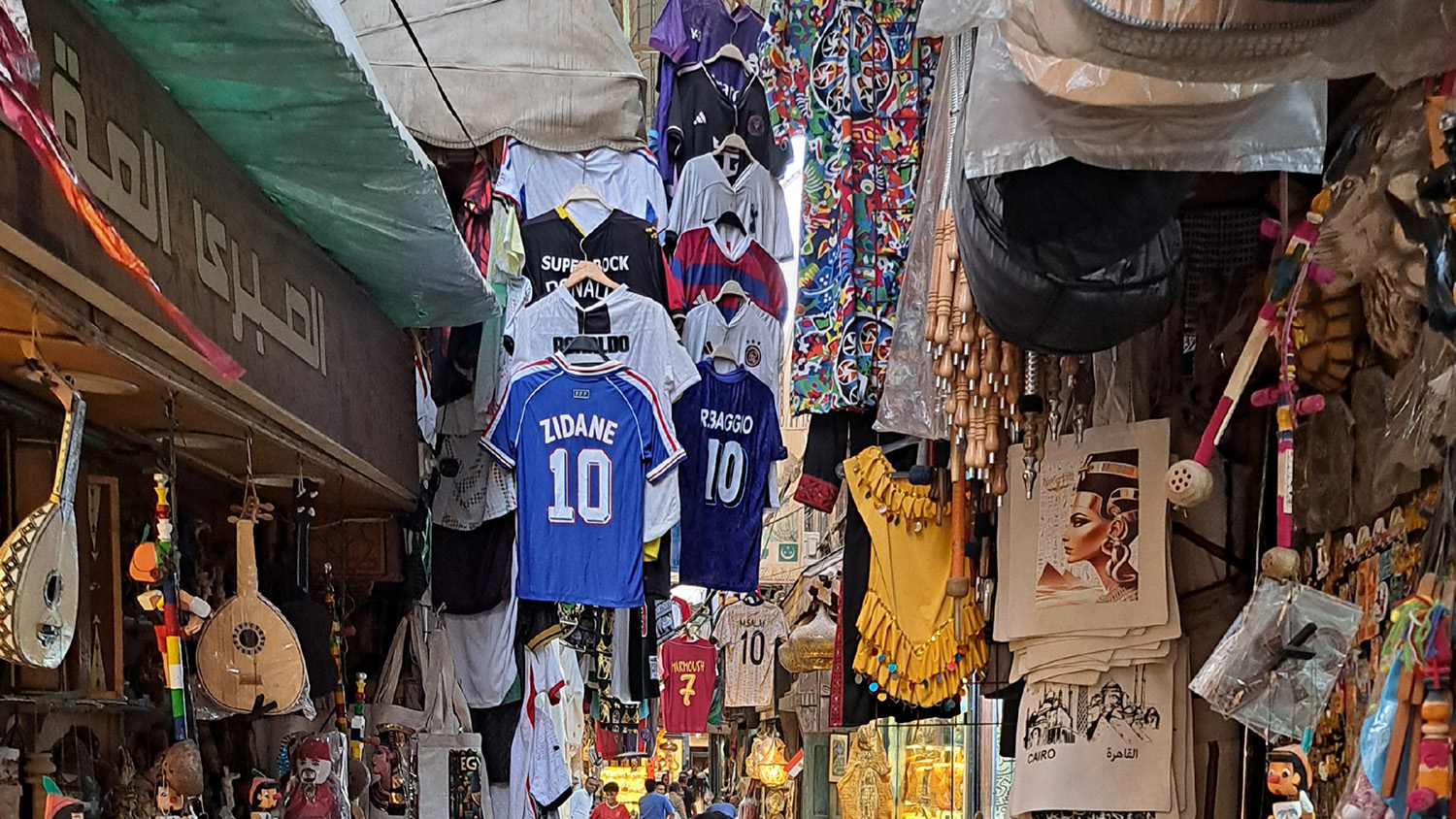
View from Khan El Khalili historic Bazaar in Cairo, Egypt, photo courtesy of Myriam Dalal, 2025.

View from a beach in Martinique, photo courtesy of Myriam Dalal, 2025.
You’re Doing Great Stuff! but Academia Will be Skeptical
Having worked outside of academia for some 15 years, during which I juggled several roles (from cultural diplomacy to project management and fundraising to arts & culture reporting then coordination and organization in galleries, museums, and archival institutions), I approached this consultancy role with that lens, which meant that I practically did a bit of all of the above listed roles, but dropped the academic hat so if you’re considering such a role, know that you won’t be doing research, you won’t have time to publish and de facto, you’re not critically analyzing any work you’ll be doing. Also, for my postdoc enthusiastic readers here, know that the consultant title gets you nowhere on the academic ladder either. I’m not saying it’s a negative thing especially if you’re aware of it from the start, but just
‟ know that in meetings, conferences and when applying to the next job, this role you have might and will raise some eyebrows in academia.”
An extra tip for the migrant postdocs from the Global South who are reading this, the role doesn’t grant you a residency permit anywhere, so you’ll have to be on the move. It makes sense when you’re doing international partnerships to move with the next project wherever that is, but just be aware that this means you’ll need to get a visitor visa for every other place you’re going to and in between projects, find pit stop countries/cities where you can get some work done remotely.
Identify Pre-existing Programmes, Projects and Initiatives, Don’t Start from Scratch
At least this is how prof. Cauvin and I proceeded. In the past couple of years, we have come across amazing projects and initiatives. We had also learned about institutions around the world that were doing great programming which had some common threads with our work and our research questions and this is how we navigated the conversations. We contacted those practitioners, scholars and academics and proposed a collaboration on threads related to public history and community archiving practices that our potential partners were already exploring, and that we wanted to further learn about and compare to our own practices in PHACS.

A Graffiti in Hamra Street in Beirut, Lebanon, photo courtesy of Myriam Dalal, 2025
Coordinating from a Distance is a Challenge, be Honest and be Consistent
You’re managing a minimum of 5 projects in 5 different countries and across continents, you’re not going to be able to follow up on everything at once and you’re not going to be able to oversee everything either.
‟ Your partners know better, they have their expertise but also their priorities, their other engagements and their agendas.”
What you could do from your side is be consistent with your regular meetings/phone calls/emails to check up every now and then but even more importantly, be honest with everyone involved in this work, including the public and the audience who knows about these projects and who are waiting for an update. For instance, we recently asked our student assistant Monyck DE SÁ SANTOS to write a “status check” update for each of our partnerships which we’ll publish on our University’s website and share on our social media, to present what we’ve done so far.
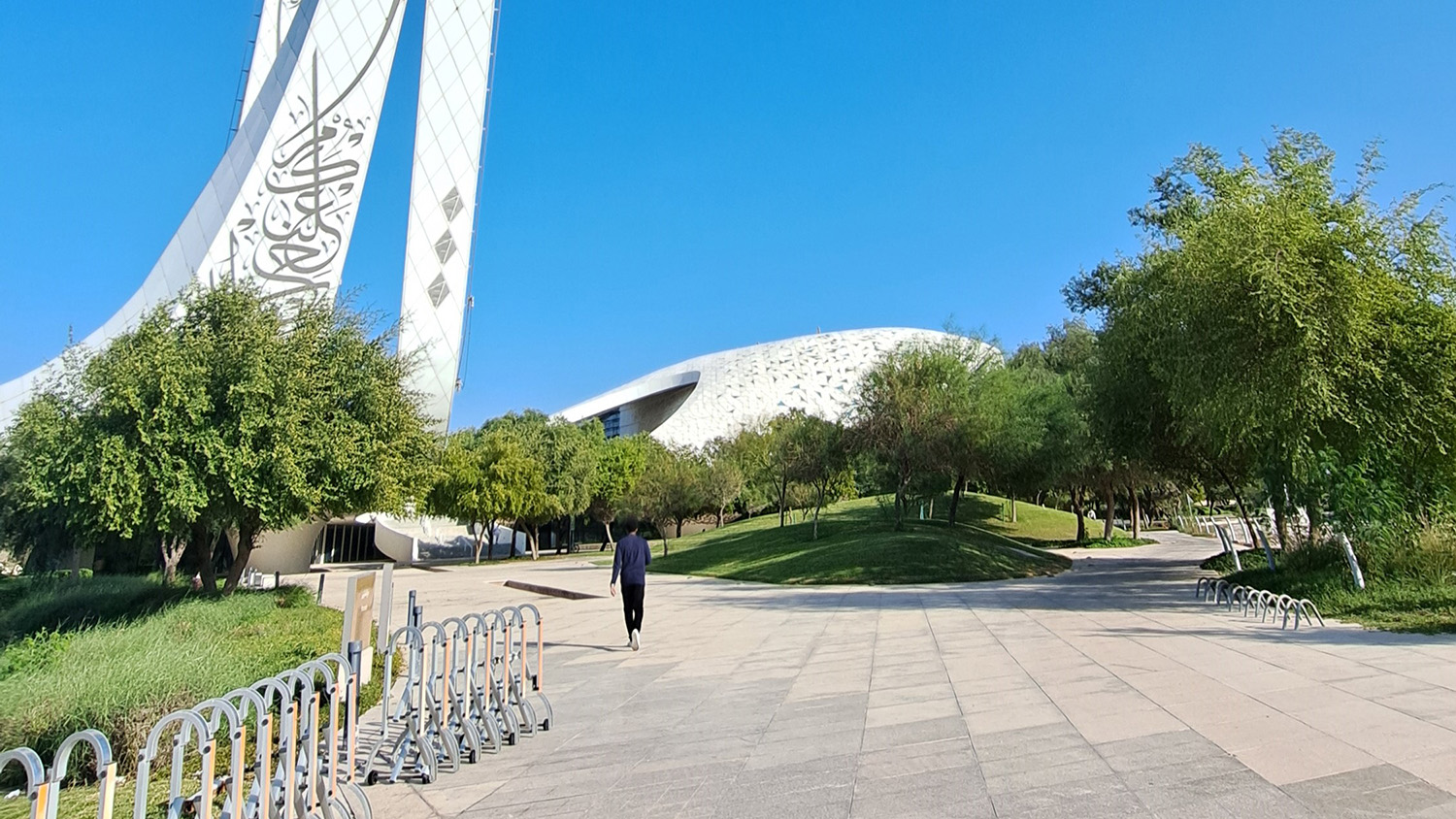
View from a University Campus in Doha, Qatar, photo courtesy of Myriam Dalal, 2025
Things Change, be Flexible
This is something that academic funding structures aren’t always ready to do, or willing to accommodate, but try your best. Some of our projects had delays, unexpected staff turnover or changes related to the community we were working with, their priorities and the time needed to build trust. This means that the project proposal that you had agreed on with your partners will not be the same.
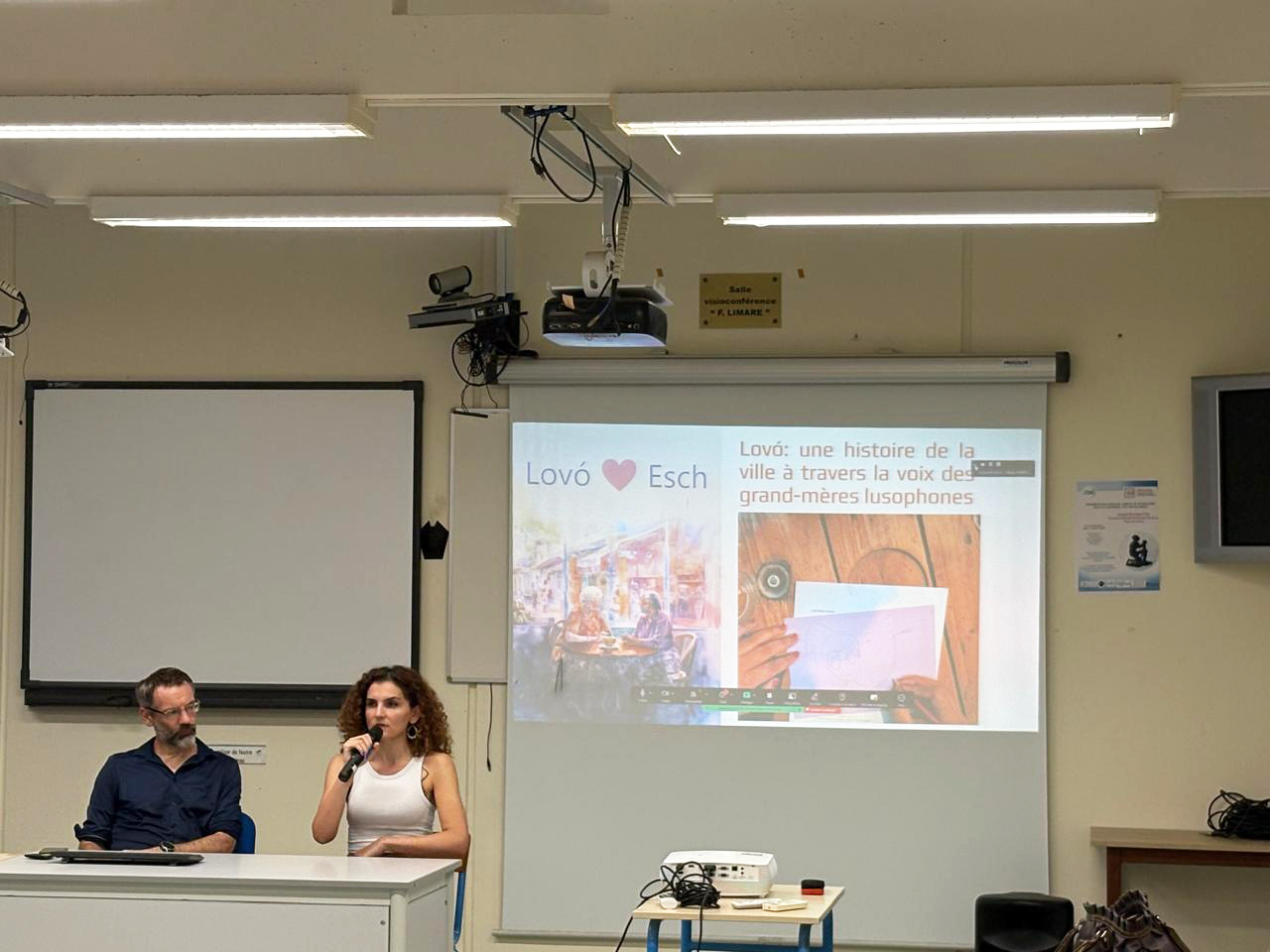
Thomas Cauvin and Myriam Dalal during a presentation at Université des Antilles, Martinique, photo courtesy of Monique Milia Marie Luce, 2025.
‟ Be ready to propose a change in the scope and to adapt your programs and funding accordingly. You want to do so much, but you’re not alone in this.”
Make plans A, B, C and D for when things don’t work out as planned because they will. If you’re working with people who already have precarious positions, or have multiple jobs, are juggling multiple responsibilities, cannot dedicate funded time for research, or don’t have access to as much resources as your host institution, don’t measure things from your University’s perspective.
‟ Time on your side of the world is not measured in the same way as time on other sides of the world.”
Tailor Your Collaborations Differently Depending on the Partner
This might sound like a no-brainer, but it’s easier said than done. Let me give a concrete example here: we were working with the Institute for Advanced Study in the Global South, based at Northwestern University in Qatar (IAS NUQ). Our partners were an academic institution, had access to resources, multiple staff members involved in programming, teaching, management and communication. Hosting an event or a series of events with them was something that could be done very easily because the whole system can support such work and because the Institute has been doing it for years. The same cannot be said about working with a grass root initiative for instance where the practitioners are working pro-bono in their own free time.
‟ Learn to sit there and listen to what could and can’t be done. Learn as you go.”
Use the first lesson of the first project to inform the next project and the next collaboration. By the end of it, you’ll come back to all your collaborators, propose a closing workshop, a conference, a joint meeting where you’ll get to collectively reflect on the process, or to write some notes/produce toolkits that others could use to learn from and make room to apologize for the mistakes. Attempts might come with good intentions, and because they’re new, they tend to be messy.
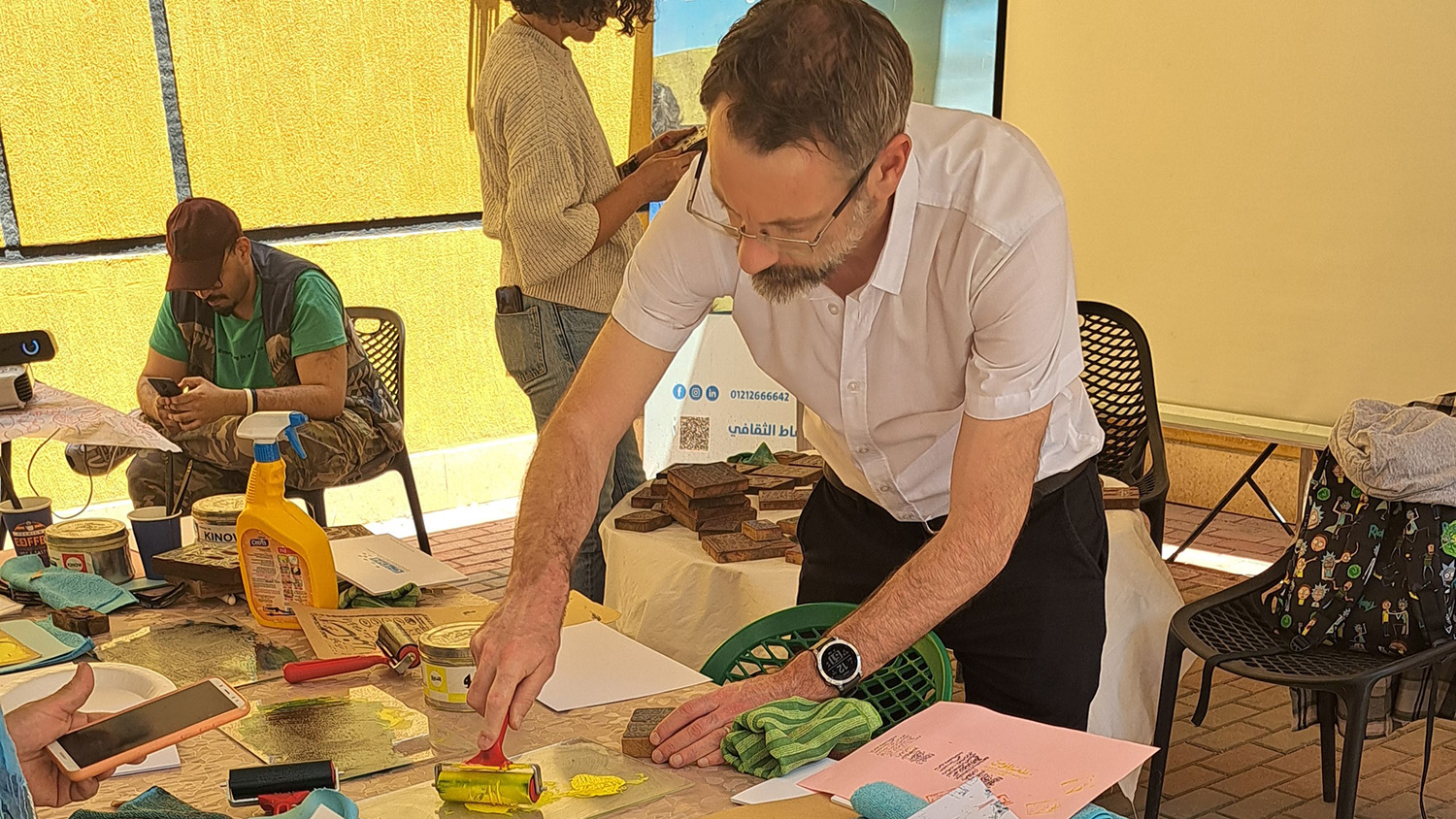
Thomas Cauvin during an Arts and Public History Workshop in Cairo, Egypt, photo courtesy of Myriam Dalal, 2025.
View from a beach in Martinique, photo courtesy of Myriam Dalal, 2025.
Close Chapters, Celebrate Successes and Think of New Beginnings
This is why in 2026, we’re organizing one closing event in Luxembourg, a workshop in Nairobi, another one in Qatar and hopefully a group discussion in Portugal. We want to create spaces to come together to say what we learned, to connect our partners together, to listen to what we did wrong and how we could do it better, to thank everyone for coming on this risky journey with us, and to launch a few last crazy ideas out there because what we are learning will continue to evolve and others could use it to do far greater things
Note to Self: Toxic Work Culture and Gatekeeping in Academia is Real, Express Yourself Outside of It and Cultivate Human Networks of Solidarity Inside
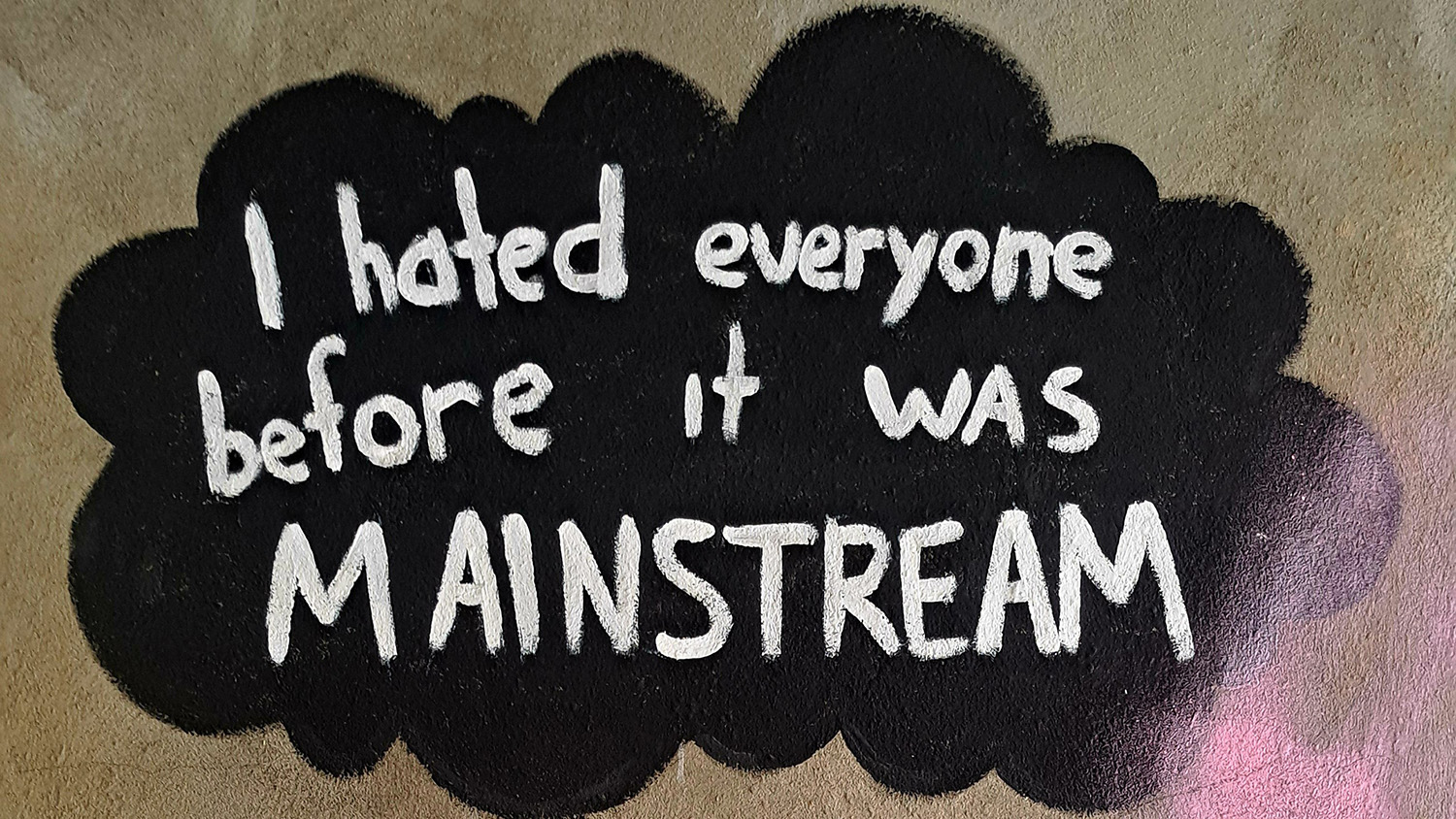
A Graffiti in Tbilisi, Georgia, photo courtesy of Myriam Dalal, 2025.
The past 10 months have been taxing, same goes for the year and half before that. Academia isn’t the best place to be yourself and do your thing. Some colleagues will criticize you, will reject you, will discredit you, will fight you and will even try to gaslight you. Always make some room to write about these experiences elsewhere, I’m lucky to be working with a few friends to document all of this in writing and in comics!
But I’ll end on a beautiful note still. In the past couple of years, I have come across generous, humane and wonderful colleagues, who offered help, who supported me, who gave me a hand, who believed in me and who saw the value of what I do. My advice is for you to sustain these constructive and encouraging allieships. Work together with these colleagues when you find them. It’s the only way to get things to change. And it will!
‟ Basically, unionize. And do that against the current in academia, pushing you to believe that the path forward has to be an individualistic one.”
It might not land you the infamous tenure track permanent position, but it’ll keep you from turning into an egoistic numb and hypocritical monster, and I’d rather stick with such a goal.
Author(s)
Myriam Dalal