

 Faculty of Science, Technology and Medicine
 Faculty of Law, Economics and Finance
 Faculty of Humanities, Education and Social Sciences
 Interdisciplinary Centre for Security, Reliability and Trust
 Luxembourg Centre for Systems Biomedicine
 Luxembourg Centre for Contemporary and Digital History
 Luxembourg Centre for European Law
 Luxembourg Centre for Socio-Environmental Systems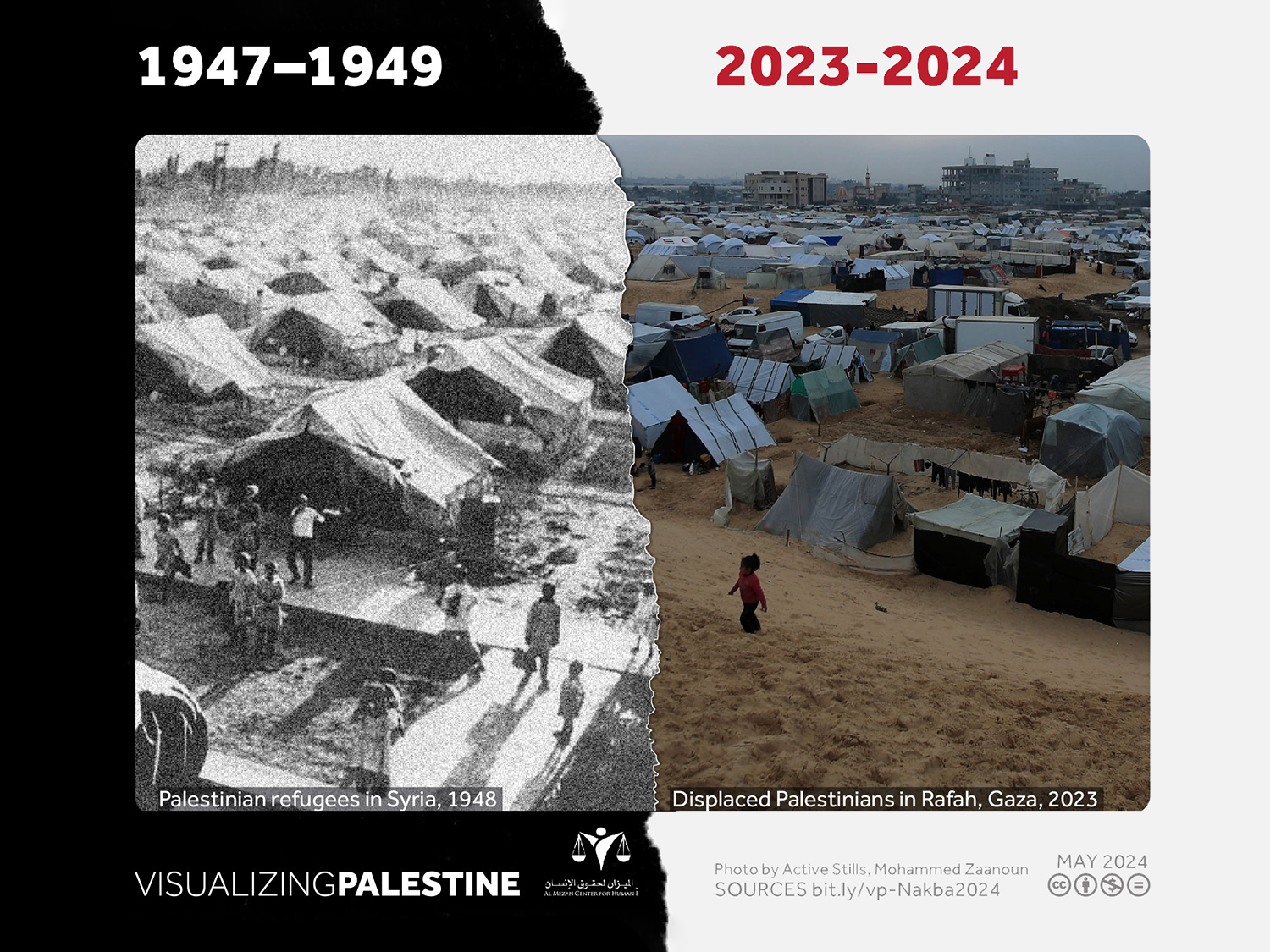
THIS SEMINAR IS POSTPONED
‘The Question of Palestine’ seminar series
Following up on the ongoing conflict in the Middle East/SWANA region, the Center for Contemporary and Digital History presents an online seminar series on “The Question of Palestine”.
In this series, we invite academics and subject matter experts to present their research and work which speaks on the historical context of the conflict in the region and its implications on the different practices from migration studies to cultural heritage, archival practices, filmmaking, feminist theory and data visualization.
- Session 1 – The ‘Peace’ to Come? The Abraham Accords as a Model
- Session 2 – Jewels that Resist: Against Colonial Geographies, a conversation with Ariella Aïsha Azoulay
- Session 3 – History of Palestinian Women Through Film and Photography
- Session 4 – Visualizing Palestine: Data Visualization and Difficult Histories
- Session 5 – The UNRWA Archive of Palestine Refugee Family Files: A 75-Year-Old History in the Digital Age
- Session 6 – The Question of Palestine in the Age of AI and the Digital: Surveillance, Power, and Responsibility
Session 6- The Question of Palestine in the Age of AI and the Digital: Surveillance, Power, and Responsibility
Speakers: Marwa Fatafta, assist.prof. Matt Mahmoudi
Chair: Dr. Myriam Dalal
Moderator: assist.prof. Frédéric Clavert
Abstract
This panel discussion will explore how digital technologies and AI systems are implicated in the surveillance, control, and targeting of Palestinians in the occupied Palestinian territory, including the West Bank and Gaza. Featuring Marwa Fatafta (MENA Policy and Advocacy Director on digital rights at Access Now NGO) and Matt Mahmoudi (Assistant Professor in Digital Humanities at the University of Cambridge), the discussion examines how tools developed within global tech ecosystems, including biometric systems, social-media moderation, and AI-driven military technologies have become instruments of domination and lethal violence. Speaking directly to digital humanities scholars, the panel highlights how research practices, data infrastructures, and cross-border collaborations can reinforce these harms.
This panel concludes the C²DH series “The Question of Palestine”, a programme that gathered scholars, practitioners, and subject-matter experts to engage critically with the historical and current dynamics shaping Palestine and the region.
Speakers
Marwa Fatafta is a Palestinian digital rights advocate and tech policy expert based in Berlin. She leads Access Now’s work on digital rights in the Middle East and North Africa region as the MENA Policy and Advocacy Director. Her work spans a number of issues at the nexus of human rights and technology including content governance and platform accountability, online censorship, surveillance tech, and transnational repression. She has written extensively on the digital occupation in Palestine and is particularly interested in the role of new technologies in armed conflicts and humanitarian contexts. Marwa is also Policy Analyst at Al-Shabaka: The Palestinian Policy Network, and an advisory board member of the Tahrir Institute for Middle East Policy. Marwa was a Fulbright scholar to the US, and holds an MA in International Relations from Maxwell School of Citizenship and Public Affairs, Syracuse University.
Matt Mahmoudi is an Assistant Professor in Digital Humanities at the University of Cambridge, and a Researcher/Advisor on Artificial Intelligence and Human Rights at Amnesty International. At Amnesty, he has led research and advocacy work on AI-driven surveillance from the NYPD’s surveillance machine to Automated Apartheid in the occupied Palestinian territory. Matt’s research focus is on red-lining and resistance in digital cities and the “smart” reproduction of racial capitalism, drawing on the Black radical tradition, critical migration studies, and urban studies. Matt is a co-editor on Resisting Borders & Technologies of Violence (Haymarket, 2024) together with Mizue Aizeki and Coline Schupfer, and further appears in International Political Sociology, and Digital Witness (Oxford University Press, 2020). His new book is titled Migrants in the Digital Periphery: New Urban Frontiers of Controls (University of California Press, February 2025).